
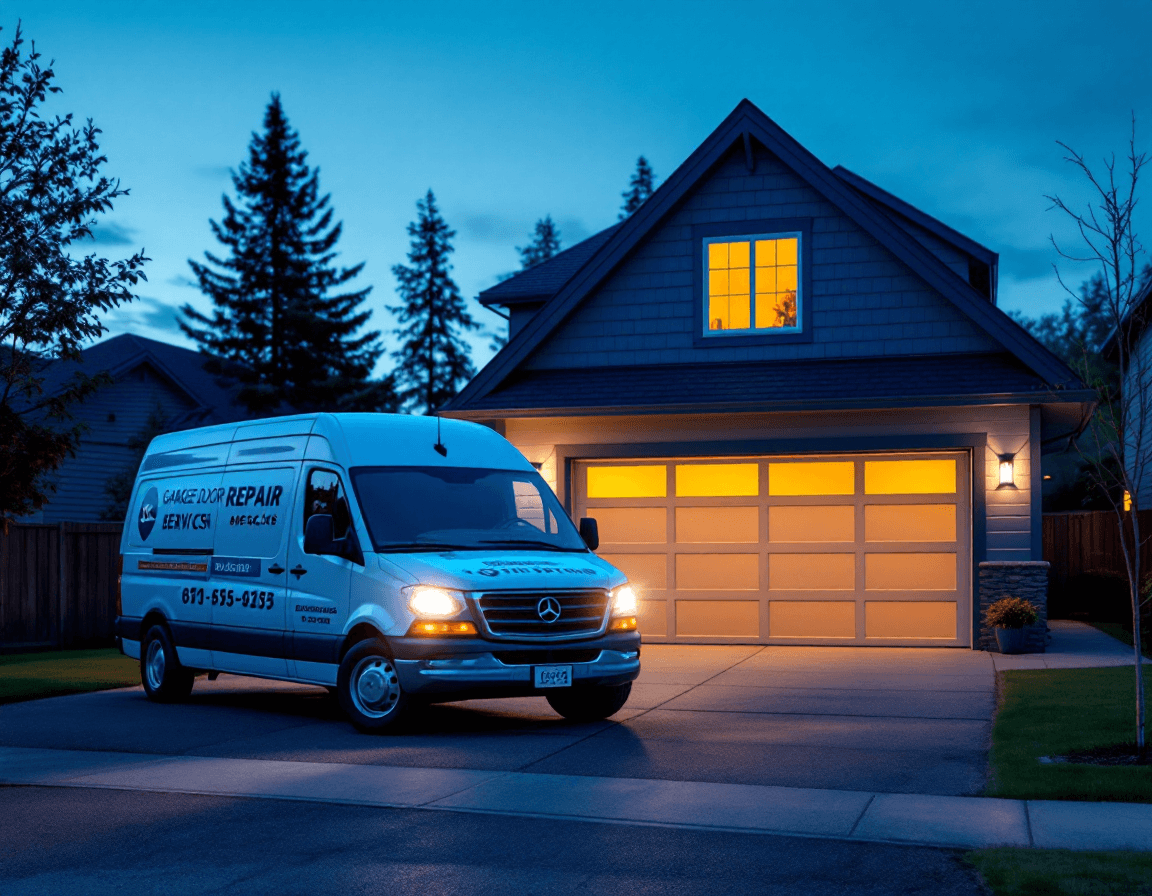
Garage door trouble rarely waits for business hours. A spring can snap at 10 p.m. on a Sunday, a cable can jump its drum as the family pulls in from dinner, or an opener can die during a windstorm while you're locked out in the rain. If you need 24 hour garage door repair in Edgewood, you need a team that answers the phone at night and can get to your driveway without a long wait. Seattle Garage Door Fix provides emergency garage door service for Edgewood homes and the surrounding Pierce County communities, including the 98372 ZIP code, around the clock.
Edgewood sits in the foothills-to-valley transition south of Tacoma, close enough to Puyallup, Milton, and Fife that many households commute along the same few arterials and rely on their garage as the main entry to the house. That daily dependence is exactly why a broken door feels so urgent here. When the door won't open, the car is trapped, the kids can't get inside, and anything stored in the garage is exposed to the weather. Our dispatchers understand that urgency and will walk you through a few safe checks while a technician is on the way.
This page explains what after-hours garage door problems look like in Edgewood, what you can safely check yourself, what you should leave to a licensed professional, and how to choose a company that will stand behind its work at 2 a.m. as well as at 2 p.m. If you're reading this with a door stuck halfway open, skip ahead to the call-to-action at the bottom. Otherwise, read on so you're prepared the next time something goes wrong.
When a Stuck Door Turns Into a Night-Shift Emergency
Most emergency calls we hear in Edgewood start with the same sentence: "It was working yesterday." A door that opened fine during the evening commute can refuse to lift an hour later, and the cause is often a component that has been quietly wearing out for months. Springs lose tension gradually, rollers chew through their tracks, and weatherstripping stiffens until the motor starts to labor. When one of these parts finally gives way, the timing rarely feels convenient.
The practical difference between a daytime annoyance and a true after-hours emergency comes down to three questions. Is the door fully closed and unable to open? Is the family or a vehicle trapped inside the garage? Is the door in an unstable position, such as hanging crooked or partially off its tracks? If you answered yes to any of these, treat the situation as urgent and call right away rather than waiting for morning.
Warning Signs Edgewood Homeowners Should Not Ignore
Garage doors usually send signals well before they fail completely. Learning to spot them gives you time to schedule a repair during a calmer moment, which is often cheaper and far less stressful than a midnight breakdown. Pay attention to changes in sound, movement, and balance, because those are the first things to shift as hardware ages.
- A loud bang or popping noise from above the door, which often signals a broken torsion spring
- The door opening unevenly, with one side higher than the other or sagging at the bottom
- Grinding or screeching from the rollers or tracks that gets worse over several weeks
- The opener reversing direction as soon as it meets resistance, or stopping partway through its cycle
- A visible gap at the top of the door or cables that look frayed, stretched, or loose
If you notice any of these, avoid running the opener repeatedly to test it. Repeated cycling on a damaged spring or cable can turn a manageable repair into a larger problem. A quick professional inspection usually costs less than the emergency call that follows a complete failure.
How Pierce County Weather Wears Down Garage Doors
The Pacific Northwest climate asks a lot from a garage door. Long stretches of gray, damp weather through fall and winter keep wood panels swelling and shrinking, and steel panels collect condensation that can lead to surface rust along hinges and bottom brackets. Moisture also finds its way into the opener housing, the wall-mounted control box, and the wiring that runs to the safety sensors near the floor. Those sensors are a frequent source of after-hours calls, because a misaligned or moisture-affected eye will tell the door it's blocked even when the path is clear.
Cold snaps add another layer of trouble. When temperatures drop below freezing, lubricants thicken, rubber seals become brittle, and metal components contract. A door that moved smoothly in October can bind on a frosty January morning, and a spring that was already near the end of its life may let go during the first hard freeze. Many of the emergency visits we handle in the colder months are really the result of stress that built up over the wet season.
Wind and occasional heavy storms add their own risk. Gusts can push a lightweight or poorly balanced door off track, and the sudden weight shift can stress cables that were already frayed. Keeping an eye on how the door behaves after a big blow is a simple habit that pays off during the cold, dark hours when a repair is hardest to schedule.
What to Do in the First Ten Minutes of a Door Emergency
When a door fails at night, your first instinct might be to pull, push, or force it open. That instinct is understandable, but it can make the damage worse and put you at risk. The goal in the first few minutes is to secure the situation, protect people and property, and wait for a licensed technician rather than attempting a repair you aren't equipped for.
- Keep everyone, including children and pets, clear of the door's path and the area beneath it
- Do not stand under a door that appears unbalanced, hanging crooked, or partly detached
- If the car is inside, use the interior release only if the door is stable and the vehicle is safe to exit
- Disconnect the opener power only if you can do so safely, and do not attempt to lift the door by hand while the springs remain under tension
- Call our after-hours line and describe what you see, including any noises, odd angles, or smells of burning
Your dispatcher can often give you clear instructions over the phone that keep the household safe until help arrives. Think of those few minutes as stabilization rather than repair. The real fix requires tools, training, and the right replacement parts, and those belong in the hands of a qualified crew.
Why Torsion Springs and Cables Belong to Professionals Only
Torsion springs and lift cables are the most dangerous components in a residential garage door. Springs store enormous amounts of energy, and when they are wound or unwound improperly, they can cause serious injury. Cables carry the full weight of the door and can snap with sudden force if they are damaged or mismanaged. For these reasons, we always recommend a licensed professional for spring and cable work in Edgewood, and we encourage homeowners to resist the temptation to tackle these repairs during a late-night emergency.
Many of the do-it-yourself injuries we hear about start with a broken spring that a homeowner tried to replace using online instructions and improvised tools. Winding bars can slip, and a spring that seems stable can release suddenly. The safest approach is to leave the springs alone entirely, keep the door closed and secured if it is stable, and let a technician who carries the correct equipment handle the job. Being cautious here protects your family far more than any quick fix could.
Openers, Remotes, and Keypads When It Gets Dark
Not every after-hours problem involves springs or heavy hardware. Sometimes the door is intact but the opener refuses to respond. A dead remote battery is the simplest cause, so start there if you can. Replace the battery, try the wall button, and then check the keypad if your system has one. If the wall button also does nothing, look at the breaker or outlet that powers the opener before you assume a larger failure.
Power interruptions during winter storms and wind events can trip breakers or knock out the opener's receiver, and a reset is sometimes enough to restore normal operation. If the motor hums without moving the door, the trolley may be disconnected or the drive mechanism may be binding, which calls for a technician. Keep the manual release handle in mind as a temporary option, but remember that pulling it while the door is under heavy tension or while the springs are damaged can cause the door to drop unexpectedly. When in doubt, wait for help.
What Happens When You Call Us After Hours
We want you to know what to expect before you dial, because uncertainty adds stress to an already frustrating night. When you call our 24-hour line, a dispatcher will ask for your address in Edgewood or the surrounding 98372 area, a description of what the door is doing, and whether anyone is trapped or the door is unstable. Those details help us send the right crew with the right parts, which often means fewer trips and a faster resolution.
After-hours technicians arrive prepared to secure the door, diagnose the failure, and explain their findings before any work begins. You should expect a clear conversation about what is broken, what options exist, and what the next steps are, whether that means a temporary stabilization or a full repair on the spot. Our crews are licensed, bonded, and insured, and we'll confirm the scope of work with you in plain language before we proceed. If you have questions about what you're being charged for, ask them at the start rather than after the job is finished.
Keeping Your Edgewood Garage Secure Until the Repair Is Finished
A broken door can leave your home vulnerable, especially if the garage is attached to the house or if the door won't close fully. While you wait for a technician, take a few simple steps to protect your property. Lock the door from the inside leading into your home, move valuables away from the garage entrance, and turn on exterior lighting so the area is visible from the street.
If the door will not close, consider blocking the gap with a sturdy object placed safely away from the moving hardware, and keep the car or any stored items away from the opening. Avoid leaving the opener's manual release engaged in a way that could let the door swing freely in the wind. These precautions are temporary, and they make the most sense as a bridge to the repair rather than a long-term solution. Once the door is restored, ask your technician whether any weatherstripping or lock components should be upgraded.
Choosing an After-Hours Garage Door Company You Can Trust
Anyone can list a phone number online, so it's worth asking a few direct questions before you hire an emergency service in Edgewood. Confirm that the company is licensed, bonded, and insured, and ask who will actually be performing the work. Find out whether the crew carries replacement springs, rollers, cables, and common opener parts, because a company that has to come back a second time after ordering supplies adds delay and cost.
- Ask whether technicians are licensed and insured for spring and cable work specifically
- Request a clear explanation of how after-hours calls are dispatched and how long arrival typically takes in your area
- Ask for a written description of the proposed repair before work begins
- Confirm that the company will recommend a licensed professional for any high-tension component, even on an emergency visit
- Read our policies on warranties and follow-up so you know what coverage applies after the crew leaves
A trustworthy company will answer these questions without hesitation and will be happy to explain its process. If something feels rushed or vague, take a breath and ask again. Your garage is too important to leave to guesswork, even at midnight.
Edgewood homeowners deserve reliable help when a garage door fails outside normal hours. If your door is stuck, unbalanced, or making alarming noises, call Seattle Garage Door Fix now at (888) 799-3819. Our around-the-clock dispatch team will walk you through safe next steps and send a licensed, insured technician to your home in the Edgewood area and throughout the 98372 ZIP code.