
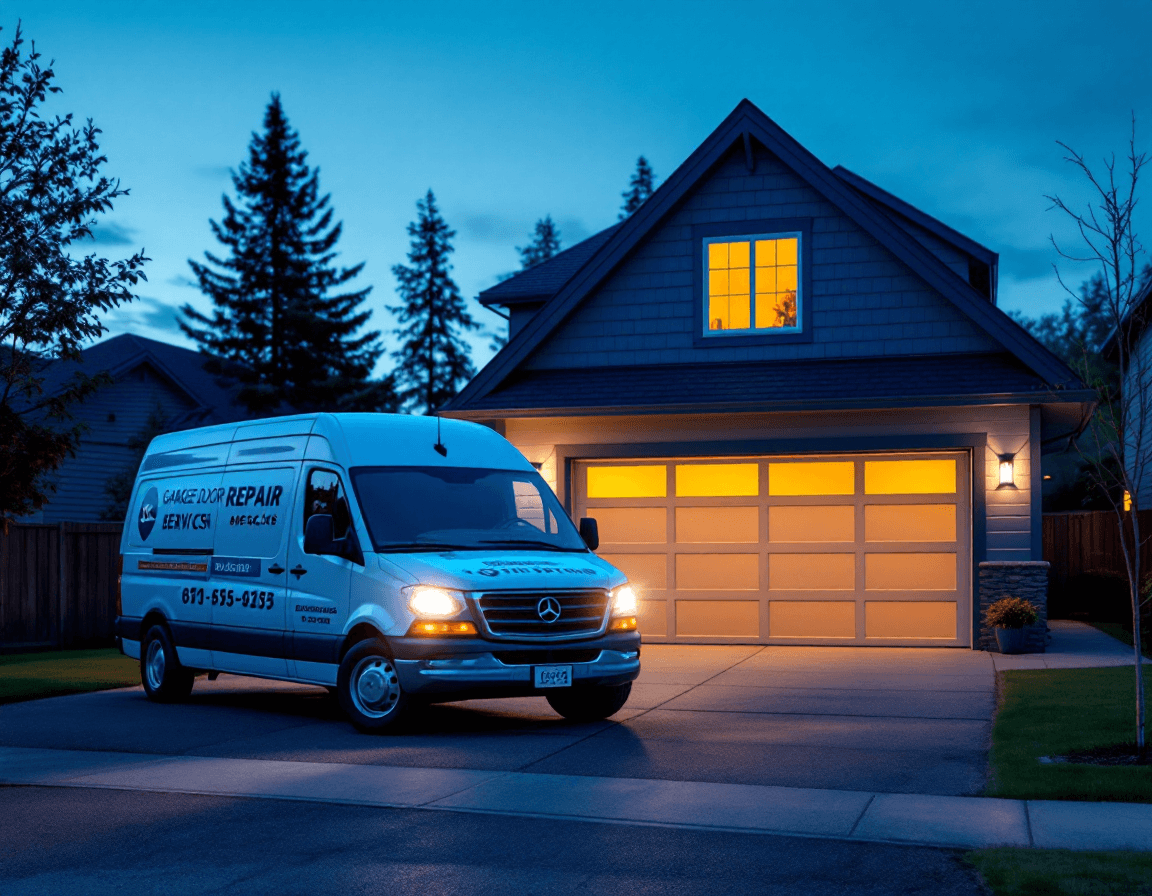
When a garage door fails at 11 p.m. on a rainy Tuesday, the problem rarely waits for business hours. Across the greater Seattle area, from the older bungalows near Ballard and Beacon Hill to the newer subdivisions east of Lake Washington and out toward Puyallup and Port Orchard, homeowners depend on their garage doors every day, and a failure can leave a car stuck, a house exposed, or a family unable to get in or out. Seattle Garage Door Fix provides 24/7 emergency garage door repair across the greater Seattle area, covering King, Pierce, Snohomish, and Kitsap counties, so that a late-night breakdown gets a real response instead of a voicemail and a promise for next week.
Emergencies are also different from routine service calls. A technician arriving for an emergency needs to make the situation safe first, then diagnose the failure, and then decide whether a temporary fix will hold until a full repair can be scheduled. Our dispatch process is built around that sequence. We ask a few focused questions when you call so the right tools and parts go on the truck, and we give you clear instructions while you wait so you are not left guessing about what to do with a door that is stuck, sagging, or standing wide open.
This page explains the situations we see most often, what causes them in our climate, what you can safely do before help arrives, and how we handle dispatch and pricing. If you are dealing with an active problem right now, read the make-safe section first and then call (888) 799-3819. If you are reading ahead of time so you know what to expect, the sections below will help you recognize the warning signs before a small problem turns into an emergency.
Why Seattle-Area Garage Doors Struggle Through Our Wet Winters
Western Washington's long wet season, which typically stretches from October into April, puts steady stress on garage doors in ways that drier climates never do. Moisture works its way into wooden doors, causing panels to swell and warp, and it accelerates rust on steel tracks, hinges, and the galvanized hardware that holds everything together. Many homes in older Seattle neighborhoods have detached garages that sit in damp shade for most of the winter, and that constant humidity shortens the life of springs, rollers, and cables more than homeowners expect. Salt air adds another layer of wear for properties in Kitsap County and along the Snohomish County shoreline, where corrosion can creep into hardware faster than it does inland.
Temperature swings matter too. A cold snap in January can make steel springs brittle and increase the chance of a sudden break, especially on a spring that has already been weakened by years of cycles. When the weather warms up quickly, metal expands and contracts, which can loosen fasteners and shift tracks just enough to cause binding. Many of the emergency calls we answer in winter trace back to a spring or cable that was already close to failing before the first hard freeze or the first week of heavy rain.
Seattle's seismic setting is worth mentioning as well. The region sits near several active faults, and even moderate shaking can knock a door out of its tracks, loosen mounting brackets, or dislodge a roller from its channel. Homeowners often do not connect a minor tremor to a garage door problem until the door refuses to close the next morning. If your door looks different after a shake, it is worth having it checked before it fails under its own weight.
Car Trapped Inside the Garage: Freeing Yourself Without Forcing the Door
A car trapped inside a closed garage is one of the most common reasons people call us in the middle of the night. The scenario usually begins with a dead remote, a power outage that disables the opener, or a door that jams partway up or down and refuses to move. Some homeowners end up inside the garage with a vehicle they need to move, while others find themselves locked out of the house because the only entry point is the overhead door. In either case, the first priority is to stop trying to force things, because forcing a jammed door can turn a simple release into a bent track, a damaged opener, or a door panel that gives way.
The safest first step is usually the emergency release cord, the red handle hanging from the trolley on the opener rail. Pulling it disconnects the door from the opener so you can lift or lower it by hand, but you should do this only when the door is closed or fully down, and you should never pull it while the door is partially open with someone underneath. If the door is stuck in the middle, do not climb on a ladder to fiddle with the tracks, and do not try to lift an unbalanced door by yourself, since a door that has lost its spring tension can drop suddenly. Keep children and pets clear of the door's path at all times.
If the release cord is missing, broken, or does not free the door, call us rather than trying to pry the bottom seal or the track apart. Our technicians can typically get a trapped vehicle out with minimal damage once they see the actual failure. In many cases, the trapped car situation is caused by a broken spring or a lost cable that a homeowner could not have diagnosed on their own, so the call also gives us the chance to fix the underlying problem and keep the same thing from happening again next week.
When a Broken Torsion Spring Keeps the Door From Lifting
Torsion springs are the heavy coil springs mounted on a steel shaft above the door opening, and they do most of the work of counterbalancing a garage door's weight. When one snaps, the door can feel suddenly very heavy, may refuse to lift at all, or may slam down if it was partially open at the time. A broken spring is one of the most common emergency repairs we handle, and it is also one of the most dangerous to attempt without training. The stored tension in a torsion spring is substantial, and a spring that releases unexpectedly can cause serious injury, which is why we always recommend a licensed professional for spring work.
Many homeowners notice warning signs before the break. The door may open unevenly, one side may sit lower than the other, or you may hear a loud bang or a sharp metallic snap from inside the garage. Sometimes you see a visible gap in the coil or a spring that looks stretched out and loose. Spring fatigue is not something you can reliably judge by sight, but any of these symptoms is a good reason to schedule service before the spring gives out completely in the middle of a rainy night.
Our technicians carry replacement springs sized for the common door weights and dimensions in the region, and they can usually restore a door to working order during a single visit. When we replace a spring, we also inspect the cables, drums, bearings, and track alignment, because a spring failure often stresses other components. We would rather fix the whole system once than send you a second call next month for a related part that was already on its way out.
Doors Stuck Open: The Security Gap You Should Not Ignore
A garage door that will not close is more than an inconvenience, because it leaves the interior of your home and your belongings exposed to anyone walking by. Homeowners in dense neighborhoods, including parts of Seattle, Tacoma, Everett, and the Eastside, often feel uneasy when a door is stuck open overnight, especially if the garage holds tools, bicycles, or vehicles that are worth stealing. A door stuck open can also let rain, leaves, and wind blow into the garage, which in the Pacific Northwest can mean soaked cardboard, damaged stored items, and a musty smell that lingers for weeks.
Security should be the first concern in a stuck-open situation. If the door is partly open, you can usually take a few protective steps while you wait for service: lock the door between the garage and the house, unplug or disconnect the opener, and avoid leaving valuables visible through the opening. Do not attempt to force the door closed with a vehicle or a pry bar, because doing so can damage the tracks and make the repair more expensive. If you have a second lock or a bar that fits the track, a temporary brace can help, but only if you can install it without climbing onto unstable equipment.
A stuck-open door is often caused by a broken spring, a failed opener, a tripped safety sensor, or a track that has shifted out of alignment. Each of these has a different fix, and a technician needs to identify the cause before the door can be reliably secured. Our priority dispatch treats stuck-open doors as a security issue, so if you describe the situation clearly when you call, we can plan the visit with the right parts on board.
Snapped Lift Cables and the Crooked Door
Lift cables run from the bottom corners of the door up to the drums on the shaft, and they work together with the springs to lift and lower the door evenly. When a cable snaps, the door typically hangs at an angle, one side drops lower than the other, and the door may bind in the track or stop moving altogether. A broken cable is a serious problem because it removes the balance the system depends on, and attempting to operate the door in this condition can damage the opener, twist the door panels, or cause the door to fall unevenly. We recommend against using the door at all until a technician has inspected it.
Homeowners often hear a loud snap or a pop, then find the door sitting crooked the next morning. Sometimes the cable can be seen dangling from the drum or frayed at the end, and sometimes the damage is hidden behind the track. In a few cases, a cable fails gradually, and the door begins to lean or stick long before it stops working entirely. If your door is noticeably off level, do not wait to see if it gets worse, because the uneven load can stress the rollers and track sections that were otherwise in good shape.
Repairing a snapped cable is not a do-it-yourself job for most homeowners, because the cable is under tension and the door must be properly supported during the repair. Our licensed technicians secure the door, relieve the tension safely, replace the cable on the correct side, and check the drum, bottom bracket, and track alignment before returning the door to service. Because cables and springs often wear together, we also look at the springs during this visit and let you know whether any component needs to be replaced soon.
Doors Knocked Off Track After Impact or Ground Movement
When a garage door is knocked off its tracks, the damage can look small from the outside but cause significant problems inside the mechanism. A vehicle backing into the door, a delivery truck clipping the frame, a fallen tree limb, or a strong gust can push a section of the door out of the channel. Once a roller is out of its track, the door may jam at an odd angle, the panels may bend, and the rest of the system can bind under strain. Continuing to run the opener in this state risks further damage to the door, the opener motor, and the surrounding hardware.
Ground shaking can cause a similar result. After a noticeable earthquake, many homeowners across King, Pierce, Snohomish, and Kitsap counties find that their doors have shifted, the bottom seal no longer meets the floor, or one side of the door has popped out of the track. Even when the door still moves, a shifted track can cause uneven wear, and the first symptoms may not appear until weeks later. A quick inspection after any strong shaking can catch these issues before they become expensive.
If your door has come off its track, stop operating it and keep people clear of the opening. Do not try to pry the door back into the track with a crowbar or hammer, since that can bend the track further and damage the rollers. Our technicians can realign the track, reseat the rollers, check the panels for damage, and verify that the springs and cables are still doing their jobs. When an impact has bent a section beyond repair, we will explain what needs replacing and give you options before any work begins.
Storm, Windstorm, and Break-In Damage Across Western Washington
Windstorms are a recurring part of life in the Puget Sound region, and strong gusts can damage garage doors in several ways. Wind can lift the bottom of a door out of its track, push panels inward, tear weatherstripping, or send debris against the door until it bends. After a major storm, many homeowners discover that their door is not closing properly, that water has pooled inside the garage, or that a section of the door is visibly dented. Windows and panels in carriage-style doors are especially vulnerable, and a cracked pane can become a safety hazard as well as a security gap.
Break-in damage is a different category, but it often looks similar. An intruder may force a door with a pry bar, damage the track or locking hardware, or pull the door partially open to get inside. Some break-ins involve smashed panels or broken opener hardware, and the damage may leave the door unable to lock or close fully. If someone has forced entry, contact local law enforcement first, then call us so we can secure the opening and repair the door once the scene is clear.
For either storm or break-in damage, the immediate goal is protection. Cover any large opening with a tarp or temporary board, and weigh the tarp down so it does not blow away or create a sail effect that stresses the remaining hardware. Photograph the damage before anything is moved, since insurance providers often ask for documentation. Our technicians can board up a damaged door temporarily when a full repair cannot be completed right away, so the garage stays secure and dry until the permanent work is scheduled.
Make-Safe Steps to Take Before a Technician Arrives
Make-safe means reducing the risk of injury or further damage while you wait for professional help. It does not mean repairing the door yourself. The first rule is to keep everyone, especially children and pets, away from the door and its tracks. Never stand underneath a door that is partially open or hanging unevenly, and never try to lift it manually if you suspect a spring or cable has failed. Treat the door as unstable until a technician confirms otherwise.
Next, disconnect the power to the opener at the outlet or breaker, and use the emergency release only when the door is fully closed or when a technician has told you it is safe. If the opener is still powered and the door has a broken cable or spring, the motor may try to move the door in an unpredictable way, which can cause more damage. Keep the interior door to the house locked, and move vehicles and valuables away from the opening if the door is stuck partway up or down.
Document the problem before you leave it alone. Take a few photos of the door, the tracks, the springs if visible, and any damage to the surrounding area, and note the time you first noticed the issue. Write down any unusual sounds you heard and what the door was doing when it failed. This information helps our technicians prepare the right parts and tools before they arrive, and it can save time on the visit. When you call (888) 799-3819, have these details ready along with the address and a short description of what happened.
- Keep children, pets, and bystanders at least a full door-width away from the opening.
- Do not attempt to lift, tilt, or pry a door that is hanging unevenly or stuck partway.
- Unplug or disconnect the opener before any hands-on inspection of the track or spring area.
- Use the red emergency release only with the door closed or after a technician instructs you.
- Lock the interior door, photograph the damage, and cover any open section with a tarp if weather is coming.
How Our Priority Dispatch Works Across Four Counties
Emergency calls are handled differently from routine scheduling. When you contact us, a dispatcher gathers the key facts: whether anyone is trapped or at risk, whether the home is exposed to weather or security problems, whether a vehicle is inside the garage, and whether the door is stuck open, crooked, or off its track. Those answers determine how quickly we move a technician to your address and what equipment the truck carries. A door that exposes a family to a break-in or blocks a medical vehicle takes precedence over a noisy opener that still works.
Our service area spans King, Pierce, Snohomish, and Kitsap counties, which means dispatch has to account for traffic patterns, ferry schedules to the Kitsap Peninsula, bridge closures, and the weather that can slow travel across the region in a matter of hours. We plan routes around those realities so that technicians are positioned to reach the most urgent calls first. When conditions are severe, such as a windstorm that takes down power and trees across several counties at once, we triage the calls by risk and let homeowners know what to expect for timing.
We also try to be straightforward about what we can and cannot promise during a regional emergency. High call volume after a major storm or earthquake can stretch even well-prepared crews, and we would rather explain that honestly than give you a time we cannot keep. What we can promise is that your call is taken seriously, that a qualified technician will assess the risk, and that you will receive clear instructions for keeping things safe while you wait.
Upfront Pricing With No After-Hours Surprises
Homeowners often worry that calling for emergency service will mean a shock on the invoice, especially when the call comes in at night or on a holiday. We believe the price of a repair should be understood before the work begins. When you call, we explain the service call structure and what it covers, and our technicians walk you through the diagnosis and repair options before anything is installed. You approve the work, and you know what you are paying for.
Our after-hours pricing is presented up front rather than added later as a surprise. The reason you are calling at an unusual hour is not a reason to be billed in a confusing way once the job is finished. If a temporary fix such as bracing or boarding is the right first step, we explain that option and what it costs, and we explain what a full permanent repair would involve so you can decide how to proceed. We do not want the decision to be made under pressure without the facts in front of you.
Because every door is different, the final cost depends on the parts needed, the door's size and weight, and the condition of related components. We will tell you if a repair that appears simple on the phone turns out to need more work once the door is open and inspected. In that situation, you will hear about the change and the reason for it before any additional work is performed, and you keep the right to decline or delay non-urgent items while keeping the door safe.
Where We Dispatch: Neighborhoods and Towns We Serve
Our emergency coverage reaches the core of Seattle and the surrounding cities that make up the greater metro. In King County, that includes Bellevue, Kirkland, Renton, Kent, Federal Way, Issaquah, and Bothell, along with many smaller communities in between. In Pierce County, we dispatch to Tacoma, Puyallup, Lakewood, and Gig Harbor. In Snohomish County, our coverage includes Everett, Lynnwood, Mukilteo, and Edmonds. Across the water in Kitsap County, we serve Bremerton, Port Orchard, and the surrounding communities that depend on ferry and bridge routes for travel.
Each of these areas has its own housing mix and garage-door history. Older homes in Seattle and Tacoma may have single-car detached garages with aging wood doors and hand-me-down hardware, while newer homes in Snohomish and Pierce counties often have insulated steel doors with more complex opener systems. Waterfront properties in Kitsap County face salt exposure that shortens the life of springs and tracks. Knowing these differences helps our technicians arrive prepared for the most likely failure modes in your neighborhood.
If you are not sure whether your address falls within our service area, call (888) 799-3819 and describe your location. We will confirm coverage and explain the expected dispatch approach before a technician heads out. Many homeowners are surprised to learn that a town they consider part of the greater metro is within reach, and we would rather answer the question than leave you searching for a provider while your garage stays open to the weather.
Garage door emergencies rarely happen at convenient times, but they can be managed calmly when you know what to do and who to call. Whether your car is trapped inside, your spring has snapped, your door is stuck open, or a storm or break-in has left the opening exposed, Seattle Garage Door Fix is ready to respond around the clock across King, Pierce, Snohomish, and Kitsap counties. Call (888) 799-3819 now for 24/7 emergency garage door repair, and we will help you make the situation safe, get your door working again, and walk you through the options with clear, upfront pricing.