
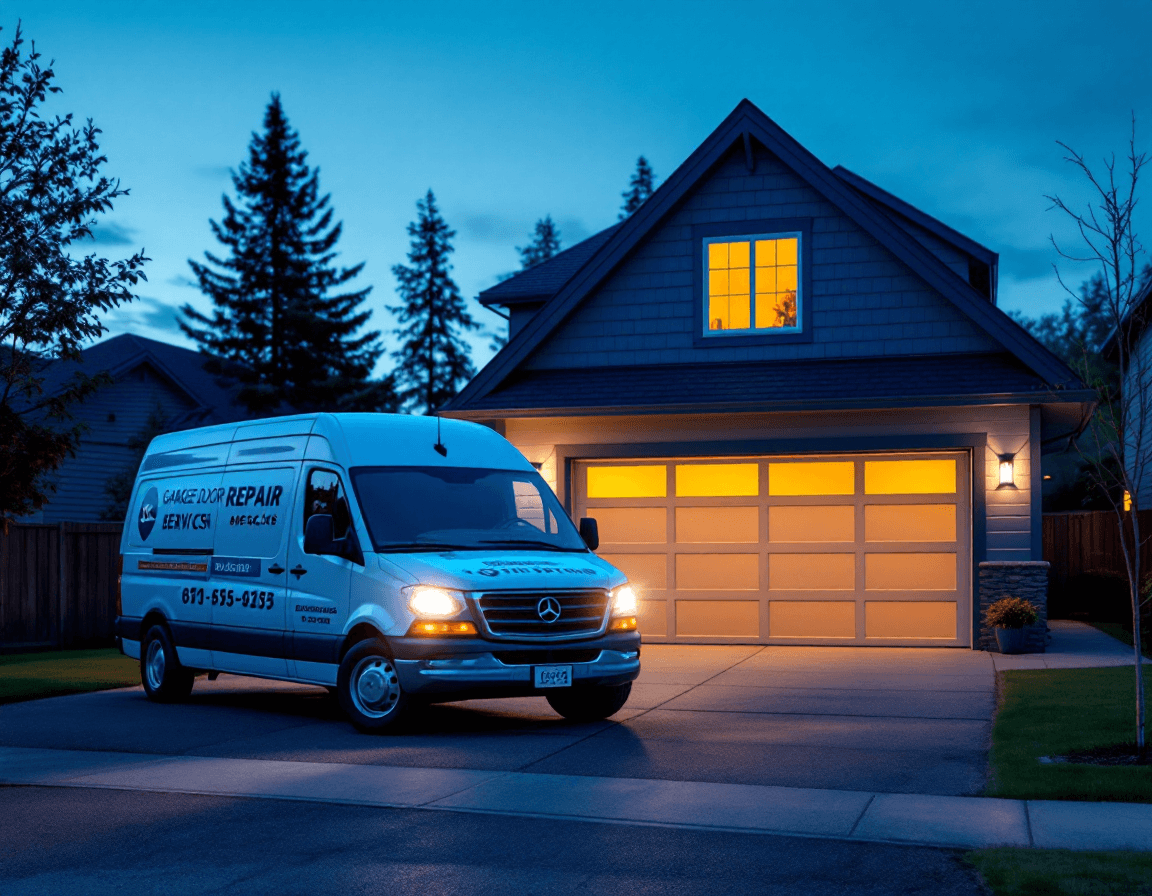
Emergency garage door repair in Poulsbo, WA is a different kind of call than a routine tune-up. When a door jams with your car inside, stays open overnight, or drops off its tracks, you need someone who can reach you the same day and fix the problem safely. Seattle Garage Door Fix provides 24/7 same-day emergency service across Poulsbo and the rest of Kitsap County, with upfront pricing so you know the cost before the work starts. Our technicians are licensed, bonded, and insured, and they handle the high-tension parts that homeowners should never touch.
Poulsbo's streets reflect its Norwegian heritage and its waterfront setting. Many homes sit on hillsides above Liberty Bay, in neighborhoods where garages face the weather head-on. Whether your house is near downtown Poulsbo or tucked into the quieter parts of the 98370 ZIP code, a garage door that fails at the wrong moment can leave you stranded, exposed, or both. This page explains the most common emergencies we see locally, what you can safely do in the first few minutes, and what to expect when you call.
Emergencies rarely happen at convenient times. A spring snaps at dawn before a commute, a cable frays on a Friday night, or a windstorm knocks a door off its track while you are asleep. Knowing what is happening, and what not to do, can prevent an injury and a much larger repair bill. The sections below walk through each situation in plain language, the way a technician would explain it standing in your driveway.
Why Poulsbo Garages Take Extra Punishment
The Pacific Northwest climate is hard on garage doors, and Poulsbo's location makes it harder. Winter brings long stretches of rain, cold mornings with condensation on every surface, and salt-laden air drifting in from Liberty Bay. Over years, that moisture works into hinges, rollers, and tracks, and it quietly speeds up rust on the springs and hardware that hold the door's weight. A door that looked fine in October can seize up after a few hard frosts in January.
Wind is the other local factor. Storm systems moving across the Sound can gust hard enough to push a lightweight door out of its tracks or bend a section of track on the side of the house exposed to the weather. Many homes in the area have garages built into sloped lots, which means the door and opener can take uneven loads when the ground shifts after heavy rain. Older Poulsbo homes often still carry original hardware that was never designed for the amount of moisture it now sees.
Because of this, we treat corrosion as a normal part of our diagnosis rather than an afterthought. When we arrive on an emergency call, we check for rust on torsion bars, cable drums, and bearing plates, and we look for old water staining on the wall brackets. Knowing the local causes of failure helps us find the real problem faster, instead of only replacing the part that broke.
When Your Car Is Boxed In at Dawn
A car trapped inside a closed garage is one of the most common emergencies we handle, and it usually happens because the opener lost power, the door's electric system failed, or a cable or spring let go while the door was closed. Your first priority is safety, not getting the car out. Keep people and pets away from the door, and do not try to lift it by hand if you suspect a spring has broken, because the door can drop suddenly and with great force.
If the opener still has power, you may be able to use the manual release cord, which is usually a red handle hanging from the trolley. Pulling it disconnects the door from the opener so you can operate it manually, but it only works safely if the door is balanced and both springs are intact. If the door feels unusually heavy, sags on one side, or will not move at all, stop and leave it alone. Pulling the release on a door with a broken spring can cause it to slam down or swing unexpectedly.
If you cannot get the car out and the house door or a side door is usable, exit the garage that way and keep the main door closed until a technician arrives. Call us at (888) 799-3819, describe what you heard or saw, and tell us whether the door is open, closed, or stuck partway. Same-day emergency service means we can typically get a technician to a trapped-car call quickly, and we will explain the likely fix and the cost before we begin.
A Door Stuck Open and Refusing to Close
A garage door that will not close is more than an inconvenience. An open garage invites theft, exposes tools and vehicles to rain, and leaves the home vulnerable overnight, especially in neighborhoods where people count on quiet streets and familiar routines. Doors often get stuck open because a photo-eye sensor is blocked or misaligned, the opener's travel limits are off, or the door has gone out of balance and stops partway through its close cycle.
Start with the simple checks. Look for anything in the door's path, such as a box, a bike, or a shifted rug, and inspect the two small sensors near the floor on either side of the opening. Their lights should be steady, and the sensors should face each other without obstruction. Sometimes a sensor has been knocked out of alignment by a broom, a stray tire, or a dog that brushed against it, and a gentle nudge is enough to fix it.
If the sensors look clean and the door still stops, the problem may lie in the opener's close-limit settings or in the balance of the door itself. Those issues can be checked safely, but adjusting certain components without training can cause serious injury. If your door is open and you cannot secure it, a temporary measure such as a padlock through the track on the inside can deter entry until a technician arrives. Our crew will restore the close function, test the safety reversal system, and confirm the door seals properly before we leave.
When a Spring Lets Go While the Door Is Lifting
Torsion and extension springs carry most of the weight of a garage door, and a broken spring is one of the most serious emergencies we see. Torsion springs sit on a steel shaft above the door opening, and when one breaks you may hear a sharp bang, see a gap in the coil, or notice the door hanging unevenly. An extension spring can snap along its length and leave the door feeling impossibly heavy or dropping quickly. Neither situation is something a homeowner should attempt to fix.
The signs of a failing spring usually appear before it breaks. Look for gaps in the coils, rust-colored flaking on the wire, or a door that struggles to lift in the cold mornings typical of Poulsbo winters. If you notice any of these, do not run the opener repeatedly, because forcing a weakened spring can finish the job. Keep the door closed, if possible, and call for service.
Torsion spring work is among the most dangerous tasks in home maintenance because the coils store enormous tension. Our technicians carry the winding bars, safety cables, and replacement components needed to restore balance properly. We recommend a licensed professional for every spring and cable job, because a mistake can cause serious injury. When we replace a spring, we also inspect the cable drums, bearings, and track hardware so the repair holds up through the next wet season.
Snapped Cables and a Door Hanging Crooked
Cables work alongside the springs to lift and guide the door, and a snapped cable can leave one side of the door dropping lower than the other. You may notice the door sitting at an angle, a gap at the bottom on one side, or a loud clunk when the opener engages. Frayed cables often give warning signs first, such as small wire strands poking out or a cable that looks slack on one side, and these are worth taking seriously before the full failure occurs.
A door hanging crooked is dangerous because the weight is no longer distributed evenly. The unsupported side can drop quickly when released, and the opener may keep pulling against the imbalance until a motor or track component gets damaged. If you see a cable that has come off its drum or a door that looks twisted, keep everyone clear of the opening and do not attempt to lift it. Contact a technician promptly rather than trying to drive the door or push it level.
When we replace cables, we match the correct gauge and length to your door's specifications and confirm that both sides are tensioned equally. A cable repair often reveals wear on the drum or the lift bracket, so we check those parts before closing out the call. We also explain what caused the failure, whether that was age, corrosion, or a lift cable that was never properly seated, so you can plan for future maintenance with clear information.
Off Its Tracks After an Impact or a Hard Gust
A door that jumps off its tracks is one of the more alarming emergencies, and it can happen after a vehicle bumps the door, a heavy branch hits it, or a strong gust catches an unsecured panel. The tracks are precisely aligned, and even a small shift can cause rollers to jam, bend a section, or push a panel out of the channel. Once a door is off track, forcing it back with the opener often causes additional damage to the rollers, hinges, and sometimes the panels themselves.
After an impact, look at the tracks from a safe distance. If you see a gap between the track and the wall, a bent piece of metal, or rollers hanging out of the channel, leave the door in place and avoid operating the opener. If the door is partly open, do not try to push it up or down by hand while a spring might still be under strain. Take photos of the damage for your insurance company, and then call us so a technician can assess the track alignment and any panel damage.
In Poulsbo, we also see tracks knocked loose during windstorms when the door is not fully latched or when the mounting brackets have loosened over time. Realigning tracks requires the right tools and a careful, measured approach, because the door, springs, and tracks all work together. Once the tracks are set, we check the rollers, hinges, and bottom seal, and we make sure the door tracks true from top to bottom before it returns to service.
Slammed Shut, Jammed, and Stuck in Place
Sometimes a door comes down hard, either because someone released it too quickly or because a spring released unexpectedly, and then it jams partway or sits crooked in the frame. A jammed door can feel immovable, make grinding noises, or refuse to respond to the remote. Pushing harder on the remote or repeatedly running the opener usually makes things worse, because it forces stressed parts to bind further.
A door that slammed shut often has damage that is not obvious from the outside. The bottom seal may be torn, a panel may be flexed, or a roller may have popped from its track and cracked. Check the weatherstripping along the bottom and sides for tears, and listen for any scraping or popping noise when you press the wall button for a single cycle. If the opener motor hums but the door does not move, shut the power off at the breaker and wait for a technician instead of forcing the door.
We approach jammed doors methodically. We check the spring tension, track alignment, roller condition, and opener limit settings, and we look for hidden damage at the hinges and bottom bracket. Many jams are caused by a combination of small problems, such as dirty tracks, dry rollers, and a tension imbalance, rather than one large failure. Clearing the whole system, rather than just the obvious symptom, is how we keep the door from jamming again after the first rain.
Storm Damage, Power Dips, and Wind-Battered Doors
Western Washington winter storms can knock out power for hours, and a power failure can leave a garage door stuck in an awkward position. When electricity returns, an opener that was mid-cycle may behave unexpectedly, especially if the door was partially open or if the logic board reset to default settings. Storm wind can also flex panels, pop hinges, or push the door against the frame, creating damage you might not notice until the next time you try to use it.
After a storm, walk around the outside and inside of the garage and look for dents on the panels, cracked window inserts, separated sections, and bent hinges. Check the bottom seal for splits, since wind-driven rain often finds its way under a poorly sealed door. Look up at the top section, where the wind load is greatest, and note any gaps between the sections or any panel that has bowed outward. Photos taken before any repairs are helpful for insurance claims.
Storm-related calls often involve more than one component. A door that took a hard gust may have a bent track, loose brackets, and a strained opener all at once. Because the Poulsbo area sees periodic power interruptions, we also check the opener's battery backup, if one is installed, and confirm the emergency release is working. A comprehensive inspection after a storm prevents a small problem from becoming an emergency during the next cold snap.
Break-In Damage and Securing the Garage Overnight
Garage doors are a common entry point for burglars, and a forced entry can leave a door that no longer latches, locks, or closes all the way. Pry marks on the panels, bent tracks where someone attempted to lift the door, and damaged locking mechanisms are all signs of tampering. If you discover this kind of damage, your first priority is your personal safety. If you believe someone may still be inside or nearby, leave the area and call local law enforcement before anything else.
Once the scene is safe and the police report is filed, call us so we can secure the door. We can repair or replace the lock mechanism, reinforce the bottom brackets, and reset the tracks so the door closes and seals properly. In some cases, a break-in also damages the opener or its wiring, and we check those components as well. Keeping a copy of the police report and taking photos before repairs will help with insurance paperwork.
Until the repair is complete, there are a few temporary steps that can help protect the garage. Close the door fully if it still works, and place a sturdy bar or a locked clamp in the track if you can do so without touching the springs. Move valuable items inside the house or to a secure location. A technician will restore the full locking system and confirm the door is secure for the night, so you can rest without worrying about what might happen before morning.
Our Same-Day Visit and Upfront Pricing in Poulsbo
When you call Seattle Garage Door Fix from Poulsbo, a dispatcher will ask a few focused questions about what you are seeing and hearing. Those answers help us decide what tools and parts to bring and whether the call needs one technician or a fuller response. We aim to get to same-day emergency calls as quickly as our schedule allows, and we will tell you clearly when we expect to arrive.
Upfront pricing means you hear the cost before any work starts. Our technician will examine the door, explain what has failed and why, and walk you through repair options, including whether a temporary fix makes sense or whether a full component replacement is the better long-term choice. You are never obligated to proceed, and we will not begin work you have not approved. The goal is to remove the guesswork that often makes emergency calls stressful.
Every visit includes a safety check before we leave. We test the close-limit settings, confirm the auto-reverse system stops and reverses the door when it meets an obstruction, and verify the emergency release works as intended. We also review the door's condition with you so you know what to watch for in the coming weeks. For homeowners in Poulsbo, that means straightforward answers and a door that operates safely in the wet, windy conditions that define the local climate.
Preventing the Next Emergency Without Risking Your Safety
Most emergency calls follow a pattern of gradual wear, and a little attention between storms can prevent many of them. Hinges, rollers, and bearings benefit from a periodic light lubrication with a silicone or lithium-based product, while tracks should be kept clean of grit and debris that can cause rollers to bind. Keeping the area around the door clear also reduces the chance of an impact or sensor misalignment.
Regular checks are straightforward and do not require special tools. Once a month, watch the door through a full open and close cycle and listen for grinding, popping, or hesitation. Look at the bottom seal, the cables, and the spring for visible damage, and make sure the sensors are clean and aligned. If the door reverses, drifts, or runs noisily, schedule service before it becomes an emergency.
Some tasks belong only to licensed professionals. Spring adjustments, cable replacements, track realignment, and any work on a torsion shaft carry serious risk of injury, and we recommend a licensed professional for all of them. A scheduled service visit from our team can catch corrosion, worn rollers, and early spring fatigue, which is often far cheaper than an unplanned repair on a cold morning. If you are dealing with a door emergency in Poulsbo right now, call (888) 799-3819 and we will send a technician to get your garage secured and working again.
If your garage door is stuck, trapped, open, off track, or damaged after a storm or break-in, call Seattle Garage Door Fix right away at (888) 799-3819. Our licensed, bonded, and insured technicians provide 24/7 same-day emergency repair throughout Poulsbo and Kitsap County, with upfront pricing before any work begins. Do not wait for a small problem to become a dangerous one.