
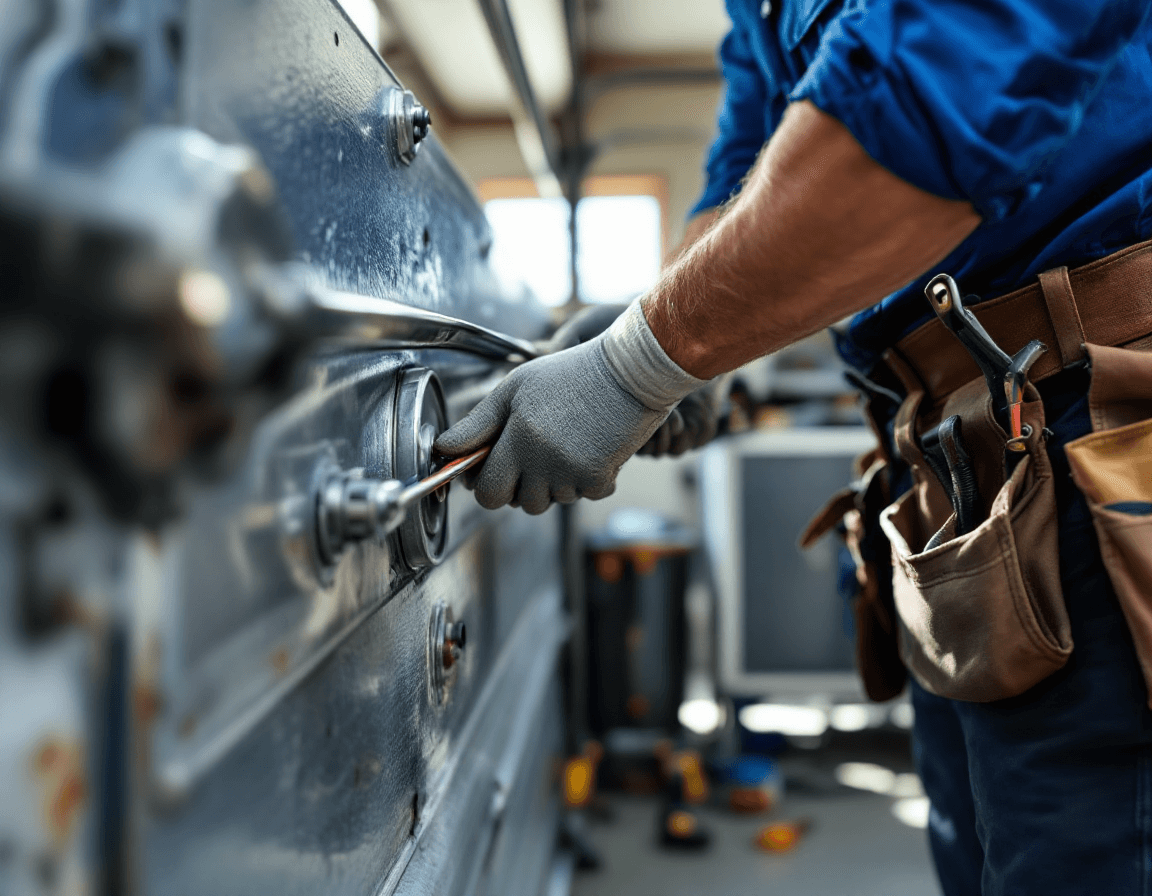
Garage door cable replacement in Poulsbo, WA is one of the most common repairs we handle on the Kitsap Peninsula, and it's also one of the most important to get right. The lift cables on a garage door carry the full weight of the door, often several hundred pounds, every time it opens and closes. When one of those cables frays, rusts through, or pulls off the drum, the door can drop, twist, or stop completely. This page explains how cable problems develop in our part of the Pacific Northwest, what the warning signs look like, and what a professional repair involves.
Homes around downtown Poulsbo and the streets that climb away from Liberty Bay see a particular mix of conditions that wear on garage door hardware. Rain can fall for weeks at a stretch between October and April, and the air stays damp even on days without rain. Salt-tinged moisture drifts in from the bay on some winds, and that moisture settles onto steel. Over time, these conditions push cables toward corrosion and fatigue faster than many homeowners expect. Knowing what to look for can help you catch a problem before a routine morning turns into a stuck door with your car on the wrong side of it.
If you think a cable has already failed, or your door is hanging crooked and you're not sure why, call Seattle Garage Door Fix at (888) 799-3819. Cable work involves high-tension springs and heavy loads, so it should always be handled by a licensed professional rather than a do-it-yourself project. The sections below walk through what to watch for and how to think about the repair.
Why Garage Doors in Poulsbo Wear Their Cables Faster
Cables are made of galvanized steel, which resists rust well when the coating stays intact. In Poulsbo, the coating is tested by long wet seasons. Winter moisture seeps into the garage through gaps at the bottom of the door and around the side jambs, and it condenses on cold metal overnight. Those repeated wet-dry cycles break down the zinc layer, and once the bare steel is exposed, small pits form along the strands. Pitted strands are weaker than they look, and the failure often happens without warning.
Many Poulsbo homes are built on slopes or sit close to the water, and garages in these spots may get less direct sun than homes farther inland. Less sun means the garage interior stays damp longer after rain. A door that rarely gets fully dry can hold moisture against its hardware for months at a time. We see cables on these homes showing surface rust well before the same hardware fails on a drier property elsewhere in the region.
Temperature swings add another layer of stress. A cold morning makes the steel contract and the lubricant thicken, so the door can resist opening more than it did in the afternoon. That extra resistance pulls harder on the cables and drums. Over several seasons, the combination of moisture, cold, and repeated loading can wear a cable down until one strand gives way.
Reading the Early Warning Signs on Your Cables
The best time to replace a cable is before it fails. A visual check is easy to do from inside the garage with the door closed, and you don't need any tools to look. Start by examining both lift cables, which run vertically from the bottom bracket on each side of the door up to the drum at the top of the track. Look for fraying, where individual wire strands stick out or the cable looks fuzzy, especially near the bottom bracket and where it wraps around the drum.
Rust is the next thing to check. Surface rust that flakes off on your fingers is a sign the protective coating has broken down. Dark pitting, especially where the cable bends, indicates that the strands are losing material. Any cable with visible broken strands should be replaced, even if the door still seems to work normally.
Pay attention to how the door behaves when you operate it. A door that closes unevenly, or one side that seems to lag behind the other, can point to a cable that is slipping or stretching. Listen for popping or grinding sounds from the top corners of the door. Any new noise paired with a change in how the door lifts deserves a closer look.
Here are the most common early signs we tell Poulsbo homeowners to watch for:
- Fuzzy or fraying strands along the length of a lift cable, or near the drum
- Rust that flakes off, or dark pitting where the cable bends or wraps
- A door that sits lower on one side when it's closed
- Visible slack in one cable while the other looks taut
- Popping or ticking noises from the top corners during operation
When a Cable Snaps and the Door Drops
A snapped lift cable usually produces a loud crack or bang, sometimes loud enough to startle anyone in the house. The door often drops suddenly, sometimes a few inches and sometimes all the way to the floor. In many cases, the door will sag at one corner first because the other cable is still holding part of the load. This uneven drop can bend the track, pull the roller out of its channel, or damage the bottom weatherstrip.
Do not try to lift the door by hand or force it open once a cable has snapped. The door is heavier than it looks, and the remaining cable and spring hardware may be under stress. Keep children and pets away from the door and the area beneath it. If your garage has an automatic opener, do not run it, because the opener can pull against a damaged system and make the situation worse. Many homeowners in the Poulsbo area are surprised by how quickly a snapped cable can turn a normal day into a stuck garage, but staying calm and keeping everyone clear of the door makes a real difference.
Once the door is secured, the repair typically involves replacing both lift cables, not just the one that failed. The cables are usually the same age and have experienced similar wear, so replacing only one leaves the other near the end of its life. Checking the drums, the bottom brackets, and the track alignment at the same time helps prevent a second failure soon after.
Cable Drums, Brackets, and the Hidden Parts of the System
The lift cable is only one component of a larger system. Each cable wraps around a drum at the top of the track, and the drum is connected to a torsion shaft or spring assembly that provides the lifting force. The drum has a grooved surface designed to hold the cable in a specific path as it winds and unwinds. If the grooves are worn, damaged, or filled with debris, the cable can slip, bunch up, or wrap unevenly.
Drums can crack or split over time, particularly on older doors. A cracked drum may look intact from a distance, but close inspection often reveals a split along the edge or a loose set screw. Set screws that have backed out can allow the drum to shift on the shaft, which throws the cable out of alignment and causes the door to lean. Bottom brackets, the small metal plates that anchor each cable to the door, can also bend or crack, especially on doors that have been hit by a car or a bike.
A thorough cable replacement includes checking all of these parts. A technician should confirm that the drums are sound, the set screws are tight, the brackets are straight, and the cables are seated correctly in the drum grooves. Skipping these checks may save a little time today but often leads to a return visit within a few months.
Why Doors Hang Crooked or Bind on One Side
A lopsided door is one of the most common symptoms of a cable problem. When one cable is stretched, frayed, or partially off the drum, the door's weight shifts toward the other side. The result can be a door that sits crooked in the opening, rubs against the jamb, or stops halfway up the track on one side. Homeowners sometimes notice a gap at the top corner on one side of the door or a bottom edge that no longer sits flat on the floor.
Binding often shows up as resistance on one side during opening or closing. The door may catch, shudder, or make a scraping sound as it travels. This is a sign that the rollers on one side are being pulled out of alignment by uneven tension. Continuing to operate a binding door can strip the opener's gears, bend the track, and wear out rollers much faster than normal.
Before assuming the cable is the culprit, it's worth checking that the tracks are straight and the rollers are seated properly. Still, if the door is lopsided and one cable looks loose or damaged, the cable should be inspected by a professional. Adjusting tension without the right tools and training is dangerous and can lead to injury.
What a Typical Cable Replacement Involves
A professional cable replacement starts with securing the door and releasing the tension in the spring system. This step is what makes cable work hazardous for untrained people. The spring carries a large amount of stored energy, and releasing it incorrectly can cause serious injury. A licensed technician uses specialized winding bars and clamps to safely relieve tension before any cable is removed.
Once the tension is controlled, the technician disconnects the old cable from the bottom bracket and unwinds it from the drum. The new cable is then routed through the same path, seated in the drum groove, and attached to the bottom bracket. Both cables are set to equal length and tension so the door lifts evenly. The technician then slowly restores spring tension, checks balance, and tests the door through several full cycles.
After the cables are in place, the technician verifies that the door opens and closes smoothly, the auto-reverse safety feature still works correctly, and the track and rollers are properly aligned. Any worn or damaged rollers, hinges, or brackets found during the visit can be addressed at the same time. For many Poulsbo homes, a single visit covers the whole job, though the exact timeline depends on the door's size, weight, and condition.
Understanding Cable Replacement Pricing in Poulsbo
For most garage door cable replacements, our typical pricing falls between $110 and $300. The final cost depends on several factors. The number of cables that need replacing matters, since replacing both cables is standard practice and costs more than a single cable. The condition of the drums, brackets, and tracks can add to the work if they also need repair. Door size and weight play a role too, because larger or heavier doors require more careful handling. Some doors have custom hardware or unusual spring setups that take additional time.
Pricing can also change if the technician finds additional issues during the visit, such as a cracked drum or a bent track. A reputable company will explain these findings before doing any extra work and give you the chance to approve or decline it. When you request a quote, ask what is included, whether the price covers both cables, and whether any hardware or safety checks are part of the service.
It is worth remembering that the lowest quote is not always the best value. Cable work done incorrectly can lead to a second failure, damaged hardware, or injury. Paying for a licensed technician who checks the entire system is usually a better investment than trying to save a small amount on a repair that has to be redone.
Safety Rules for Poulsbo Homeowners Working Near Garage Doors
Garage door springs and cables are among the most dangerous parts of a household system. Torsion springs store enough energy to cause serious injury if they are released incorrectly. Even extension springs, which are found on some older doors, can recoil with force. For these reasons, the most important safety rule is to leave cable and spring work to a licensed professional.
There are still a few things every homeowner should do. Keep people and pets clear of the door whenever it is damaged or unbalanced. Do not stand under a door that may drop. Avoid pulling on cables, prying at drums, or adjusting spring tension. If your opener is not working properly, disconnect power at the opener before inspecting the door, and never use the opener to force a damaged door.
Here are a few safety practices we recommend to Poulsbo homeowners:
- Never attempt to replace a cable or adjust spring tension yourself
- Keep children and pets away from the door while it is damaged or unbalanced
- Disconnect the opener power before visually inspecting the door
- Do not run the opener if a cable has snapped or the door is hanging crooked
- Call a licensed technician promptly if you hear a loud bang or see the door drop
Choosing a Local Technician for Cable Work
Selecting the right technician matters, especially for work this sensitive. Look for a company that is licensed, bonded, and insured, and ask to confirm those details before the visit. A good technician will be willing to explain what they plan to check, why they are replacing each part, and what the expected outcome is. They should also be comfortable answering questions about the spring system, the cable type, and the warranty on their work.
Local familiarity helps as well. A technician who regularly works in the Poulsbo area understands how Pacific Northwest moisture and coastal air affect garage hardware, and can recommend materials and maintenance steps suited to the conditions. Ask whether the company serves your specific neighborhood and whether they can usually arrange a visit within a reasonable window, since a stuck garage door often needs prompt attention.
Finally, trust your instincts during the consultation. A professional should be clear, patient, and transparent about the work. If someone pressures you into an expensive repair without explaining the problem, or refuses to show you the damaged parts, consider getting a second opinion.
Garage door cable replacement in Poulsbo, WA is a repair that rewards early attention and careful work. Catching frayed or rusted cables before they snap protects your door, your vehicles, and the people who use your garage every day. If your door is hanging crooked, binding on one side, or showing any of the signs described above, contact Seattle Garage Door Fix at (888) 799-3819 to schedule a licensed technician. We'll inspect the cables, drums, and brackets, explain what we find, and get your door moving smoothly and safely again.