
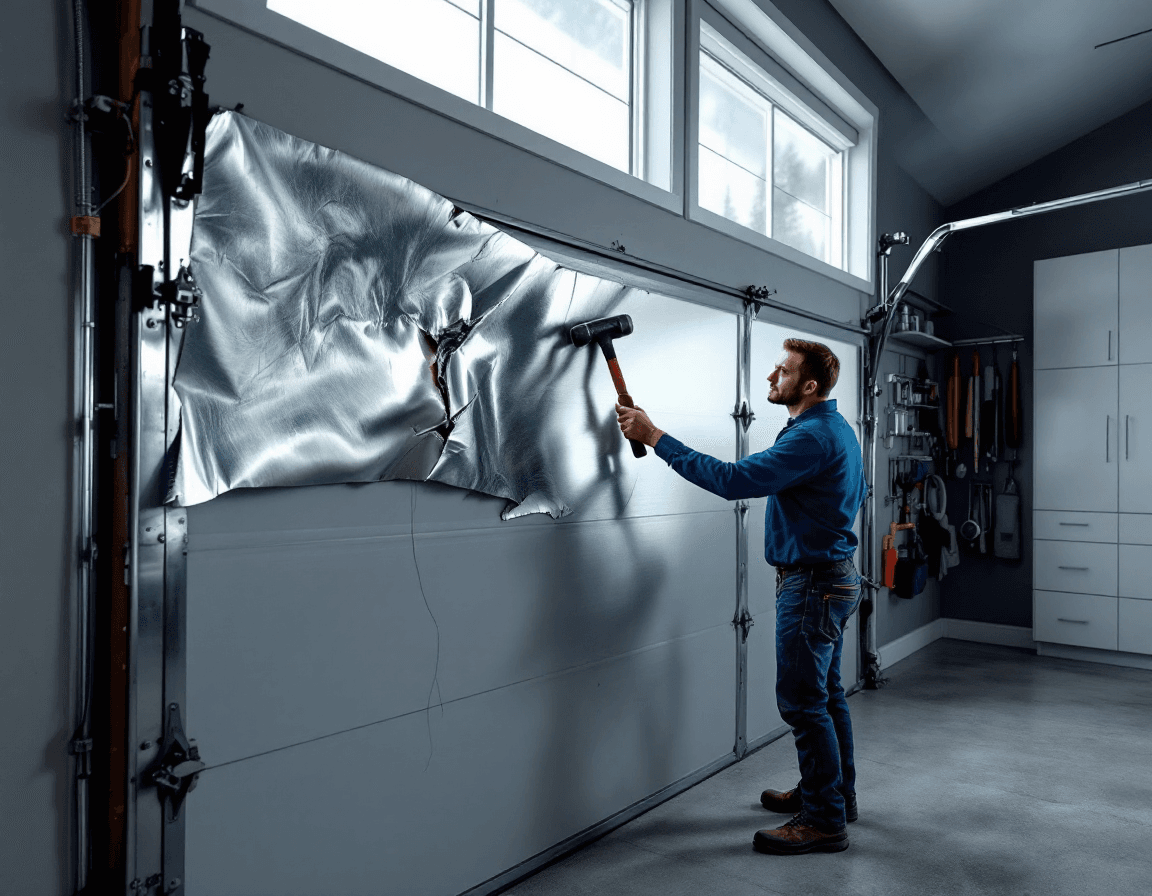
Garage Door Panel Replacement in Poulsbo, WA is one of the most practical repairs a homeowner can choose, because a single damaged section can often be swapped out without replacing the entire door. Many Poulsbo households deal with a dented panel after a bumped trash bin, a cracked section after a windy winter storm, or a bottom panel that has swelled and softened from months of standing water. The good news is that a panel swap is usually far less expensive than a full door, and it can restore both the look and the weather protection of your garage.
Poulsbo sits on the shore of Liberty Bay, and that setting shapes how garage doors age here. Homes near Downtown Poulsbo, along the bay, and up the hillsides of the surrounding neighborhoods all face a mix of damp winters, salt-laden breezes, and long stretches of gray weather that keep surfaces wet far longer than they would in drier parts of the state. Panels that look perfectly fine in July can show hairline cracks, bubbling paint, or soft spots by the time the rain settles in for the season. This guide explains how panel damage happens, how to tell whether a section should be repaired or replaced, what matching a panel really involves, and what you can expect when you call for service at (888) 799-3819.
Why Panels Take the Beating on Poulsbo Homes
A garage door panel is thinner than most homeowners realize. Steel panels often measure only a few hundredths of an inch thick before they are insulated or finished, and even thicker insulated sections rely on a skin of metal or composite that can be dented, punctured, or cracked with surprising ease. Because the panels sit at bumper height and wheel-height, they absorb a steady stream of small impacts from cars, bikes, lawn equipment, and the occasional rolling trash can. Over time, those small impacts add up, and a panel that once looked smooth can develop a pattern of shallow dimples that catch the light.
In Poulsbo, the damage often starts with weather rather than with a collision. Water that pools at the bottom edge of a door, especially where the weatherstrip has flattened or gone missing, can work its way into the lowest section for months before anyone notices. The bottom panel is the most exposed to splashing, dirt, and runoff from the driveway, so it tends to be the first place where rust, delamination, or soft core material appears. Once a section starts to fail, the damage rarely stays contained, and nearby seams and hinges often take on stress as the panel flexes.
Wind is another factor. Gusts that come off the water during winter storms can push on a large, flat door with enough force to crack a panel that was already weakened by a previous ding or a patch of corrosion. A panel that looks like a minor cosmetic problem may actually be a structural weak point, and it deserves a closer look before the next storm arrives.
Salt Air, Rain, and the Liberty Bay Effect
Homes around Liberty Bay live with a combination of moist air and salt carried in from the Sound, and that environment is hard on exposed metal. Salt particles settle on surfaces and hold moisture against them, which accelerates corrosion at scratches, fastener holes, and the edges where paint has chipped. A panel that has a small scrape from a shovel or a bicycle pedal can start to rust from that spot outward, sometimes creating a bubble of paint that looks innocent until you press on it and feel the metal give way.
Rain is the other half of the equation. Western Washington winters bring long periods of wet, cool weather, and a garage door that spends those months closed can trap humidity inside the space. Damp air condenses on the back of the panels, especially on uninsulated doors, and that moisture can migrate into the seams. If your garage is unheated or only lightly ventilated, you may notice the problem more in spring, when the first warm days reveal swelling, peeling finish, or staining along the lower sections.
Practical habits help. Rinsing the bottom panel with fresh water every month or two during the wet season removes salt residue and grit before it has time to bond to the surface. Touching up small chips with a paint or finish designed for garage door metal, rather than a generic spray, keeps moisture out of the scratch. Checking the bottom weatherstrip each fall and replacing it when it flattens also reduces the amount of standing water that reaches the lowest panel. None of these steps replaces a professional inspection, but they can slow the progression that turns a small blemish into a panel that needs swapping.
Reading the Damage: Dents, Cracks, and Hidden Rot
Not all panel damage looks the same, and identifying the type of problem is the first step toward choosing the right fix. A simple dent in the middle of a steel panel, with the paint intact and no sharp creases, may be correctable in some cases, but a crease or a dent that has stretched the metal often leaves a permanent weak line. Cracks, especially those that run through the foam or composite core of an insulated section, usually mean the panel has lost much of its strength and its ability to hold insulation in place.
Rot and rust deserve special attention because they hide well. On the surface, a panel might look like it only needs a little touch-up paint, but pressing gently along the bottom edge can reveal soft spots, crumbling material on wood-clad doors, or a spongy feel where moisture has penetrated the core. On steel doors, rust often begins at the inside face of the panel, where condensation collects, so the damage may not be visible from the street. If you notice a musty smell, dark staining on the floor below the door, or paint that bubbles when lightly tapped, the panel likely needs to be opened up and inspected.
When a technician checks a damaged section, they typically look at several points: whether the panel is still attached securely to the rails, whether the insulation is compressed or wet, whether the edges and interlocking grooves still engage properly, and whether the damage has spread to adjacent sections. Recording these details helps determine whether a single panel can be swapped cleanly or whether the damage reflects a larger problem with the door.
Repair or Replace? A Practical Way to Decide
Deciding between repairing a panel and replacing it depends on how far the damage has traveled and how the door was built. A small surface scratch or a shallow ding in a steel panel may be better left alone or touched up with finish, especially if the metal is still sound. A cracked or deeply creased panel, on the other hand, rarely returns to its original strength through patching, and a replacement section gives you a clean, consistent surface and fresh insulation where it is needed.
Several factors usually tip the balance toward replacement:
- The panel is cracked through the full thickness or has separated along a seam.
- Rust or rot has reached the core, or the insulation feels wet and compressed.
- The damage affects a section that is structurally important, such as one that carries the weight of the door's movement.
- Multiple adjacent panels show the same wear, suggesting a systemic moisture or alignment problem.
- The door is otherwise sound, and replacing one section will extend its useful life far more economically than replacing the entire door.
Repair may still make sense when the damage is cosmetic and limited to the paint or the outer skin, when the panel is still solid and tight in its channels, or when the homeowner plans to replace the door in the near future anyway. A technician can explain the tradeoffs honestly, and they should be able to tell you when a patch is a reasonable stopgap and when it would be money spent on a panel that is going to keep failing.
Matching a Panel That Has Been Out in the Weather
One of the most common concerns homeowners raise is whether a replacement panel will match the rest of the door. Garage door finishes fade over time, particularly on the south- and west-facing sides of a house that catch more daylight. A brand-new panel will look noticeably different from a twelve-year-old section next to it, even if both were originally the same color. Matching starts with identifying the manufacturer, model, panel profile, and the original color or finish if possible.
Some doors are easy to match because the manufacturer still produces the same panel design, and the color can be sourced from the original specifications. Others are harder. A door that has been repainted, a door with a discontinued profile, or a wood-clad door with a grain pattern that varies from board to board can make an exact match difficult. In those cases, a technician may suggest alternatives such as a slightly different shade that blends better in the context of the entire door, or a plan to refinish the surrounding panels so the variation is less noticeable.
It helps to think about matching in terms of the whole door rather than a single panel. If your door has aged unevenly, the most attractive long-term solution may be a coordinated refresh of several sections, or a conversation about whether a full door replacement would produce a more consistent look. A good technician will show you options and explain what each one looks like on your specific door, so you can decide what matters most.
What a Section Swap Typically Involves
Replacing a single panel is more involved than most people expect, but it is also a well-defined job. The technician first confirms the door's make, model, and dimensions, then sources a replacement section that matches the existing panel's height, width, thickness, and profile. Because garage doors are built with interlocking panels, the new section has to fit precisely into the tracks, hinges, and grooves of the door, and it has to be seated so it does not rub or bind when the door moves.
In most cases, the process follows a predictable sequence:
- The door is secured and the opener is disconnected for safety.
- The damaged panel is separated from its neighbors and removed from the hinges and rollers that hold it in place.
- The replacement section is positioned, aligned, and fastened with the correct hardware.
- Weatherstrip and seals along the new panel are checked, and any worn components are addressed at the same visit.
- The door is cycled several times to confirm smooth movement, even balance, and proper sealing.
Work of this kind involves handling heavy, awkward sections under tension, so it should always be done by a qualified professional. Springs, cables, and drums store a great deal of energy, and a homeowner who attempts a repair without training can be seriously injured. Our technicians treat every panel job as a full door inspection, which is one reason we recommend having the surrounding hardware checked during the same visit.
Pricing for a Single Section From $250 to $800
Panel replacement pricing in Poulsbo generally falls in the range of $250 to $800 per section, depending on the door. That spread reflects real differences in the work. A standard steel panel on a common residential door is usually at the lower end, while an insulated section, a wood-clad panel, a glass insert, or a panel from a less common manufacturer often costs more. The size of the section, the availability of a matching replacement, and the amount of labor needed to align and balance the door all affect the final number.
It is worth asking what the quote includes. A reliable estimate should identify the panel itself, the labor to install it, any necessary weatherstrip or seal replacement, and whether a balance check or minor adjustment is part of the visit. If the technician discovers that the damage has spread to a second section or that a worn spring or cable needs attention, you should receive a clear explanation and a separate quote before any additional work begins. Surprises are the enemy of good service, and a transparent estimate protects both the homeowner and the technician.
Comparing the cost of a panel to the cost of a full door can help frame the decision. For a door that is structurally sound and only one or two sections are damaged, replacing those panels is usually the more economical choice. When a large fraction of the door is failing, or when the door is very old and the opener and tracks are also worn, a full replacement may deliver better value over the long run. A technician can walk you through both scenarios with actual numbers for your door.
Insulated Doors, Windows, and Other Panel Details
Many homes in the Poulsbo area have insulated garage doors, and insulated sections need special care when they are damaged. The foam core provides thermal performance and structural stiffness, so a cracked or punctured insulated panel can lose some of its value even if the outer skin looks only slightly marked. When an insulated section is replaced, the new panel should carry the same insulation rating and thickness as the others, or the door can develop a noticeable temperature difference between sections, along with sweating on the interior face during cold snaps.
Glass or window inserts add another layer of complexity. A cracked pane in a window section is often replaceable without swapping the entire panel, but the frame, seals, and glazing must be checked to prevent water from entering through the edges. Decorative hardware, handles, and trim may also need attention when a panel is removed, since older hardware can break or bend during disassembly. Taking time to inspect these details during the panel visit prevents a second trip for a problem that could have been handled at the same time.
Hardware matters too. A replacement panel that is installed with worn or mismatched brackets can sag over time, and that sag can cause the panel to rub against the adjacent section and chip the finish again. Checking hinges, rollers, and fasteners as part of the job is a simple way to protect the new panel and keep the door running quietly.
Backing Accidents, Impacts, and Documentation
A single panel damaged in a backing accident is one of the most common reasons homeowners call for a section replacement. A vehicle reversing too quickly, a bicycle that slips off a rack, or a trailer hitch that catches the bottom panel can leave a distinct crease or puncture. In these cases the damage is usually localized, and a panel swap is often the cleanest path to restoring the door's appearance and weather protection.
If the damage came from a collision, it is worth documenting the condition before any work begins. Take clear photographs of the panel, the surrounding sections, and any visible marks on the vehicle or equipment that caused the impact. Keep a note of when the incident occurred and what caused it. Whether your homeowner's insurance policy covers the repair depends on the terms of your individual policy, the cause of the damage, and your deductible, so it is best to speak with your insurer directly about your coverage. We can provide an itemized estimate and written description of the work that you can share with your insurance company, but we cannot make coverage decisions on your behalf.
Quick action after an impact also prevents secondary damage. A bent panel that is left in place can stress hinges, pull rollers out of alignment, and make the door harder to operate. If the door is stuck, rubbing, or making a grinding sound after an impact, stop using it and schedule an inspection rather than forcing it through the track.
When the Panel Looks Fine but the Door Isn't Right
Sometimes the damage that brings a homeowner to our door is visible, but the mechanical condition of the door seems normal. The door opens and closes, the opener runs quietly, and the balance feels reasonable, yet one section has a visible dent or a flaking finish that the homeowner wants repaired. In those situations, a panel replacement is a reasonable goal, but the technician should still confirm that the door is operating within safe limits before and after the work.
This matters because a door that looks fine can still hide wear in the springs, cables, and drums that carry its weight. Those components are under high tension, and they should only be adjusted, replaced, or serviced by trained professionals. A homeowner should never attempt to wind a torsion spring, loosen a cable, or remove a drum on their own, as these tasks carry a risk of severe injury. If a technician finds signs of spring wear, such as gaps between coils, rust, or a broken spring, they should explain the risk clearly and recommend service rather than leaving the door in an unsafe state.
Our general advice is simple: if the door is sound, replace the panel and keep the door running smoothly. If the door shows signs of mechanical stress, get it inspected before you invest in cosmetic repairs, because a panel is a poor place to spend money on a door that is about to fail.
Scheduling Service Around Poulsbo Neighborhoods
Our team provides garage door panel replacement across Poulsbo and the surrounding Kitsap County communities, including homes in ZIP code 98370. Many of the calls we receive come from households near the waterfront, along the main commercial streets, and in the hillside neighborhoods where garages face the weather head-on. Because panel replacements depend on matching parts, it helps to have as much information as possible when you call, including the door's manufacturer if it is printed on a label inside the top section, the approximate age of the door, and photographs of the damage.
Timing can matter. During the wet season, technicians may be busy with weather-related repairs, so calling early in the week or as soon as you notice damage can help you get on the schedule sooner. If a panel is cracked and the door is exposed to the elements, let us know, because a temporary weather seal or a quick inspection may be needed before the full replacement is completed.
Whether your door was damaged by a bumped bin, a winter storm, or a slow buildup of salt and moisture, a clear assessment is the first step. We will explain what we see, offer repair or replacement options that fit your door and budget, and give you a written estimate before any work begins.
Dented, cracked, or water-damaged garage door panels rarely fix themselves, and waiting often turns a single section into a larger repair. If you are in Poulsbo or the surrounding area and want an honest assessment of your damaged panel, call Seattle Garage Door Fix at (888) 799-3819. Our licensed, bonded, and insured technicians will inspect the section, explain your options, and help you get your garage door looking and working the way it should.