
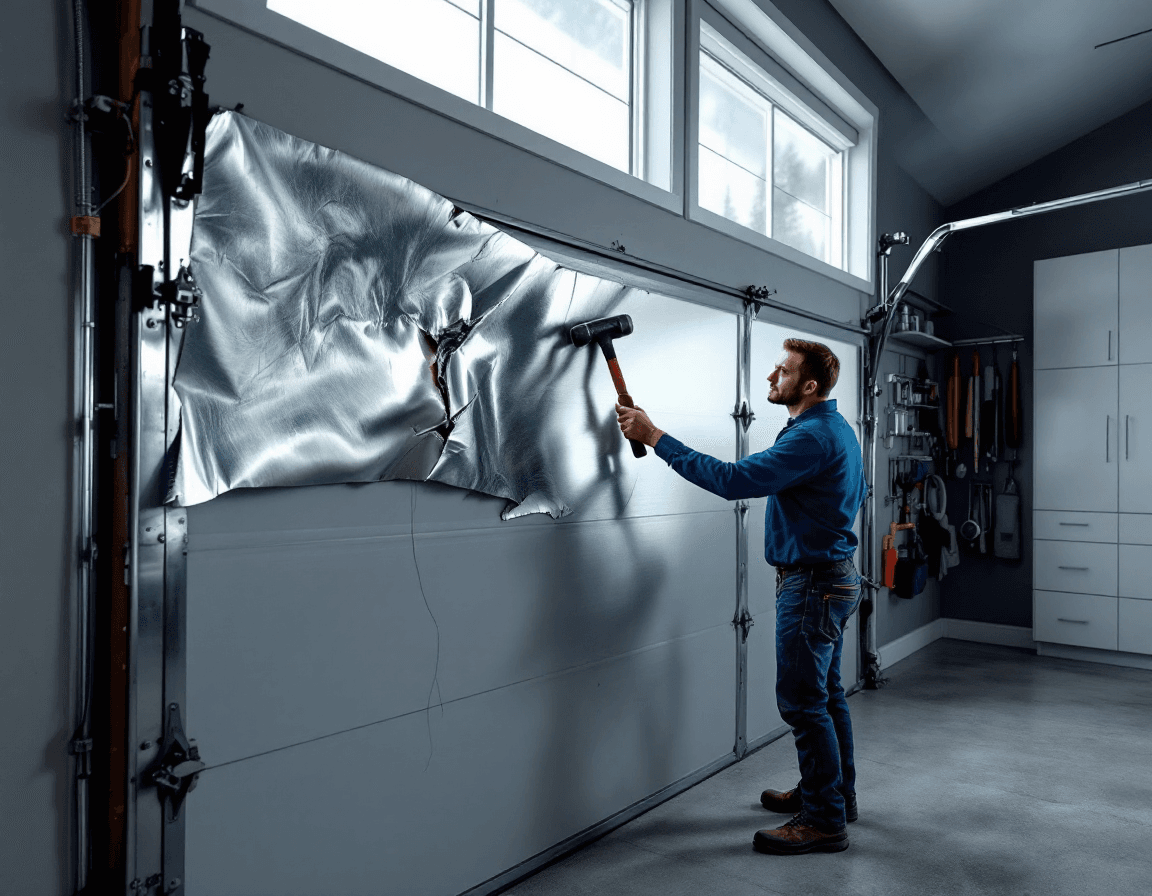
Garage Door Panel Replacement in Port Orchard, WA is often the most sensible fix when one part of an otherwise sound door has taken a hit. A dented section from a backing accident, a bottom panel softened by water, or a rusted stretch near the ground does not automatically mean the whole door needs replacing. Because sectional doors are built from separate panels that bolt together, a skilled technician can usually remove and swap just the damaged piece while leaving the springs, tracks, and opener alone.
Homes across Port Orchard, from the older blocks near downtown to the newer streets in McCormick Woods, sit close to weather that tests every part of a garage door. Wet winters, salt-laden air drifting in off Sinclair Inlet, and long stretches of drizzle all work on the lowest sections of a door first. That is why many of the calls we answer in 98366 and 98367 involve a panel rather than a mechanical failure. The door still lifts smoothly, but a bottom section has bowed, cracked, or started to flake, and the homeowner wants to know whether it can be fixed without a major project.
This page walks through how panel damage happens locally, how to read what you are looking at, when repair makes more sense than replacement, how matching works, what the job involves, and what it typically costs. Panel replacement generally runs $250 to $800 per section, and the exact figure depends on your door's make, insulation, color, and how easily the panel can be sourced. If you are not sure whether your damage is a panel problem or something bigger, the sections below will help you sort it out before you call.
Why Port Orchard Garages See Panel Damage Differently
Panel damage in Port Orchard usually has a few recurring causes, and knowing them helps you spot trouble early. Many homes here have driveways that slope toward the street or run alongside narrow lots, so vehicles and yard equipment are often close to the door. The damp climate also means that metal, wood, and composite panels are constantly absorbing moisture, expanding, contracting, and collecting grime in the seams. Over several years, these small pressures add up to a panel that looks fine from across the driveway but has lost its structural edge.
Salt air is a particular factor for homes closer to the water or with a clear view of the Sound. Chloride from the marine environment settles onto steel surfaces and speeds up corrosion, especially where paint has been chipped by a bumped bicycle or a dragged bin. Even homes set back from the shoreline notice that galvanized and painted steel near the floor darkens faster than it does inland. A door that gets a quick rinse once or twice a year will show these effects sooner than one that is cleaned regularly.
Seasonal rhythm matters too. Heavy rain followed by a dry spell causes wood and some composite materials to swell and then shrink, which can crack finishes and open gaps at the joints between sections. Moss and algae take hold on shaded north faces, and wet leaves packed against the bottom panel hold moisture against the metal for weeks at a time. None of this is dramatic on its own, but it is the reason we often find that a bottom section needs attention long before the top of the door shows any wear.
Reading the Damage: Dents, Creases, and Cracks That Matter
Not every mark on a garage door panel is a reason to replace it, so it helps to understand what you are seeing. A shallow dent that is smooth, rounded, and does not break the paint may be cosmetic, especially if it sits in the middle of a panel and the door still closes evenly. A sharp crease is different because it stretches and weakens the metal along a line, and it often signals that the panel has been bent past the point where it can recover. Cracks in composite or fiberglass panels are more serious, since moisture can get behind them and begin to delaminate the material.
Insulated steel panels deserve special attention because they are typically made of two skins of steel bonded around a foam core. A dent may look minor on the outside while the core beneath it has crushed or separated from the skin. If the panel feels hollow or flexes noticeably when pressed, the insulation has likely been compromised, and the door will lose some of its temperature control at that spot. Homeowners who use the garage as a workshop or a space that connects to living areas tend to notice this sooner, since drafts and cold spots appear near the damaged section.
It is worth checking the edges of each section as well as the face. Look for bent tongues or grooves where one panel locks into the next, because a damaged edge can cause the door to sit crooked or let water channel into the joint. Pay attention to the bottom weather seal and whether it still lines up with the damaged panel. Here is a quick checklist many of our technicians walk through with homeowners:
- Does the dent or crease break the paint, the finish, or the surface coating?
- Is there any rust, white powder, or dark staining around the damaged area?
- Does the panel feel solid when pressed, or does it flex or sound hollow?
- Are the panel edges still straight, and do they still seat against the adjacent sections?
- Does the damage sit on a panel that carries hinges or rollers that are now loose or out of line?
If you answered yes to any of these, the section deserves a closer look from a technician before it gets worse.
Water, Salt Air, and the Bottom Section That Rots or Rusts
The bottom panel takes more abuse than any other section on a Port Orchard garage door. It sits closest to the driveway where splash, runoff, and standing water collect, and it is the first place leaves, grit, and road salt gather. On wood doors, this is where rot typically starts, showing up as soft spots, darkened grain, or paint that bubbles and peels away. On steel doors, rust often begins at the lower edge and works upward along scratches or fastener holes, sometimes staining the panel below it as well.
Replacing a rotted or rusted bottom section is one of the more common panel jobs we handle here. The key is to replace the damaged section rather than patching over it, because a patch cannot restore the strength of the original panel or stop moisture from wicking into the core. A technician will check whether the rust has reached the hinge brackets or the bottom roller area, since those hidden corners often need cleaning or hardware replacement at the same visit. If the bottom panel is also where the weather seal sits, the seal should be replaced at the same time so the new panel does not start life with a gap at the floor.
Prevention is simpler than repair in this climate. Rinsing the lower panels with fresh water every few months helps remove the salt and grime that hold moisture against the metal. Keeping leaves and debris cleared from the threshold and the area directly in front of the door reduces standing water. If you notice a chip in the paint on a steel door, touching it up with a rust-inhibiting primer and matching topcoat is a small step that can save a full panel later on.
Backing Accidents and Impact Damage on Tight Driveways
Impact damage is one of the most frequent reasons homeowners in Port Orchard need a single panel replaced. Many driveways here are tight, with garages set close to property lines, curved approaches, or landscaping that narrows the turn. A moment of distraction while backing out, a trash bin rolled into the wrong spot, or a child's bike left in the path can leave a clear dent in one section. Because the damage is isolated, the rest of the door often continues to function normally, which can make the homeowner hesitate to call anyone at all.
When impact damage is recent, it is worth documenting it before doing anything else. Take clear photos from several angles, including close-ups of the dent and wide shots that show the panel's position in the door. If the incident involved a vehicle, note the time, the other party's details if applicable, and any witnesses, since insurance claims for accidental damage often depend on prompt reporting. Even when the damage is minor, a dent that is left alone can gradually crack the paint, which then opens the metal to moisture and corrosion.
For impact damage that involves a crease, a deep dent, or a cracked panel, replacement is usually the most reliable path. Attempting to hammer a steel panel back into shape rarely restores its original profile and can leave stress points that show up again later. A technician will assess whether the impact also shifted the track, bent a hinge, or pushed the section out of alignment with its neighbors. Addressing those hidden effects during the panel swap prevents a second service call a few weeks later when the door starts to bind.
Repair or Replace? A Practical Decision Guide
Deciding between repairing a panel and replacing it depends on the type of damage, the age of the door, and how well the rest of the door holds up. Cosmetic dents on a sound steel panel may be a candidate for careful reshaping, particularly if the paint is intact and the metal is not creased. Surface rust that has not penetrated the metal can sometimes be cleaned, treated, and recoated. Once a panel has cracked, delaminated, or lost its insulation core, however, replacement is usually the better long-term choice.
The age and condition of the rest of the door matter just as much as the damaged section itself. If the springs are near the end of their expected life, the cables are fraying, or the tracks are worn, replacing one panel will not address those problems, and it may be wise to plan a broader repair. Homeowners with doors that have several damaged sections, widespread rust, or a discontinued model should weigh the cost of multiple panels against a full door upgrade. A technician can help you compare the two options with real numbers rather than guesswork.
Here are some general signs that point toward replacing the panel rather than trying to repair it:
- The panel has a crease, a split seam, or a crack that runs through the material.
- Rust or rot has spread into the core or the hinge area.
- The insulation has been compromised, and the section feels hollow or cold.
- The panel no longer seats properly against its neighbors, creating gaps or uneven lines.
- Several panels on the same door show similar deterioration, which suggests the door's finish has reached the end of its protective life.
Replacement is not always the answer for every situation, and a good technician should be willing to tell you when a simpler fix will do. If you are unsure, ask for a clear explanation of what is driving the recommendation and what the alternatives would cost.
Matching a Panel You Can't Find Anymore
Matching is one of the trickiest parts of panel replacement, and it is often the reason homeowners hesitate. Garage door manufacturers update their profiles, textures, and colors over time, and a door installed fifteen or twenty years ago may use a panel design that is no longer produced in the same form. Even when the model is still available, the color may have faded on the existing door, so a brand-new panel can look noticeably different next to weathered neighbors. Those differences are especially visible on darker colors, which show UV fading and water spotting more readily.
The first step in matching is identifying the door accurately. Look for a manufacturer label or data plate, typically on the inside of a panel edge or near the track, that lists the model, the size, and sometimes the production date. Measure the panel's height and width, count the number of ribs or grooves, and note whether the section has windows, decorative inserts, or a specific embossed pattern. Taking clear photos of the door face and edge profile gives the technician a reference point, even if the original sales paperwork has been lost.
When an exact match is not available, there are still good options. A technician can often source a panel that matches the profile and dimensions, then recommend a color-matched paint or a compatible finish to blend it with the rest of the door. In some cases, a full repaint of the door's lower sections, or a coordinated refresh across several panels, produces a more uniform appearance than a single mismatched swap. The priority is making sure the new section fits structurally and seals properly, then addressing the cosmetic match with the homeowner's preferences in mind.
Here is what is helpful to gather before a technician visits:
- The manufacturer name and model number, if you can find them.
- The panel's exact height and width, plus the total number of sections on the door.
- Photos of the damaged panel, the neighboring panels, and any labels or hardware.
- Notes on the door's color, finish, and any windows or decorative elements.
- Any previous repair records, which can reveal whether a panel has already been replaced.
What a Single Section Swap Involves, Step by Step
A typical single-section replacement follows a clear sequence, though the details vary by door design. The technician first confirms the damage, checks the springs and cables for their condition, and verifies that the door is balanced and safely secured before any work begins. The damaged section is then isolated, which usually means removing the hardware that connects it to the adjacent panels, including the hinges and rollers at the section's edges. The panel is carefully separated from the door and set aside, while the remaining sections are supported so the door does not shift.
Once the old panel is out, the new panel is positioned, aligned with its neighbors, and fastened using the existing hinge and roller hardware or replacement parts if the originals are worn. The technician checks that the new section sits level, that the edges meet cleanly, and that the door travels smoothly along the tracks. Weather seals, bottom seals, and any gaskets at the joints are inspected and replaced if they are compromised. Finally, the door is cycled several times with the opener to confirm that the new panel moves freely and that the balance has not changed.
Homeowners often ask whether a panel swap can be done in a single visit, and in most cases it can, provided the parts are on hand or readily available. When a custom panel has to be ordered, the job may be scheduled for a second visit once the part arrives. A reliable technician will explain the timeline upfront so you know whether the garage will be out of commission for a day or for a longer stretch. Ask about cleanup and protection of your driveway and floor as well, since a professional crew should leave the work area clean and the door fully operational.
What Panel Replacement Costs Here
Panel replacement generally falls within a range of $250 to $800 per section, and the exact figure depends on several factors. Standard steel panels from common manufacturers tend to sit at the lower end, while insulated panels, custom colors, windowed sections, and discontinued profiles usually cost more. The size of the panel also plays a role, since larger sections require more material and sometimes more labor to handle safely. Access matters as well, because a section on a two-car door with heavy hardware may take longer to replace than one on a lighter single-car door.
Other variables can push the price up or down. If the damaged section is part of a door with worn hardware, the technician may recommend replacing hinges or rollers at the same time, which adds to the total but prevents a repeat visit. Color matching, touch-up painting, and weather seal replacement are sometimes quoted separately, and a clear estimate should list each item. Homeowners with a door that has multiple damaged panels may find that a broader repair or replacement plan offers better value over time than swapping sections one at a time.
When you request a quote, ask what is included, whether the price covers the panel, labor, hardware, and cleanup, and how long the part is expected to take to arrive. Compare the estimate against the condition of the rest of the door, since a low panel price can be misleading if the springs or tracks are close to failing. The goal is a repair that holds up through Port Orchard's wet seasons, not just a fix that looks acceptable on the day it is finished.
Keeping the Door Safe During the Job
Safety has to come first in any garage door work, and it becomes even more important when a panel repair involves handling a heavy door. Garage doors are under significant spring tension, and the cables and springs that hold them in balance can cause serious injury if they are disturbed without the right equipment and training. For that reason, homeowners should never attempt to remove, adjust, or wind springs, and should never try to disconnect cables themselves. Panel replacement is a job for a licensed, bonded, and insured technician who knows how to secure the door and manage the load safely.
If you notice that a panel repair seems to require work on the springs or cables, stop and ask the technician to explain the plan before anything proceeds. A qualified professional will secure the door, use the proper clamps and supports, and confirm the balance before removing hardware. Spring and cable work should be handled by licensed personnel, even if the panel itself seems like a simple swap. Keep children and pets away from the work area, and make sure the opener is disconnected or locked out during the repair.
After the job, ask the technician to show you how the door should sound and move when it operates normally. Note any scraping, popping, or hesitation, and report it promptly, since these can be early signs of a balance or track issue. A brief walkthrough at the end of the visit is a good habit, and it gives you a chance to ask questions about maintenance, the new panel's finish, and how to protect it from the local weather.
Protecting New Panels from Our Wet Winters
Once a new panel is installed, a little care goes a long way toward keeping it looking and performing well through Port Orchard's wet seasons. Rinse the lower sections every few months with fresh water, paying attention to the bottom edge and the area where the panel meets the threshold. Avoid harsh abrasive cleaners that can strip the finish, and choose gentle, non-corrosive products if you need something stronger for stubborn grime. If you notice a fresh scratch or chip, address it quickly with a matching touch-up so moisture cannot reach the metal underneath.
Keep the area in front of the garage clear of standing water and debris. Leaves, pine needles, and mud piled against the bottom panel hold moisture close to the surface, and that is exactly where new rust or rot tends to start. Trim shrubs and branches that drop sap or rub against the door, and consider a small drainage fix if water pools consistently at the threshold. These simple habits protect not only the new panel but also the seals and hardware around it.
Schedule a periodic check-in with a technician, especially after heavy storms or a particularly damp winter. Early detection of a loose hinge, a worn seal, or a developing crack is far less expensive than waiting until a panel fails. A professional inspection can also confirm that the door remains balanced and that the new section is weathering as expected. Taking these steps helps your door stay solid, quiet, and attractive for many years on Kitsap's rainy streets.
If one of your garage door panels has been dented, cracked, rusted, or damaged in a backing accident, our licensed, bonded, and insured technicians can assess the section, explain your repair-or-replace options, and handle the job safely from start to finish. Call (888) 799-3819 to schedule an inspection for your Port Orchard home, and we will walk you through what the repair involves and what it is likely to cost.