
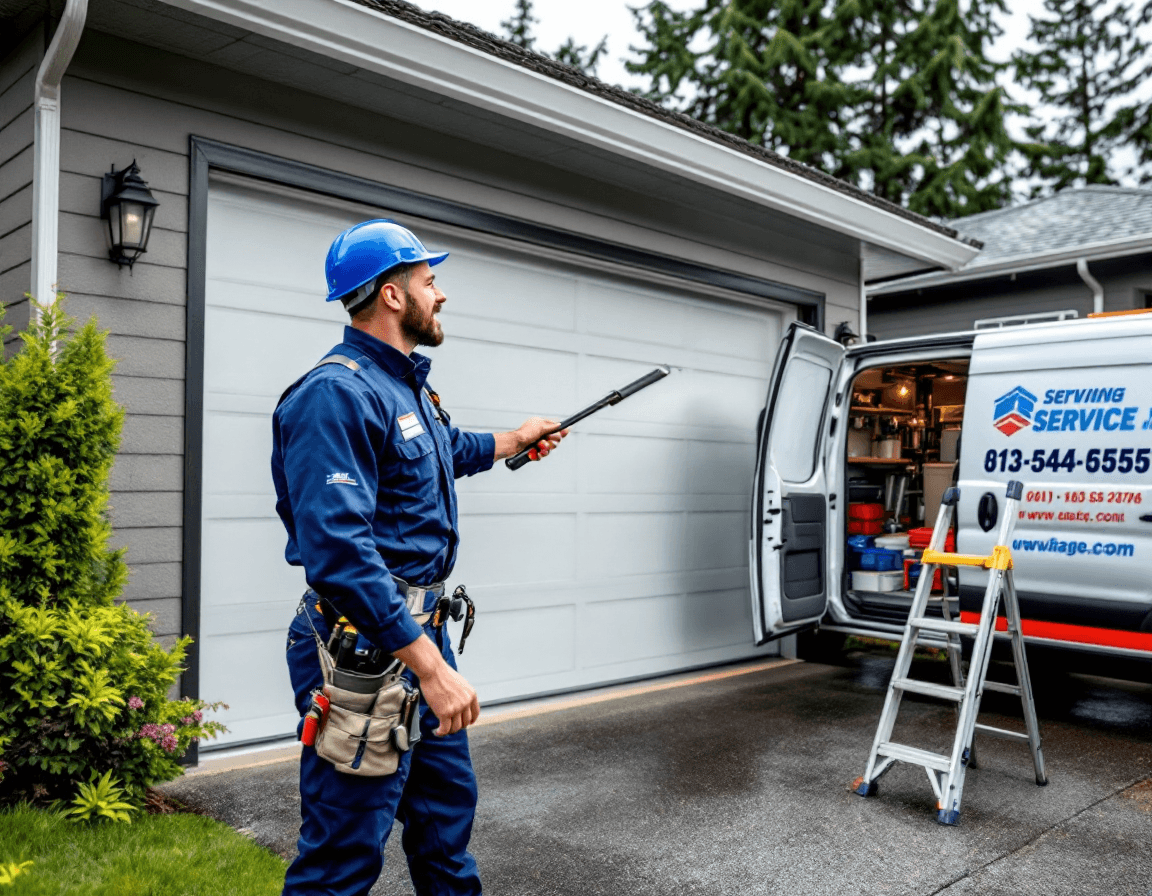
Garage door trouble rarely announces itself politely. One morning the door stops halfway up, or the remote that worked fine last week suddenly does nothing, and you're left wondering whether you're looking at a $95 adjustment or a $450 part. Garage Door Repair in Port Orchard, WA is a common search for homeowners across the peninsula, and for good reason: our damp winters, salt-tinged air off Sinclair Inlet, and the steady use most family garages get all put pressure on door hardware. This page explains what tends to fail, what the warning signs look like, and when it's time to call a technician instead of trying a fix yourself.
Seattle Garage Door Fix serves Port Orchard and the surrounding Kitsap County communities, including homes in the 98366 and 98367 ZIP codes. Our technicians are licensed, bonded, and insured, and we treat every call as a safety call first and a convenience call second. Most residential repairs we handle fall somewhere between $95 and $450, depending on what has failed and whether the parts need to be ordered. We'll explain the diagnosis and the options before any work begins, so you can decide what makes sense for your household and your budget.
If your door is sticking, grinding, reversing, or sitting crooked right now, you don't need to understand every component to take a useful next step. Stop using the door until it's inspected, keep children and pets clear of the opening, and read on to see which symptoms point to simple adjustments and which ones call for a professional with the right tools. For immediate help, call (888) 799-3819.
Why Port Orchard Garage Doors Face Their Own Set of Challenges
Port Orchard sits on the western shore of the Kitsap Peninsula, and that location shapes how garage doors age. Marine air carries moisture and salt, and in a region where rain can persist for weeks during the cooler months, that moisture finds its way into steel tracks, hinge pins, and roller bearings. Steel that sits in damp conditions for long stretches tends to develop surface rust, and rust increases friction long before it causes a visible failure. Many homeowners notice a door getting slower or louder over a couple of seasons and assume it's simply getting older, when corrosion and grit are often the real culprits.
Temperature swings matter as well. Winters here are usually mild compared with inland parts of the country, but we do get cold snaps that drop temperatures enough to stiffen lubricants and make metal contract. A door that moves smoothly on a warm October afternoon may stutter on a frosty January morning. Lubricant that was applied in a hurry, or the wrong type of grease, can thicken in the cold and leave rollers dragging in their tracks. Spring is the opposite problem: warmer, wetter weather can cause wooden doors to swell and composite panels to shift slightly.
Many homes in and around Port Orchard also have attached garages that double as workshops, storage space, or a main entry point. That means the door sees more cycles per day than a rarely used detached garage would. Every open and close cycle stresses rollers, cables, and the opener. When a door is used heavily and exposed to wet, salty air, it makes sense to inspect it more often than the manufacturer's minimum suggests.
Recognizing Early Warning Signs Before a Door Fails Completely
Most garage door failures give you some advance notice, though it's easy to dismiss those early hints as minor annoyances. A door that takes an extra second to start moving, a slight hesitation at the top of its travel, or a faint squeak that appears only when the door is cold are all signals worth paying attention to. Catching a worn roller or a loose bracket early often turns a larger repair into a quick adjustment. Waiting until the door jams with a car in the driveway usually means a more urgent and more expensive visit.
Here are common early signs that suggest it's time for an inspection:
- The door hesitates or shudders for a moment before it begins to move.
- You hear a new squeak, rattle, or scraping sound that wasn't present a few months ago.
- The door looks slightly higher on one side when it's fully closed, or there's a visible gap at the bottom on one end.
- The opener seems to strain, runs longer than usual, or makes a clicking sound before it starts.
- Rust-colored dust or small metal shavings appear on the floor below the tracks.
If any of these show up, take a few minutes to observe the door through a full open and close cycle. Note whether the problem appears at the same point in the travel each time, because that detail helps a technician pinpoint the cause quickly. Write down the weather conditions too, since humidity and temperature can make an intermittent problem look random when it actually follows a pattern.
When Your Door Reverses Before Reaching the Floor
A door that starts to close, then bounces back up before it touches the ground, is doing exactly what it was designed to do, which is protecting people and objects in its path. Modern openers are equipped with safety reversal systems, and in most installations those systems rely on photo-eye sensors mounted near the bottom of each track. When the sensors detect an obstruction or lose their line of sight, the opener reverses the door as a precaution. That behavior is a good thing, but it can be frustrating when nothing is in the way.
The most common cause of unexpected reversal in our service area is a misaligned or dirty sensor. Sensors are often mounted at about six inches off the floor, and they must face each other directly. A spiderweb, a bit of mud kicked up from a wet driveway, or a bump from a bicycle can knock one sensor slightly out of alignment. Sometimes the sensor lenses simply need cleaning, and sometimes the wiring has been damaged by rodents or by repeated flexing. Check the small indicator lights on each sensor first, since they usually reveal whether the units are communicating.
If the sensors look fine and the door still reverses, the next suspect is the force or travel setting on the opener, or a section of track that has shifted out of its correct position. Adjusting the force setting without understanding the system can create a real hazard, because a door that doesn't reverse properly when it meets resistance is dangerous. This is one area where we strongly recommend letting a licensed technician test the reversal function with proper tools. A basic sensor cleaning or realignment often costs less than a full repair, but the safety testing afterward is essential.
Decoding Grinding, Squealing, and Banging Noises
Noise is often the first clue that something in your garage door system needs attention, and each type of sound tends to point toward a different part. A high-pitched squeal usually comes from dry or dirty rollers, hinges, or bearings that are rubbing without enough lubrication. A low grinding noise, especially when the door is moving slowly, may indicate a worn roller or a bearing that has begun to fail. A sharp bang or thud often suggests a loose bracket, a stripped gear, or a panel that's shifting against the track.
It helps to know which sounds deserve immediate attention. Here are the noise patterns we see most often in Kitsap County homes:
- A steady squeak during the entire cycle usually points to dry hinges or rollers that need proper lubrication.
- A grinding sound that gets louder at the top of the travel can indicate worn bearings or a track alignment issue.
- A deep banging or popping noise when the door starts or stops often means a loose mounting bracket or a damaged spring component.
- A ratcheting or clicking sound from the opener itself may signal a worn drive gear or belt problem.
- Any noise accompanied by visible movement of the cable, the spring, or the bottom bracket should be treated as urgent.
A word of caution: spring and cable components store a great deal of tension, and they can cause serious injury if they fail while someone is working nearby. If your noise seems to come from the torsion spring above the door or from the cables running along the sides, stop and call a licensed technician. Lubricating rollers and hinges with a silicone-based or garage-door-specific lubricant is a reasonable homeowner task, but spring adjustment and cable replacement belong with trained professionals.
Off-Track Doors, Sagging Panels, and Crooked Travel
A door that looks crooked, sits higher on one side, or has popped partly out of its tracks is among the more alarming problems a homeowner can face. The door may appear to function for a while, but a door that has left its track is under uneven stress and can fall or bind without warning. Visible gaps between the top of the door and the header, or between the bottom panel and the floor, often mean the tracks have loosened or the rollers have jumped out of their channels.
Causes vary. A bent track can result from a bump with a vehicle or a stored item that leaned against the door. Worn or broken rollers can cause the door to wander sideways as it travels. In older homes, the wooden framing around the opening may have shifted with settling or moisture, pulling the tracks slightly out of plumb. Sagging panels, particularly on heavier insulated doors, can also cause one side to lag behind the other as the springs lose balance.
Do not try to force an off-track door back into position yourself. Lifting a heavy panel by hand can cause sudden movement, and tension in the springs can make the door behave unpredictably. Keep people away from the opening, disconnect the opener by pulling the emergency release cord only if the door is closed and you know how to do it safely, and call for service. Our technicians can measure track alignment, check the roller condition, and determine whether the door hardware needs replacement or simply reseating.
Remote Controls, Wall Buttons, and Opener Glitches
When the remote does nothing and the wall button is equally unresponsive, many homeowners assume the entire opener has died. In reality, the cause is often much simpler. Remote batteries are the first thing to check, since the small coin cells used in many transmitters can weaken over time, especially in humid conditions. If the remote's indicator light doesn't flash when you press a button, replace the battery and try again before calling for help.
If the batteries are fine, look at the opener's power supply. A tripped breaker, a loose outlet connection, or a power cord that has been bumped out of its socket can make the opener appear dead. Some openers also have a safety feature that prevents operation when the wall control wiring is damaged or shorted, so a wall button that stops working suddenly may point to a wiring fault. Wiring that runs through a wet or cold garage can develop corrosion at connection points over time.
Remote systems can also lose synchronization after a power outage or after a battery swap. Many openers have a learn button on the motor unit that allows you to reprogram the remote. The exact steps vary by brand, so consult the manual or ask a technician before you start pressing buttons at random. If the opener's logic board or receiver has failed, the repair may require replacement, and our team can explain whether a repair or a new unit makes the most sense for your situation.
Doors That Slam Shut or Stall Halfway Up
A door that drops too quickly or slams against the floor is more than a noisy annoyance. It can damage the bottom seal, crack panels, and create a pinch hazard. Rapid closing usually means the door has lost its balance, the spring tension is off, or the opener's close force or speed settings have been changed. Sometimes a worn cable or a damaged drum is the root cause, and that type of failure should be handled only by a licensed technician.
A door that stalls halfway up or down is another common complaint, and it often points to the balance system. When a door is properly balanced, it should stay roughly in place when you release it partway through its travel. If it drifts downward or upward on its own, the springs are either too strong or too weak for the door's weight. Heavy insulated doors, especially those with glass panels or decorative hardware, may be more sensitive to balance changes.
Stalling can also result from an obstruction in the track, a bent section of rail, or a motor that is struggling to pull the door upward. Look for debris, a loose bracket, or a visible bow in the track before assuming the opener is at fault. Spring replacement is one of the most important jobs a licensed technician performs, because the tension involved is substantial. Please never attempt to wind, unwind, or replace torsion springs on your own.
Safety Lines You Should Never Cross as a Homeowner
Every garage door repair involves some level of risk, and knowing where the line sits protects your household. Homeowners can generally handle basic tasks such as cleaning sensor lenses, wiping down tracks, tightening visible hardware with the correct tools, lubricating hinges and rollers, and replacing a remote battery. Those tasks are low-risk and can extend the life of your door. Beyond them, the safe approach is to call a professional.
Torsion springs, extension springs, lift cables, and drum assemblies are the components that call for licensed service. These parts hold significant energy, and a spring that releases unexpectedly can cause serious injury. Cable failures can cause a door to drop suddenly. Even experienced DIYers can be injured when they underestimate the force stored in a wound spring. If you can see a gap in a spring coil, a frayed cable, or a drum that has come loose, keep the door closed, keep vehicles and people clear, and call for help.
Electrical work on the opener itself, including replacing internal wiring or working inside the motor housing, also belongs with qualified technicians. Our team carries the tools and training to diagnose both mechanical and electrical problems safely, and we can explain each step so you understand what was done and why. When in doubt, pick up the phone rather than the toolbox.
What Typical Repairs Cost Around Port Orchard
Pricing for garage door work varies depending on the door type, the failed component, and whether a part must be ordered. For most residential repairs in the Port Orchard area, our pricing falls between $95 and $450. Simple service calls such as sensor realignment, opener adjustments, or track tightening generally land near the lower end of that range. More involved repairs, such as replacing rollers across a full door, swapping a damaged panel, or replacing a motor unit, usually fall toward the higher end.
Several factors influence the final number. The age and style of the door matters, since older or custom doors may require specialty parts. The location of the problem matters too, because access to a torsion spring or a damaged track section can take more time. Weather and scheduling can affect parts availability, particularly for less common hardware. We aim to explain the scope of work and the expected cost before we begin, so there are no surprises when the job is done.
It's worth asking for a clear explanation of what the technician found and what options exist. Sometimes a minor repair now prevents a larger failure later, and sometimes a full replacement makes more financial sense than repeated patch jobs. We'll walk you through the tradeoffs honestly, without pressuring you toward more expensive choices than your door needs.
Neighborhood Notes for Downtown, Manchester, and McCormick Woods
Port Orchard covers a varied mix of housing, and garage door needs can differ depending on where you live. Homes near Downtown Port Orchard are often older, with detached or single-car garages that may have been updated over the years but still carry original hardware in places. Older tracks and springs can show wear faster, and wiring for openers may be older too. Many of these homes have limited driveway space, so doors get used often and sometimes bumped by vehicles.
Manchester, with its waterfront character and proximity to the shoreline, deals with the full force of marine moisture. Homes in that area may see more rust on exposed hardware and more salt residue on door surfaces. Regular cleaning and lubrication of metal components can make a noticeable difference in how smoothly a door runs over time. Wooden and composite doors can also experience swelling during the wetter months, which sometimes causes sticking near the bottom panel.
McCormick Woods is known for its planned community layout, and many homes there were built with attached garages and larger door openings. Wider doors place more load on springs and rollers, and they can shift more noticeably if one side of the track loosens. Homeowners in that neighborhood often appreciate proactive maintenance, since a large door that fails can block a driveway entirely. Whatever part of Port Orchard you call home, a short inspection can tell you whether your door is ready for the next season.
Preparing for Your Garage Door Service Visit
A little preparation makes a service visit smoother for everyone. Clear the area around the door so the technician can work safely and access the tracks, springs, and opener. If your door is stuck, avoid forcing it open or closed, and keep vehicles, children, and pets away from the opening. Gather any remote controls, keypad codes, or manuals you have, since they help the technician identify the opener model quickly.
Write down the symptoms you've noticed, including when they happen. Does the problem occur in the morning, after rain, or only when the door is fully closed? Do you hear a particular sound, and where does it seem to come from? Notes like these help diagnose intermittent issues, which are often the most frustrating to track down. If you've already replaced a remote battery or cleaned the sensors, mention that too.
When the technician arrives, ask questions. You're entitled to understand what's wrong, what the repair involves, and what the cost will be before the work begins. A good technician will explain the findings in plain language and will tell you if something can wait. If your door has a safety concern, such as a broken spring or a cable under tension, we'll recommend immediate action to protect your household.
Port Orchard homeowners deserve reliable garage doors that open smoothly, close safely, and stay in their tracks through every season of wet weather. If your door is stuck, noisy, crooked, reversing, or unresponsive, call Seattle Garage Door Fix at (888) 799-3819 to schedule a licensed technician. We'll inspect the problem, explain your options clearly, and get your garage back in working order.