
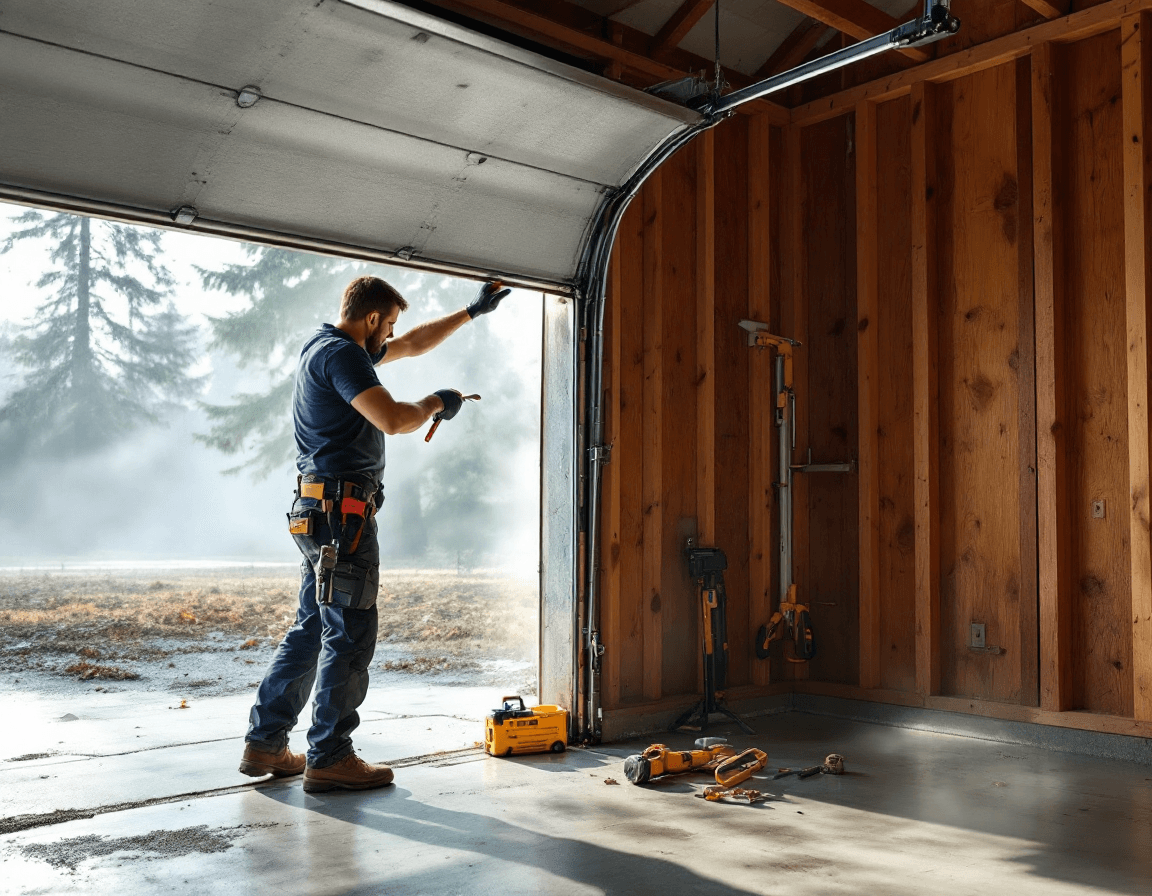
Off-track garage door repair in Port Orchard, WA is one of the most common reasons homeowners call us, and it is rarely a sign that the door is finished. When a door jumps a track, the panels, rollers, and track are usually still intact, and a skilled technician can often return it to service the same visit. Homes in Downtown Port Orchard, Manchester, and McCormick Woods each have their own quirks, from older detached garages near the water to newer two-car doors with heavier insulated panels. Understanding what has happened to your door is the first step toward a repair that holds.
This page explains why doors come off track on the Kitsap Peninsula, what the warning signs look like, and what you can safely do before a technician arrives. It also covers how we approach realignment, straightening damaged track, and replacing rollers, along with the costs most homeowners can expect. Most off-track repairs we handle fall in the range of $125 to $400, depending on how much damage is involved and how long the door has been out of alignment. The sections below walk through each piece so you can make an informed decision for your home.
Why Doors Keep Leaving the Track in Kitsap County
Port Orchard sits on a peninsula with plenty of moisture, salt-laden air drifting in from the Sinclair Inlet side, and long stretches of gray, damp weather. Those conditions are tough on steel and galvanized components, and they slowly change how a garage door behaves. Track fasteners loosen, mounting brackets develop surface rust, and the nylon or steel rollers that ride inside the track can swell or flatten over time. When any one of those parts starts to drift out of tolerance, the door can wander just enough to slip a roller out of its channel.
Wind is the other major factor. Gusts coming off the water during winter storms can push against the face of a large door, especially on a two-car model, and that lateral force can knock a roller loose from the track. Doors that have been installed with a slight out-of-level track or a loose header bracket are more vulnerable because they have less margin before something gives. We often find that a door which has popped off once during a storm had been running slightly crooked for months without anyone noticing.
Improper operation also causes derailments. A door that is pulled up by hand while the opener is still engaged, or one that is forced closed when something is caught in the track, can jump its rollers in a single moment. Kids hanging on the bottom panel and vehicles that brush the door while backing out create similar problems. None of these causes means the door is beyond saving, but each one tells the technician where to look first.
Spotting an Off-Track Door Before It Becomes a Jammed Door
Most homeowners notice a derailment only when the door refuses to move, but the warning signs usually show up days or weeks earlier. Listen for scraping or grinding noises when the door travels, particularly near the top of the track where the curve begins. A door that makes a popping sound as it nears the closed position may have a roller that is starting to ride up over the track lip.
Visual cues are just as useful. Stand inside the garage with the door closed and look at the gap between the top panel and the header, and then compare the gap on the left and right sides. If one side is noticeably wider, the door may be racking or the track on that side may have shifted. Check whether the bottom weather seal is pressed flat evenly along the floor, because a door sitting cockeyed will often leave a lighter seal on one end.
Pay attention to changes in how the door behaves when the opener runs. A door that used to glide smoothly and now stops, shudders, or reverses on its own may be catching on a misaligned roller. If the opener's auto-reverse feature keeps triggering, do not keep forcing the cycle, because repeated attempts can stress the track and the bottom panel. Early attention often turns a half-hour adjustment into a much simpler job.
Immediate Steps That Keep You and Your Door Safe
When a door is off its track, safety comes first, and the safest action is often to do very little. Do not try to lift the door by hand while the springs are under tension, and never stand under a door that is hanging crookedly or partly off the track. If the door has come loose on one side, keep children and pets well away from the opening until a technician has secured it.
Here is what most homeowners can safely do in the first few minutes:
- Keep the door closed if it is closed, and do not try to force it open or closed.
- Pull the red emergency release cord only when the door is fully closed, so the opener disconnects and you can operate the door manually later.
- Turn off the opener at the wall unit if you notice grinding, smoke, or a burning smell.
- Photograph the door, track, and any visible damage so you can describe the problem accurately on the phone.
- Park vehicles outside the garage and keep the driveway clear of anything that could be struck.
Avoid anything that involves the springs, the cables, or the drum assembly. Those components store enormous energy, and a torsion spring or cable that lets go can cause serious injury. Realigning the door itself, including reseating rollers and tightening track bolts, is work for a licensed technician with the right tools and training.
Rollers, Hinges, and the Wear That Sets Up a Derailment
Rollers are the small wheels that carry each panel along the track, and they are usually the first component to fail in a derailment. Steel rollers with sealed bearings tend to last longer in damp climates, while nylon rollers can become brittle, flat-spotted, or cracked after years of exposure. When a roller seizes, the panel it supports drags instead of rolling, and the extra friction can pull the roller out of the track entirely. Replacing worn rollers is one of the most common parts of an off-track repair.
Hinges connect the panels to one another and carry the weight of the door as it travels. Loose or bent hinges allow panels to pivot unevenly, which can push a roller past the edge of the track. Hinge screws often loosen gradually, especially on older doors where the wood or steel around the fastener has worn. A technician will check each hinge and tighten or replace it so the panels stay aligned through the full range of motion.
Lubrication matters too, but it is not a cure-all. Using the wrong product on rollers can attract grit and create more wear, and heavy grease in the track can gum up the path and trap moisture. We generally recommend a light silicone-based or manufacturer-approved lubricant on the roller bearings and hinge pivots, applied sparingly. A well-maintained door in a coastal climate usually needs attention at least once a year, and more often if it sits close to the water or faces prevailing winds.
Straightening Bent Track Without Creating New Problems
Track sections take the most abuse when a door is struck or when a derailed panel is forced back into place. A dented track may look like a minor cosmetic issue, but even a small deformation can cause a roller to catch and jump the next time the door moves. Tracks are made from thin-gauge steel, so they can be straightened in place when the damage is moderate, but they should never be hammered back into shape without checking the result carefully.
A proper straightening job starts with measuring the gap between the track and the door at several points along the run. The technician loosens the track bolts just enough to shift the section, then gradually restores the correct spacing and tightens everything back down. Where a section has separated from its bracket or has a crack at a weld or bend, the safer choice is usually to replace that section rather than try to repair it. Replacement track is available in standard gauges and can be matched to your existing hardware.
Track alignment also affects the balance of the door. If the left track sits even slightly higher than the right, the door will tend to lean and place extra stress on one set of rollers and hinges. For that reason, a realignment should always include checking that both tracks are level, plumb, and parallel. Taking shortcuts at this stage often leads to a second call within a few weeks.
Vehicle Strikes in Busy Driveways and Tight Port Orchard Lots
Many of the most dramatic off-track calls involve a vehicle that clipped the door while backing out, pulling in too fast, or turning in a narrow driveway. In Port Orchard, many homes have sloped driveways, short turnarounds, and garages set close to the street, which leaves little room for error. A pickup with a tow hitch or a larger SUV can dent the lower panels, bend the track, and knock a section of the door completely out of its channel.
After a strike, look past the obvious damage. Check the header, the track brackets bolted to the wall or ceiling, and the drum and spring assembly for signs that something has shifted. A vehicle impact can throw the door off the centerline, which may cause the cable to bind or the springs to work unevenly even if the panels look fine. Our technicians inspect these systems as part of the visit so you are not surprised by a second problem a week later.
Insurance and documentation are worth thinking about, but the most useful thing you can do is take clear photos before any repairs begin. Note the time, the damage you can see, and anything the driver said at the time. If the vehicle was not yours, keep the other party's information as well. Reach out to your insurer early, because some policies treat garage door damage differently from structural damage to the home.
Wind, Storms, and the Coastal Weather That Tests Every Door
Western Washington winters bring long rain events, saturated soil, and periods of strong wind, and all of these put steady pressure on garage doors. Wind is especially tricky because it can build slowly against a large door without any obvious warning, then release all at once as a gust. Doors with lightweight panels or older bracing are more prone to flexing, and flexing is one of the main ways a roller slips out of the track.
Moisture is the quieter threat. Water that gets into the track during a storm can pool at the bottom of the channel, freeze in colder snaps, or wash grit into the roller bearings. Over time, that combination causes corrosion on the track and rust on the mounting hardware. Homeowners who notice a faint orange film or flaking near the bottom bracket should have it checked, because corrosion can weaken the connection right where the door needs the most support.
Preparation helps. Keep the track clear of leaves, moss, and debris, especially in the fall when wet foliage collects in the corners. Check the weather stripping along the bottom and sides so water is not blowing under the door. If your garage is exposed to the open water or sits in a particularly windy pocket of town, ask your technician whether additional bracing or reinforced track brackets would make sense for your door.
How Technicians Diagnose and Price an Off-Track Visit
Every off-track call starts with a diagnostic check, because the cause of a derailment determines the repair. The technician will test the door by hand and with the opener, observe how the rollers track through the full cycle, and inspect the track, hinges, cables, springs, and opener mechanism. This check usually reveals whether the problem is a single roller, a bent track section, a loose bracket, or something more involved.
Pricing depends on how many components are affected and how much labor the job requires. A single roller reseated after a minor jump is typically the simplest end of the range, while a door with bent track, several worn rollers, and a loose hinge takes longer and costs more. Most off-track repairs we handle fall between $125 and $400, and the final number depends on parts needed, access, and the condition of the rest of the system. We aim to explain the scope before work begins so there are no surprises.
Several factors tend to push the cost up or down:
- Number of rollers that need replacement or reseating
- Whether any track sections must be straightened or replaced
- Condition of hinges, brackets, and the header
- Access to the track, especially on high-lift or older garage configurations
- Whether the cables, drums, or springs also show wear that should be addressed at the same time
Ask for a clear explanation of what was done and why, and keep notes on the parts that were replaced. A good technician will tell you what can wait and what should be handled promptly.
When a Simple Realignment Becomes a Larger Repair
Not every off-track door can be restored with a quick realignment. Sometimes the problem is a symptom of a deeper issue, such as a worn spring, a cable that has frayed or stretched unevenly, or a drum that has slipped. A door that jumps the track repeatedly even after it has been reseated usually has an underlying cause that still needs to be identified. Continuing to run the opener in that condition can damage the track, the opener, and the panels.
Springs deserve particular attention. Torsion springs and extension springs carry the weight of the door, and a weakened spring can allow the door to sag on one side, which pushes rollers out of their channels. Spring work is dangerous and must be done by a licensed professional with proper equipment. If a technician recommends spring or cable replacement, ask them to show you the worn component and explain how it contributed to the derailment.
Opener alignment is also part of the picture. A misaligned opener rail or a trolley that pulls at an angle can push the door unevenly every time it moves. These issues are often overlooked because the door still opens, but they accelerate wear on the track and rollers. If the derailment keeps happening after everything else checks out, the opener deserves a close look.
Keeping Your Door Tracking True Through Every Season
Preventive care is the best way to avoid another off-track call. Each season, take a few minutes to watch your door complete a full cycle. Listen for new noises, look for gaps that have appeared, and check that the panels travel smoothly in the track without bumping. A quick visual check during the wetter months can catch corrosion or loose hardware before it leads to a derailment.
Schedule a professional tune-up at least once a year, and consider doing it in early fall before the heaviest rain arrives. During a tune-up, a technician can tighten track bolts, check roller and hinge condition, lubricate the moving parts with the appropriate product, and test the balance and safety features. This is also a good time to look at weather seals and make sure the door is closing fully against the floor.
Finally, keep the driveway and track area clear, teach everyone in the household to stay clear of the door while it moves, and avoid using the door as a makeshift hand-operated lift. Small habits make a noticeable difference over the life of a door in a damp climate. If your door has come off track before, a little extra attention now can prevent the same problem from returning.
If your garage door has come off its track, is jammed, or looks crooked, call Seattle Garage Door Fix at (888) 799-3819 for off-track repair in Port Orchard and the surrounding Kitsap County neighborhoods, including ZIP codes 98366 and 98367. Our licensed, bonded, and insured technicians will inspect the door, explain what they find, and recommend the repair that makes sense for your home. Spring and cable work is always handled by a licensed professional, so you can count on a safe, straightforward fix.