
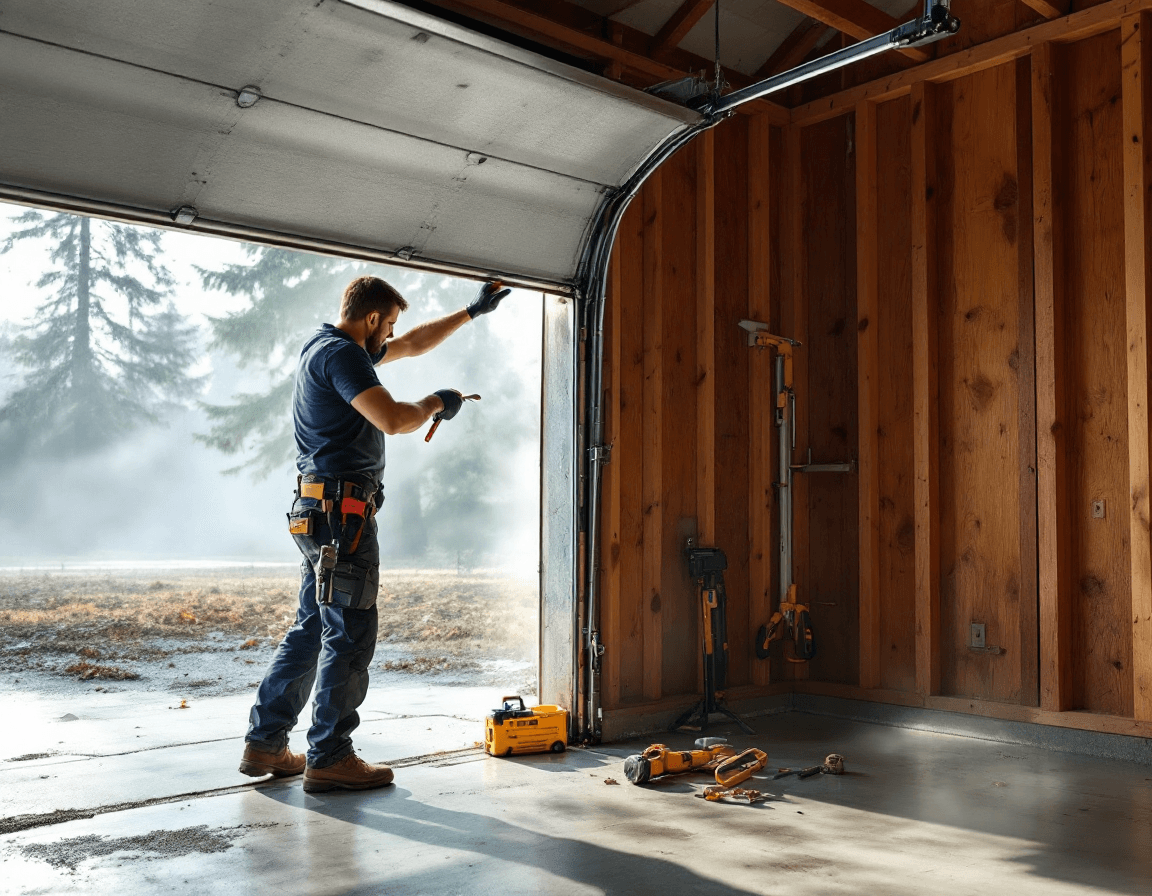
Off-track garage door repair in Gig Harbor, WA is one of the most common calls we take from homeowners between the Harborview waterfront and the Rosedale corridor, and it usually begins with a sound that wasn't there before. A bang, a grinding noise, or a door that suddenly sits at an angle often points to the same problem: one or more rollers have left the track. Many of these situations can be corrected in a single visit, though the cost and complexity depend on whether the track is only misaligned or actually bent. This page covers what we see on the Peninsula, what you can safely check yourself, and when it's time to bring in a licensed technician.
Gig Harbor sits on the Kitsap Peninsula with Puget Sound on multiple sides, so our garage doors live with more moisture, salt-laced air, and temperature swings than many homes farther inland. Wood doors swell during long wet stretches and shrink during dry spells, and that movement can press a panel against the track until a roller hops free. Steel doors handle moisture better but are prone to surface rust at the bottom bracket and along the hinge points, which can make rollers stick and then slip. Over the years, these small shifts add up, and a door that tracked perfectly for a decade can start wandering after one hard winter.
Typical off-track repairs in our service area run from $125 to $400, depending on the extent of the damage and the parts involved. Reseating a roller and realigning a door usually lands at the lower end, while straightening a bent section or replacing a damaged track piece costs more. We provide a written quote after inspection so you know the figure before any work begins. No article can diagnose your specific door, but the information below should help you understand what you're looking at and make a sound decision.
Early Warning Signs the Door Is Drifting Out of Line
Off-track problems rarely appear without warning, even though it can feel that way when the door finally stops at a strange angle. Most homeowners notice a change in sound first, such as a scraping or rattling noise near the top corners as the door travels. Pay attention to how the door behaves at the start and end of its cycle, since rollers often leave the track at those points where the door changes direction. Catching these signs early can keep a minor realignment from turning into a bent-track replacement.
Watch for the following indicators, which often show up before a full derailment:
- A gap of noticeably different width between the top of the door and the header on one side compared with the other
- Rollers that visibly ride to one side of the track, or a roller that looks tilted in its bracket
- Shiny scrape marks or fresh paint transfer on the track, which signal that something is rubbing where it shouldn't
- The door pausing, jerking, or hesitating during the first few feet of opening or closing
- Light that appears around the bottom seal in a new spot, suggesting the door is no longer sitting flat on the threshold
If you notice two or more of these at once, schedule an inspection rather than waiting for the door to jam.
How Puget Sound Humidity Works Against Your Track
Our marine climate creates a steady cycle of expansion and contraction that most garage hardware was never designed to ignore. A Gig Harbor winter can bring weeks of rain and high humidity, followed by a dry spell in late summer when the air calms and the sun comes out. Steel tracks can develop surface corrosion, and the fasteners holding them to the wall or ceiling can loosen as the surrounding framing moves. Wood framing and drywall around the opening absorb moisture, which can subtly shift the track's mounting points out of their original plane.
Salt air adds another layer of wear, particularly for homes close to the water or those where prevailing winds carry spray inland. Salt accelerates rust on exposed metal, and rust can seize rollers, stiffen hinges, and weaken the brackets that hold the track in position. A roller that once rolled freely may start to bind, and that binding can push the door sideways until the roller pops out. Routine attention to these surfaces helps keep the door tracking as it was designed to.
Homeowners sometimes assume that off-track problems only come from accidents or age, but environmental stress plays a large role here. Keeping the door's moving parts clean and lightly lubricated, away from salt residue where possible, helps preserve smooth operation. A simple rinse of the lower track and bracket areas after heavy salt exposure, followed by a quick check for loose fasteners, can prevent a lot of trouble later.
Safe Checks You Can Make Before Calling a Technician
There are a few things a homeowner can look at safely without touching the tension system. Start by disconnecting the opener so the door cannot be moved by the motor while you look at it. Stand to the side of the door rather than underneath it, and keep children and pets clear of the work area. Visual inspection is always safer than trying to force a door back into place.
Consider these simple checks as a starting point:
- Confirm the door is fully closed and the opener is disconnected before you look at the track
- Look for obstructions such as a tool, a bicycle, or a stored box that might be pinning the bottom panel
- Check whether any rollers are visibly sitting outside the track's channel, without pulling or prying them
- Note whether the track looks bent, pinched, or separated at any joint, and take a photo for your technician
- Make sure the emergency release cord is not tangled, but do not pull it while the door is under spring tension unless you understand the risk
Do not attempt to adjust, loosen, or remove springs, cables, or drums under any circumstances. Those components store significant energy, and mishandling them can cause serious injury. If the door appears to be sitting crooked because a spring or cable has failed, stop there and call a licensed professional. Our technicians handle spring and cable work as a matter of routine safety practice.
The Hardware Behind a Smooth, Straight Door
A garage door tracks correctly only when many small parts work together. Rollers ride inside the track and carry the weight of each section, while hinges connect the panels and let the door bend around the curve of the track. Brackets anchor the track to the structure, and the bottom bracket supports the door when it's closed. When any one of these parts wears, bends, or loosens, the door can start to drift.
Roller type matters more than many people realize. Nylon rollers are quieter and more forgiving, but they can crack or flatten over time, especially in cold weather when the material loses flexibility. Steel rollers last longer under load but can be noisier and may wear the track faster if they're not kept lubricated. Some doors use sealed ball-bearing rollers, which run smoothly but need the correct size to fit the track profile.
Hinges and end caps deserve attention too. A hinge that has worked loose can allow a panel to shift sideways, and that shift can pull the adjacent roller out of its channel. Replacing a worn roller without checking the hinge and bracket is a common reason repairs fail a few months later. A thorough technician looks at the whole system instead of only the spot where the door came off.
Straightening Bent and Dented Track Sections
Track damage is often the most serious part of an off-track situation, and it's the reason repair prices vary so widely. A track can bend from a vehicle strike, from a door that was forced past a jam, or from years of repeated stress at a joint. Even a slight bend can throw off a roller, and a roller that keeps catching on the same spot will eventually wear down or derail again. Straightening is possible for many minor bends, but the technician must measure carefully to avoid creating new stress points.
Dents and separated sections require a different approach. A dented track may be tapped back into shape with the right tools, while a section that has pulled away from its neighbor usually needs to be re-joined, re-fastened, or replaced. The track must be aligned level and plumb, and the vertical and horizontal runs must meet at consistent angles. Rushing this step is the reason some doors seem fixed on the day of service and begin to bind again within weeks.
Homeowners should be aware that track straightening is a precision job rather than a quick hammer fix. We check each section against the others and confirm that the door moves freely through its full range before we consider the job complete. If the track is severely damaged or the mounting surface is compromised, we discuss replacement options so you can make an informed choice.
When a Vehicle Strike Changes the Repair Plan
Gig Harbor driveways are often tight, and a vehicle backing out at an angle can easily clip the lower corner of a garage door. Even a light tap can knock a roller out of the track, bend the bottom bracket, or crack a panel edge. Some of the damage may not be visible right away, which is why a door that seems to be working after a strike still deserves an inspection. Hidden bending in the track or misalignment in the hinges can show up days later as grinding or a sudden stop.
After any impact, avoid operating the door until someone has checked it. Running the opener on a damaged track can compound the bend and turn a modest realignment into a larger repair. Photograph the damage from several angles, including the track, brackets, and the panel that was hit, since this documentation can help with insurance conversations. If the vehicle contacted the door hard enough to lift a section, treat the door as unsafe and keep people away from the opening.
Insurance coverage for vehicle damage varies by policy and by the circumstances of the incident, so we recommend reviewing your own policy before making assumptions. We can provide a written description of the damage and repair scope for your records if you request it. The goal after a strike is to restore safe, reliable operation and avoid repeat problems, not simply to make the door move again.
Why Jammed Doors Need Calm, Methodical Hands
A door that is jammed and won't move in either direction is frustrating, and it's tempting to force it. Forcing a jammed door, however, can strip the opener's gears, tear rollers out of their brackets, or damage the panels themselves. In a few cases the jam is caused by a spring or cable issue, and forcing the door can make a dangerous situation worse. The safest first step is always to stop, disconnect the opener, and assess before doing anything else.
Jams usually have one of a few causes. A roller may have jumped the track and wedged against the track's edge, or a bottom bracket may have been pushed into the path of the rollers. A section of track may have shifted so that the rollers can't pass a joint, or debris such as gravel, leaf litter, or a loose hinge pin may be lodged in the channel. Each of these calls for a slightly different solution, and only a close look reveals which one applies.
Our technicians approach a jammed door by first confirming that the tension system is in a safe state, then working through the track and rollers in sequence. We look for the point where movement stops, identify whether the resistance is coming from the track, the rollers, the hinges, or the springs, and address each in turn. This methodical approach is slower than forcing the door, but it protects the opener, the hardware, and the people who use the garage every day.
What Our Technicians Check During an Off-Track Visit
When we arrive at a home in Gig Harbor for an off-track call, the first thing we do is make sure the door is secured and the opener is disconnected. We then walk through a standard inspection so the repair addresses the real cause rather than only the visible symptom. Taking the time to document everything also gives you a clear picture of what was wrong and what was fixed.
Our inspection typically covers the following items:
- Track alignment at the top, vertical, and horizontal sections, including joints and mounting points
- Condition of every roller, including whether any are cracked, flattened, or seized
- Hinges, end caps, and bottom bracket for looseness, wear, or corrosion
- Wall, header, and ceiling anchors that hold the track in position
- Weather seals and the bottom threshold, since a shifted door can change how it sits on the floor
- Overall balance and smoothness of travel, checked through a full open and close cycle
Once the inspection is complete, we explain our findings in plain language and give you a written estimate. We do not begin work you have not approved, and we'll tell you if the scope changes once the job is underway. You are welcome to ask questions at any point, and we'll show you the damaged parts if you want to see them.
Pricing, Timelines, and What Shapes the Final Quote
Most off-track repairs in Gig Harbor and the surrounding area fall between $125 and $400. The price depends on several factors, including how many rollers need replacement, whether the track is simply out of alignment or actually bent, and whether any hinges or brackets must be swapped. Homes in ZIP codes 98332 and 98335 are served by the same crew and the same parts inventory, so the core pricing logic is consistent across the area. Access can also matter, particularly for garages with limited headroom or doors that are difficult to reach.
Timing depends on the scope of the damage and on the parts required. A straightforward realignment with reseated rollers is often completed during the same visit. A repair that requires replacing track sections or ordering specialty hardware may take longer, and we'll let you know the expected timeline before we begin. We aim to keep you informed so you can plan around the work without surprises.
It helps to have a few details ready when you call. Note the door's brand and approximate age if you know them, describe the symptoms you've seen, and mention whether the door has been struck or forced recently. Photos of the track and rollers are very helpful. This information allows us to prepare for the visit and may shorten the time needed on site.
Keeping Your Door Tracking Straight Through Wet Peninsula Winters
Prevention is the best long-term strategy for a door that stays on its track. A simple seasonal routine can catch problems while they are still small. In the fall, before the heavy rains of winter, look over the track, rollers, and hinges and tighten any fasteners that have backed out. Check the weather seal around the perimeter of the door, since gaps there let in moisture that can accelerate rust and wood movement.
Lubrication is part of that routine, but it must be done carefully. Use a lubricant recommended for garage door hardware, apply it to the hinges, rollers, and track rails as directed, and wipe off any excess so dirt does not stick to it. Avoid spraying lubricant onto the springs or cables, and never apply it to the track in a way that causes the rollers to slip. Keeping the area clear of debris and checking after storms can also prevent gravel or leaves from building up in the channel.
Finally, schedule a professional inspection at least once a year, ideally before the wettest months arrive. A technician can measure alignment, catch early corrosion, and replace worn rollers before they fail. Regular attention is far less expensive than an emergency call on a cold, dark evening, and it keeps your door running smoothly through every Gig Harbor season.
If your door has come off its track, is crooked, or refuses to move, call Seattle Garage Door Fix at (888) 799-3819 for prompt, licensed off-track repair across Gig Harbor and the greater Seattle area. We'll inspect the door, explain what we find in plain terms, and give you a clear quote before any work begins. Please don't force a jammed or damaged door in the meantime, and leave any spring or cable work to our licensed technicians. Call today and let us get your door tracking straight again.