
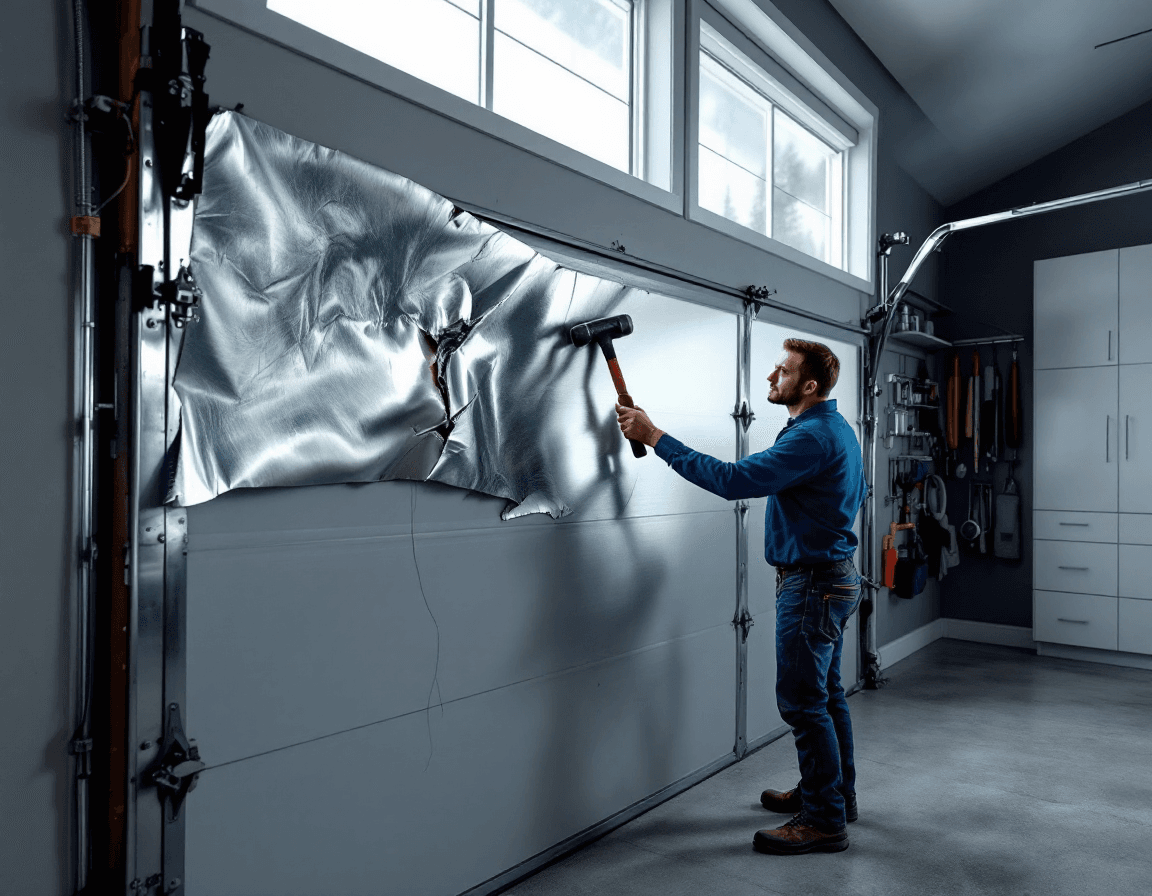
Garage Door Panel Replacement in Gig Harbor, WA is often the most cost-effective fix when a single section of your door is dented, cracked, or rotted while the rest of the door still runs smoothly. Many homeowners assume a damaged panel means buying a whole new door, but most modern sectional doors are built so that individual sections can be swapped out. The key is identifying the damage correctly, confirming the exact door model, and deciding whether a replacement section will hold up in our wet, salty, and mossy climate. This page walks through how we approach those decisions for homes in Gig Harbor and the surrounding Peninsula area.
Gig Harbor sits on the Key Peninsula side of Puget Sound, and that position shapes how garage doors age. Salt-laden air drifts inland, winter rain can persist for weeks, and the damp shade under big evergreens keeps the lower edges of doors wet long after a storm has passed. Homes near the water, along the bluffs, or in the older neighborhoods around Harborview see this moisture most clearly, but the effects show up across the whole area. A panel that looked fine during a dry August can show swelling, flaking, or soft spots by February.
Whether you live in the 98332 or 98335 ZIP codes, or somewhere in between, the first step is the same: figure out what actually happened to the door. A careful look at the panel, the hardware around it, and the door's history will tell you whether a replacement section is the right call. The sections below explain what to look for, how to decide between repair and replacement, and what to expect when you schedule service with us at (888) 799-3819.
Why Puget Sound Moisture Attacks the Bottom of Your Door First
The lowest section of a garage door takes the most abuse in the Pacific Northwest. Rain runs down the face of the door and collects at the bottom seal, and in Gig Harbor's damp winters that moisture can sit against the steel or wood for days. Road spray, tire grime, and leaf debris build up at the threshold, trapping water right where the panel meets the concrete. Over time this combination leads to rust on steel panels and rot on wood, and it can also work its way up into the insulation core of sandwich-style panels.
Salt air adds another layer of trouble for homes within a few miles of the water. Salt particles are hygroscopic, meaning they attract and hold moisture on metal surfaces, which speeds up corrosion even when the paint looks intact. We frequently see tiny pitting spots along the bottom rail of a steel panel that look harmless from a distance but have already compromised the coating underneath. Once the coating breaks down, the metal starts to flake and the damage spreads quickly.
Moss and algae also play a role, especially on north-facing doors that rarely see direct sun. Moss holds water against the surface and can lift paint along seams and edges. If you notice green staining or a fuzzy texture near the bottom of a panel, that is usually a sign that moisture has been sitting there for a long time. Addressing the cause, rather than only the visible spot, is what keeps a replacement panel from failing the same way.
Reading the Damage: Dents, Cracks, Creases, and Delamination
Not every mark on a garage door is the same kind of problem, and understanding the difference will help you describe the issue accurately when you call. A shallow dent in a steel panel, sometimes from a basketball, a lawn tool, or a thrown rock, often leaves the metal's structure intact even though it looks unsightly. A crease is different because the metal has folded sharply, which weakens the panel and can make it rattle or stick in the track. Creases rarely straighten cleanly, and attempting to hammer them out usually makes the damage worse.
Cracks are more serious, particularly in insulated panels. Many residential doors use two steel skins bonded around a foam core, and a crack that reaches the core can allow moisture inside. You may notice the panel feels spongy when pressed, makes a hollow sound, or shows a bulge that was not there before. This is called delamination, and it generally means the panel cannot be restored to its original strength. Replacement is the reliable path in these cases.
Wood and composite doors show damage differently. Softness near the bottom edge, bubbling paint, or a split along a grain line usually points to water getting into the material. Composite panels can swell and crack after prolonged wet weather, and those cracks often start at fastener holes or at the joints between panels. If the rot has spread beyond a single section, it may be time to look at the whole door instead of one panel.
- Shallow dents with intact paint: often candidates for replacement if they affect the look of the door, though they can sometimes be monitored
- Sharp creases or folds: usually require replacing the section
- Cracks through steel or composite: typically need a new panel to restore strength
- Spongy, hollow, or bulging insulated panels: a sign of core damage and delamination
- Soft wood or swollen composite at the bottom: suggests water intrusion that may extend beyond one panel
Repair or Replace: A Practical Decision Guide
Deciding between repairing and replacing a panel depends on the type of damage, the age of the door, and how well a new section would match. For minor cosmetic dents that do not affect how the door operates, some homeowners choose to live with the mark for a while, especially if it is on a rear-facing surface. That is a legitimate choice, but keep in mind that dents can trap water and grow into rust over time. If the dent is near a seam, a hinge, or the bottom edge, we generally recommend addressing it sooner.
Structural damage almost always points toward replacement. A cracked or creased panel can flex under the tension of the springs and may begin to pull on the hinges or rollers next to it. Continuing to run a damaged door can accelerate wear on hardware that is much more expensive to fix. When a panel no longer holds its shape, replacing it is usually more economical than trying to stabilize it with patches or reinforcement.
Age matters too. If your door is more than fifteen years old and the panel is damaged, we will often look closely at the other sections before recommending a single swap. Older doors may have fading, brittle paint, or worn seals that signal the rest of the door is nearing the end of its useful life. In those situations, a single replacement section can still make sense, but it is worth having an honest conversation about whether the door as a whole will stay consistent and reliable going forward.
Finding Your Door's Model Number and Panel Specifications
Accurate panel replacement starts with knowing exactly what you have. Most garage door manufacturers place a data plate or sticker on the inside of one of the sections, often near the top or on the bottom panel. The plate lists the model series, size, and sometimes the color and insulation rating. If the plate has worn away, we can usually identify the door from its panel profile, the spacing of the grooves, the style of the windows, and the hardware pattern.
Panel dimensions matter as much as the model. A standard residential section is typically sold by width and height, and a 16-foot door might use two or three sections of different heights depending on the design. Some doors have raised-panel or carriage-house styling that is difficult to match with a generic section. Measuring the panel's width, height, and groove count before you call saves time and helps us confirm the correct part on the first visit.
Insulation thickness is another detail homeowners often overlook. A replacement panel with a different core thickness can change how the door fits in the tracks and how well it holds temperature in a garage that may already be cool and damp. If your garage is attached to a living space, matching the original insulation rating helps keep energy costs predictable. We always check this before ordering a section.
Matching a Faded, Discontinued, or Mismatched Panel
Color matching is one of the trickiest parts of panel replacement, especially on doors that have spent years in full Gig Harbor sun on the south side of the house and rain on the north side. Even a door that was one uniform color when installed may have faded differently across its surface. A new panel will look bright and fresh beside an older section, and the contrast can be jarring. We explain this to homeowners up front so there are no surprises when the work is finished.
Discontinued models create a bigger challenge. Manufacturers update their lines regularly, and a specific series from ten or fifteen years ago may no longer be produced in the same finish. In those cases, we look at the closest available color, the panel texture, and the window or decorative details. Sometimes the best match is a slightly different shade that blends better than an exact match would, and we will walk you through the options honestly.
When a perfect match is not possible, there are a few practical approaches. Some homeowners choose to repaint the entire door so every section looks consistent, which works well for steel doors with a durable finish. Others accept a visible difference on a rear-facing or less visible section. We discuss the tradeoffs during the estimate so you can decide what fits your home and budget. Honest expectations at this stage prevent frustration later.
Bottom Section Trouble: Water, Impact, and Rust Under the Seal
The bottom panel deserves its own attention because it takes the worst of both weather and daily use. Bottom sections sit closest to the ground, so they absorb curb strikes, tire contact from a car pulling in too far, and debris kicked up by the wheels. They also carry the bottom weather seal, which can crack or tear and let water wick into the panel edges. A bottom panel that looks fine from the outside may still have moisture trapped in its lower channel.
Rust on the bottom rail is one of the most common findings we see in Gig Harbor. It often starts where the seal has pulled away from the door or where a bolt hole has let water into the panel. Surface rust can sometimes be cleaned and treated, but once it has eaten through the skin or reached the insulation, the section should be replaced. Leaving rust in place can spread into the bottom bracket and the bottom roller brackets.
Impact damage at the bottom is usually easy to spot, but the less obvious problems matter just as much. A small bend in the bottom panel can change how the door sits on the threshold, which may let more water in and cause uneven wear on the seal. If you notice light coming under the door on only one side, or the door seems to hitch when it closes, have the bottom section inspected before the problem spreads.
After a Backing Accident: What to Check Before You Schedule
Backing accidents are a frequent reason for panel replacement, and they can be deceptively complicated. A single section may look like the only casualty, but a strike hard enough to dent a panel can also bend a track, shift a roller, or stress a hinge. Before you assume the damage is limited to the panel, take a few minutes to look at the surrounding hardware. Note any rubbing sounds, uneven gaps at the top of the door, or a door that no longer lines up with the opener.
Safety is the priority after an impact. If the door is stuck, misaligned, or leaning, do not try to force it open or pry on the springs or cables. Those components store a great deal of energy, and a door that appears stable can move unexpectedly once it is disturbed. Keep people and vehicles clear of the door, and disconnect the opener only if you are comfortable doing so without putting strain on the door itself. When in doubt, call a licensed technician to secure the door first.
Document the accident for your records. Photos of the panel, the track, and the surrounding area can be useful if you are working with an insurance provider or if the damage happened in a shared driveway. We are happy to provide a written description of the damage and recommended parts so you have a clear record of what was done.
What a Panel Replacement Visit Typically Involves
A panel swap is more involved than it first appears, because the section must be removed and installed without disturbing the balance of the door. On most residential doors, the technician secures the door, relieves tension from the spring system using licensed procedures, and then removes the hinges and rollers connecting the damaged section to its neighbors. Only after the door is safely supported does the old panel come out and the new one go in. Spring work and cable adjustments are reserved for licensed professionals, and that is not a step we recommend homeowners attempt on their own.
Once the new section is in place, the technician reattaches the hardware, checks the alignment of the track, and tests the door through several full cycles. We look at the balance, the seal contact along the bottom, and how the new panel sits relative to the rest of the door. A properly installed panel should move quietly and sit flush with its neighbors. If anything feels off, we correct it before leaving.
Here is what homeowners can generally expect during a visit:
- A quick inspection of the damaged panel, the surrounding sections, and the hardware
- Confirmation of the door model, panel size, and finish before parts are ordered
- Safe securing of the door and controlled removal of the damaged section
- Installation of the replacement panel with hinges and rollers reattached
- Track alignment check and balance test across several full cycles
- A walkthrough of any finish differences and suggestions for protecting the new section
What Panel Replacement Costs in Gig Harbor
Panel replacement typically runs between $250 and $800 per section, and the wide range reflects real differences between doors. A standard steel section on a common residential model generally falls toward the lower end, while insulated panels, decorative styles, wood or composite sections, and discontinued models usually cost more. Sections that require extra hardware, or that are difficult to source in a matching finish, also shift the price upward. We provide a specific quote once we confirm your door's model and the condition of the surrounding components.
Several factors influence where your price lands within that range. The number of sections affected, the amount of hardware that needs replacement, and whether the door needs a track adjustment all play a role. If the damage is limited to a single section on an otherwise healthy door, the job is usually straightforward. If the rot or rust has spread into several panels, the conversation may shift toward whether repairing the whole door makes more sense.
We believe in giving clear, honest estimates. Before any work begins, you should know the part cost, the labor involved, and whether any follow-up items are likely. If we find something that changes the picture, such as hidden corrosion in a track or a worn spring that needs licensed attention, we will explain it before going further.
Protecting Your New Panel From Gig Harbor Weather
A new panel will only last as long as the conditions around it allow. Start with the bottom seal, because a worn or missing seal is the fastest route to moisture damage. Inspect it every few months, especially after storms, and replace it when it flattens, cracks, or pulls away from the door. Keeping the threshold clear of leaves, moss, and grit also helps the seal seat properly and reduces moisture trapped against the bottom rail.
Washing the door a few times a year makes a meaningful difference, particularly on the side facing the salt air. Use a mild soap and fresh water, rinse thoroughly, and avoid high-pressure sprayers that can force water past seals and into hinge areas. Dry the bottom edge after heavy rain if you notice standing water. Trim back shrubs and branches that keep the lower door shaded and damp, since moss thrives in those spots.
Finishes matter as well. Steel panels benefit from periodic touch-ups on chips or scratches so rust cannot start underneath the coating. Wood and composite sections need sealing or painting according to the manufacturer's guidance, and we can recommend products suited to Western Washington's wet season. Small maintenance steps now often prevent the need for another panel replacement down the road.
Service Notes for Gig Harbor Neighborhoods and Nearby Areas
We regularly work with homeowners across Gig Harbor, including households near Harborview, the commercial and residential corridors of Gig Harbor North, and the streets around Rosedale. Each area has its own mix of home styles, driveway layouts, and exposure to the weather. Homes closer to the water tend to show salt-related corrosion sooner, while homes set back among tall trees often deal more with moss and persistent dampness on the lower door.
Our service covers the 98332 and 98335 ZIP codes, and we coordinate scheduling around local traffic patterns and the realities of getting parts to the Peninsula. If you are in a neighborhood not listed here, we can confirm coverage when you call. Many repairs can be scheduled within a convenient window, and we will tell you clearly what to expect before the appointment.
Whether your panel damage came from a backing mishap, a winter of rot, or a rock that flew off the road, the right next step is a careful look at the door and an honest recommendation. We are a licensed, bonded, and insured team, and we will always point you toward the option that makes sense for your home. For a same-day discussion about your damaged panel, call (888) 799-3819 and we will help you decide whether a single replacement section is the right fix for your Gig Harbor garage.