
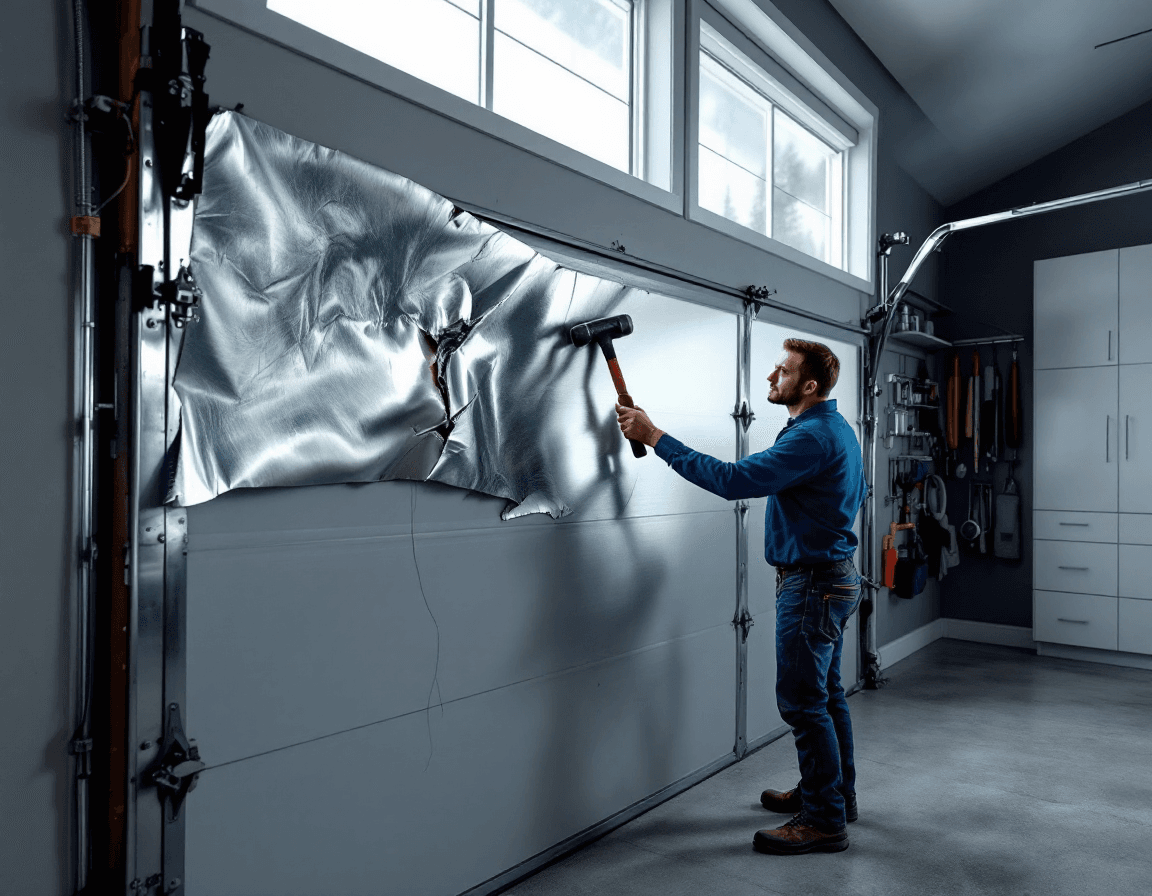
Garage Door Panel Replacement in University Place, WA is often the right fix when one part of your door is badly damaged but the rest still works. Many homes here have a single dented or cracked panel after a backing accident, a bottom section softened by water, or a rusted segment near the ground where road spray collects. Replacing that panel can restore the door's looks and weather protection without the cost of a full new door. Our technicians serve University Place homes across the 98466 and 98467 ZIP codes, and we can usually tell within one visit whether a panel swap makes sense.
University Place sits on the Pierce County side of the Tacoma area, with neighborhoods that run from older split-levels to newer infill homes, many with two-car garages facing the street. Doors in this area take a steady beating from wet winters, salt-tinged wind coming in off Puget Sound, and the constant moisture that settles in shaded driveways. Over time, those conditions show up as chalky finish, bubbling paint, and corroded seams, and they make panel damage harder to ignore. A panel problem is rarely just cosmetic, because a compromised section can let water, cold air, and pests into the garage.
This page explains how panel replacement works, what it typically costs, how to tell a panel swap from a full door replacement, and what to expect when we match a new panel to a door that has already weathered several Washington seasons. Pricing for panel replacement generally falls between $250 and $800 per section, and the exact figure depends on the door's material, insulation, age, and how hard the new panel is to source. If you already suspect a damaged section, the sections below will help you think it through before you pick up the phone.
Reading the Damage Before You Call
Start by looking at the door closely in daylight, ideally on a dry morning when surface issues are easier to spot. Run your hand along the panel edges and check for sharp creases, hairline cracks in the paint or fiberglass, or a bulge that suggests the panel has been pushed inward. A dent that looks shallow from ten feet away can still crack the bead or distort the panel where it meets the rail. Take a few photos from the driveway and from inside the garage so you have a record of what you saw.
Pay attention to how the door behaves, not only how it looks. A damaged panel can cause the door to rub against the track, sit unevenly when closed, or leave a gap at the bottom that lets in drafts and leaves. If the door seems fine mechanically, that is a good sign that the problem is limited to the panel itself. Still, any time the door has been struck hard, the springs, tracks, and rollers deserve a quick check, because impact can knock them out of alignment.
Note whether the damage is isolated or spread across several sections. One bent panel usually points to a single incident, such as a car backing into the door or a delivery cart striking the lower section. Multiple dents, or damage repeated at the same height on every section, can point to a different cause such as wind rattling or a track that was never properly squared. Recording what you see now makes the diagnosis faster when a technician arrives.
Why Puget Sound Weather Hits Garage Panels So Hard
The Pacific Northwest climate is hard on garage doors, and University Place homes feel it in a few specific ways. Winter brings long stretches of rain and high humidity, which can work into the lower sections of a door and sit there. Where a panel has a small scratch or chipped finish, moisture finds the bare metal and starts corrosion. Steel panels in particular can rust from the inside out, so a section can look acceptable until you press on it and feel it flex.
Proximity to the water and open exposure to wind add another layer. Salt carried in the air settles on surfaces and accelerates corrosion, especially on the bottom panel where spray from the road and driveway runoff collects. Winds that roll across open areas near the waterfront can also rattle loosely fastened panels, which gradually wears down the seams and can crack older fiberglass or vinyl sections. Homes near the shoreline parks and open lots tend to show this kind of wear earlier than homes tucked into wooded interior streets.
Shade and moss matter too. Many properties have tall conifers and damp, north-facing driveways where algae and moss establish quickly. Those organisms trap water against the door's base and can stain or soften the bottom panel over time. When we inspect a door, we look for these patterns because they tell us whether a single panel can be replaced or whether the surrounding sections are likely to fail next.
Repair Versus Replace: Deciding on a Single Panel
Not every damaged panel needs to be swapped. Small surface scratches can often be touched up with a matched paint or primer, and minor dents in some steel panels can be pulled out if the metal has not cracked or creased. A panel that is still structurally sound but cosmetically marked is often a candidate for refinishing rather than replacement. We will tell you honestly when a touch-up will do the job, because there is no sense spending money on a new section when the old one has years of life left.
Replacement becomes the better choice when the panel is cracked through, deeply creased, rusted through at the seams, or no longer holds its shape when you press it. A panel that has lost its structural integrity can allow the door to flex under wind load, which stresses the hinges and rollers. It also tends to let water in around the edges, so waiting only increases the risk of damage to nearby sections. If the panel is soft or crumbles, replacement is almost always the sensible path.
There are also cases where replacing one panel is not the best value. If the door is older, the insulation is failing, and several sections show corrosion, a full door replacement may make more sense than a patchwork fix. Likewise, if the panel design has been discontinued and the matching replacement would look noticeably different from the rest of the door, we will walk through options with you before quoting. Our goal is to recommend the least expensive approach that will last, not the most expensive one.
Matching a Replacement Panel to an Older Door
Matching is one of the trickiest parts of a panel job, and it is where expectations need to be set carefully. Garage door manufacturers change their designs over the years, and paint colors and finishes fade differently depending on how much sun and salt exposure a door has received. A brand-new panel can look slightly brighter or a different shade than a twelve-year-old door, particularly on a driveway that gets afternoon sun off the water. We bring the door's model and finish information to the job so we can source the closest possible match.
Panel design is only part of the match. Section height, the groove pattern, window inserts, and the hardware holes all have to line up with the existing door. If a door has been modified in the past or has a custom insert, the replacement may need a small adjustment to fit cleanly. We check these details before ordering so the part you receive is the right one.
Color is the area where you should discuss expectations. Some finishes weather unevenly, and an older door may show a visible difference between sections even when everything is in good condition. In many cases the new panel will blend well once it has been in the weather for a season or two. If a perfect color match is important to you, we can talk through repainting the adjacent panels for a more uniform look, though that adds to the overall cost.
What Panel Replacement Typically Costs
Panel replacement is usually priced per section, and most quotes fall between $250 and $800 per section. The range depends on several factors, including the door's material, whether the panel is insulated, how old the door is, and whether the matching panel is readily available or must be specially ordered. Steel panels are generally less costly than wood or custom-finished sections, while insulated panels with foam cores cost more to produce and install. A bottom section may carry a different price than a middle section because of its size and the hardware it includes.
Labor is part of the total, and it depends on how many fasteners, brackets, and seals must be removed and reinstalled. A simple swap on a door with accessible hardware goes faster than a job where the panel is tightly tied into the track system or where the surrounding sections must be partially disassembled. Access matters as well. A door that is hard to reach or sits behind a crowded garage may take longer to work on, which is reflected in the quote.
Ask for an itemized quote that names the panel, the expected finish match, and any additional parts such as seals, brackets, or weatherstripping. Getting clear numbers up front prevents surprises later. We will explain what is included and what might change if the inspection turns up additional issues, so you can decide with full information.
Safety Limits: When to Call a Licensed Pro for Spring and Cable Work
Panel replacement is one of the safer garage door repairs a homeowner might consider, but it still involves a heavy, spring-loaded system. Some tasks are not appropriate for anyone without professional training. Garage door springs and cables are under very high tension even when the door appears to be at rest, and mishandling them can cause serious injury. If a damaged panel sits near the spring assembly or the cable runs, the job belongs to a licensed technician.
Our team is licensed, bonded, and insured, which matters when the work involves tensioned components. We recommend that homeowners do not attempt to remove springs, adjust torsion tension, or disconnect cables to get at a panel. If the panel repair requires lifting the door off its tracks or removing sections that are connected to the spring system, we will handle that with the proper tools and procedures. A quick phone call before you begin can prevent a dangerous mistake.
Keep the door closed and the opener disconnected while you inspect the damage and wait for a technician. Avoid standing under a door that appears to be out of balance, and do not force a damaged door open or closed by hand. If the door is stuck, sagging, or making loud popping sounds, treat that as a signal to stop and call for service rather than attempting a fix yourself.
Common Panel Damage Patterns We See in University Place
Certain patterns repeat across University Place homes, and recognizing them can help you explain the problem clearly when you call. Backing accidents are one of the most common causes, and they usually produce a dent or crease at a predictable height, often in the middle or lower-middle section where a bumper or side mirror makes contact. Those panels sometimes look fine at first but develop a crack along the bend over the following months as the metal fatigues. Many homeowners notice this only after a rainy stretch.
Water damage is another frequent cause. The bottom panel often softens or delaminates where water has sat against it, especially if the garage floor slopes toward the door or if the weatherseal has worn away. Rusted sections tend to appear at the seams and along the bottom edge, where moisture and road grime build up. Once corrosion breaks through the finish, it spreads quickly in damp conditions.
Less obvious damage often comes from wind and thermal movement. Panels that flex repeatedly in gusts can crack at the rivets, and insulated sections can separate from their skins after years of expansion and contraction. These problems may only be visible when the light hits the door at a certain angle, which is why a closer inspection is worth the time.
- Dents or creases at bumper height, often from a backing accident
- Cracked or softened bottom panels caused by water sitting at the base
- Rust forming at seams, rivets, or the lowest edge of a steel panel
- Separated or bubbling insulation in an older insulated section
- Faded or chalky finish that makes a replacement panel look mismatched
The Replacement Process from Inspection to Installation
A panel replacement typically starts with a diagnostic visit. A technician inspects the damaged section, checks the surrounding panels and hardware, and tests the door's movement by operating it through a few cycles. We record the model and finish information, measure the panel, and confirm whether the replacement can be sourced quickly or needs to be specially ordered. You will receive a clear explanation of the options and a quote before any work begins.
Once you approve the job, we order the matching panel and schedule installation. Lead time varies depending on how common the panel is, so we will give you a realistic estimate rather than a guess. When the part arrives, the technician removes the damaged section, cleans the channels and seals, and installs the new panel with the correct fasteners and weatherstripping. We then test the door's movement and check that the panel sits flush and level.
Before leaving, we review the work with you and point out anything you should watch for in the coming weeks. Settling is normal for a new panel, and minor adjustments may be needed as the door breaks in. If something does not look or operate right, call us so we can correct it. Keeping the paperwork and the original model information also helps the next time you need parts.
Protecting a New Panel in the Pacific Northwest
Once a new panel is installed, a little routine care goes a long way in this climate. Rinse the lower sections of the door with fresh water every few weeks during the wet season, especially if you park near the road or live close to the shoreline where salt air settles. Clear debris, leaves, and moss from the bottom edge and the threshold so water does not pool against the door. A soft brush and mild detergent are enough for most finishes.
Check the weatherstrip along the bottom and the side seals at least twice a year. Worn seals let water reach the bottom panel, and that moisture is what starts the cycle of softening and rust. Replacing a worn seal is inexpensive compared with replacing a panel, and it helps protect the whole door. Look for cracks, flattening, or gaps that let light through when the door is closed.
Keep an eye on the garage floor drainage as well. If water consistently runs toward the door during storms, the bottom panel will take more punishment than the rest of the door. Adding a threshold seal or regrading a small area can reduce the problem. If you notice a new dent, crack, or rust spot, address it early, because a small repair is much easier and less costly than a larger one later.
Finding Dependable Panel Service in Your Neighborhood
Choosing a technician for panel work is about more than price. Look for a company that will inspect the door before quoting, explain your options honestly, and tell you when a repair will do the job instead of a replacement. Ask whether the team is licensed, bonded, and insured, and whether they handle spring and cable work with proper training and equipment. A clear, itemized quote and a straightforward explanation of what happens next are good signs of a trustworthy service.
Our team serves University Place and the surrounding Pierce County communities, including the 98466 and 98467 ZIP codes. Many of our calls come from homeowners near Chambers Bay and from families who shop or run errands at Bridgeport Village, where cars, carts, and tight parking lots make accidental door damage more common than most people expect. We understand how these conditions affect local garage doors and we plan our repairs around them.
If a dented or rusted panel is making your garage look worn or letting the weather in, a professional inspection is the fastest way to find out what it needs. We can usually tell you within one visit whether a single panel replacement, a touch-up, or a broader repair makes the most sense. Call (888) 799-3819 to schedule an inspection for your University Place home, and we will walk you through the options, the expected cost range of $250 to $800 per section, and the next steps.