
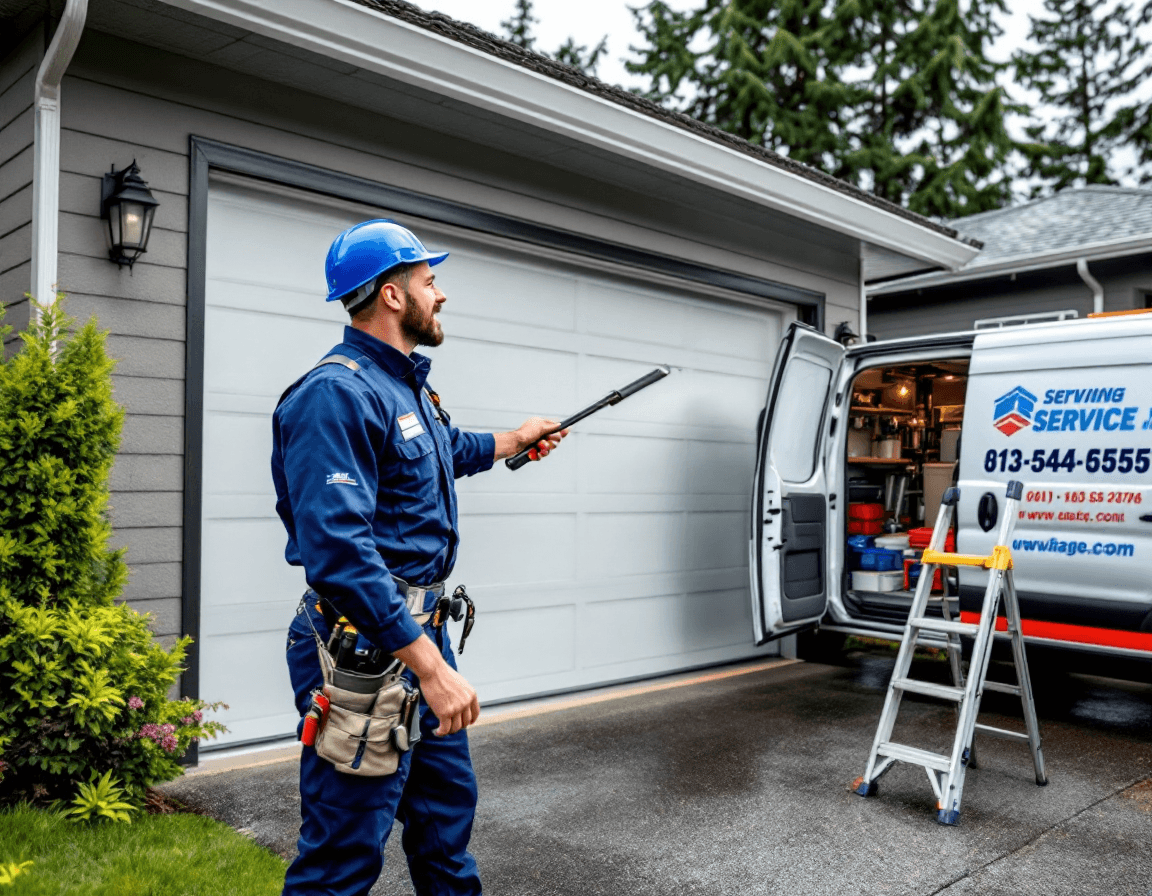
Garage Door Repair in University Place, WA is a service that many homeowners in this part of Pierce County end up needing sooner than they expected. Between wet winters, salty air drifting in from Puget Sound, and the everyday wear of a door that goes up and down several times a day, even a well-built door can start to stick, stall, or make a racket. When that happens, the door is more than an inconvenience, since it is often the main way cars, bikes, and household traffic move in and out of the house.
This page explains the most common problems we see on residential doors across University Place and the surrounding neighborhoods in the 98466 and 98467 ZIP codes. We cover what each symptom usually means, what a technician checks first, and which fixes a homeowner can reasonably handle versus the ones that should be left to a licensed professional. We also explain how local conditions near Chambers Bay and along the Bridgeport Way corridor can affect the hardware on your door over time.
Read through the sections that match what your door is doing right now. If you are dealing with a door that is stuck, off its tracks, or hanging unevenly, treat it as a safety concern and avoid trying to force it open or closed. The guidance below is meant to help you describe the problem accurately on the phone and understand what a repair visit should involve.
Why Garage Doors in University Place Age Differently
Much of University Place was built out over decades, which means the housing stock includes everything from older ranch-style homes to newer infill construction and split-level layouts on sloped lots. Doors in these homes have been installed with different track geometries, different opener models, and different spring systems, so there is no single "typical" failure pattern. A door that is twenty-five years old with a steel torsion spring behaves very differently from a newer insulated panel door on a modern operator, and a good diagnosis starts with knowing which one you have.
The Pacific Northwest climate adds its own pressure. Our winters bring long stretches of damp, cool air, and moisture finds its way into hinges, rollers, and the bottom seal of the door. Metal that sees constant dampness can begin to corrode, and wood or composite panels can swell and warp when they cycle between wet and dry weather. Even when the temperature stays above freezing, that humidity can make a door feel heavier and less responsive than it did in August.
Because the climate is so consistent, many local problems develop slowly rather than all at once. Rollers flatten, tracks shift a fraction of an inch, and springs lose balance long before the door fails outright. Paying attention to these small changes is often the difference between a simple adjustment and a more involved repair.
Signs Your Door Needs Attention Before It Stops Working
Most garage doors give warning signals well before they fail completely. The trick is recognizing that a change in behavior, even a small one, usually points to a part that is wearing out. A door that used to close in a few seconds and now takes noticeably longer, or one that seems to hesitate at the top of its travel, is often telling you something useful about the springs, rollers, or opener.
Homeowners in University Place frequently mention that their door works fine in the summer and then starts acting up once the rainy season settles in. That pattern is worth noting, because moisture can increase friction and expose hardware that was already marginal. If the change is gradual, make a quick note of what you observed and when, since that information helps a technician narrow down the cause.
- The door takes noticeably longer to open or close than it did a few months ago.
- You hear a new sound during travel, especially at the top or bottom of the track.
- The door pauses, jerks, or stops briefly before continuing.
- One side of the door sits lower or looks out of alignment when closed.
- The opener runs but the door barely moves, or the motor strains and cuts out.
When the Door Reverses Before It Reaches the Floor
A door that starts to close and then immediately reverses is one of the most common complaints we hear from homeowners in this area. In nearly every case, the cause is the photo-eye safety sensors mounted near the bottom of the door tracks. These sensors are designed to stop the door if something breaks the beam, and they will send the door back up if they lose their line of sight, even when nothing is in the way.
Start by looking at the two small sensor units on either side of the opening, usually mounted about six inches above the floor. Check whether the lenses are dirty, whether a spider web or a piece of debris has blocked them, and whether one unit has been knocked out of alignment by a bicycle, a recycling bin, or a moving vehicle. Many sensors have a small indicator light that changes color when they are properly aligned, and a steady light is what you want to see. Keep in mind that dust and road grime blown in from Bridgeport Way and the surrounding streets can cloud lenses over time, so a quick wipe with a soft cloth can sometimes resolve the issue on its own.
If the sensors look clean and aligned but the door still reverses, the problem may be in the wiring, a failing sensor, or the opener's force settings. Those are not repairs most homeowners should attempt on their own, because the opener control board and safety circuitry are part of the system that protects people and pets. A licensed technician can test the sensors, check the wiring, and confirm that the close-force limits are set correctly.
Grinding, Squealing, and Banging: Reading the Noise
Noise is one of the most useful diagnostic clues a garage door can give you, and each sound tends to point toward a different component. A rhythmic grinding usually suggests worn bearings or rollers. A high-pitched squeal often comes from dry hinges or a roller that is starting to seize. A sharp bang or clunk, especially at the very top or bottom of travel, can mean a loose bracket, a damaged track section, or a spring that has lost tension.
Keep in mind that garage doors in this part of the Puget Sound region can be noisier during wet weather simply because metal contracts and expands with temperature changes and moisture. That said, normal seasonal noise should not be confused with a worn part. If a sound is new, getting louder, or accompanied by a shudder or a visible shift in the door, it deserves prompt attention.
- Grinding that gets worse over several cycles usually points to rollers or bearings that need replacing.
- Squealing that stops after a light lubrication often indicates dry hinges, but if it returns quickly the roller may be the real problem.
- A single loud bang at the top of travel can signal a loose bracket or a track that has shifted out of its proper position.
- A rattling sound with the door closed may mean hardware has worked loose and should be tightened by a technician.
Remote Controls and Wall Buttons That Do Nothing
When the remote or wall button stops responding, the first step is almost always the simplest one. Replace the batteries in the remote, and then try the wall button, which tests whether the problem is the transmitter or the opener itself. If the wall button works but the remote does not, the remote may need to be reprogrammed or the battery contacts may be corroded, which is a common issue in humid conditions.
If neither control responds, check whether the opener has been placed in a lockout or vacation mode, which some models allow. Look at the wall control for a light that is flashing or an indicator that suggests the system is in a non-standard state. Also make sure the opener's power is on, since a tripped breaker in the garage can make it look as if the entire system has failed. A quick check of the panel is a reasonable first step for most homeowners.
When the basics do not resolve the problem, the fault may be in the opener's logic board, the wall control wiring, or the receiver antenna. These components require testing with proper tools, and replacing them is more involved than changing a battery. Our technicians can diagnose which part is failing and explain the options without guessing.
Doors Stuck Halfway or Jammed in the Track
A door that stops partway up or down and refuses to move is one of the more alarming symptoms, and it should be treated with caution. Do not try to force the door by pulling on it or lifting it by hand while the opener is still connected. Doors under spring tension are heavy and can move unexpectedly, and attempting to free a jammed door can cause injury or additional damage to the track and rollers.
Common causes include a track that has been bent or knocked out of alignment, a roller that has come out of the track, debris lodged in the channel, or a broken spring that has left the door without its counterbalance. Sometimes the opener's force setting is also a factor, particularly if a previous repair changed the limits or if the door has become harder to move over time. Each of these possibilities calls for a careful inspection rather than a quick fix.
If your door is jammed, the safest first step is to disconnect the opener by pulling the emergency release cord, which typically hangs from the trolley near the top of the door, and then keep people and vehicles clear of the opening. Call a licensed technician to assess the track, rollers, and springs before anyone attempts further movement. Trying to pry a door back into a track is one of the most common ways homeowners turn a manageable repair into an expensive one.
Slamming, Sagging, and Crooked Travel
A door that drops shut much faster than normal, or one that sags open at one corner, is usually telling you that the balance system is no longer doing its job. In a properly balanced door, the springs carry most of the weight, so the door should stay put when you let go of it halfway up and should lower in a controlled way. When the springs lose tension, the door can slam, sag, or travel unevenly from one side to the other.
Crooked travel is especially common when one spring has weakened while the other is still working, or when cables have stretched or come off their drums. You may notice that one side of the door is lower than the other or that the bottom seal sits at an angle when the door is closed. Visible gaps at the top or sides can also indicate that the door is no longer tracking straight. These conditions can allow pests, drafts, and rain to enter the garage, and they can put additional strain on the opener.
Please do not attempt to adjust, tighten, or replace torsion springs or cables yourself. Those components store a large amount of energy, and the work requires specialized tools and training. Our licensed technicians handle spring and cable replacement as a matter of safety, and we can explain whether your door needs a spring, cable, roller, or track adjustment.
Salt Air, Moss, and Rust in a Coastal Pierce County Garage
Living near the water brings many benefits, but it also means that garage hardware faces a constant supply of moisture and airborne salt. Homes in the broader University Place area, particularly those closer to the shoreline and the open spaces around Chambers Bay, often see faster corrosion on hinges, brackets, and springs than homes farther inland. Even when the air does not feel particularly salty, fine mineral residue can settle on metal parts and speed up rust.
Moss and mildew are another concern in the shaded or north-facing parts of a garage. Moisture that collects along the bottom of the door or in the track can create a slippery film that makes rollers slide poorly and encourages early wear. Dirt and grit tracked in from the driveway can also work into the roller bearings and create the kind of grinding noise that many homeowners mistake for a major failure.
Regular cleaning helps. Wipe down the tracks and rollers with a dry cloth at least a few times a year, and remove debris from the channel. Use a silicone-based lubricant on hinges, rollers, and the torsion spring coils (the spring itself should only be serviced by a professional), and avoid heavy grease that attracts dirt. Lubrication should be applied sparingly, because excess product can drip onto the floor and collect grit.
What a Typical Repair Visit Covers and What It Costs
Many homeowners want to understand what they are paying for before they schedule a visit, so it helps to know what a routine repair usually involves. A standard service call typically begins with a full inspection of the door, opener, sensors, springs, cables, rollers, hinges, and tracks. The technician will test the door's balance, check the safety reversal system, and confirm that the opener is responding correctly to the remote and wall control.
Once the diagnosis is complete, the technician will explain the cause of the problem and present the repair options. Some issues, such as a misaligned sensor or a worn set of rollers, can be fixed on the same visit. Others, such as a broken spring or a damaged opener board, may require ordering parts and returning to complete the job. For most residential repairs, our pricing falls between $95 and $450, depending on the parts needed and the complexity of the work.
- A diagnostic inspection covering the door, opener, sensors, and tracks.
- Adjustment of sensors, opener force settings, and travel limits.
- Replacement of worn rollers, hinges, or brackets as needed.
- Testing of the remote, wall control, and safety reversal system before the technician leaves.
- A clear explanation of any additional parts or services recommended, with the option to decline them.
When to Call a Licensed Technician Right Away
Some garage door problems are safe to investigate yourself, such as replacing remote batteries, cleaning sensor lenses, or confirming that the breaker has not tripped. Other problems should be handled by a licensed and insured professional without delay. Any issue involving torsion springs, lift cables, a door that is off its tracks, or a door that is jammed or falling unexpectedly falls into that second category.
A helpful rule of thumb is to stop and call for help if you see a visibly broken spring, frayed or slack cables, a door that is hanging crooked, or a panel that has come partly out of the track. Those conditions can change quickly, and a door under high spring tension can cause serious injury if it is handled incorrectly. Keep children and pets away from the door while you wait for service, and avoid driving under a door that is visibly unbalanced.
Our technicians are licensed, bonded, and insured, and they can arrive prepared to handle the specialized tools and parts these repairs require. If you are unsure whether a problem is urgent, describe what you are seeing when you call at (888) 799-3819, and we can help you decide how quickly to schedule a visit.
Keeping Your Door Running Smoothly Through Pierce County Seasons
A little regular attention goes a long way toward preventing the kinds of failures described above. Twice a year, in the spring and again in the fall, take a few minutes to look at your door and its hardware. Check that the sensors are clean and aligned, test the auto-reverse feature by placing a sturdy object on the floor in the door's path (carefully, with the door closed and the object removed promptly after the test), and listen for any new sounds during a full cycle.
Pay particular attention to the weather transitions that are typical for our region. The first hard rains of autumn and the cold, damp stretches of winter are when moisture and grit tend to build up in tracks and rollers, while the drier spring months are a good time to clean and lubricate. Keeping the area around the door clear of leaves, moss, and debris also helps prevent the bottom seal from trapping water against the threshold.
Finally, keep a simple record of any changes you notice, including the date, the symptom, and any steps you took. That information is genuinely useful when a technician arrives, and it can shorten the time needed to find the root cause. Whether your door is slow, noisy, crooked, or simply unresponsive, a licensed technician can help you restore smooth, safe operation and get your garage back to working the way it should.
If your garage door in University Place is stuck, reversing, noisy, or hanging crooked, call Seattle Garage Door Fix today at (888) 799-3819. We will look at what your door is doing, explain the likely cause in plain terms, and walk you through repair options before any work begins.