
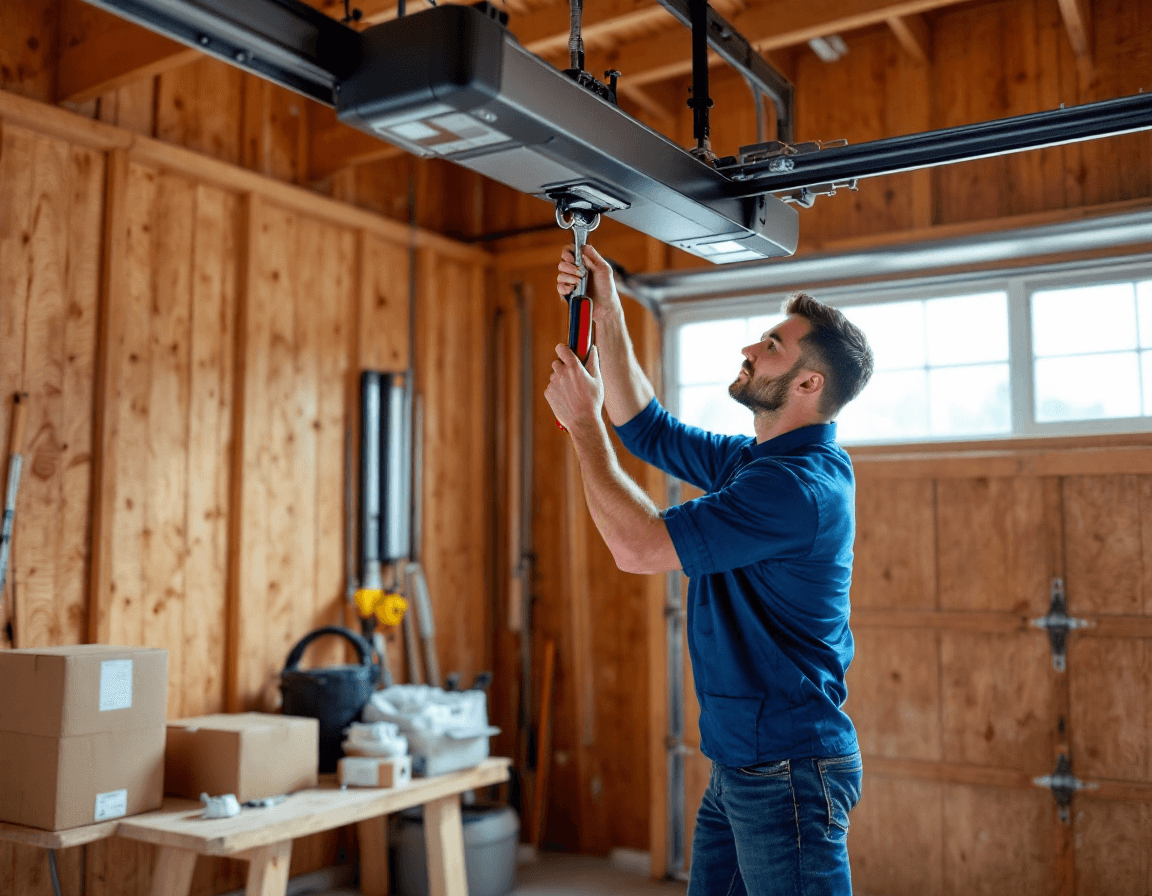
Your garage door opener is probably the most overlooked appliance in your home until the day it stops working. If you're searching for garage door opener installation and replacement in University Place, WA, you may be dealing with a unit that grinds, stalls, or simply refuses to respond to the remote. Homes across University Place, from the older blocks near Chambers Bay to the newer subdivisions off the main arterials, often run openers that were installed a decade or more ago. Technology has moved quickly since then, and a modern opener can be quieter, safer, and far more convenient.
Our team at Seattle Garage Door Fix works on openers throughout the 98466 and 98467 ZIP codes every week. We are licensed, bonded, and insured, and we handle installation and replacement with the same care whether the job is a single-car detached garage or a two-bay attached garage in a split-level home. This page explains how to tell when replacement makes more sense than another repair, which opener styles suit local homes, what features matter in the Pacific Northwest, and what you can expect when you call us. Installed pricing typically falls between $275 and $650, depending on the opener model and the features you choose.
Reading the Signs That Your Opener Has Reached the End
Most openers do not fail overnight. They give you warnings for months, and the early signs are easy to dismiss. A unit that used to run quietly now rattles on startup, the door pauses halfway up, or the motor hums without moving the door. Some homeowners notice that the light bulb flickers or the opener reverses for no clear reason, which can point to a worn logic board or a safety sensor issue that compounds over time.
Age is the clearest indicator. Many older openers were built without the safety and security features that current models include, and parts for very old units can be difficult to source. When a single repair call starts to cost a meaningful share of what a new opener would cost, replacement usually makes better financial sense. We will always give you an honest comparison before any work begins, so you can decide with the full picture in front of you.
Reliability matters as much as age. If the opener works on some days and not others, or if the remote's range seems to shrink every winter, the problem may be intermittent electronics that are hard to diagnose in a temporary fix. A new opener removes that uncertainty and gives you a known starting point for years of predictable operation.
Belt Drive, Chain Drive, or Wall-Mount: Matching the Motor to Your Garage
The three main opener styles each have a clear role, and the right choice depends on how you use your garage and how much noise you can tolerate. Chain-drive openers are the traditional and most budget-friendly option. They are sturdy and handle heavy doors well, but the metal-on-metal action produces more noise, which can be noticeable if the garage shares a wall with a bedroom or home office.
Belt-drive openers use a reinforced rubber belt in place of a chain, and they run much more quietly. Homeowners who park near a living space or who leave the door open late at night often prefer this design. Belt-drive units usually cost more upfront, but the difference in daily comfort is substantial. Wall-mount openers attach the motor to the side wall rather than the ceiling, which opens up overhead room and suits certain door types.
- Chain-drive: most affordable, durable, and best for detached garages where noise is less of a concern
- Belt-drive: quieter operation, a strong fit for attached garages beside bedrooms or living rooms
- Wall-mount: frees ceiling space and works well when headroom is limited or when the track setup is unusual
Our technicians will measure your door weight, track configuration, and available space before recommending a model. That step prevents the common mistake of buying a motor that is underpowered for a heavy insulated door or too large for the ceiling bracket layout.
Making Room for a Wall-Mount Opener in Tighter University Place Garages
Many homes in the 98466 and 98467 area were built with generous lots but garages that were sized for compact vehicles and limited storage. Ceiling joists, water heater placement, and overhead storage racks can all leave very little clearance for a traditional ceiling-mounted motor. In those situations, a wall-mount opener can be the difference between a clean installation and a cramped, awkward one.
Wall-mount units bolt to a sturdy section of the side wall and connect to the door arm, so the motor no longer hangs over the garage in the middle of the ceiling. That open space can be reclaimed for bikes, kayaks, or a ladder rack, which many families on the Puget Sound side of Pierce County find useful. The trade-off is that the wall must be solid enough to carry the motor and its vibration, which is why we inspect framing before drilling.
We also check the door's balance and track alignment during any replacement. An opener cannot compensate for a door that binds, and installing a new motor on a poorly balanced door only shifts the stress elsewhere. Addressing that early protects your investment and avoids premature wear on the new equipment.
Rolling-Code Security and Why an Old Remote Is a Real Concern
Security is one of the strongest reasons to replace an older opener. Early units used fixed codes, meaning the signal from your remote was the same every time. A determined person with a simple scanning device could capture that code and reuse it to open the door. Rolling-code technology changes the signal with every press, so a captured transmission cannot be replayed to gain entry.
If your opener is old enough that it still relies on fixed-code remotes, you may not realize how exposed the garage is. This matters in busy neighborhoods, near the trails and parks around Chambers Bay, and anywhere that vehicles and bikes are parked visibly in driveways. Upgrading to a rolling-code system is one of the most meaningful security improvements a homeowner can make for a modest investment.
We also recommend reviewing every remote and keypad that was ever programmed to the old unit. Old remotes that were lost, given away, or left in a vehicle can still work with some systems, and a proper replacement lets us clear that legacy access. We walk homeowners through the reprogramming process so they know exactly which devices are paired with the new opener.
Smart Wi-Fi Control and myQ Compatibility for Everyday Convenience
Smart openers have become popular because they solve everyday problems. Many families have wondered whether they closed the garage door after leaving for work or a weekend trip. A Wi-Fi-enabled opener, including systems compatible with the myQ ecosystem, allows you to check the door status and open or close it from a smartphone. Some setups also send alerts or let you schedule routine closing times.
The practical value is strongest for households with teenagers coming and going, frequent travelers, or homeowners who rely on delivery services and want to grant temporary access. When you set up smart control, we configure user access carefully so that only the people you choose can operate the door remotely. We also make sure your home network is stable enough to keep the connection reliable, since a weak signal in a detached garage can cause frustrating disconnections.
Smart features do add complexity, so the setup process matters. We install the hub, pair the opener, and test every control point before we leave, including the wall station and any keypad. Our goal is for you to finish the visit understanding how each feature works, not just knowing that it exists.
Battery Backup for Power Outages and Cold, Windy Nights
Power outages in the Puget Sound region usually come from wind and storms rather than long freezes, but they happen often enough that a battery backup is worth considering. Without backup, a standard opener cannot move the door when the power is out, and that can leave a family stuck inside or unable to pull a vehicle out during an emergency. Battery backup options allow the opener to operate for a limited number of cycles during an outage, which is often enough to get a car out or bring the door down for security.
Battery backup is especially useful for households that rely on the garage as a secondary entrance or that keep a backup generator nearby. It also helps when the power flickers and the opener would otherwise leave the door stuck halfway. We can advise on whether a backup unit fits your opener model and how often the battery should be replaced, so the feature stays dependable rather than becoming a hidden weakness.
Keep in mind that battery backup supports convenience but does not replace a manual release. Every homeowner should know where the emergency release cord is and how to use it safely. We demonstrate that process during every installation.
How the Pacific Northwest Climate Shapes Opener Performance
The Pacific Northwest climate is mild by national standards, but it is persistently damp. Winter brings long stretches of rain and high humidity, and Puget Sound air carries moisture and a trace of salt that can accelerate corrosion on exposed metal brackets and hardware. In University Place, homes near the water or on open exposures can see that wear more quickly than homes further inland.
Moisture also affects electronics. Condensation can work its way into control boards and wall stations, especially in detached garages that are not climate-controlled. Choosing an opener with appropriate weather resistance, and sealing or positioning control components thoughtfully, helps extend service life. We pay attention to cable routing, drip exposure, and bracket materials during every install.
Temperature swings matter too. Cold mornings can thicken lubricants and stress the motor, while warm, humid afternoons can cause the door to expand slightly. A properly sized, well-maintained opener handles these shifts without strain, which is one reason we match the motor to your door weight rather than simply choosing the cheapest option.
Understanding the $275 to $650 Installed Price Range
Pricing for opener replacement varies, and we believe homeowners deserve a clear explanation of what drives the number. Our installed range runs from $275 to $650, and the spread reflects the opener model, its drive type, the features it includes, and any additional work the installation requires. A basic chain-drive unit sits at the lower end of that range, while a belt-drive or smart model with battery backup will typically fall higher.
Several factors can shift the final quote. The weight and size of your door determine the motor strength you need. Whether the garage is attached or detached, whether the ceiling has adequate clearance, and whether a wall-mount bracket is required all influence labor. If the door needs a minor balance or track adjustment to work correctly with the new opener, that is also part of the discussion.
- Opener drive type: chain, belt, or wall-mount
- Smart features: Wi-Fi hub, myQ compatibility, and app-based control
- Battery backup: included or added as a separate component
- Door weight and size: which affects the motor horsepower needed
- Installation conditions: ceiling clearance, wall condition, and existing wiring
We provide a written estimate before work begins, and we explain each line item in plain language so there are no surprises on installation day.
What Happens During Your Installation Visit
A well-run installation starts before the new opener leaves the truck. Our technician inspects the existing door, track, springs, and safety sensors to confirm the opener is the right fix and that nothing else will undermine its performance. We then remove the old unit, check the mounting surfaces, and prepare the ceiling or wall bracket for the new motor.
Once the new opener is mounted, we connect the door arm, set the travel limits, and program the close and open positions. We test the photo-eye sensors, the auto-reverse feature, and the force settings, because those safety functions must work correctly before the job is complete. Finally, we pair remotes, keypads, and any smart features, then test each control point together. Homeowners are welcome to ask questions throughout the visit.
By the end of the appointment, you should understand how to operate the opener, how to use the emergency release, how to change the light bulb, and what routine checks to perform. We believe that a knowledgeable homeowner is a safer homeowner, and we make that part of every visit.
Why Spring and Cable Work Belong with a Licensed Professional
Opener replacement is a manageable job for a trained technician, but it is also the moment when many homeowners are tempted to tackle related repairs themselves. Garage door springs and cables store tremendous mechanical energy, and a broken torsion spring or frayed cable can cause serious injury. Even experienced DIYers can be caught off guard by the force released when tension is improperly handled.
If your opener replacement reveals worn springs, damaged cables, or a door that is out of balance, we recommend letting a licensed professional address those components. Our technicians use proper tools, safety procedures, and the training to recognize when a spring is near failure. We would much rather explain the risk and handle the repair correctly than have a homeowner attempt a job that could cause harm.
Please avoid adjusting spring tension, removing cables, or working on the drum assembly yourself. Those tasks are best left to licensed experts who can complete them safely and to standard.
Simple Habits That Protect Your New Opener for Years
A new opener performs best when it receives basic attention. A few minutes twice a year can prevent many common problems. Start by checking that the door reverses when it contacts an object on the floor, since this confirms the safety system is working. Test the photo-eye sensors by waving a board in the beam while the door is closing, and make sure the door stops and reverses.
Lubrication also helps. Use a silicone-based or garage-door-specific lubricant on the rollers, hinges, and track, and avoid heavy grease that can attract dirt. Wipe the rail clean and keep it free of debris, especially during the wet months when leaves and moss can accumulate in the track. Tighten loose hardware gently, and watch for signs that the door is binding or that the opener sounds strained.
If something seems off, call us before it becomes a larger repair. Our team is available to schedule a service visit, answer questions about your opener, or recommend a replacement if your current system is no longer worth maintaining. Reach out to Seattle Garage Door Fix at (888) 799-3819 to schedule your University Place opener installation or replacement, and let our licensed technicians help you choose a quieter, more secure, and more reliable opener for your home.