
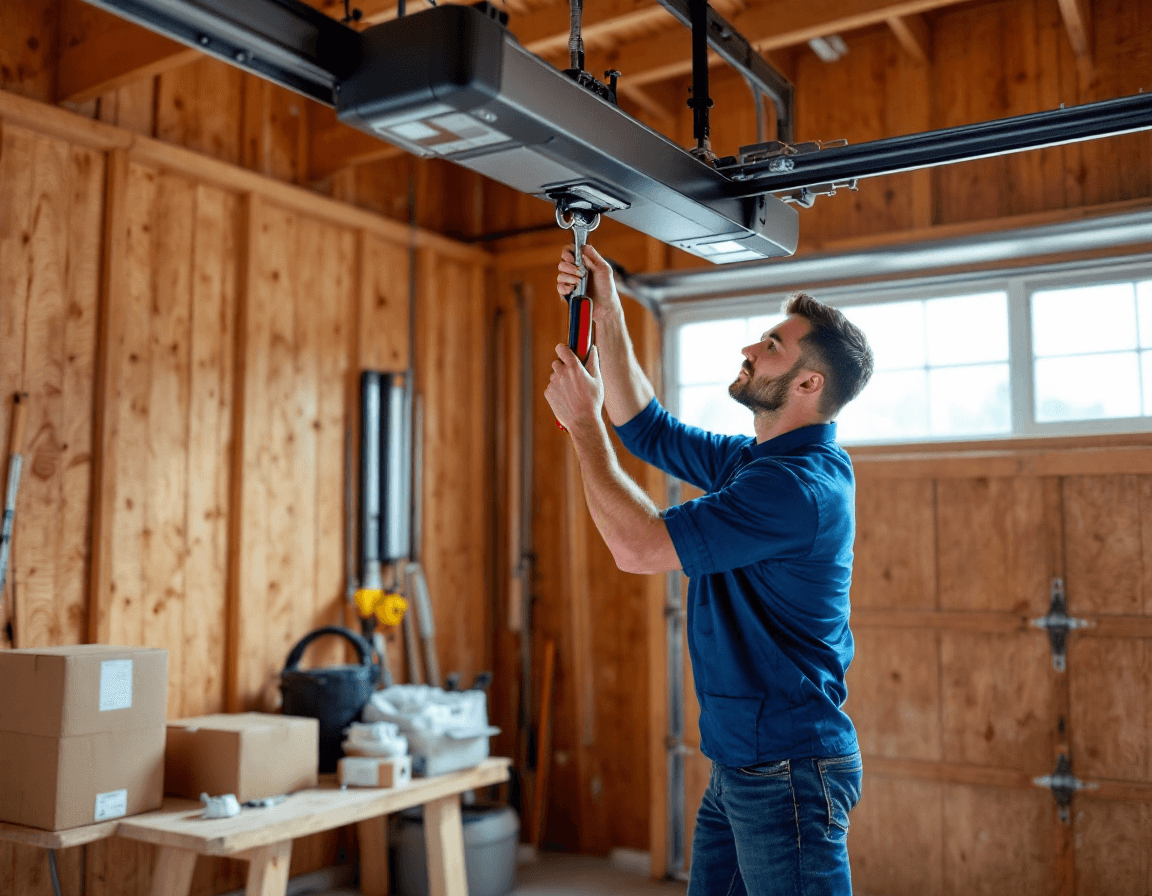
Garage Door Opener Installation & Replacement in Fircrest, WA is one of the most practical upgrades a homeowner can make, and it often gets postponed until the old unit fails completely at the worst possible moment. Fircrest sits in the heart of Pierce County, just west of Tacoma, where neighborhoods of mid-century ranchers and newer two-car builds share the same damp, mild climate. Garage openers here work hard. They cycle through wet winters, humid spring mornings, and the occasional windstorm that knocks out power for hours. A tired opener that was adequate a decade ago can become unreliable quickly under those conditions.
This page explains when replacement makes more sense than repair, how to choose between belt-drive, chain-drive, and wall-mount models, and what modern features like rolling-code security, Wi-Fi control, and battery backup actually do for you day to day. We also cover what the process looks like on a typical visit and how installed pricing generally falls between $275 and $650 depending on the opener you select. Our goal is to give you enough background to ask good questions and make a confident decision.
If you are reading this because your door is stuck halfway up or the motor sounds like it is grinding gravel, you are in the right place. Keep reading for the details, and call us at (888) 799-3819 whenever you are ready to talk through your specific garage.
Why Fircrest Garages Put Openers Through More Than Usual
Fircrest homes tend to have attached garages that double as workshops, storage rooms, and the main entry for daily traffic. That means the opener often cycles several times a day, sometimes more during school runs or weekend errands around the Fircrest Park area. Each cycle puts load on the motor, the trolley, and the rail, and over time those components wear in predictable ways. Many of the openers we see in this part of Pierce County were installed in the late 1990s or early 2000s and have never been upgraded.
Humidity is the second factor. Western Washington rarely gets the bone-dry air that helps metal and electrical components last in other regions. Moisture gets into limit switch housings, wiring connectors, and the steel hardware of the rail system, causing corrosion that slowly increases friction. A door that once glided may start to hesitate or stop at the same spot every time, and the opener compensates by pulling harder until something gives.
Finally, the mild winters here mean that many homeowners do not notice how cold the garage gets until a freeze arrives. Low temperatures thicken lubricants and stiffen weatherstripping, which adds resistance the opener must overcome. A unit that was just barely strong enough in October can labor noticeably in January. Recognizing these local pressures helps explain why an opener might fail earlier here than the manufacturer's typical lifespan suggests.
Belt Drive, Chain Drive, or Wall Mount: Matching the Drive to Your Garage
The drive style determines how the opener moves the door, and it affects noise, maintenance, and cost more than most people expect. A chain-drive opener pulls the trolley along the rail with a metal chain. It is typically the most budget-friendly option and handles heavy doors well, but it is also the loudest because metal links striking the rail produce a rattle that carries into the house. Chain drives are a sensible choice for detached garages or for homeowners who mainly care about strength and value.
Belt-drive openers use a reinforced rubber belt instead of a chain, and the difference in sound is dramatic. Belt-drive operation is much quieter, which matters if your garage shares a wall with a bedroom or a home office. The belt also runs smoothly without the metallic clatter, and it tends to stay cooler during repeated cycles. For attached garages in Fircrest where neighbors sit close together, belt drive is often the most comfortable long-term choice even though the upfront cost is somewhat higher.
Wall-mount openers attach the motor to the wall beside the garage door rather than to the ceiling. This design frees up overhead space, which is valuable in garages with tall storage racks, bikes hanging from the ceiling, or a lift for a vehicle. Wall-mount units also suit low-clearance garages where a ceiling-mounted motor simply will not fit. Your technician will measure the header height, the track radius, and the available wall space before recommending which configuration will work for your door.
Reading the Signs Your Opener Has Reached the End of Its Useful Life
Some openers fail suddenly, but most send warnings for weeks or months before they stop completely. Learning to recognize those warnings lets you plan a replacement instead of scrambling for a same-day fix. A quick self-check can reveal whether repair is still reasonable or whether replacement is the smarter investment. Pay attention to how the door behaves, not just whether it opens.
Here are the most common signs that an opener is no longer economical to keep running:
- The motor is loud, grinding, or squealing during every cycle, even after the rail has been cleaned and lubricated.
- The door starts slowly, pauses mid-travel, or reverses without any obstruction present.
- The opener needs several button presses before it responds, or it works only from one remote while others fail.
- Repairs have already been made more than once within a short period, and the cost of the next part approaches the cost of a new unit.
- The unit lacks modern safety features or uses an older receiver that cannot accept upgraded remotes or keypads.
If you notice one or two of these symptoms, a diagnostic visit can clarify whether a single part is responsible. If several appear together, replacement usually delivers better value because you get a new motor, new logic board, and current safety standards in one visit.
Rolling-Code Security and Why Older Units Leave You Exposed
Older openers often used fixed-code remotes, meaning the signal sent from your clicker was the same every time. Anyone with a basic scanning device could capture that signal and reuse it to open the door. Rolling-code technology solves this problem by changing the transmitted code with every use, so a captured signal becomes useless almost immediately. If your opener predates this standard, your garage is more vulnerable than you may realize, especially if the door is visible from the street.
Replacing an older unit with a rolling-code model also brings the rest of your system into line. Current openers can usually pair with newer keypads, wireless wall controls, and smartphone apps that rely on encrypted communication. Your technician can also confirm that the safety reversal system, including the photo-eye sensors near the floor, works correctly with the new logic board. Those sensors are a critical safeguard for children, pets, and anyone who might step into the door's path.
Security is not only about remotes. A well-installed opener should be paired with a locking mechanism that prevents manual override from outside, and you should remove or secure any emergency release cord that could be reached through a gap in the door. We often walk homeowners through these details during replacement so that convenience does not quietly undermine protection. The best opener in the world offers limited protection if the surrounding hardware is weak.
Wi-Fi Control and Smart Features for Daily Life in the South Sound
Smart openers have moved from novelty to everyday tool, and for many Fircrest households the appeal is practical. A Wi-Fi-enabled unit lets you check whether the door is closed while you are at work, open it for a delivery driver, or receive an alert if it has been left open overnight. Systems compatible with myQ and similar platforms also allow you to create schedules, share temporary access with family members, and review activity history. These features are genuinely useful when you are coming home late from a trip across the Narrows or from a long shift in downtown Tacoma.
Wi-Fi performance is where planning matters. Many garages sit at the far end of a house or in a detached building with walls that dampen signals. Before installation, we check the strength of your home network at the garage location and discuss whether a mesh node or extender would improve reliability. A smart opener that drops offline every few hours is more frustrating than a basic model, so we treat signal testing as part of the job rather than an afterthought.
Smart features also come with a responsibility to keep software current and passwords secure. We recommend setting up two-factor authentication on the account used to control the door, reviewing which phones have access, and removing old devices when they are no longer in use. These small habits protect the convenience you paid for. Your technician can walk you through the setup and explain which settings matter most for your household.
Battery Backup for Windstorm Season and Power Interruptions
Power outages in Western Washington are most often tied to wind, falling branches, and saturated ground after heavy rain. A garage door that cannot open during an outage can trap you outside or leave a vehicle stranded in the driveway, and it can also make it difficult to reach emergency supplies stored inside. Battery backup is an add-on for many openers that keeps the door operating for a limited number of cycles when the grid goes down. It is a small investment that pays off on the nights when the neighborhood goes dark.
Battery backup kits vary in how many cycles they support and how long they take to recharge, so it helps to match the option to your household. A family that uses the garage as its main entrance will benefit from a system that can handle several open and close cycles in a row. Homeowners who only need occasional access may be satisfied with a smaller configuration. Your installer can estimate expected performance based on your door's weight and your typical use.
Battery backup does not replace the manual release cord, which remains the way to operate the door if the battery is depleted or the motor fails. We make sure homeowners understand how to use that release safely and when to disengage it. Testing the backup once a year, especially before the fall windstorm season, is a good habit that takes only a few minutes.
What Happens During a Typical Opener Installation Visit
A professional installation begins with a careful look at the existing hardware, even when the goal is full replacement. The technician checks the door's balance, the condition of the tracks and rollers, the spring system, and the mounting points for the new motor. If the door is out of balance or the springs show wear, that information affects both safety and the longevity of the new opener, and it is far better to know before the old unit comes down. Any spring or cable work must be handled by a licensed professional, and that is part of how we approach every visit.
Once the assessment is complete, the old opener is removed and the new unit is mounted to the ceiling or wall, depending on the configuration selected. The rail is aligned, the trolley is connected to the door's operating arm, and the limit settings are programmed so the door stops at the correct open and closed positions. The safety reversal sensors are mounted and aligned, then tested with a known obstruction to confirm the door reverses as designed. Remotes, keypads, and any smart accessories are paired and tested before the technician leaves.
Here is a quick checklist of what a thorough installation should include:
- Inspection of door balance, tracks, rollers, hinges, and weatherstripping before the new opener is mounted.
- Secure mounting of the motor, rail, and header bracket to structural framing rather than thin drywall or trim.
- Calibration of travel limits, force settings, and the auto-reverse function to match your specific door.
- Testing of photo-eye sensors, the wall control, and all remotes, followed by a walkthrough of the manual release.
- Confirmation of Wi-Fi connectivity and app setup if a smart model was selected, plus a review of backup battery operation.
Installed Pricing From $275 to $650 and What Influences the Number
Installed pricing for a garage door opener in our service area generally falls between $275 and $650, and the spread depends mainly on the opener model you choose. Entry-level chain-drive units sit at the lower end of that range, while quieter belt-drive models, wall-mount configurations, and smart systems with battery backup typically land higher. The labor involved in mounting and calibrating the unit is relatively consistent, so the difference usually reflects the hardware itself and the features it includes.
Other factors can affect the final figure. A garage with an unusual header height, a non-standard track configuration, or a door that needs minor adjustments before the new opener can operate safely may require additional time. Replacement of worn rollers or a damaged safety sensor is sometimes recommended during the same visit, and we always explain those items before doing the work. Our goal is to give you a clear, itemized understanding of what you are paying for rather than surprising you at the end of the job.
Comparing quotes is worthwhile, but compare what each quote includes. A low price that omits Wi-Fi setup, battery backup testing, or safety sensor alignment may cost more in the long run if problems appear later. Ask whether the price includes the opener, the mounting hardware, the installation labor, and the programming of your remotes. A transparent estimate makes it much easier to choose the option that fits your budget and your daily routine.
Matching Opener Power to Your Door's Weight and Garage Layout
An opener is only as good as its match to the door it moves, and a mismatch is one of the most common causes of premature failure. Single-car doors are generally lighter than double-car doors, and insulated steel models weigh more than older uncoated panels. Wood carriage-style doors, which remain popular in some Fircrest neighborhoods, can be considerably heavier than their appearance suggests. The opener's horsepower rating should reflect the actual weight of the door, with a margin for seasonal changes in friction and lubrication.
Garage layout matters just as much. Tall doors, doors with glass panels, and doors with extra bracing may require different track and arm configurations. Low headroom can make a standard ceiling-mount unit impractical, which is when a wall-mount or a side-mount solution becomes the better choice. We measure the space above the door, the depth of the garage, and the position of any overhead storage before recommending a specific model.
Sizing is not guesswork. Installing an opener that is too weak forces the motor to run hot and wears the gears prematurely, while one that is far too powerful can strain the door hardware and increase the risk of damage if something goes wrong. The right match protects both the opener and the door, and it gives you smooth, predictable operation for years.
Safety Checks, Sensors, and Why Spring Work Stays With Licensed Professionals
Safety is the foundation of every opener installation, and it extends well beyond the motor. The photo-eye sensors mounted near the floor must be aligned so their beams cross the full width of the opening, and the auto-reverse function must respond correctly when the beam is interrupted. The force settings must be adjusted so the door reverses when it contacts an obstruction, which protects children, pets, and vehicles. These checks should happen every time an opener is installed or replaced, and they should be repeated periodically as the door ages.
Spring and cable work is different and carries serious risk. Torsion springs and extension springs store enough energy to cause severe injury if they are adjusted or replaced incorrectly, and cables can fail under tension. We recommend that homeowners leave all spring tensioning, cable replacement, and major balance adjustments to a licensed, bonded, and insured professional who has the proper tools and training. If your opener installation reveals a spring problem, our technicians will explain the issue and recommend a safe course of action rather than attempting a shortcut.
Homeowners can take simple steps between service visits. Keep the sensor lenses clean, check that the door reverses when you place a small object in its path, and look for fraying cables or gaps in the weatherstripping. Avoid lubricating the springs yourself, since that can make the problem worse, and never attempt to unwind or adjust them. If anything seems wrong, call a professional before the next use.
Ready to Upgrade Your Fircrest Garage Opener?
If your opener is loud, slow, unreliable, or lacking modern security and battery backup, a replacement can restore smooth, quiet operation and give you the features that fit how you live. Our technicians serve Fircrest and the surrounding Pierce County communities, and we are happy to talk through drive style, smart options, and installed pricing before any work begins. Call (888) 799-3819 to schedule a visit, ask questions about your specific door, or request a clear estimate for your Fircrest garage.