
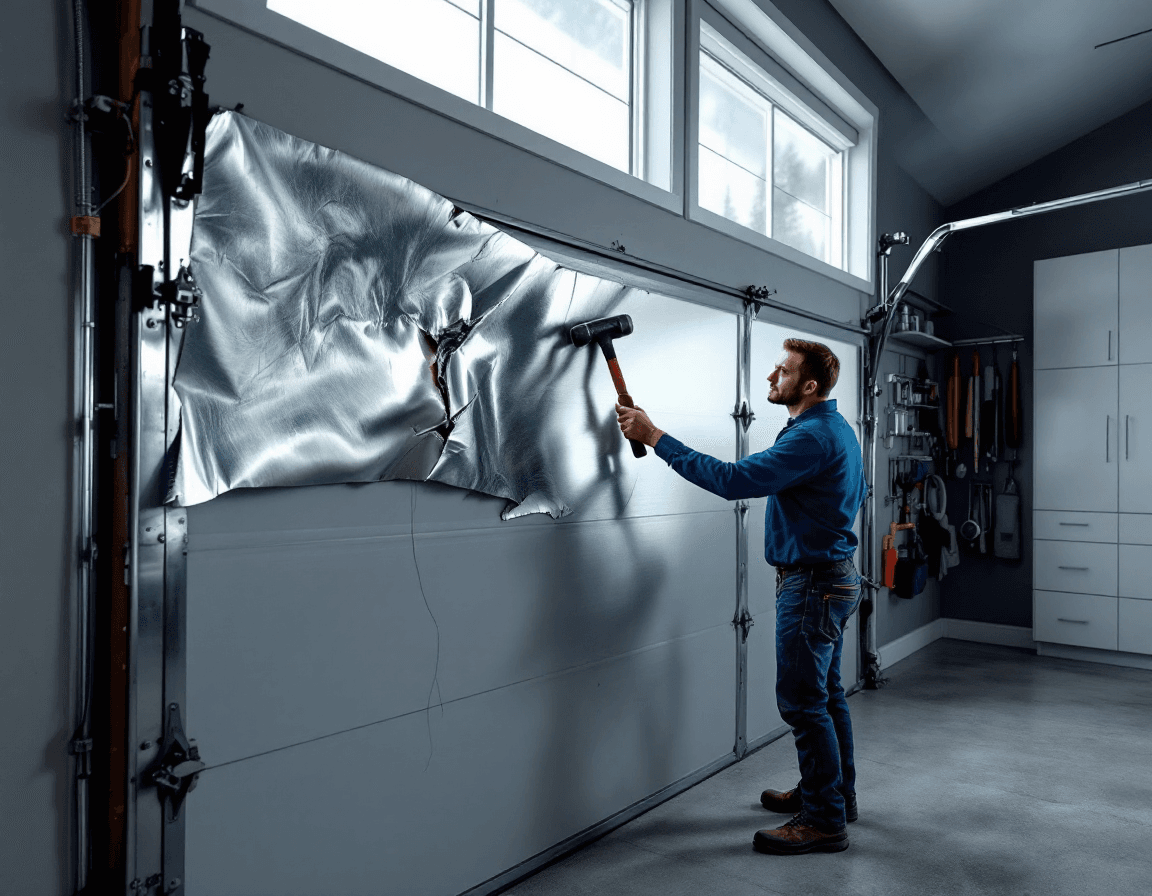
Garage door panel replacement in Fircrest, WA is often the most sensible fix when one section of a door is damaged but the rest of the system still works well. Many homeowners assume a dent or cracked panel means buying a new door, yet a single section can often be swapped for a few hundred dollars. Our technicians at Seattle Garage Door Fix serve Fircrest and the surrounding Pierce County communities, and we see this situation regularly, usually after a backing mishap, a winter of water intrusion, or a slow rust problem that nobody noticed until a panel started to bulge.
This page explains how panel damage shows up on Fircrest garage doors, how to tell whether a section can be replaced or whether the whole door deserves a second look, and what to expect from pricing, which typically runs $250 to $800 per section depending on the door. We also cover the matching problem, which is often the hardest part of a panel job, and the safety boundaries that should keep you away from the spring and cable system. If you read through the whole page, you should have a clear picture of your options before you call anyone.
Because the homes in and around Fircrest range from older ranch-style houses to newer builds with larger two-car doors, the panels you are dealing with may be steel, insulated steel, wood, or a composite material. Each one fails in its own way, and each one responds differently to replacement. The guidance below is written for a homeowner who wants practical answers rather than a sales pitch, so you can decide what makes sense for your garage, your budget, and your timeline.
Why Fircrest Garages Wear Panels Differently
Fircrest sits in the Puget Sound lowlands, where winters bring long stretches of cloudy, damp weather and summers stay mild with only occasional dry spells. That pattern matters for garage doors because moisture is the single biggest enemy of the bottom sections, which sit closest to the driveway and receive the most splash, road grit, and condensation. A door that looks sound in July can show swelling, peeling paint, or surface corrosion by February if water has been wicking up from the bottom edge.
Many houses in the area have garages that are not climate controlled, so the doors go through repeated cycles of warm afternoons and cold, damp nights. Temperature swings cause metal panels to expand and contract, and over years that movement can stress the seams and the factory finish. Wood doors respond even more dramatically, absorbing moisture in wet months and drying out in brief dry spells, which opens the door to checking, cupping, and eventually rot in the lower rails and stiles.
Local driveways and street layouts also play a role. Narrow approaches, tight turns into garages, and the common habit of parking close to the door frame increase the chance of minor contact that dents a single panel. None of these conditions is unusual for the Pacific Northwest, but they explain why the damage pattern you see on a Fircrest door often looks different from what a homeowner in a dry climate would encounter.
Reading the Bottom Section for Water and Slow Rot
The bottom panel is the first place we look when someone calls about damage, and for good reason. Water runs down the face of the door, collects at the threshold, and sits against the lowest section, especially if the door seal has worn flat or the garage floor slopes toward the house. Over time you may notice bubbling paint, a chalky white residue, or a dark stain along the lower seam.
On steel doors, the rust often starts hidden inside the panel, where the galvanized layer may have been scratched during manufacturing or handling. You may not see anything wrong on the outside until the metal has thinned enough to bulge or crease under pressure. Pressing firmly along the bottom edge with your palm is a simple test; if the section feels soft, flexes more than the panels above it, or makes a crinkling sound, the interior is likely compromised.
Wood and composite bottom sections give off different warning signs. A wood panel may feel spongy, show raised grain, or develop a slight gap where the stile meets the rail. Soft spots that release a crumble of material when poked with a screwdriver usually mean the rot has advanced beyond a simple refinish. In those cases, replacing the single panel is often more cost-effective than trying to patch and repaint, though the decision depends on how far the damage has traveled into the surrounding structure.
Dents from Backing Accidents and What the Metal Shows
A single panel damaged after a backing accident is one of the most common reasons homeowners call us, and it is often the cleanest repair. A vehicle bumper, a snow shovel, a wayward bicycle, or a rolling trash bin can leave a pronounced dent in one section while the rest of the door remains perfectly fine. The good news is that the damage is usually confined to a specific panel, which makes replacement a targeted job rather than a complete door overhaul.
Not every dent needs replacement, though. A shallow dimple with no sharp crease and no broken paint can sometimes be pushed out or left alone for cosmetic purposes, particularly if the door opens and closes smoothly. The warning sign is a crease, a fold line, or a tear in the paint, because those indicate the metal has been stressed beyond its elastic limit. Once the metal has folded, it rarely returns to its original shape, and the panel may begin to rub against the track or the adjacent section.
It is worth checking the door after any impact, even if the damage looks minor. Look at the track alignment, the roller condition, and whether the door now sits slightly out of level when closed. A dented panel can change how the door tracks, and if the impact also bent a track or rail, the fix involves more than a new panel. A technician can evaluate these connected components during the same visit, which saves a second trip.
Deciding Between a Single Section Swap and a Full Door
Repair versus replacement is the question homeowners ask most often, and the honest answer depends on several factors beyond the damaged panel itself. A single section swap usually makes sense when the rest of the door is structurally sound, the springs and cables are in good condition, the tracks are straight, and the remaining panels show no widespread rust or rot. Under those conditions, replacing one panel can extend the life of an otherwise healthy door for many more years.
A full door replacement deserves a closer look when damage is spread across several sections, when the door is very old and the insulation has degraded, or when the panel style is no longer manufactured in a close enough match. If you have three or four damaged sections, the labor and materials for individual swaps can approach the cost of a new door, and a new door may offer better insulation, quieter operation, and a more modern weather seal. Your budget, your plans for the home, and how long you intend to stay all belong in that calculation.
Here are the signs we weigh most heavily when advising a homeowner:
- The rest of the door is level, straight, and tracks smoothly without binding.
- Damage is limited to one or two sections rather than spread across the entire height.
- Springs and cables appear intact, and the door has not shown recent signs of imbalance.
- The remaining panels are the same design and finish, or a close match is available.
- There is no active rot in the framing, hinges, or bottom seal channel.
If several of these conditions are not met, we recommend a broader inspection before committing to a panel-only repair.
The Matching Problem: Finding a Panel That Blends In
Matching is where many panel jobs become frustrating. Garage door manufacturers update their designs, change paint formulations, and discontinue lines over time, so a door purchased fifteen years ago may no longer have an exact replacement available. Even when the model number is still in production, the factory finish can look slightly different after years of sun and weather, which makes a brand-new panel stand out like a fresh patch on old jeans.
Start by identifying the door manufacturer, model, and series. The information is usually printed on a label on an inside edge of a panel, on the door frame, or in the original paperwork. If you cannot find it, photographing the door face, the panel profile, the number of grooves, and the hardware can help a technician narrow down the likely source. Bring that information along when you call so we can check parts availability before scheduling.
When an exact match is unavailable, there are practical options. A panel can sometimes be painted to blend, especially on steel doors where the finish is a standard color. Some homeowners choose to replace the entire row of panels across the affected height so the change looks deliberate rather than accidental. We will talk through these tradeoffs honestly, including the point where an imperfect match is still acceptable and the point where a full replacement becomes the better path.
Insulated Panels and the Cost of Cutting Corners
Many doors in the area now have insulated panels with a foam core sandwiched between steel skins, and these deserve special attention. The insulation improves comfort in an attached garage and can reduce drafts into living spaces, but it also means the panel is more complex than a simple sheet of metal. A dent that breaks the outer skin can allow moisture into the foam, which may then stay trapped and encourage corrosion from the inside.
Replacing an insulated section should be done with a matching insulated panel, not a thinner single-skin piece. Using the wrong panel can create a noticeable gap in thermal performance and may change how the door balances under its own weight. The added weight of a foam-core section also matters for the spring tension and the opener's capacity, so the replacement should be checked against the door's specifications.
Homeowners sometimes ask whether they can save money with a generic panel from a home center. In some cases a generic option may fit, but the risks include mismatched hinge spacing, incorrect groove profiles, and poor seal alignment. The cost difference is usually small compared with the frustration of a panel that rattles, leaks at the seam, or fails to track correctly.
Hidden Water Trails and Hairline Cracks
Not all panel damage is visible from the driveway. Hairline cracks in the paint can open paths for moisture, and water can travel along the inside of a panel before showing up as a stain at a seam or a hinge. This is particularly common in the bottom two sections, where the weather seal may be compressed or missing entirely. A crack that seems trivial can become a corrosion site within a single wet season.
To check for hidden water, look at the inner face of the panels when the door is closed and the garage is lit. Dark streaks, white mineral deposits, or a musty smell along the lower edge all suggest moisture has been moving through the section. Pay attention to the hinges as well, because water that enters through a crack often exits at a hinge location and leaves rust that looks like a separate problem.
If you find a crack that runs through the full thickness of a panel, the repair is usually a replacement rather than a patch. Patching may hold cosmetically for a while, but the structural integrity of the panel is compromised, and the next freeze-thaw cycle or windy storm can make the crack spread. Replacing the section early typically costs less than dealing with an emergency repair after the panel fails outright.
What a Typical Section Job Costs in Fircrest
Pricing for panel replacement generally falls between $250 and $800 per section, depending on the door. Several variables drive that range. The door material and insulation level matter, as do the panel dimensions, the availability of the part, and whether the job involves removing additional components such as track sections, hinges, or rollers to get the panel out. A standard steel panel on a common door sits at the lower end of the range, while an insulated panel, a wood section, or a discontinued design sits higher.
Labor is a significant part of the total. Replacing a panel involves carefully disassembling the affected section, aligning the new panel with the adjacent ones, reattaching hinges and rollers, and confirming that the door still tracks and seals correctly. Rushing this step can leave gaps, rattles, or misalignment that show up weeks later, so we treat the final alignment check as part of the job rather than an extra.
Keep in mind that the quoted range is a general guideline, not a fixed estimate. Our technician will give you a specific price after inspecting your door, confirming the part, and explaining any additional repairs you might want to consider. If the inspection reveals a problem outside the panel scope, such as a worn spring or a bent track, you will receive a separate explanation so you can decide how to proceed.
Safety Boundaries: Springs, Cables, and Heavy Sections
Panel replacement is a job that can be approached carefully by an experienced technician, but it is not a project for an untrained homeowner, especially when the work involves lifting or supporting a heavy door. Garage doors are under significant tension from the springs, and a door that is disconnected from its balance system or handled incorrectly can move with dangerous force. Anyone working near the springs, cables, or drums should step back and call a licensed professional.
Please do not attempt to remove a torsion spring, adjust cable tension, or disconnect the door from the opener while a section is out. These components store large amounts of energy, and even a small mistake can cause serious injury. Our team is licensed, bonded, and insured, and we recommend that any work touching the balance system be handled by a trained professional. Spring and cable replacement is always a job for a licensed technician.
Here are the basic safety steps we recommend for homeowners while waiting for a service visit:
- Keep the door closed and disconnect the opener power if the door is damaged or unbalanced.
- Keep children, pets, and vehicles clear of the door path until the repair is complete.
- Do not stand under a door that is partially raised or lifted by hand.
- Avoid pulling a damaged panel off the door yourself, since it may still be held by tension.
- Note any unusual sounds, such as popping or grinding, and mention them when you call.
Preparing Your Driveway and Garage Before the Visit
A little preparation makes a panel service visit smoother and helps the technician work efficiently. Clear the area around the door so there is room to set down tools, lay out replacement parts, and move around the opening safely. If vehicles are parked close to the door, move them to the street or an outside spot so the technician can position equipment without obstruction.
Take photos of the damaged panel and the door as a whole before the visit. Include close-ups of the dent, crack, or rust, and a wider shot showing the door's full height and width. If you have the door manufacturer's label or paperwork, have it ready, along with the approximate age of the door if you know it. Those details help us confirm the correct replacement section before arriving.
It is also helpful to write down any symptoms you have noticed beyond the obvious damage. Mention whether the door sticks, makes new noises, sits unevenly when closed, or shows a gap at the bottom. A short list like this gives the technician a head start and reduces the chance of missing a related issue that might affect the final price or timing.
Keeping New Panels Sound Through Pierce County Weather
Once a new panel is installed, a few habits can help it last through another Pacific Northwest winter. Clean the lower sections periodically with a mild soap and water, rinsing grit and road salt that may collect from nearby traffic and seasonal treatments. Rinse the bottom edge gently rather than blasting it with high-pressure water, which can force moisture into seams.
Check the bottom weather seal every season and replace it if it is cracked, flattened, or pulling away from the door. A good seal keeps splash and wind-driven rain from reaching the lowest panel, and it is one of the least expensive protections available. Touch up small paint chips promptly with a matching finish, because exposed metal is where corrosion starts.
Finally, keep an eye on the door's balance and tracking. A door that has been dented or repaired may shift slightly over time, and early adjustment is far cheaper than waiting for a bigger problem. If the door begins to bind, drift, or sit unevenly, call for an inspection, and let a licensed technician check the springs, cables, rollers, and hinges as part of the maintenance plan.
If a dented, cracked, rusted, or water-damaged panel is making your Fircrest garage door look worse or behave differently, Seattle Garage Door Fix can help you sort out whether a single section replacement, a matching panel, or a broader repair makes the most sense. Call (888) 799-3819 to schedule an inspection, and we will walk you through the options and give you a clear estimate before any work begins.