
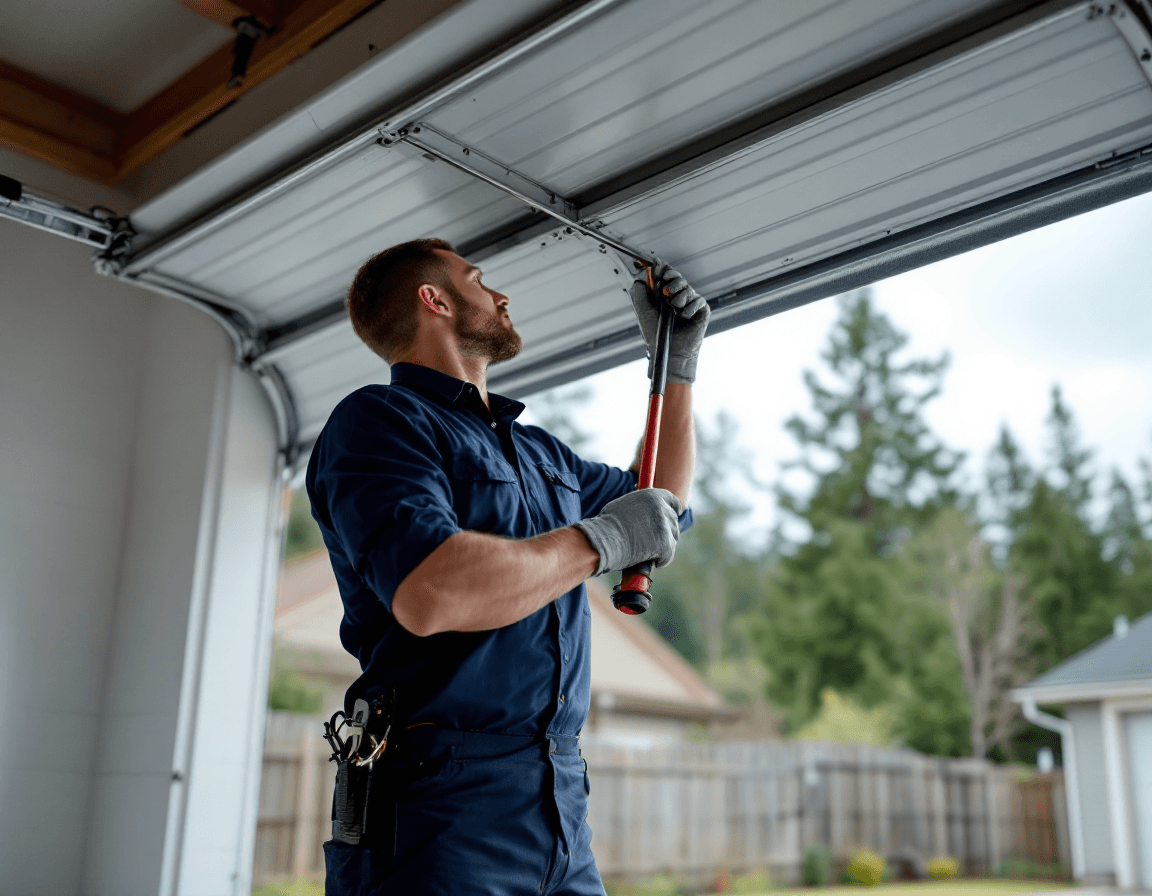
Garage door spring replacement in Fircrest, WA is one of the most common repairs we handle for homeowners on the Pierce County side of the Tacoma line, and it is also one of the most dangerous jobs to attempt yourself. The springs that lift a heavy door are under enormous tension even when the door looks still and harmless. When one fails, the sound alone can rattle a whole block, and the door may suddenly feel impossible to open by hand. Knowing what is happening inside that metal coil helps you decide what to do next, and why the safest move is almost always a phone call to a licensed technician.
Fircrest is a compact, tree-lined community with a mix of older single-story homes and newer additions, and many of the detached garages here were built with the standard residential torsion spring setups that were common for decades. Those systems were engineered for a certain number of cycles, and a household that opens its door several times a day for school runs, work commutes, and weekend errands will reach that limit sooner than most people expect. The spring does not usually fail on a schedule you can read on a calendar. It fails when the wire fatigues past its limit, and the first sign is often a sound you will not forget. If you have just heard a sharp crack or a sudden bang from the garage, the rest of this page will walk you through what that likely means and how to respond.
We serve Fircrest and the wider Western Washington region as a licensed, bonded, and insured garage door company, and we have seen how local weather and daily habits shape the way these springs wear. Our goal here is to give you practical, accurate information so you can recognize a failing spring, understand the repair options, and make a confident decision. Nothing on this page replaces an in-person inspection, but it should help you ask the right questions and avoid the costly mistakes that homeowners sometimes make when they try to handle a broken spring alone.
Reading the Bang: What a Snapped Spring Sounds Like on a Fircrest Morning
A broken torsion spring usually announces itself with a loud, sharp report, often compared to a gunshot or a heavy metal pipe dropping on concrete. Many homeowners in Fircrest describe hearing it from inside the house, sometimes while the coffee is brewing, and then discovering that the door will no longer lift. The noise happens because the coil releases its stored energy all at once, and the metal snaps against the center bearing plate or the shaft. The sound is startling, but it is also useful information, because it tells you the spring has failed rather than the opener or the tracks.
After a snap, take a moment to look at the door without touching the springs. If the door sits closed and seems to hang with unusual weight, or if you can see a gap in the coil above the door, the spring has probably broken. Keep children and pets away from the area, and do not attempt to open the door manually by pulling on the handle with force. A door that suddenly drops or shifts can cause injury, and the cables may still be under tension even though the spring is no longer doing its job. Leave the opener disconnected if it is safe to do so, and keep the car out of the garage until a technician can secure the door.
It is also worth noting when the bang happened. If it occurred during a cold morning after a wet night, that is consistent with the way Pacific Northwest moisture and temperature swings stress metal. Metal contracts in the cold and can become more brittle, and any existing rust or hairline fatigue can give way at that moment. The timing does not change the repair, but it can help a technician understand the condition of the rest of the hardware.
Why Pierce County Winters Wear Out Springs Faster Than You Expect
Western Washington is famous for its gray, damp winters, and that moisture is hard on any steel component that lives in an attached or detached garage. Even when a garage feels dry inside, humidity can settle on the coils of a torsion spring and encourage surface rust. Rust does not always cause immediate failure, but it creates tiny pits that act as stress points, and over time those pits can start cracks that spread through the wire. A spring that has been quietly corroding through several wet seasons may fail on a day that seems completely ordinary.
Fircrest sits close enough to the Puget Sound lowlands that salt-laden air can drift inland on certain winds, and homes near open ground or tree cover may also see more lingering dampness after rain. Garages that are not insulated or that share a wall with an unheated space tend to experience larger swings in temperature and humidity. Each cycle of warming and cooling causes the metal to expand and contract slightly, and those repeated movements add up. Over a decade or more, a spring can accumulate a considerable amount of fatigue even if the door is not used heavily.
Seasonal shifts also affect the rest of the system. Wet weather can cause wooden door sections, weatherstripping, and track alignments to change, which increases the load on the springs. When the door becomes harder to lift, the spring must work harder, and a spring already weakened by rust or age is more likely to fail under that extra stress. This is one reason we encourage homeowners to schedule an inspection at the start of the rainy season, rather than waiting for a sound or a stuck door to prompt a call.
Torsion or Extension: Knowing Which Spring Your Door Carries
Before anyone discusses a replacement, a technician needs to identify which type of spring your door uses. Torsion springs mount horizontally on a steel shaft above the garage opening, and they wind and unwind to lift the door through a set of cables wrapped around drums at each end. They are the most common type on modern residential doors, and they generally last longer than extension springs when they are properly matched to the door's weight and cycle rating. A torsion spring is identified by its visible coil, usually a single long spring or a pair of springs side by side, sitting on a bar above the door.
Extension springs run along the horizontal tracks on each side of the door, usually stretched when the door is closed and relaxing as it opens. They are found on many older garage doors and on some lighter doors, and they carry safety cables inside the coil that are designed to restrain the spring if it breaks. A snapped extension spring often looks like a loose, dangling coil near the track, and it may not produce the dramatic bang that a torsion spring does. Because extension springs can release suddenly, a licensed technician should always handle their removal and replacement.
Knowing the difference matters because the replacement must match the door's weight, height, and intended cycle life. Installing the wrong spring type or an undersized spring can cause the door to fall too fast, close unevenly, or strain the opener. If you are unsure which system you have, take a photo of the spring area and the track layout, and describe what you hear and see when the door operates. That information gives a technician a head start on identifying the correct parts.
Signs Your Spring Is Failing Before It Breaks
Springs rarely fail without warning, although the warning signs are sometimes subtle. A door that starts to feel heavier over several weeks, or one that needs a hand boost near the bottom of its travel, may be showing early fatigue. Many homeowners in Fircrest only realize something is wrong when the door begins to stick or when the opener seems to labor more than it used to. Catching these changes early can help you schedule a repair on your own terms instead of during an emergency.
Common early warnings include:
- A visible gap or space between coils on a torsion spring, which may indicate that the wire has begun to separate
- Rust-colored flakes or orange streaks on the spring, especially near the center or at the anchor points
- A door that rises unevenly, with one side lifting faster or sitting lower than the other
- Popping, creaking, or ticking sounds during operation that were not present before
- A door that seems heavier to lift manually than it did last season
If you notice any of these symptoms, avoid running the door repeatedly to test it. Each cycle adds stress to a spring that is already weakening, and continued use can turn a manageable repair into a broken spring with damaged cables or a bent track. A short inspection can confirm whether the spring is near the end of its life, and it can also reveal whether the opener, rollers, or hinges are contributing to the problem.
When the Door Stops Halfway and the Opener Groans
One of the most frustrating situations we see is a door that opens a few inches and then stops, or an opener that hums and strains while the door barely moves. Homeowners often assume the opener motor has failed, but in many cases the real issue is a spring that no longer provides enough lift. When the spring cannot carry its share of the door's weight, the opener must pull harder than it was designed to, and the motor may overheat or trip its safety circuit. This is why replacing the opener alone rarely solves the problem.
If your door stops partway and the opener sounds like it is working hard, disconnect the opener from the door by pulling the emergency release cord. Be careful, because a door without spring assistance can drop quickly if it is not balanced. Do not lift the door by hand from the bottom while the springs are compromised, and keep fingers and hands clear of the tracks. Once the door is disconnected and the area is secure, call a technician who can check the spring, the cables, and the balance before anyone operates the opener again.
A door that is heavy on one side often indicates uneven spring tension or a broken cable, and this can strain the opener and the track. Balance problems should be corrected before the opener is reinstalled, because an unbalanced door can cause uneven wear on rollers and hinges. The technician will test the door at several points in its travel to see whether it holds position when partially open, and this test helps determine whether the spring is the culprit or whether other parts need attention.
Cables, Drums, and the Loose-Wire Problem After a Break
When a torsion spring breaks, the lifting cables often go slack or come loose from the drum. This is one of the more dangerous aftereffects, because the drum and cable assembly can unwind in an uncontrolled way when the tension is released. A cable that has jumped off the drum may also become tangled in the track or pinched between rollers. Any time you see loose cable, a frayed strand, or a drum that appears out of position, treat the door as unsafe until a professional has inspected it.
Cables are also worn by the same moisture and friction that affects springs. A frayed or kinked cable can snap under load, and a damaged drum can fail to hold the cable at the correct tension. When we replace a spring, we typically inspect the cables, drums, and bearing plates together, because a worn component left in place can fail soon after the new spring is installed. Replacing these parts at the same visit can prevent a second service call and reduce the risk of another sudden failure.
Homeowners sometimes try to reattach a cable by themselves, but this is a serious mistake. The cable must be seated in the correct groove on the drum, and the tension must be set in the proper sequence to avoid injury. Improper tension or a cable that slips during adjustment can cause the door to drop unexpectedly. Leave this work to a licensed technician who has the tools and training to do it safely.
What a Spring Replacement Involves in a Fircrest Driveway
A professional spring replacement is a methodical process that begins with safety and ends with testing. The technician first secures the door, relieves any remaining tension where possible, and inspects the hardware to confirm the failure mode. They then measure the door's weight, height, and track configuration, because those measurements determine the correct spring size and cycle rating. Only after these steps are complete does the technician begin removing the broken spring and installing the new one under controlled conditions.
For a typical residential torsion spring job in the Fircrest area, the work usually includes removing the damaged spring, installing a matched replacement, checking or replacing the cables, inspecting the drums and bearing plates, and lubricating the moving parts. The technician then sets the tension, tests the door's balance, and confirms that the opener and safety sensors operate correctly. A thorough visit also includes checking the tracks, rollers, and hinges, because misalignment can shorten the life of a new spring.
Because many Fircrest homes have driveways that slope gently toward the street, technicians often check the door's clearance and the position of the vehicle during testing. A door that closes crookedly or lifts unevenly may appear to be a spring issue, but it can also stem from track alignment or a bent shaft. Our technicians look at the full system so the repair restores smooth operation rather than simply replacing the part that failed.
High-Cycle Springs and Why Balance Matters More Than Price
High-cycle springs are engineered to last longer than standard springs, typically by using wire with a different temper or by increasing the number of turns and the cycle rating. For households that open the garage several times a day, a high-cycle spring can be a sensible investment because it reduces the frequency of future replacements. The added cost is often modest compared with a second emergency repair, and it can be a practical choice for families with active schedules, home businesses, or shared garages.
However, a high-cycle spring only performs well when the door is properly balanced. A spring that is too strong can cause the door to rise too quickly and slam at the top, while one that is too weak can allow the door to drop and strain the opener. Balance is set by adjusting spring tension to match the door's actual weight, which may change when new weatherstripping, paint, or hardware is added. This is why a reputable technician will test balance before finishing the job, not simply install a part and walk away.
We recommend asking any technician to demonstrate the balance test. The door should stay in place when raised to about halfway, without the opener engaged, and it should move smoothly without bouncing or dragging. If the door does not hold position, the springs may need further adjustment, and the installation is not complete until that is corrected. A well-balanced door reduces stress on the entire system, which helps the new spring reach its rated life.
Realistic Costs: The $180 to $450 Range Explained
Most spring replacements we perform fall within a price range of $180 to $450, depending on the type of spring, the door's size, and the additional work required. A standard torsion spring replacement on a single-car door is often at the lower end of that range, while a double-car door, a high-cycle upgrade, or a job that includes cable and drum replacement may land higher. Extension spring replacements and jobs involving multiple damaged components can also shift the total. Every quote should be confirmed after an inspection, because the actual condition of the system determines the scope.
Several factors commonly affect the final cost:
- The number of springs required, such as a single spring versus a pair on a wide door
- The door's weight and size, which determine the spring specification
- Whether cables, drums, or bearing plates also need replacement
- The choice between standard and high-cycle springs
- The time needed to safely secure and balance the door
Keep in mind that the lowest price is not always the best value. A rushed installation that skips balance testing or uses an incorrectly rated spring may fail sooner and create additional expense. Ask what is included in the quote, whether the technician will test the door before leaving, and whether the work carries a warranty. Clear answers to these questions will help you compare options fairly.
Keeping the Replacement Lasting Through Puget Sound Humidity
Once a new spring is installed, a bit of routine care can extend its life considerably. Lubricate the springs, bearings, and rollers with a garage-door-specific lubricant during the spring and fall, and wipe away any dust or debris that accumulates on the coils. Avoid petroleum-based products that can attract dirt, and do not spray lubricant directly into the opener motor. A simple visual check every few months can help you catch rust, gaps, or loose hardware before they become urgent.
Humidity control in the garage also makes a difference. A dehumidifier, improved ventilation, or a weather seal at the bottom of the door can reduce the moisture that settles on metal parts during wet months. In Fircrest, where rainy stretches can be long, this kind of adjustment is worth considering, especially if the garage is used for storage of items that also attract moisture. Keeping the area clean and dry helps protect springs, cables, and the opener from accelerated corrosion.
Finally, do not ignore small changes in how the door behaves. A slight increase in noise, a faint shift in balance, or a new scrape along the track may be the first sign of trouble. Scheduling an inspection at the first hint of a problem is usually far less expensive than waiting for a spring to break, and it keeps your household safer while you plan the repair.
Garage door spring replacement is not a project to tackle alone, and a broken spring is not something to wait out. If your Fircrest garage door has snapped, stopped halfway, or started to feel unusually heavy, call Seattle Garage Door Fix at (888) 799-3819 for a licensed, bonded, and insured technician who can secure the door, assess the full system, and recommend the right spring for your home.