
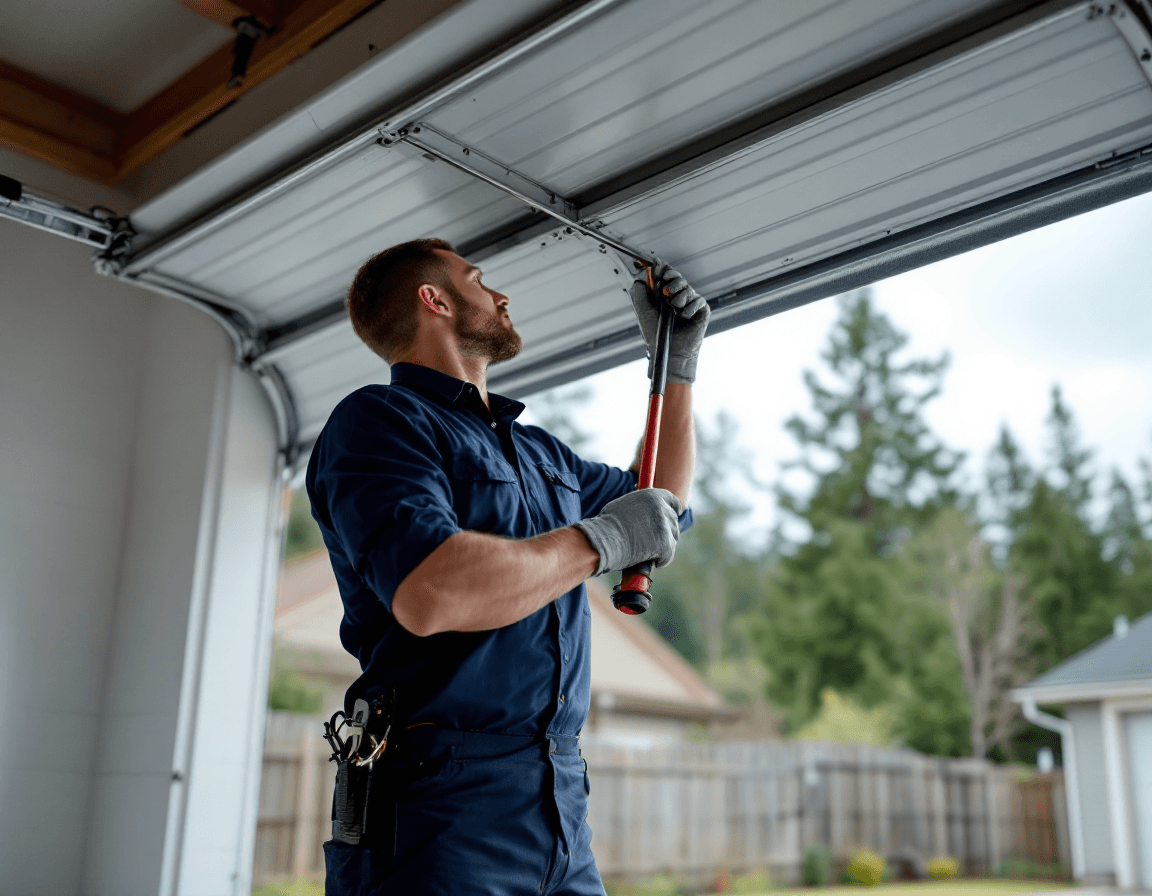
Garage door spring replacement in University Place, WA is one of the most common repairs we handle for homeowners across the peninsula, and it is also one of the most urgent when it goes wrong. The springs carry most of the weight of your door, so when one fails, the door can become almost impossible to lift by hand or can drop suddenly. A broken spring is rarely a slow decline, and it often shows up on a weekday morning when the car is backed halfway out of the driveway. Understanding what happened and what a proper replacement involves will help you make a good decision.
University Place sits between Tacoma and the Puget Sound shoreline, and its homes range from mid-century ranchers to newer builds with wide two-car garages. Residents here deal with a particular mix of conditions: long stretches of rain, damp air that lingers through the cooler months, and occasional salt-laden wind when weather moves in off the water. Those conditions shape how garage door hardware ages. This page explains what we see most often, how to recognize a failing spring before it breaks, and what a responsible repair looks like from start to finish.
Whether your door is a single-panel carriage style from the 1980s or a modern insulated sectional, the principles are the same. Springs store the energy that counterbalances the door, and once that balance is lost, every part of the system works harder than it was designed to. Catching the problem early protects your opener, your cables, and the people standing nearby. The sections below walk through the details in the order most homeowners encounter them.
Why Torsion Springs Give Up Faster in Western Washington
Torsion springs are the coiled steel bars mounted horizontally above the garage door opening, and they wind and unwind every time the door moves. Each cycle stresses the metal, and over years of use that stress accumulates until the steel fatigues and eventually snaps. Rust is the other half of the story, and moisture is what drives it. A garage in University Place that sees a long run of drizzle, condensation on cold mornings, or water tracking in under the door will often show surface corrosion on the springs long before the coils actually fail.
Many homeowners assume a spring only breaks because it is old, but humidity and temperature swings often matter just as much. Metal that repeatedly absorbs moisture and dries out again develops tiny pits, and those pits become starting points for cracks. Garages attached to homes can also trap warm, humid air from laundry rooms or kitchens, which accelerates corrosion on the hardware inside. We find that doors on the north side of a house or in shaded driveways tend to show rust earlier than those that get afternoon sun.
It is also worth knowing that springs are rated for a number of cycles, not a number of years. A busy household that opens the garage several times a day will reach that cycle count far sooner than a couple who uses the door mainly for weekend trips. When we replace a spring, we discuss how many times the door cycles in a typical week so the replacement matches the way your household actually uses the garage. That conversation makes a bigger difference than most people expect.
The Bang Nobody Forgets: What a Snapped Spring Sounds and Feels Like
A broken torsion spring usually announces itself with a loud bang that sounds like a gunshot or a heavy metal pipe dropping on concrete. Many homeowners hear it from inside the house and assume something has fallen off a shelf or that a neighbor's car has hit a fence. If you hear that noise and then notice the door sitting lower than usual, or the opener running without the door responding, the spring is the most likely culprit. Do not assume the door is fine just because it didn't crash to the floor.
After the bang, the door often remains partly closed and feels deceptively stable. The remaining spring, if there is one on a two-spring system, may keep the door from falling, but the balance is gone. Trying to lift the door by hand at that point can injure your back or hands, and the cables may slip off their drums. Keep people and pets clear of the door, avoid standing under it, and resist the urge to test it by pulling on it.
The sound also tells a technician a lot about the failure. A clean snap usually points to metal fatigue that has been building for a long time, while a dull thud with a rattling afterward can mean a cable or drum has come loose at the same time. We have seen spring failures in University Place that were preceded by weeks of squealing or grinding, and homeowners who noticed that early warning avoided the surprise of a full break on a school morning. Paying attention to new noises is one of the simplest things you can do to prevent a sudden failure.
Reading the Coil: Recognizing a Visible Gap in a Torsion Spring
One of the clearest signs of a failing torsion spring is a visible gap in the coil, meaning the steel has separated into two pieces or a noticeable space has opened between windings. You can often spot this by looking at the spring from a safe position on the side of the garage, not directly beneath it. Look for a section where the coils no longer line up evenly, or for a spot where the metal appears to have pulled apart. Even a small gap means the spring has lost its ability to hold tension consistently.
A gap may not always mean the spring has fully broken yet. Some springs crack partially and continue to work for a while, but the stress on the remaining coils rises quickly. The door may begin to lift unevenly, feel heavier on one side, or fail to stay open at the height it used to. Homeowners sometimes describe this as a door that seems to be "fighting" them as it rises, which is a fair way to put it. Once you see a gap, plan for replacement rather than waiting for the spring to finish breaking.
Inspecting from a distance matters for safety. Do not climb a ladder to examine the spring, and do not use a flashlight to peer closely while the door is closed and the spring is under tension. Springs can release stored energy violently even when they appear to be intact. A licensed technician will use proper winding bars, locking pliers, and a controlled method to assess the coil, and that is exactly why we recommend a professional for any inspection that goes past a simple visual check.
When the Door Stops Three Inches Off the Ground
A door that opens a few inches and then stops is one of the most frustrating symptoms we hear about. Homeowners often think the opener has failed, but in many cases the opener is doing exactly what it was asked to do. When a spring loses tension, the door becomes heavier than the opener was designed to lift at that point in the travel, and the opener motor may cut off or strain. The door appears to be stuck, but the real problem is that the counterbalance has disappeared.
There are other reasons a door stops early, including a track obstruction, a bent section, or a sensor fault. A good diagnostic visit checks those possibilities before assuming the spring is responsible. Still, when the door stops at the same height every time and the opener runs without moving the door further, a spring problem is very likely. The opener may also hum, grind, or get hot, which is a sign it is working too hard and should not be left to run repeatedly.
If your opener is humming and the door barely budges, turn off the power to the opener using the disconnect or unplug it before trying anything else. Continuing to run the motor against a heavy door can damage the gears and the trolley, turning a spring repair into a larger bill. Once the opener is off, the door should be manually inspected only from a safe position and then serviced by a professional. Keeping the opener from straining is one of the quickest ways to limit the total cost of the repair.
Extension Springs on Older University Place Doors
Not every garage door uses torsion springs. Many older homes in and around University Place still have extension springs, which are the long coiled springs running along the horizontal tracks on either side of the door. Extension springs stretch as the door opens and pull it back toward the closed position through a set of cables and pulleys. They are often found on single-car doors and on doors installed before the widespread adoption of torsion systems.
Extension springs have their own failure patterns. They frequently snap near the hook end, and when they do, the broken segment can whip back toward the wall or ceiling. Safety cables are supposed to run through the center of each extension spring to catch the pieces and limit their movement, so checking whether those cables are present and secure is part of any proper inspection. If your garage has extension springs and you do not know whether safety cables are installed, that is a good question to ask during service.
Replacing extension springs is generally less expensive than replacing a full torsion system, but it still requires careful attention to tension and cable routing. A mismatched spring can cause the door to close too fast, pull crooked, or wear out the rollers prematurely. We recommend matching the replacement to the door's weight and height, and confirming that the cables, drums, and pulleys are in good shape before the new spring goes in. Shortcuts at this stage tend to show up again within a season.
Cables That Slipped Off the Drum and Why They Matter
After a spring breaks, the cables attached to the drums can come loose, jump off, or wrap unevenly. These cables are the lifting mechanism, and they are under significant tension even when the door appears to be sitting still. When a cable slips off the drum, the door may tilt, hang lower on one side, or sit at a visible angle. Trying to re-seat the cable without the right tools and training is one of the most common ways homeowners get hurt during a spring incident.
The cables themselves may show fraying, kinks, or rust after years of humid weather, and they should be checked whenever a spring is replaced. A cable that has been stressed by a sudden spring failure may appear intact but have lost strength at the crimp or along the wire. Drums can also crack or slip on their shafts, and a damaged drum can make a new spring unbalanced or cause the door to pull unevenly. A thorough service visit looks at the whole assembly rather than just the spring.
We always recommend replacing cables when a spring has failed and the cables show wear, rather than trying to reuse questionable parts. The cost of a cable is small compared to the cost of a second failure or an injury. Keep the area around the door clear and do not attempt to wind or unwind the drum yourself. A licensed technician will secure the door, release tension in a controlled way, and install new parts to the right specifications.
Crooked Closes, Fast Drops, and the Balance Problem
A door that closes too fast, slams down, or hangs crooked is often suffering from a balance issue rather than a broken part. Balance means the springs are providing the correct amount of lift so the door stays in place when you let go of it halfway open. If the springs are too weak, the door will drift down. If they are too strong, the door may rise on its own or bounce at the top. Both conditions put extra stress on the opener and wear out the rollers, hinges, and track faster than normal.
Crooked closing usually points to a difference in tension between the two sides of the door, or to a cable that is wound unevenly. It can also result from a worn roller that is binding on the track, but spring tension is a common cause after a replacement that was not properly matched. A simple test is to lift the door manually to about waist height and then let go; if it drifts, the balance is off. We recommend having a technician adjust balance after any spring replacement rather than assuming the new spring alone will solve the problem.
Precise balancing is one of the most important parts of a quality spring replacement. A correctly balanced door opens smoothly, stays put when stopped partway, and closes at a steady pace. It also reduces wear across the entire system, which can extend the life of the opener and hardware. When you book a replacement, ask whether balance will be checked and adjusted before the technician leaves, because that step is what turns a replacement into a lasting repair.
High-Cycle Springs and Matching Them to Your Household
High-cycle springs are designed to handle more openings and closings before they reach the end of their rated life. They are often made from more carefully tempered steel and may be wound to tighter tolerances than standard springs. For households that open the garage many times a day, such as families with teenagers driving to school or home businesses that receive frequent deliveries, a high-cycle option can make a meaningful difference in how often the springs need attention.
It is worth being honest about what high-cycle springs do and do not promise. They can last longer under heavy use, but they still require periodic inspection, and they cannot compensate for rust, poor balance, or worn cables. Their performance depends on the rest of the system working correctly. We discuss the options during the estimate visit so you can compare the expected use of your door with the features of each spring, rather than choosing based on a sales pitch.
For lighter-use households, a standard spring may be a perfectly reasonable choice, and we will say so when that is the case. The right answer depends on how your garage is used, the weight of your door, whether it has insulation or windows, and how exposed the door is to weather. Matching the spring to your real routine is one of the most practical ways to get value from the repair.
What a Typical Spring Replacement Costs in Pierce County
For most spring replacements, the price range we quote is $180 to $450, and the final number depends on the type of spring, the size and weight of the door, and whether additional parts such as cables, drums, or bearings need attention. Torsion systems on standard two-car doors usually fall within that range when the work is straightforward. Larger, heavier doors, extension systems with extra hardware, or repairs that uncover damaged drums can move the total up. We aim to explain those variables clearly before any work begins.
A transparent estimate should list the spring type, the parts included, whether balance adjustment is part of the service, and whether any lubrication or hardware checks are included. Ask whether the price covers removal of the broken spring and disposal, and whether the technician will inspect the opener and safety sensors while on site. Those details matter because a low headline number can hide add-ons that appear later. We would rather you know the full picture on the first call than be surprised at the end of the visit.
Insurance sometimes covers a sudden spring failure if it is part of a broader damage claim, though coverage varies widely by policy and situation. We cannot promise how your insurer will respond, so it is worth checking your own policy before you schedule. Homeowners in University Place who have a spring break alongside other storm-related damage may want to document the condition with photos before repairs begin. Clear records make any claim conversation easier.
Safety Rules That Protect You During Any Spring Repair
Garage door springs store enough energy to cause serious injury, and that is the main reason spring work should be left to licensed professionals. Never attempt to remove, adjust, or wind a torsion or extension spring yourself. Do not use improvised tools, do not stand in the path of the door, and do not assume that a spring is safe just because the door looks stable. The rules below are a good starting point for keeping your household safe while you wait for a technician.
- Keep children, pets, and visitors away from the garage door and the spring area until service is complete.
- Disconnect the opener power and avoid running the motor against a stuck or heavy door.
- Do not attempt to lift or lower the door by hand after a suspected spring failure.
- Avoid standing beneath the door or reaching into the track, the drum, or the spring assembly.
- Photograph any visible gap, rust, or loose cable from a safe distance to help the technician prepare.
We also recommend that homeowners in University Place who have young children or older family members in the home talk through these rules with everyone who uses the garage. A broken spring can happen with little warning, and clear household habits reduce the chance that someone is nearby when it does. Safety is not only about the repair itself but also about how the space is used in the days before a technician arrives.
Keeping Springs Healthy Through Wet Winters and Salty Breezes
Preventive care for garage door springs is simpler than most people think, but it requires consistency. Wipe down the springs and the surrounding hardware periodically to remove dust, moisture, and grime, and keep an eye out for early surface rust. Lubricating the rollers, hinges, and bearings with a product appropriate for garage door hardware can reduce friction that would otherwise pass more stress onto the springs. Avoid spraying lubricant directly onto the springs themselves unless a technician has advised it, because certain products can trap grit.
Ventilation matters a great deal in our climate. A garage that stays damp for weeks will corrode hardware faster than one that dries out between rain showers. Opening the garage briefly on dry days, running a dehumidifier if the space is enclosed and humid, and making sure weatherstripping is intact can all help. Homeowners near the water sometimes notice a faint salty residue or accelerated rust on exposed metal, and rinsing the hardware with fresh water and drying it thoroughly can slow that process down.
Finally, schedule an inspection every year or two, especially after a winter with heavy rain or a cold snap that stressed the door. A technician can spot early rust, uneven tension, or a cable that is starting to fray, long before those issues turn into an emergency. Preventive visits are typically far less disruptive than a sudden spring failure on a busy morning. Treating the springs as a system worth monitoring is one of the best ways to keep your door reliable for years.
Ready to get your University Place garage door back on track? Call Seattle Garage Door Fix at (888) 799-3819 to schedule a licensed, bonded, and insured technician who can inspect your springs, explain your options, and balance your door before we leave. If you hear a bang, see a gap in the coil, or notice your door stopping partway, do not wait to call. We are ready to help you get the job done safely and correctly.