
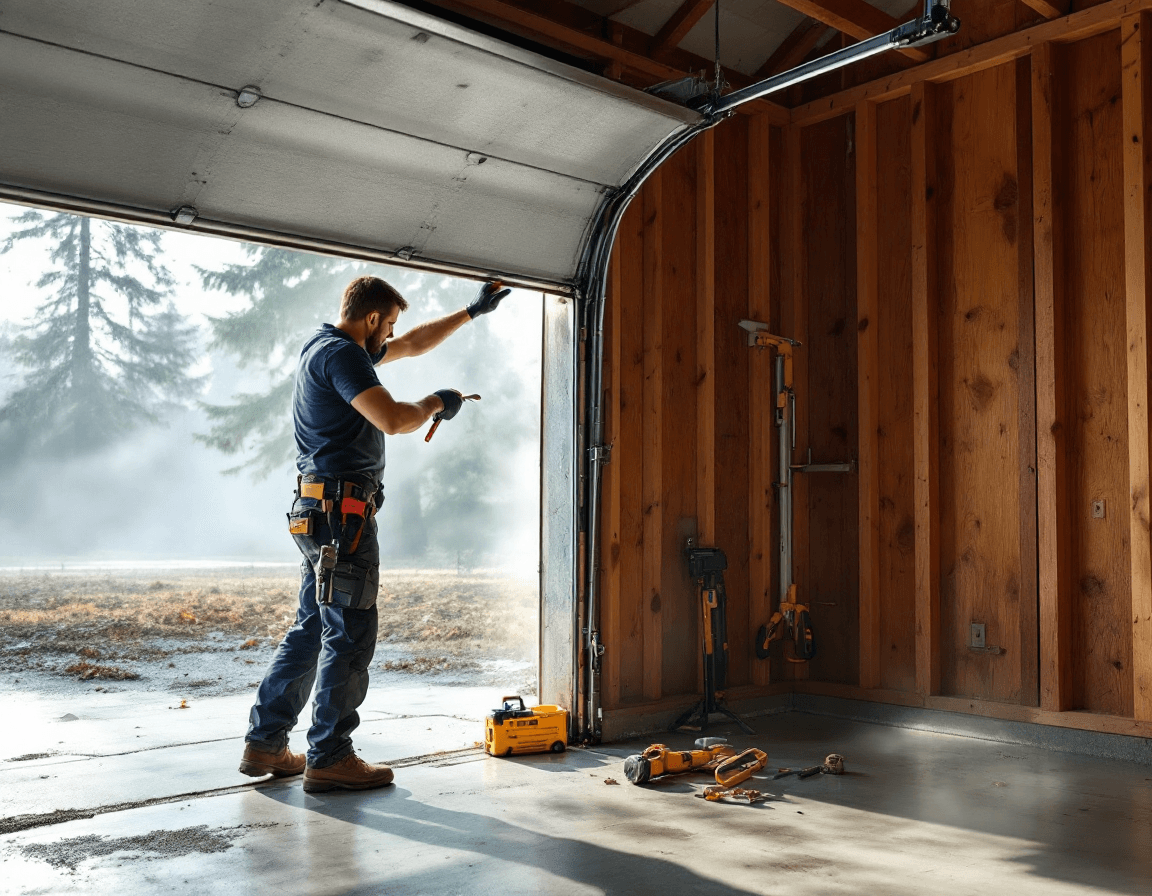
Off-track garage door repair in University Place, WA is one of the most common calls we take from homeowners between Chambers Bay and the Bridgeport Village area, and it usually starts with a sound that is hard to ignore: a grinding rattle, a sudden lurch, or a door that stops halfway up with a gap showing along one side. Doors can leave their tracks for many reasons, from a worn roller that finally gives out to a bumped track after a busy week of backing out of the driveway. Whatever caused it, a door that is off track is no longer seated where it was designed to run, and continuing to operate it can cause more damage to the panels, the opener, and the track itself.
This page explains what typically goes wrong with garage doors in University Place and the surrounding 98466 and 98467 neighborhoods, how to recognize the early signs of a problem, and what a realignment or track repair usually involves. We also cover the practical factors that shape the cost, which for most off-track repairs falls in the range of $125 to $400 depending on the damage. You will find a few things here that you should not try on your own, because spring tension and heavy panels can cause serious injuries, and we make that point clearly where it matters.
Our goal is to give you enough background to make a good decision when your door stops cooperating. Some situations can wait a day or two while you schedule a visit, and others need to be left alone until a licensed technician arrives. Knowing the difference can protect your vehicle, your belongings, and the people in your household.
Why Our Westside Weather Pushes Doors Off Track
Living on the Puget Sound side of Pierce County means accepting long stretches of damp weather, and that moisture works its way into nearly every moving part of a garage door system. Steel track and rollers that sit in a damp garage for months can develop surface rust, and the lubricant that once let the rollers glide can wash out or collect grit. When rollers stop turning smoothly, they resist the pull of the cables and the door begins to twist or hop as it travels, which is often how a door slips out of its channel. Our technicians see this pattern most often in the colder months, when the door runs stiffly in the morning and then loosens up after a few cycles.
Wind is the other factor that deserves attention in this part of the region. Homes near the water and on open lots can take gusts that rock a large, lightweight panel back and forth, and a door that is not fully latched or locked down can shift enough to ride out of its track. Older tracks that were installed with slightly loose brackets are especially vulnerable, because repeated flexing gradually opens the gap between the track and the wall or header. Over time, that small amount of movement becomes enough for a roller to climb the edge.
Temperature swings also play a role. Days that are cool and damp followed by a dry spell can cause the steel and wood components of a door to expand and contract at different rates, which can loosen fasteners and change how the panels sit in the track. None of these factors alone usually causes a derailment, but together they make it more likely that a worn roller or a small misalignment will turn into a door that is off track.
Recognizing the Early Warning Signs Before a Full Derailment
Most off-track doors give some warning before they come completely free of the track. A door that starts to lean slightly, makes a scraping noise in one corner, or sits a little higher on one side than the other is often telling you that a roller is beginning to slip. Catching these signs early means the fix is usually a simple roller replacement and track adjustment rather than a more involved repair. Waiting until the door has fully jumped the track can turn a modest service call into a larger job, especially if the panels have bent or the track has been pushed out of shape.
Pay attention to how the door behaves when you operate it by hand from inside the garage, but only when the opener is disconnected and the door is completely closed and stable. Look for places where the door seems to catch, where the movement is jerky, or where one side moves faster than the other. Check whether the gap between the top section and the header or between the side of the door and the jamb looks even all the way around. A consistent, even gap is a good sign, while a gap that widens on one side is a clue that the door is pulling to one direction.
Here are the most common early signals our technicians hear about from homeowners in University Place:
- A grinding or squealing noise that is louder on one side of the door
- The door pausing or stuttering partway through its travel
- A visible gap between a panel and the vertical track, or one side of the door sitting noticeably lower
- Rollers that look flattened, cracked, or have shiny flat spots on the edge
- Fresh rust or dark streaks on the track near the rollers
- The opener strains or the door reverses unexpectedly during normal operation
If you notice one or more of these signs, it is a good idea to schedule an inspection before the problem worsens. A technician can determine whether the issue is limited to a roller, a loose bracket, or a track that has begun to shift.
Rollers That Pop Out of the Track
Rollers are the small wheels that ride inside the track and carry the weight of the door as it moves between the closed and open positions. When a roller pops out, the door loses its guide on that side, and the entire panel can tip or shift in a way that causes it to bind or come off completely. Rollers can pop out because the wheel has worn down, the stem has bent, the bearing has seized, or the track has been nudged out of its proper alignment. Often a homeowner finds one roller sitting outside the track while the others still look normal, which points to a localized problem rather than a failure of the entire system.
Replacing a worn roller is usually a straightforward task for a trained technician, but the work involves important safety steps. The door must be secured, the tension on the springs must be handled correctly, and the replacement rollers need to match the track size and the bearing type. Many modern doors use nylon rollers with sealed bearings, which tend to handle damp conditions better than old steel rollers, and that choice can make a noticeable difference in how smoothly your door runs through the wet months. A technician can also check whether the hinges and brackets around the rollers are secure, since a loose hinge can be the reason a roller keeps coming out.
If a roller has popped out and the door is sitting crooked, do not try to pry the door back into the track by hand. Forcing a panel can bend the track, crack a panel, or cause the door to drop suddenly. The safest approach is to keep people and vehicles clear of the door and call for service.
Bent, Dented, or Separated Track Sections
The track itself is precisely formed steel, and even a small bend can throw off the path of the rollers. Tracks can bend from impacts, from a door that was forced past a jam, or from a long period of stress when a bracket has loosened and let the track drift. When a section is dented, the rollers may still roll through most of the path but catch at one point, which is why a door often works fine in the morning and then stops halfway up. A separated section, where two pieces of track have pulled apart at a joint, can leave a visible step or gap that the rollers cannot cross smoothly.
Repairing track usually involves carefully straightening the affected section, re-securing the brackets to the wall or ceiling, and checking the vertical and horizontal alignment with a level and measuring tools. In some cases the damaged section must be replaced, particularly if the metal has creased or split. Good track repair also includes checking the bolts that hold the track in place, because loose hardware is one of the main reasons alignment drifts over time. A technician will verify that the track is parallel with the door opening and that the rollers can run freely from top to bottom.
Track work often accounts for a larger share of the cost in off-track repairs, and it is one of the reasons the price range can vary. A single straightened bracket is a relatively quick job, while a section that needs replacement or a track that has shifted across both sides of the door will take more time and materials.
When a Vehicle Hits the Door
Backing a car, truck, or delivery van into a garage door is more common than many homeowners like to admit, and University Place driveways are no exception. Even a low-speed tap can knock a panel out of its tracks, bend the track sections, or split a hinge. Sometimes the damage is obvious, with a dent in the panel and a door hanging crooked, but at other times the only sign is a slight tilt or a new noise that appears a few days after the incident. Because a vehicle impact can also stress the springs and cables, it is important to have the door inspected even if it still seems to operate.
After any impact, the first priority is safety. Keep everyone away from the door, and do not attempt to lift or manually force it, since the springs may be damaged or the door may fall. If the opener is still attached, avoid running it, since it may pull the door against a bent track and worsen the problem. Take photos of the damage for your records, especially if you plan to contact your insurance company, and then call a licensed technician to assess the situation. A professional can determine whether the panel, track, rollers, and springs all need attention, and can advise you on what repairs fall under a typical homeowners policy.
Vehicle impacts also highlight why it helps to keep a clear turning area in the driveway. Simple habits such as backing in with a spotter or leaving a few extra feet of space near the door can prevent a costly repair that might otherwise be avoidable.
Binding, Gaps, and the Crooked Look
A door that looks crooked, binds in the middle of its travel, or leaves a gap at the top or side is usually signaling that its weight is not being balanced evenly. This can happen when one spring has weakened more than the other, when a cable has begun to fray or slip on a drum, or when a track on one side sits a fraction of an inch higher than the other. Binding is particularly frustrating because the door may still move, but it does so with resistance and noise, which puts extra strain on the opener and the components that carry the load. A gap between the door and the jamb can also let in drafts, moisture, and pests, which is a real concern during the wet season.
Correcting a crooked door typically means checking the balance, the alignment of the tracks, and the condition of the cables and drums. Adjusting the track is often the first step, followed by inspecting the springs and cables for wear. Some doors need the weatherstripping replaced or re-seated so that the bottom seal meets the floor evenly. Our technicians frequently find that a door which looked crooked was actually being pulled by a loose bracket or a worn roller on one side, so the fix can be simpler than the symptoms suggest.
Keep in mind that spring and cable work carries serious risk. The tension stored in a torsion or extension spring is significant, and a mistake during adjustment can cause injury. Homeowners should never attempt to rebalance a door by adjusting springs themselves, and any repair involving spring or cable components should be handled by a licensed professional.
Understanding Off-Track Repair Pricing in University Place
For most off-track repairs in University Place, the price typically falls between $125 and $400. The final amount depends on what the technician finds once the door is secured and inspected. A door that has simply popped a roller or needs a bracket tightened will usually land at the lower end of the range, while a door with bent track sections, damaged rollers on both sides, or a panel that needs to be realigned may reach the upper end. Access and the type of door can also influence the cost, since heavier or custom panels require more time and care to handle safely.
Several factors shape the estimate. The number of rollers that need replacing, whether the track can be straightened or must be replaced, and whether the springs or cables show signs of wear all play a part. Doors in damp, coastal-influenced areas sometimes show more corrosion on hardware, which can add time if fasteners are stuck or brackets need replacing. A technician will usually explain what is included in the quote before work begins, so you can decide how to proceed.
If you are weighing a repair against a larger investment, ask the technician to note which components are in good condition and which will need attention soon. Addressing a small issue early often prevents a larger bill later, and a clear picture of the door's condition helps you plan the budget.
Safety Is Not Optional: Why a Jammed Door Needs a Licensed Pro
A door that is jammed, off track, or hanging at an angle carries energy that can release suddenly. The springs and cables are under high tension, and the door panels are heavy enough to cause serious injury if they drop or swing unexpectedly. Many homeowners try to free a jammed door by pulling on it, pushing it, or working the rollers by hand, and those actions are exactly how people get hurt and how springs and cables get damaged. The right approach is to stop, step back, and let a trained professional handle the repair.
Licensed and insured technicians have the tools to secure the door before work starts, the training to handle spring tension safely, and the experience to recognize when a repair is more involved than it first appears. They can also check the opener to make sure it is not pulling against a damaged track, which protects the motor and the logic board. If a professional tells you that a component needs to be replaced, that recommendation is usually based on what they have seen on the door, not an upsell.
Spring and cable work should always be done by a licensed professional. This is not a task for a weekend project, and attempting it without proper training can cause severe injury. Our team is licensed, bonded, and insured, and we treat every off-track call as a safety priority first and a repair second.
Temporary Steps That Protect Your Door Until the Technician Arrives
There are a few steps you can take safely while you wait for service. First, keep all people, pets, and vehicles clear of the door and its path. Second, avoid using the opener, since running it against a crooked or derailed door can cause the motor to strain and can bend the track further. Third, if the door is partly open, consider whether it can remain in its current position without sagging or shifting; if it seems unstable, do not attempt to close it by hand. Taking these simple precautions can prevent a manageable repair from becoming a more costly one.
Some homeowners ask about the emergency release cord that hangs from the opener trolley. Pulling this cord disconnects the door from the opener so it can be operated manually, but it should be used with care. On a door that is off track or has a damaged spring, the release can cause the door to move unexpectedly, so the safest choice is generally to leave the door alone and call for service. If you do need to use the release for any reason, stand well to the side, keep hands and feet clear of the track, and never try to lift a heavy or crooked panel by yourself.
It is also helpful to note any sounds, the time of day the problem happens, and whether the door was recently hit or stressed. Those details give the technician useful clues and can shorten the diagnostic visit.
Keeping the Door on Track Through Pierce County Seasons
Preventive care is the most effective way to avoid repeated off-track problems, especially in a climate where moisture and wind are constant companions. Start by checking the track and brackets at least twice a year, looking for loose bolts, rust, or any gap between the track and the wall. Keep the rollers and hinges lightly lubricated with a product recommended for garage door components, and wipe away the grit that collects in the track during the wet months. Avoid heavy grease on the track itself, since it can collect dirt and make rollers slower to respond.
A seasonal inspection by a technician can catch problems that are difficult to see from the driveway. The technician can check spring balance, look for frayed cables, confirm that the rollers are seated correctly, and test the auto-reverse safety features. Many homeowners also benefit from replacing older steel rollers with sealed nylon versions when the door is due for service, since those rollers tend to run quieter and handle moisture better.
Finally, make a habit of watching how your door moves. A smooth, quiet, even operation is the best sign that the system is healthy, and any change from that baseline is worth a closer look. Catching a small issue early keeps the repair simple and the cost predictable.
If your garage door has come off track, is jammed, shows a gap or crooked alignment, or was hit by a vehicle, do not wait for the problem to get worse. Call Seattle Garage Door Fix at (888) 799-3819 to schedule a licensed technician who serves University Place and the surrounding neighborhoods in 98466 and 98467. We will assess the door safely, explain your options clearly, and get it running smoothly again.