
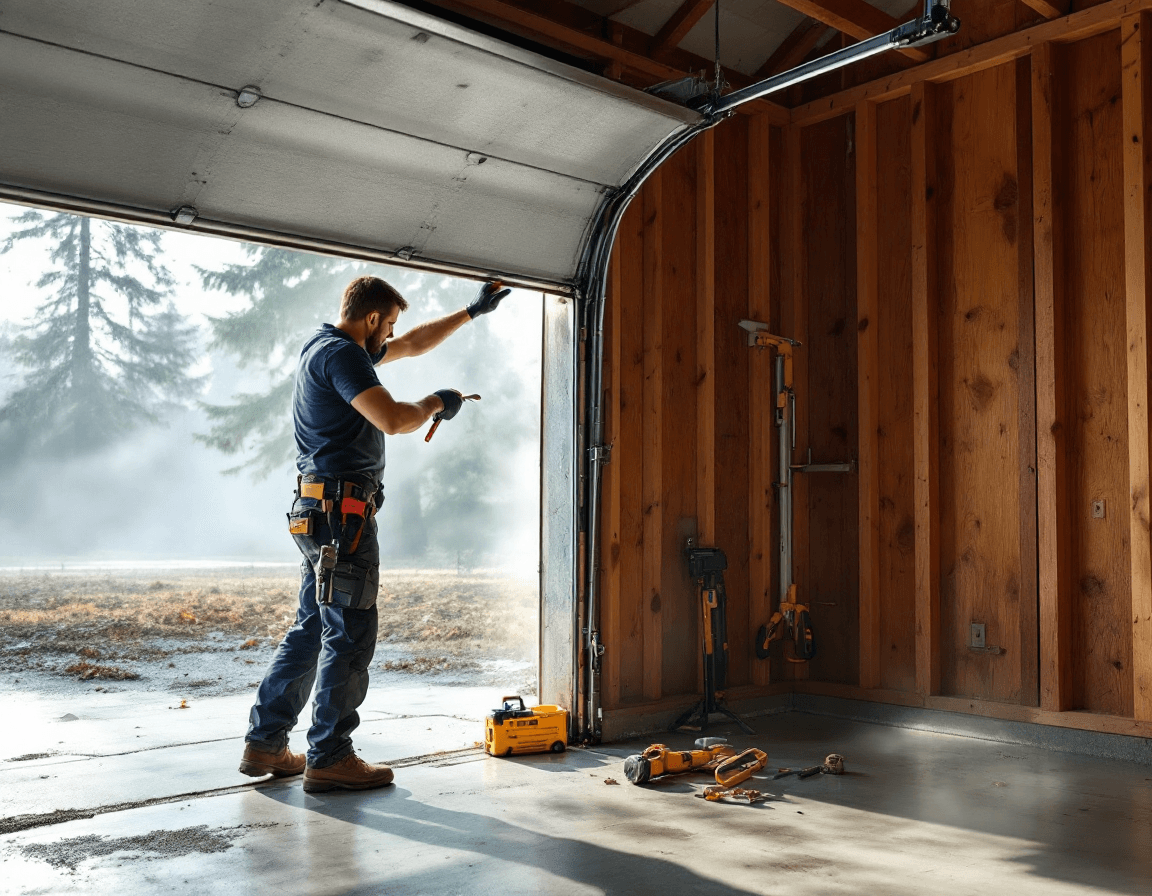
Off-track garage door repair in Ruston, WA is one of the more common calls we answer, and it is also one of the easiest to make worse. When a door leaves its track, the panels, rollers, and hinges can bind, bend, or crack within minutes if someone keeps operating the opener. Homeowners in the 98407 area often notice the problem only after the door has jammed halfway up or sits at an odd angle, and by then the question is usually how to get it back on track safely rather than whether it needs attention at all. This page explains what causes doors to derail in our part of Pierce County, what the warning signs look like, and what a licensed technician does to fix the problem.
Ruston is a small waterfront community tucked between Commencement Bay and the wooded bluffs of Point Defiance, and its homes see a mix of conditions that many inland neighborhoods do not. Salt-laden air drifts in off the water, winter rain soaks the area for weeks at a time, and the afternoon winds that funnel across the bay can push on large panel doors more than homeowners expect. Each of these factors puts stress on the steel track and the nylon or steel rollers that ride inside it. A door that has run smoothly for years can suddenly start to lean or stick after a stretch of wet, windy weather.
This guide is written for homeowners, landlords, and property managers who want a clear picture of the repair process. We cover the symptoms, the immediate steps that protect you and your equipment, the technical work involved in realignment, and the factors that influence cost. Pricing for most off-track repairs falls between $125 and $400, depending on the damage and the parts required, and we will explain what drives that range. Throughout, we emphasize one point above all others: the torsion springs and cables that hold your door's weight are under extreme tension, and that work belongs with a licensed professional.
Why Doors in Ruston Tend to Jump Their Tracks
Garage doors are engineered to run in a precise path, and the track system is the guide that keeps every panel moving in a straight line. In Ruston, several local conditions chip away at that precision over time. Moisture is the main culprit, because the steel tracks and the hardware that bolts them to the framing can develop surface rust in the damp months, and rust on a roller path creates friction that the door was never designed to overcome. Salt carried on the breeze from the bay accelerates this process, particularly on homes within a few blocks of the water.
Thermal movement also plays a role. Pacific Northwest winters can bring a cold snap followed by a warm, wet week, and the metal in tracks expands and contracts with those temperature swings. Over many seasons, this movement can loosen the brackets that hold the track to the wall or ceiling, causing the track to drift just enough that a roller catches an edge. A door that was perfectly square last fall may start to lean by a fraction of an inch, and that small shift is often the first step toward a full derailment.
Wind is the third factor, and it is especially relevant for homes with a view of the water. Gusts that push against a wide single-panel door can force the bottom corner out of the track, particularly if the door is partially open for ventilation or if the opener's safety features are not set correctly. Homeowners sometimes describe this as the door "jumping" during a storm, and in many cases the roller simply rode up past the guide lip. Once one side of the door has jumped, the opposite roller often follows, and the door ends up jammed at an angle.
Reading the Warning Signs Before a Door Fully Derails
Most off-track events do not happen instantly. They are preceded by a series of smaller symptoms that a careful homeowner can spot if they know what to look for. A door that begins to make a grinding or scraping noise on one side is often showing the first sign of a roller that is starting to ride out of its channel. A squeal or a sudden change in the sound the door makes while closing deserves attention, because it usually means something is rubbing where it should not.
Visual cues matter just as much. Walk outside and look at the gap between the top edge of the door and the header, then check the gap on each side between the door and the vertical track. If one gap is noticeably wider than the other, the door is likely leaning, and the track on the narrow side may be pushing against a roller. Look for any space where the bottom seal no longer meets the floor evenly, since a door that sits unevenly on the threshold may be riding on one roller more than the other.
Finally, pay attention to how the door behaves when you operate it manually or with the opener. A door that stops partway, reverses without an obvious obstacle, or requires extra force to move in one direction is telling you that the path is no longer clear. If you notice any of these signs, stop using the door until it has been inspected, because continued operation can bend track sections or tear rollers loose from their brackets. A repair that would have cost a modest amount when caught early can become a larger job once a track has been deformed.
- A grinding, scraping, or squealing sound that appears on only one side of the door
- A visible gap between the door and the vertical track that is wider on one side than the other
- A door that reverses, stalls, or stops partway without a clear obstruction
- Rollers that look flattened, cracked, or pulled partly out of their track channel
- The bottom seal making contact with the floor unevenly from left to right
What Happens Inside the Track When a Roller Pops Out
To understand why off-track repair takes skill, it helps to know how the system is built. Each side of a garage door has vertical track that holds rollers attached to the door panels by brackets and hinges. The rollers travel up the vertical section, then curve into a horizontal track near the ceiling, and the door's weight is carried through this path with the help of the springs. When a roller pops out of its channel, it no longer follows that curve, and the panel it is attached to is pulled out of alignment with the rest of the door.
Re-seating a roller sounds straightforward, but the technician must first relieve the load on the door so that nothing shifts unexpectedly during the work. This is where the torsion springs come into play. Those springs are wound under very high tension, and the technician must follow strict procedures to avoid releasing that energy. For an off-track situation where the springs are intact and the door is simply out of its channel, the work often focuses on the track and rollers rather than the springs, but the technician still needs to assess the spring system before lifting anything.
Once the door is safely supported, the technician checks each roller, bracket, and hinge for damage. A roller with a cracked wheel or a worn bearing will be replaced, and a bent hinge will be straightened or swapped out. The track itself is then inspected for dents, kinks, or gaps at the joints between sections. When everything is verified, the door is lifted back into the track, the rollers are seated fully in their channels, and the door is cycled several times to confirm it travels straight without binding.
Safe Steps to Take While You Wait for a Technician
When a door comes off its track, your first priority is safety, and the most important rule is to keep your hands and body away from the springs and the bottom of the door. Do not attempt to lift the door to force it back onto the track, and do not pull on the springs or cables for any reason. A door that is partially off track can drop suddenly, and the spring system can cause injury even when the door appears to be stable. Keep children and pets clear of the area until the problem is resolved.
If you need to get the door out of the way, disconnect the opener using the emergency release cord, which is usually a red handle hanging from the trolley. Once the opener is disconnected, the door can be moved by hand, but it should be moved gently and only as far as necessary to prevent additional damage. If the door is jammed and cannot move easily in either direction, leave it where it is, close the vehicle access, and use the side or walk-through door if you have one. Avoid any repeated attempts to run the opener, because each cycle can bend a track section or pull a roller further out of position.
Document the situation before you call for service. Take photos of the gap between the door and the track, the position of the rollers if they are visible, and any dents or damage on the track or panels. Note whether the problem appeared after a storm, a vehicle strike, or a noticeable change in weather, since that information helps the technician decide what to check first. When you call, describe exactly what the door is doing, because a clear description can help the technician plan the right tools and parts for your visit.
- Disconnect the opener using the emergency release, but do not force the door open or closed
- Keep hands, feet, and tools away from the springs, cables, and the lower edge of the door
- Stop running the opener until the door has been inspected
- Photograph the gap, track, and any visible damage before anything is moved
- Use an alternate entrance if the garage door is jammed and cannot be moved safely
Wind Off the Sound and Storm Damage Near Ruston Way
Homes in Ruston and along the waterfront stretch of Ruston Way face wind conditions that can be stronger than those farther inland. Winter storms that sweep across Commencement Bay can deliver sustained gusts, and the exposed position of some properties means the garage door takes the full force of the wind. Wide doors, such as double-car doors, have more surface area for wind to act on, which puts additional load on the rollers and the track brackets during gusty conditions.
A storm-related off-track event often shows a specific pattern. The door may be found with one side pushed slightly outward from the track, or with the top section bowed where the panels meet the header. In some cases, the bottom bracket on one side has been pulled free from the wall, allowing the track to shift. Technicians look carefully at these clues because they indicate whether the damage is limited to the rollers and track alignment or whether the structural components of the door have also been affected.
If your door was disturbed during a storm, do not assume the problem will resolve on its own when the weather improves. The bent track or displaced bracket will continue to stress the rollers every time the door is operated, and the damage tends to grow with each cycle. A technician can inspect the track mounting, tighten or replace brackets, straighten or replace bent sections, and confirm that the door is square before it goes back into regular use. Acting promptly keeps a storm-related repair from turning into a larger replacement project.
Vehicle Strikes, Bent Track Sections, and Impact Damage
A vehicle that clips the door, a delivery truck that backs into the driveway, or a bicycle that catches the bottom panel can all knock a garage door out of alignment. Impact damage is often the most dramatic cause of an off-track event, because a single hard hit can bend a track section, separate it from its joint, or crack a roller housing. Homeowners in Ruston sometimes notice these incidents only after the door begins to act strangely hours or days later, which is why it is worth inspecting the door after any contact.
Bent and dented track is a particular concern because it is difficult to correct with a simple reseating. A kink in the vertical track narrows the channel, so the rollers bind as they pass the damaged point. A separated section, where a joint has pulled apart, leaves a gap that catches the roller and can pull it out completely. Technicians will typically check the track with a straightedge and by running a roller through each section to identify where the path is restricted. Minor dents can often be straightened, while severely deformed sections are replaced to restore smooth travel.
The panels themselves can also be affected by impact. A dented or bent section may press against the track or the opposite side of the frame, creating friction that the opener was never designed to handle. Inspect the bottom panel, the hinges between sections, and the end caps for signs of stress such as cracked paint, popped rivets, or visible creasing. If the damage extends beyond the track and rollers, the technician will discuss whether a panel or hinge replacement is the more practical choice, since that affects the final cost of the repair.
How a Technician Re-Seats Rollers and Squares the Door
A professional off-track repair follows a sequence designed to protect both the technician and the equipment. The first stage is a thorough safety assessment, which includes confirming the condition of the springs, the cable drums, and the lift cables before any load is applied to the door. The technician then secures the door so it cannot move unexpectedly, and begins checking the rollers, brackets, and track for damage. This assessment helps determine whether the job is a straightforward reseating or whether additional parts will be needed.
Next, the technician works to restore the door's alignment. Rollers that have popped out are guided back into their channels, often with the door supported by approved clamps or lifting equipment. Bent brackets are straightened or replaced, and any track sections that are out of plumb or level are adjusted and secured. Technicians pay close attention to the squareness of the door, because a door that is correctly seated in one track but slightly skewed can still bind at the top or bottom. Measuring the gap on both sides and checking the diagonal dimensions helps confirm the door is true.
The final stage is testing and adjustment. The door is cycled slowly by hand and then by the opener to confirm it moves freely through its full range of travel. Any rubbing points are addressed, and the opener's force and travel settings are checked so the safety reverse system responds correctly. A technician will also review the lubrication of the rollers and hinges and suggest a maintenance plan. A door that has been properly realigned should move quietly and evenly, without leaning, scraping, or pausing.
Factors That Influence the Cost of an Off-Track Repair
Most off-track repairs fall in the range of $125 to $400, but the final figure depends on several variables. A simple reseating of one or two rollers, with no damage to the track or brackets, sits at the lower end of that range. Jobs that require replacing rollers, straightening or replacing track sections, or repairing bracket mounts move toward the higher end, because they involve additional parts and labor time. The condition of the door and the accessibility of the track also influence how long the work takes.
The type of door is another factor. Standard steel sectional doors with a common track layout are generally quicker to service than custom wood doors or specialty designs with unusual track geometry. Double-car doors can require more careful handling because of their weight and width, and the technician may need extra support during the lift. Doors with insulation or decorative glass panels may also require additional care to avoid damaging the panels during realignment.
It is also worth knowing what may and may not be included. If a repair reveals a worn torsion spring, cable, or drum that needs replacement, that work is a separate service with its own scope and pricing, and it must be performed by a licensed technician. Our technicians will explain any additional recommendations before proceeding, so there are no surprises. If you have questions about how the quote is built, ask for a clear breakdown of parts and labor before the work begins.
Keeping Tracks Aligned Through Wet Pacific Northwest Winters
Preventive care can dramatically reduce the chance of an off-track event, and the most effective steps are simple. Start by inspecting the tracks at least twice a year, ideally once in late fall before the heaviest rains arrive and once in spring after the wet season. Look for rust spots, loose bolts, and any gap between the track and the wall or ceiling brackets. Tightening loose fasteners and removing surface rust early keeps the rollers moving freely and reduces wear on the bearings.
Lubrication matters, but it must be done correctly. Use a lubricant recommended for garage door components, applied to the rollers, hinges, and the springs as directed by the manufacturer, and avoid spraying oil onto the tracks themselves. Track surfaces should be kept clean and free of debris, since grit and sand that accumulate near the bottom of the door can grind into the rollers. In salt-influenced areas, a periodic wipe-down of exposed hardware helps slow corrosion.
Watch for changes in how the door behaves through the seasons. If the door becomes noticeably harder to operate after a cold snap, or if it seems to lean more during windy weeks, schedule a service visit before the problem becomes an emergency. Keeping the opener's force and travel settings properly adjusted also helps, since an opener that pushes too hard against a binding door can accelerate damage. A short professional tune-up can catch small misalignments before they turn into off-track events.
- Inspect tracks and mounting brackets twice a year, especially before and after the wet season
- Tighten loose bolts and address surface rust before it spreads along the track
- Lubricate rollers and hinges with a garage-door-appropriate product, not general-purpose oil on the track
- Keep the area at the base of the track clear of sand, gravel, and debris
- Schedule a professional check if the door starts to lean, scrape, or operate unevenly
Service Notes for Point Defiance and Point Ruston Homes
Our technicians serve homes throughout Ruston, including properties near Point Ruston and the residential streets that lead toward Point Defiance. The mix of newer construction, older homes, and properties that sit close to the water means the door types and track conditions can vary considerably from one block to the next. Some homes have original steel doors that have been in place for decades, while others have recently installed doors with newer track systems. Each situation calls for a slightly different approach during realignment.
Properties in the 98407 area often have garages that receive heavy use, whether for vehicles, storage, or workshop space. Heavier loads and frequent cycling can increase wear on rollers and track brackets, which makes regular inspection more valuable. Homes near the waterfront may also see more moisture and salt exposure, so the hardware on those doors can deteriorate faster than on inland properties. Describing the age and exposure of your door when you call helps the technician arrive prepared.
Access to some Ruston driveways and garages can be tight, particularly on narrower lots. When you schedule a visit, let the office know about parking, gate codes, or any obstacles that may affect the technician's ability to reach the door. A clear description of the problem and the door's location helps us bring the right equipment on the first visit, which can save time and reduce the chance of a return trip.
Schedule Off-Track Repair in Ruston with a Licensed Technician
If your garage door has jumped its track, leans, binds, or has sustained damage from wind or impact, the safest and most reliable path is a licensed, bonded, and insured technician who can assess the springs, cables, rollers, and track together. Call Seattle Garage Door Fix at (888) 799-3819 to describe what your door is doing, and we will help you plan the next step. Please do not attempt spring or cable work yourself, and keep the door out of regular use until it has been inspected.