
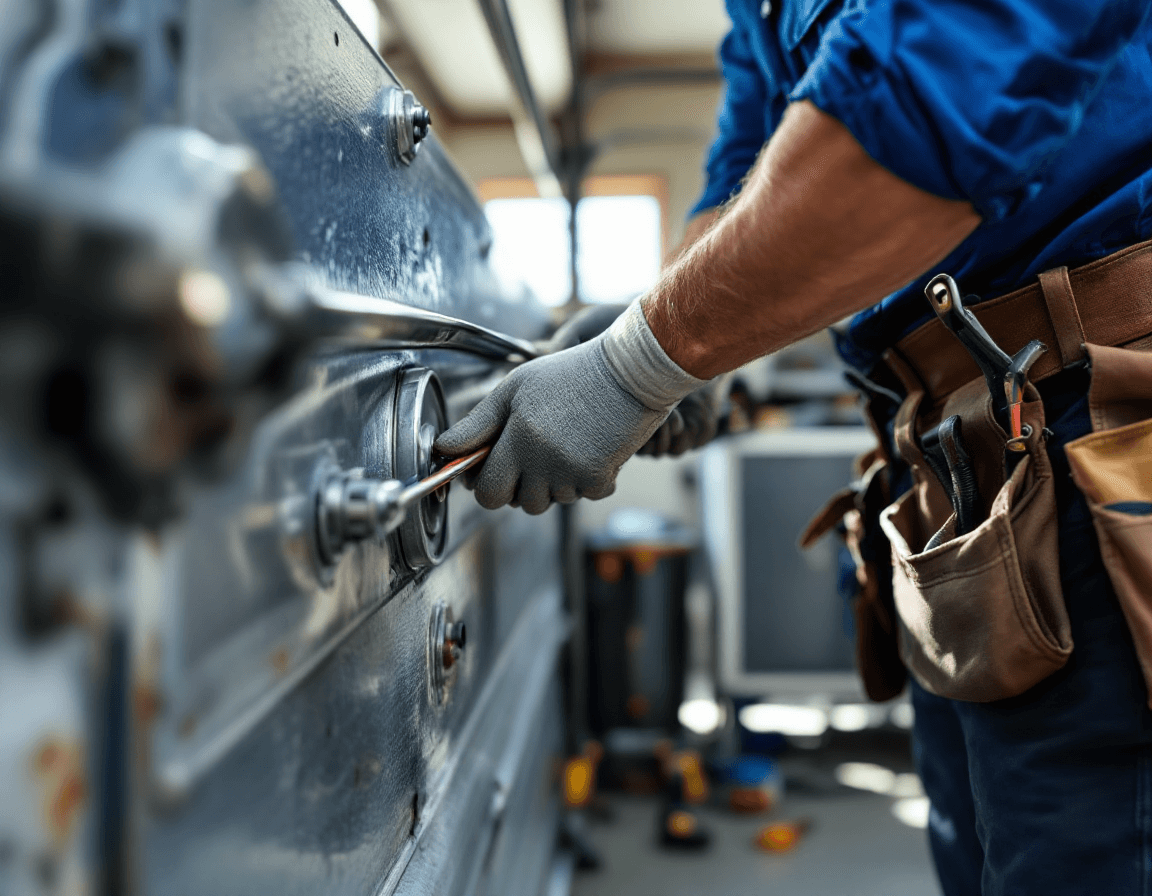
Garage door cable replacement in Ruston, WA is one of the more urgent repairs a homeowner can face, because a lift cable that has snapped or jumped off its drum can leave a heavy door hanging crooked, stuck halfway open, or dropping unevenly. Ruston is a small, compact town tucked between Tacoma's waterfront and the bluffs of Point Defiance, and its homes sit close to the moist, salty air that drifts in off Commencement Bay. Those conditions shape how cables wear, how they fail, and how quickly a minor fray becomes a broken line. This page explains what cable failure looks like on local doors, why it happens here, and what a careful repair involves.
Many Ruston homeowners first notice a problem on an ordinary morning, when the door stops moving smoothly or makes a sound they have never heard before. Some discover the issue only after a wind storm rolls off the Sound and rattles the door in its tracks. Others notice a slight tilt in the door that they had assumed was just the way it sat. Whatever the first clue, the safest course is the same: keep people and vehicles clear of the door, avoid forcing it, and call a licensed technician who handles spring and cable systems every day. The sections below walk through what to look for and what a professional can do about it.
Why Ruston Garage Doors Wear Their Cables Faster
The lift cables on a residential garage door do much more work than most people realize. Each cable runs from the bottom bracket of a door panel up over a pulley and wraps onto a grooved drum at the end of a torsion shaft, and together with the springs they carry most of the door's weight. Because the cable is constantly flexing around the drum and pulley, small amounts of wear accumulate over thousands of cycles. In a dry climate that wear is mostly mechanical, but in the Pacific Northwest moisture and salt add a chemical element that speeds up deterioration.
Ruston's location makes that combination especially relevant. Homes here regularly deal with long stretches of damp weather, condensation in unheated garages, and the fine salt spray carried by onshore winds from the water. Steel cable is galvanized to resist corrosion, but once the zinc coating is scraped, bent, or worn through at the drum groove, rust can start quietly inside the strands. A cable can look acceptable from the outside while its interior wires have already begun to weaken, which is why a visual check alone often misses the early stages of failure.
Doors in older Ruston neighborhoods also tend to have had their cables in place for many years, sometimes through several seasons of heavy rain and a few hard winter winds. Newer construction near the Point Ruston waterfront may have fresher hardware, but even there the damp air and temperature swings will eventually take their toll. Recognizing that a cable is living in this environment helps set realistic expectations about how long it should last and when to schedule an inspection.
Listening for the Crack: What a Snapped Lift Cable Sounds Like
A broken lift cable usually announces itself with a sharp, loud snap that sounds like a small gunshot or a metal bar hitting concrete. Homeowners often describe hearing it from inside the house or from the driveway, and the noise is usually the single clearest sign that something has gone seriously wrong. After the snap, the door may drop a few inches, stop moving entirely, or shift to one side while the opposite side remains where it was. In some cases the door will still look intact but refuse to open past a certain height.
Sometimes the sound is less dramatic. A frayed cable may make a dry scraping or ticking noise as it rubs over the pulley, especially during the first few feet of travel. You may also hear a faint popping that happens only in cold or damp weather, when the metal contracts slightly and the damaged strands catch differently. These softer noises are an early warning, and waiting until the cable actually breaks usually means a more difficult and more expensive day for everyone involved.
If the snap has already happened, do not attempt to lift the door by hand or try to reattach the cable yourself. The spring system may still be under tension, and even a partly broken cable can release that energy unpredictably. Keep children and pets away from the door, use the manual release only if you understand the door's current position, and call a licensed technician promptly. A door that has stopped in mid-travel is safer to leave alone than to coax into motion.
Crooked, Lopsided, or Binding: Reading the Door's Posture
One of the most useful diagnostics for a cable problem is the way the door sits and moves. When both cables are balanced and in good condition, the door rises and lowers as a level unit, with the bottom edge staying parallel to the floor. When one cable has stretched, frayed, or come partially off its drum, the door may begin to hang lower on one side, creating a visible tilt or a gap at the bottom seal. That tilt often becomes more obvious as the door reaches the top of its travel.
Binding is another clue that deserves attention. If the door closes unevenly, catches at one track, or grinds on one side only, the lift system may be pulling unequally because a cable is slipping, tangled, or losing tension. Sometimes a door will appear to bind in one spot and run freely in another, which can point to a cable that has jumped a groove at a particular height on the drum. These symptoms can also come from track alignment or roller problems, so a professional should confirm the cause before parts are replaced.
Ruston homeowners sometimes assume that a lopsided door is simply settling with age, but a sudden change in posture is rarely harmless. Measuring the gap at the bottom corners with a level or a straightedge can give you a rough sense of how far the door has shifted. Take note of which side is affected and whether the problem appears in all weather or only in the damp months. That information helps the technician locate the failing component faster and avoid unnecessary work.
Here are a few posture-related signs worth recording before you call:
- The bottom edge of the door sits noticeably lower on one side.
- A gap appears under one corner that did not exist last season.
- The door stops or jerks at one specific height while running smoothly elsewhere.
- The door closes unevenly, with one side reaching the floor before the other.
Inside the Drum: How Cable Winds and Why It Jumps
To understand why cables fail, it helps to picture how they wind. The cable attaches to the bottom bracket of the door and feeds up toward a drum mounted on the torsion shaft above the opening. As the door lowers, the cable unwinds from the drum in a precise spiral, and as the door rises, it winds back on in the same pattern. Each drum has a grooved channel designed to guide the cable so that every turn sits neatly beside the last, which keeps tension even and prevents the cable from rubbing against itself.
When a cable comes off the drum, it is usually because the tension has become unequal or the cable has slipped out of its guide channel during operation. A loose or frayed cable can loosen its hold on the drum, and once it starts to overlap, the next lift can drag it out of the groove entirely. A cable that has tangled around the drum or wrapped unevenly may also bind the door, and forcing the door under those conditions can damage the drum, the bracket, or the shaft.
Drum service often accompanies cable replacement because the drum groove itself can wear or deform over time. A worn or cracked drum can cause a new cable to fail prematurely, so a technician will typically inspect the groove, the set screws, and the cable anchor during the same visit. Replacing only the cable without checking the drum can leave the root problem unaddressed. A thorough repair treats the cable and drum as a matched pair.
Rust, Fray, and the Marine Air Off Commencement Bay
Salt and moisture are the quiet enemies of garage door hardware in Ruston. Onshore winds carry fine mist from Commencement Bay across the town, and that mist settles on exterior surfaces, including the garage door, the tracks, and any cable that sits exposed to the outdoors. Over time the salt accumulates in small pits and crevices that hold moisture long after the rain has passed. Cable strands are especially vulnerable because the spaces between wires can trap both water and salt.
Frayed cables often start with small broken wires on the outside of the strand. Those broken wires catch on the drum and pulley, which accelerates the fraying and creates a rough surface that stresses the rest of the cable. A cable that looks dull, brittle, or slightly orange-brown at the bends is showing the early stages of rust, and it should be inspected soon. The problem is more pronounced near the bottom bracket, where the cable is most exposed to splashing and where it bends sharply as it enters the track area.
Homeowners can reduce the effects of this environment by keeping the garage well ventilated, wiping down exposed hardware occasionally, and avoiding long periods of standing water near the door's base. Still, no maintenance routine can fully offset constant marine humidity. The most reliable strategy is to schedule periodic inspections, especially after particularly wet or windy seasons, so that a cable showing early corrosion can be replaced before it fails during an ordinary morning commute.
Why Ruston Homeowners Should Never Touch the Spring First
Cable work is inseparable from the spring system, and that is why it should be handled by a licensed professional. Most residential doors use either torsion springs mounted on a shaft above the opening or extension springs running along the horizontal tracks. Torsion springs store an enormous amount of energy when wound, and mishandling them can cause serious injury. Even experienced homeowners underestimate how quickly a spring can release, and a single slip can be enough to cause lasting harm.
A cable replacement typically requires the door's tension to be fully released before the old cable can be removed and the new one fitted. That process involves specialized winding bars, careful measurement, and a clear understanding of how the spring and drum interact. Attempting it without training risks not only personal injury but also damage to the door, the opener, or the drum. In many cases, what looks like a simple cable swap turns out to involve a broken spring, a bent shaft, or a damaged bearing that needs attention too.
Ruston homes often have garages with limited working space, sloped driveways, and older doors with mismatched hardware from previous repairs. Those conditions make improvised repairs even more dangerous. A licensed technician brings the right tools, the proper replacement parts, and the training to work safely in tight quarters. If a spring is involved, the repair is not a do-it-yourself project, and the safest decision is always to call for help.
What a Professional Visit Typically Covers
A well-run cable repair visit begins with a careful inspection rather than an immediate parts swap. The technician will check the door's balance, examine the cables for fraying, rust, and kinks, and look at the drum grooves and anchors. They will also confirm whether the springs are intact, whether the tracks are aligned, and whether the rollers and hinges are moving freely. That broader view matters because a failed cable often means other components have been under stress.
Once the diagnosis is clear, the technician will explain the options. In many cases the repair involves replacing the damaged cable, inspecting or replacing the drum, and checking the spring tension to confirm it matches the door's weight. The door will then be tested through its full range of motion to confirm smooth, level operation. A good technician will also point out any worn parts that are not yet failing but will need attention soon, so you can plan rather than react.
Homeowners in the Ruston area should expect clear communication throughout the visit. You should understand what failed, what was replaced, and why. If anything about the door's condition seems unsafe to continue using, the technician should say so plainly. Asking questions during the visit is a good habit, and it helps you learn how your particular door works so you can recognize early warnings in the future.
Price Expectations for Cable Work in the 98407 Area
Cost is one of the first questions homeowners ask, and it is reasonable to plan for it. For most cable replacements, pricing falls in the range of $110 to $300, depending on the door's size and weight, the type and condition of the cable, and whether a drum or other related part also needs service. Doors that are heavier, wider, or equipped with more complex hardware can sit toward the upper end of that range. A quote should always be given after an inspection so you know exactly what work is included.
Several factors influence the final figure. A simple cable swap on a standard single-car door usually costs less than a repair that also requires drum replacement or spring adjustment. Emergency visits, when a door has stopped in an unsafe position, may be scheduled differently than a planned repair. Ask whether the quote covers the cable, the labor, the drum inspection, and a final balance test, so there are no surprises when the work is complete.
Before approving any work, ask the technician to explain the diagnosis in plain language and to show you the damaged part if possible. A reputable company will be transparent about what needs replacing and why. Taking time to compare the scope of work, rather than focusing only on the lowest number, helps ensure the repair will actually solve the problem rather than leaving you with a second visit next month.
Preventive Habits That Stretch Cable Life
Although cables eventually wear out, a few habits can extend their working life, especially in a damp coastal setting. Periodically inspecting the cables from a safe distance, with the door closed and the opener disconnected, can reveal early fraying or rust. Look for broken strands, shiny or flattened spots, and any discoloration near the bends. Keep the door's bottom seal and tracks clear of debris, since grit and grime can accelerate wear on moving parts.
Lubrication helps too, but it should be done with care. Use a garage-door-appropriate lubricant on the rollers, hinges, and track surfaces, and avoid spraying oil directly onto the cables, which can attract dirt and make the strands harder to inspect. Wiping down exposed hardware after long periods of salt-laden fog or heavy rain can slow corrosion. Ventilating the garage, especially in winter, reduces condensation that can gather on steel parts overnight.
Finally, pay attention to how the door behaves across the seasons. A door that starts to sound different during the first cold snap or the first heavy rain may be giving you a clue about tension or cable condition. Making a note of those changes and mentioning them to your technician during routine service can help catch problems early. Preventive care will never replace a professional inspection, but it can keep small concerns from turning into emergencies.
When Replacing One Cable Isn't Enough
Garage doors are built with two lift cables, one on each side, and they are designed to share the load. When one cable fails, the other has usually been under similar stress and may be close to its own limit. For that reason, many technicians recommend inspecting and, in many cases, replacing both cables at the same time. Replacing only the failed side can leave the door with mismatched tension and an uneven lift, which often leads to a second failure within a short period.
Other parts can also be affected. A cable that jumped off its drum may have damaged the drum groove, bent a bracket, or stressed the bearings on the shaft. Rollers that have worn flat or bent tracks can cause the cable to bind and fray faster than normal. A thorough inspection looks at the whole lift system so that the repair addresses the cause as well as the symptom.
If you have already replaced a cable once and it failed again, that is a strong signal that something else in the system needs attention. Repeated cable failures are rarely bad luck alone. Ask the technician to look at spring tension, drum condition, track alignment, and the door's balance before assuming the problem is simply a defective part. Addressing the underlying issue is the most reliable way to protect your door, your vehicles, and the people who use your garage every day.
If your Ruston garage door is hanging crooked, has made a sharp snapping sound, or has stopped partway up or down, please do not try to fix it yourself. Call Seattle Garage Door Fix at (888) 799-3819 to schedule a licensed technician who can inspect the cables, drum, and spring system safely and explain your options before any work begins. Prompt attention keeps a manageable repair from becoming a bigger problem.