
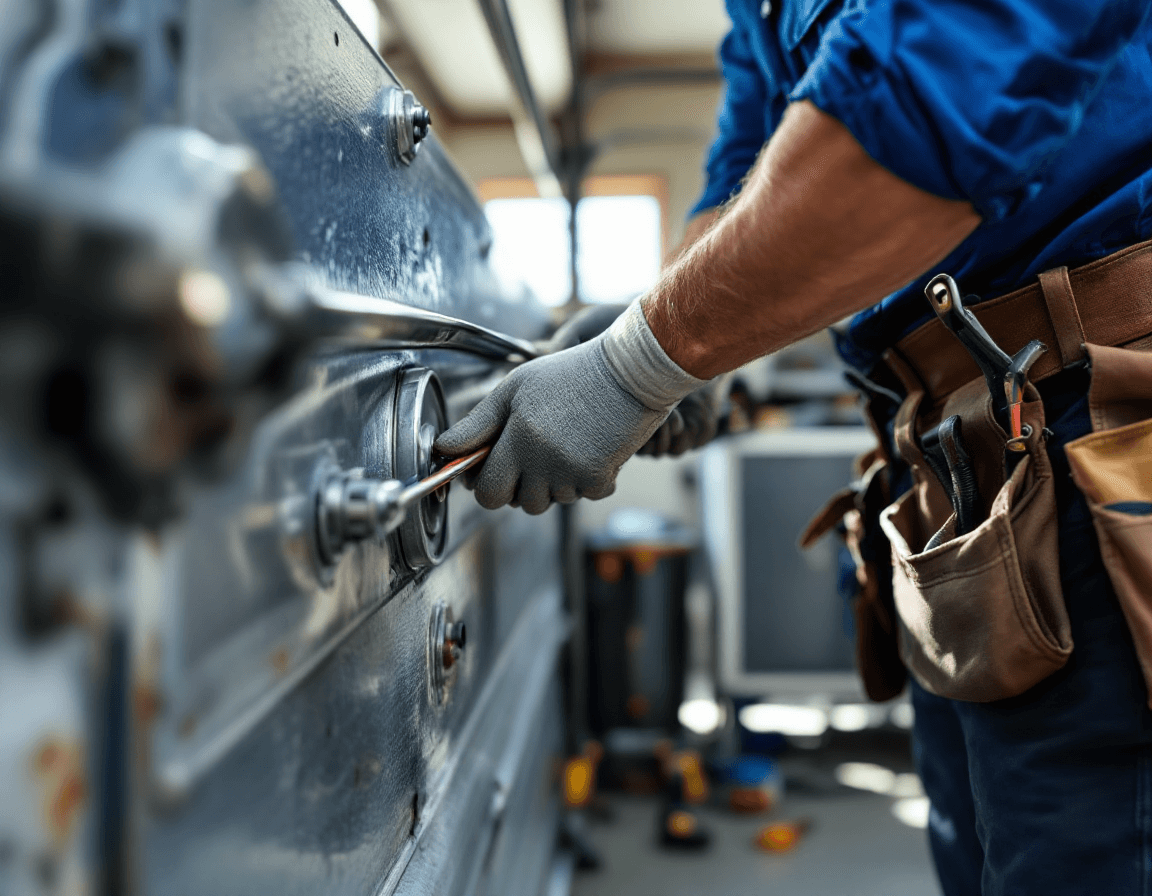
Garage door cable replacement in Fircrest, WA is one of the repairs homeowners call us about most often, and it rarely improves by waiting. Lift cables carry most of the weight of a typical sectional door, so when one lets go, the door may drop unevenly, jam in its track, or sit partly open while looking almost normal. Many homes in the 98466 area were built when a single-car or two-car garage was a modest addition, so the doors and hardware have often spent decades absorbing damp winters. That history shapes how cables wear out and when they fail.
The Pacific Northwest climate does much of the damage quietly. Winters bring long stretches of rain and humidity, and the moist air that drifts inland from Puget Sound speeds up corrosion on bare steel. A cable can look intact from a few feet away while rust works through the strands where it crimps to the bracket or wraps the drum. Temperature swings in late fall and early spring add repeated expansion and contraction that fatigues the metal, and when a cable finally fails, it often does so with a sharp crack that startles everyone in the house.
This page explains what cable failure looks like, why it happens here, what a professional replacement involves, and where the limits of a do-it-yourself approach lie. Lift cables operate under serious tension, usually balanced by torsion springs above the door, and mishandling them can cause injury. We are a licensed, bonded, and insured garage door company, and we will always direct homeowners to a qualified technician for spring-related and cable work. Read on for the warning signs to watch for and the steps that protect your door and your family.
Recognizing a Snapped or Dislodged Lift Cable
A snapped cable usually announces itself. Homeowners often describe a sharp bang from inside the garage, followed by a door that will no longer lift smoothly or hangs at an angle. In many cases the door still closes, but it may thud down or stop short of the floor. If you hear a noise like that, avoid pulling on the door by hand and keep people, pets, and vehicles clear of the opening until someone can inspect it. Those first few minutes matter more than most people expect.
A cable can also come off the drum without breaking. The drum is the grooved pulley mounted at each end of the torsion shaft, and the cable should wind neatly into its channel as the door rises. If the cable jumps out of its groove, you may notice slack on one side, a loose loop lying along the track, or a drum that looks tangled. This is common after a door has been forced open by hand or after one side has been struck by a ladder, a bicycle, or a vehicle.
Subtler cues matter too. If the door hangs crooked, rises higher on one edge than the other, or binds in the track on one side, a cable may be stretched or unseated. Many people first notice the problem when the opener strains or the door reverses unexpectedly. Any of these signs deserves a closer look, and that look should come from a professional rather than a quick tug on the door.
Why Pacific Northwest Moisture Wears Out Cables Faster
Western Washington is known for gray, damp months, and garage doors feel that more than most parts of a house. Moisture settles on hardware, and bare or lightly coated steel cable can begin to show surface rust long before it loses real strength. In a garage with limited ventilation, the air can stay humid for days after a rainstorm. The problem worsens when the garage also holds laundry, recycling, or a water heater that adds condensation to the air.
Coastal air carries a faint salt presence that accelerates corrosion on metal. Fircrest sits within reach of the Tacoma shoreline and the broader influence of the Sound, so homes here are not immune to that effect. Rust rarely looks dramatic at first. It often appears as a dull orange film, a roughened texture, or small pits near the crimped ends of the cable and where the cable bends across the drum. Those spots are exactly where failure tends to begin.
Temperature cycling adds another layer of stress. Cold mornings in winter and warm afternoons in summer cause the cable, the springs, and the door panels to move at slightly different rates. Over years, that movement fatigues individual wire strands. A cable can look acceptable from a distance while broken wires remain hidden inside the bundle, which is why a visual check should always be paired with a professional evaluation.
Frayed Cables, Rust Spots, and What Each Condition Means
Not every cable problem is an emergency, but every damaged cable deserves attention. Fraying appears as individual wire strands sticking out from the braided steel, often near the end fittings or where the cable bends around the drum. Rust signals a different problem: the protective coating has failed, and the steel is losing its margin of safety. Either condition means the cable should be evaluated soon rather than after the next wet season.
Homeowners sometimes ask whether a rusty cable can be wiped down and kept in service. Surface cleaning does nothing for internal corrosion, and once a cable has pitted, its rated strength is compromised in ways you cannot see. Lubricating a damaged cable does not restore it either. Replacement is the appropriate fix, and replacing both cables together is usually recommended so that the door lifts evenly and the remaining cable is not carrying a disproportionate load.
Stretch is the third condition worth knowing about. A stretched cable lets one side of the door sit lower than the other, and the door may appear to level out when you lift it by hand but not when the opener runs. Stretch often develops alongside worn springs, so the whole system should be inspected rather than focusing only on the cable. Here are the common warning signs that justify a service call:
- A visible wire strand, kink, or bulge anywhere along the cable
- Orange or brown rust at the crimped ends or on the drum surface
- One side of the door sitting noticeably l
How Long Garage Door Repairs Take
Speed matters when your door is down. In Fircrest (Pierce County), a typical spring or cable repair takes about an hour, a roller set a bit less, and an opener installation a couple of hours. Stocked trucks mean one visit, not a string of appointments.
Our Work Is Guaranteed
Confidence matters when someone works on your home. Every Seattle Garage Door Fix repair and install is covered by our workmanship warranty, with manufacturer warranties on the parts. If anything isn't right, we come back and fix it.
We earn that guarantee by doing it right the first time: quality parts, manufacturer specs, and a full system test before we pack up. It's why so many Fircrest (Pierce County) jobs come to us by word of mouth.
The Safety Systems Protecting Your Family
Modern garage doors have two key safety systems, and both must work. The photo-eye sensors near the floor project an invisible beam; if anything breaks it while the door is closing, the door reverses. The auto-reverse force setting makes the door back off if it contacts an object. We test both on every Fircrest (Pierce County) service call, because a failed safety system can be dangerous — especially in homes with children or pets.
How We Protect Your Home During Service
We treat your Fircrest (Pierce County) home the way we'd want ours treated. Our technicians arrive in clean uniforms and marked vehicles, protect your floors and belongings, and clean up completely before they leave. You'll always know who's coming, and every technician is background-checked, licensed, and trained on the brands we service.
Seasonal Garage Door Care in the Northwest
Our region's weather puts garage doors through a lot. Cold snaps thicken old lubricant and make brittle springs more likely to snap, which is why so many breaks happen on the first freezing morning. Damp fall and winter months accelerate rust on cables and springs. A quick seasonal routine — lubricating moving parts before winter and clearing the tracks of leaves and grit — keeps your Fircrest (Pierce County) door reliable year-round.
What to Do While You Wait for Your Technician
If your garage door has failed, a few simple precautions keep everyone safe until we arrive. Don't try to force the door open or closed — if a spring or cable is broken, the door is unbalanced and can fall or snap back. Avoid using the opener, which can worsen the damage. Keep children and pets away from the door, and park vehicles clear of its path.
Got a car stuck inside? The red manual-release cord disconnects the opener so you can lift the door by hand — but only if the springs are still intact. If they're not, wait for us. Our Fircrest (Pierce County) technicians will make the door safe and get you moving again fast.
Common Garage Door Myths
A few garage door myths cost homeowners money. One is that a noisy door just needs oil — often it's worn rollers or loose hardware that oil only masks. Another is that you can safely replace a spring yourself; in reality, springs store enough energy to cause serious injury. And many people assume a door that works is a door that's safe, when the auto-reverse and sensors may have quietly failed. We set the record straight on every Fircrest (Pierce County) visit.
Modern Convenience & Security
If your opener is more than a few years old, you're missing modern conveniences. Wi-Fi control, open/close alerts, guest access, and battery backup are now standard features that Fircrest (Pierce County) homeowners love. We can often retrofit smart control to your current opener, or upgrade you to a connected model.
Why Fircrest (Pierce County) Homeowners Recommend Us
In a trade where trust is everything, Fircrest (Pierce County) homeowners choose Seattle Garage Door Fix because we show up when we say we will, keep the work area clean, explain what we find without the jargon, and quote fairly. That's how we've earned a Seattle Garage Door Fix reputation we're proud of.
Decoding the Sounds Your Door Makes
New noises are early warning signs. In Fircrest (Pierce County) homes, a bang means a broken spring, grinding means worn rollers or a failing gear, squeaks mean dry parts, and rattles mean loose hardware. Paying attention to what you hear lets us fix the cause before the door quits entirely.