
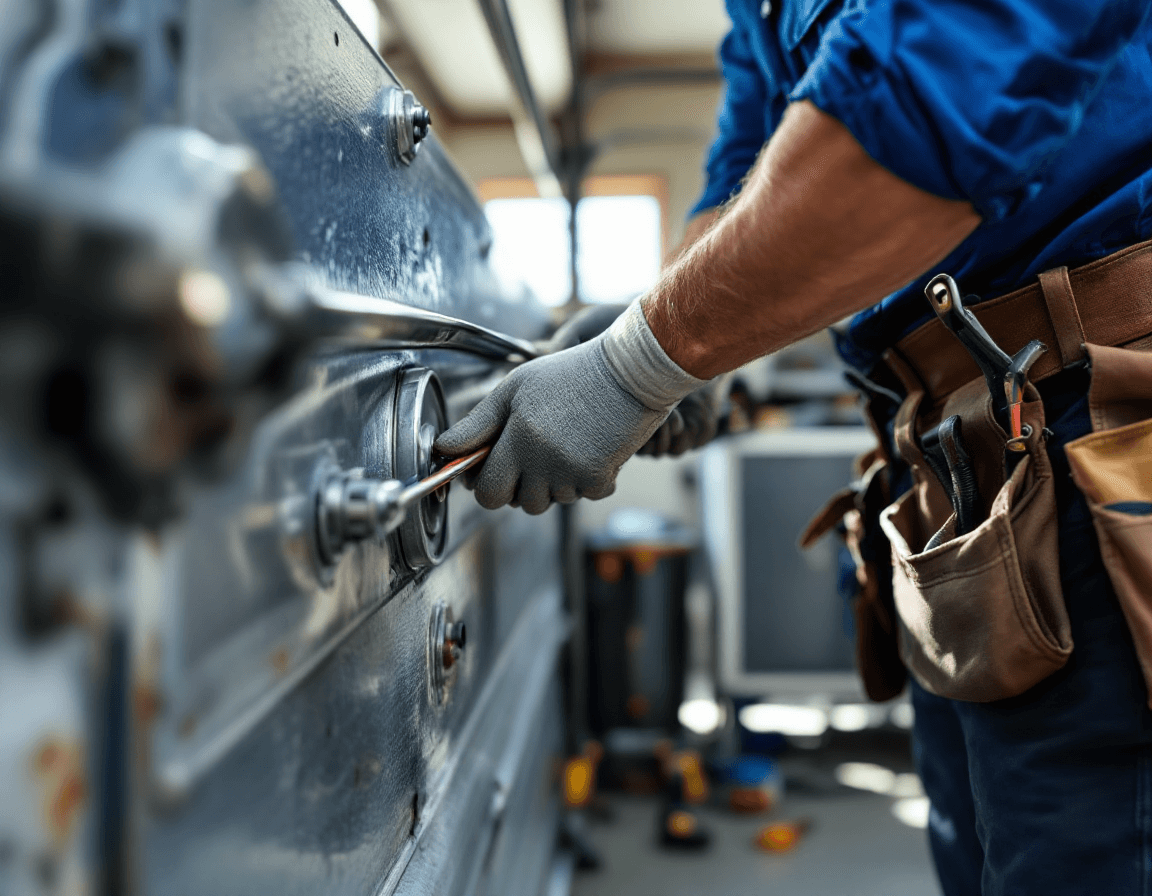
Garage Door Cable Replacement in Tacoma, WA is one of the most common repairs we handle, and it is also one of the most important to get right. The lift cables on a garage door carry the weight of the door every time it moves, and when one fails, the door can drop unevenly, jam in its track, or come down with enough force to cause real damage. Homeowners from the Downtown core to the quieter blocks of Lakewood-adjacent Pierce County call us after a loud bang in the garage, a door that suddenly sits crooked, or a cable that has simply frayed out of view. Each situation looks a little different, but the underlying parts are the same.
Tacoma's climate plays a bigger role in cable problems than many people expect. Our winters are long, gray, and wet, and the air stays damp for weeks at a stretch, which is hard on any exposed steel. Add the salt-tinged breezes that drift in from Commencement Bay on certain days and the moisture that collects in older detached garages, and you have an environment where galvanized cable can develop surface rust, and where that rust slowly weakens the strands from the inside. This page explains what to watch for, how the system works, what a cable replacement typically involves, and where the safe boundaries are for homeowners who want to understand their own door.
Our team works across Tacoma and the surrounding parts of Pierce County, and we have learned that the same repair can feel different depending on the house. A craftsman bungalow near Proctor, a split-level off a hillside street on Hilltop, and a newer attached garage in a planned development each present their own quirks. The goal of this guide is to give you enough practical knowledge to describe your problem clearly, to make a sensible decision about what to do next, and to know when a licensed technician needs to take over. If you are reading this with a door that is currently stuck or hanging wrong, please keep it closed and keep people and vehicles clear until someone can look at it.
Reading the Cable Story Your Door Is Telling You
Most garage doors give some warning before a cable gives out, although the warning is easy to miss if you only open the door once or twice a week. The most obvious sign is a door that hangs lower on one side than the other, which often shows up as a visible gap at the bottom corner or a panel that appears to sit at a slight angle when the door is closed. Some homeowners notice that the door closes unevenly, touching the floor on one side while the other side still has space, or that it seems to bind in the track near the top of its travel. Either pattern suggests that one side is no longer carrying its share of the load.
Sound is another useful clue. A sharp snap followed by a sudden drop is the classic signature of a cable that has broken, and in most cases the door will stop moving wherever it happened to be when the failure occurred. A softer, repeated popping or a grinding noise during operation can point to a cable that is fraying or a drum that is not spooling smoothly. If you see loose cable wraps sitting on the drum in an untidy pile, or a cable that appears to have slipped off the edge of the drum, the system has already moved past the early warning stage.
Visual inspection is worth doing carefully, but only with the door closed, the opener unplugged or the power disconnected, and the door resting on the floor. Look for rust-colored spots, flattened or kinked sections, and strands that stick out like tiny wires from the cable. Check the cable where it wraps around the drum and where it passes over the pulley at the top of the track. If you find any of these conditions, the cable has reached the point where a professional should replace it, not patch it.
- A door that sits lower or tilted on one side when closed
- A loud snap, bang, or sudden drop during normal operation
- Cable strands that look fuzzy, flattened, or broken along the length
- Orange or brown rust spots, especially near the drum or top pulley
- Cable loops piled up on the drum instead of wrapped neatly in order
- A door that stops halfway and will not move in either direction
How Tacoma's Damp Winters Wear Down Steel Cable
Garage door cable is typically galvanized steel, which means a zinc coating is meant to protect the steel core from moisture. In a dry climate, that coating can last a long time. In the Pacific Northwest, where rain can fall for days and humidity rarely drops far in the cooler months, the coating gets tested every season. Once the zinc is scratched, worn, or chemically broken down, moisture reaches the bare steel and begins forming rust. Because each strand in a cable is made of many smaller wires, rust can attack the interior long before anything looks obviously wrong on the outside.
Tacoma's garages present several conditions that accelerate this process. Many homes in older neighborhoods have detached garages with poor ventilation, dirt floors in some older outbuildings, or gaps at the bottom of the door that let in wind-driven rain. Cars parked inside carry in road moisture and winter grime, and that dampness can linger on the door hardware for days. Garages that sit low or near drainage paths can also collect condensation on cold mornings, which means the cable may be wet more often than the homeowner realizes.
Temperature swings add another layer of stress. Cold mornings make steel and lubricant stiffer, which can cause the cable to bind slightly as it winds, and warmer afternoons can soften old grease and let dirt collect on the drum. Over time, these repeated cycles can cause small, unseen fatigue in the strands near the drum, which is one reason cables often fail in the same place every time. A technician who sees a failure pattern at the drum end is usually looking at a combination of moisture, friction, and heat cycling rather than a single cause.
Salt and road grime deserve a mention as well. Homes closer to the water or along busier arterial streets can pick up more airborne particles and winter road residue, and those contaminants can settle on hardware and speed corrosion. Washing the lower section of a garage door panel and wiping down visible hardware after a wet stretch of weather is a small habit that helps, though it does not replace inspection. If you live in a location where you can see rust on tracks, hinges, or brackets, it is reasonable to assume the cables are facing the same conditions.
Inside the Drum: What Actually Holds Your Door Up
To understand why cable replacement is a job for trained hands, it helps to know what is happening inside the mechanism. Most residential garage doors use a torsion spring system, with a steel shaft running across the top of the opening. The spring stores large amounts of energy when it is wound, and the cables attach to drums at each end of the shaft. As the door lowers, the cables unwind from the drums, the spring winds up, and as the door rises the process reverses. The cables themselves are not what lifts the door; they are the connection that lets the stored spring tension do the work in a controlled way.
That is exactly why cable work carries serious risk. Torsion springs and cable tension can release suddenly and with considerable force, and the drum and cable assembly is designed to be installed and adjusted under specific conditions. A homeowner who removes or loosens a cable without first securing the door and relieving spring tension can be injured, and the door itself can drop unpredictably. Even when a cable has simply come off the drum, the door may still be supported by the spring system, which means the situation is not a simple reattachment.
This is also why we are firm about the cable and spring boundary. A licensed technician uses specialized winding bars, safety clamps, and a systematic approach to lock the shaft, relieve tension, and then rebuild the cable path correctly. The cable must be seated in the correct groove on the drum, routed through the pulley at the right angle, and tensioned evenly on both sides so the door tracks straight. When these steps are done properly, the door should lift and lower with balance and without binding.
For most homeowners, the practical takeaway is simple. You can safely observe the door, describe the symptoms, and keep the area clear. You should not attempt to wind springs, pull cable under load, or remove drums on your own. Those tasks belong to professionals who handle spring and cable work every day and who understand the force involved.
Older Homes, Alley Garages, and Hilltop Hillsides: Tacoma Door Quirks
Tacoma has a remarkable range of housing styles, and garage doors reflect that variety. Older homes in the North End and Proctor often have single-car garages that were built decades ago, sometimes with narrower openings, older track profiles, and hardware that has been modified several times over the years. In these cases, a cable replacement may reveal mismatched parts, drums that do not quite match the spring size, or track alignment that has shifted as the building settled. Careful measurement and a fresh look at the whole system are usually needed before we can say a cable job is straightforward.
Alley-accessed garages are common in several parts of the city, and they bring their own challenges. Doors on these structures often see more exposure to wind, road spray, and debris, and some have been retrofitted with openers that place extra demand on the cables. Garages built into hillsides or on steeper lots, as many on Hilltop are, may also have uneven floors or sloped driveways that make the door appear to hang differently even when the cables are sound. A technician needs to tell the difference between a level problem and a cable problem before making a recommendation.
Stadium District and Downtown Tacoma have their own mix of attached and detached garages, including converted structures and newer infill homes. Many of these doors are heavier than they look, especially those with insulated panels or glass inserts, and that added weight changes how cable tension behaves. When a cable fails on a heavier door, the drop can be more abrupt, which is one reason we recommend treating any cable issue on a large or insulated door as a same-day safety concern. Knowing the door type helps us choose the right replacement cable and drum configuration.
Finally, the age and maintenance history of the opener and springs matter. A door that has been running on the same springs for fifteen or twenty years may be closer to the end of its spring life than the cable itself suggests. We usually check the spring condition while the cable is being serviced, because replacing a cable on a worn spring can lead to another failure soon after. This is a conversation we want to have openly with homeowners, so that the repair decision reflects the full condition of the door.
Cable That Jumped the Drum: Why It Happens and What It Means
One of the most frustrating situations for homeowners is a cable that has come off the drum and sits tangled or loose along the shaft. This often happens when a cable has stretched or worn at a specific point, when the drum groove has been damaged, or when tension has become uneven because one spring or cable is weaker than the other. It can also follow an impact, such as a vehicle bumping the door or a child pulling on the bottom panel. The door may appear to stop abruptly with one side higher than the other, and the cable may look as though it has simply wandered off its path.
When a cable jumps the drum, the door is no longer balanced, and continued operation can damage the track, the panel hinges, or the opener. Some homeowners try to push the cable back onto the drum with their hands or pry it into place with a screwdriver. That approach is risky, because the cable is under spring tension even if the door looks stationary, and a sudden release can cause injury. It can also worsen drum damage and make the eventual repair more expensive.
A technician who is called to a jumped cable will first secure the door, release spring tension using proper methods, and then examine the drum for grooves that are worn, cracked, or misaligned. If the drum is damaged, replacing it along with the cable is usually the more durable choice. If the drum is sound, the cable can often be reseated and replaced with a new section that matches the original length and specification. Either way, the goal is to restore even tension, not just to get the door moving again.
Homeowners sometimes ask whether a jumped cable means the spring has failed. Not necessarily. A cable can jump even when the spring still has life in it, but the situation should always be evaluated as a whole. Because the spring and cable work together, a thorough inspection after a jump gives the best chance of preventing a second failure within months.
Price Expectations Across Tacoma Doors ($110–$300)
Pricing for garage door cable work depends on what is actually wrong and what kind of door is involved. For most cable replacements, our typical range is $110 to $300, and that figure is generally the realistic window for a standard residential door where a single cable or a matched pair is replaced with the needed parts. The final number depends on whether one cable or both are being replaced, whether the drum is damaged, how difficult the door is to access, and whether additional work such as spring service or track adjustment is recommended during the same visit.
Several factors push the cost higher or lower within that range. A single-car door with a standard steel panel and accessible hardware is usually at the lower end, while a larger or insulated door, a door with a damaged drum, or a door that needs extra safety work may move toward the upper end. If the existing cable has broken in a way that also damaged the shaft or bearing plates, the job becomes more involved and we will explain that before doing the work. We aim to give homeowners a clear picture before any parts are installed.
It is also worth knowing that cable replacement is often the cheapest way to restore safe operation, but it is not always the only repair a door needs. If the springs are near the end of their life, if the rollers are worn, or if the track is badly out of alignment, replacing only the cable may buy limited time. A good technician will point out these related issues without pressure, and will let you decide how far to take the repair based on your budget and how long you plan to stay in the home.
Homeowners in every part of Pierce County should ask for a written explanation of the work before approving it. A clear estimate should describe the parts, the labor, and any follow-up items, and it should not rely on vague promises. If someone offers a dramatically low price without inspecting the door or explaining the scope, treat that as a reason to ask more questions rather than a bargain.
DIY Limits: The Lines a Homeowner Should Not Cross
Many homeowners are comfortable with basic maintenance, and there is a clear set of tasks that are reasonable to do yourself. Keeping the tracks clean, wiping away grime from rollers, checking that the door balances manually when disconnected, and tightening loose nuts that you can reach safely are all examples of appropriate care. You can also monitor the cables from the outside, take photos of any fraying or rust, and note when the door behaves differently. These habits help you communicate clearly with a technician and catch problems early.
The line should be drawn firmly before anything involving spring tension or cable removal. Do not attempt to wind or unwind a torsion spring, do not loosen the set screws on a drum while the door is under tension, and do not try to pull a cable off a drum that is still holding weight. Avoid any method that involves standing directly under a door that is not secured, and do not rely on clamps or straps that are not designed for garage door work. Even seemingly minor steps can lead to serious injury when stored energy is involved.
If you are unsure whether a task falls into the safe category, assume it does not. Calling a licensed professional costs far less than a hospital visit or a damaged vehicle, and it gives you peace of mind that the work was done according to the manufacturer's specifications. When you call, describe what you see and hear as precisely as you can, because that information helps us prepare the right parts and time estimate before arriving.
Keeping children and pets away from the door during any repair is also essential. A door that appears stable can shift during service, and a cable under tension can move unexpectedly. We ask homeowners to clear the garage, disconnect the opener when instructed, and keep vehicles out of the path, so the technician can work safely and efficiently.
Neighborhood Notes: Downtown, North End, Proctor, and the Stadium District
Each part of Tacoma has a character that shapes how garage door problems show up. In Downtown Tacoma, many residents live in apartments or townhomes with shared or limited garage access, and the doors there often see frequent cycling and heavier traffic. Cable issues in these settings are sometimes first noticed by neighbors or building managers, and getting a clear diagnosis quickly helps prevent a door from being left in an unsafe state. Commercial-style doors in mixed-use buildings may also have different hardware, which we check carefully before recommending parts.
The North End is known for its older housing stock, tree-lined streets, and a mix of owner-occupied homes with detached garages. Doors here frequently show the effects of decades of weather, and the garages themselves may have settled or been modified over time. We often find that cable replacements in this area go smoothly when the track and drum are in good shape, but we also want to verify that the older hardware is still compatible with the new parts. Homeowners who are restoring period homes appreciate a technician who respects the original character of the structure while prioritizing safety.
Proctor has its own rhythm, with a lively commercial strip and residential blocks behind it. Many garages here are attached to modest homes built during different eras, and some have been converted or expanded. Cable issues in Proctor often appear after a long wet season, when the door has been slow to dry and the hardware has collected grime. Scheduling a quick inspection before the rainy months can save a homeowner from a sudden breakdown on a cold morning.
The Stadium District and Hilltop bring additional considerations. Steep grades, historic structures, and a variety of door sizes mean that no two garages are exactly alike. On Hilltop, sloped driveways and hillside foundations can affect how a door sits, so we pay close attention to level and alignment during every visit. Across these neighborhoods, our goal is the same: find the real cause of the problem, explain it in plain language, and recommend only the work that the door truly needs.
Keeping Cables Healthy Between Service Visits
Once a cable has been replaced, a few simple habits can extend its life considerably. Schedule a visual check at least twice a year, ideally once before the wet season and once after it. During these checks, look at the cables from a safe distance with the door closed and the opener disconnected, watching for rust, flattened sections, and loose strands. Also note how smoothly the door runs in both directions, because gradual changes often show up in the operation before they become visible on the cable itself.
Lubrication is part of the picture, but it needs to be done with care. Use a lubricant recommended for garage door springs and cables, apply it sparingly to the cable and drum surfaces as directed by the manufacturer, and avoid spraying it onto the rollers in a way that attracts dirt. Excess lubricant can collect grit and speed wear, so a light, clean application is better than a heavy coat. Wipe away any buildup before reapplying.
Ventilation and moisture control make a meaningful difference in damp climates. If your garage has a bottom seal that is cracked or missing, replacing it reduces the amount of wind-driven rain that reaches the door hardware. Keeping the floor clear of standing water and running a dehumidifier in a closed garage during the wettest months can also slow corrosion. These steps are not glamorous, but they protect the cable system from the conditions that cause the most damage in Tacoma.
Finally, pay attention to changes rather than waiting for a dramatic failure. A door that starts to sound different, a panel that seems to rest lower on one side, or a noticeable increase in the effort the opener needs are all reasons to call for an inspection. Early attention is almost always less expensive and less stressful than an emergency service call on a cold weekday morning.
What Happens During a Tacoma Cable Visit
When you contact us about a cable problem, the first step is a conversation about what you have observed. We ask where the door is located, whether it has been moving, whether anything has been touched or damaged, and whether the opener has been running. Those details help us decide how quickly to schedule and what equipment to bring. If the door is currently unsafe, we give instructions for keeping it closed and avoiding the area until our technician arrives.
On arrival, the technician will first confirm the door's condition without moving it unnecessarily. They will check the spring system, the drums, both cables, the track, the rollers, and the opener connection, because cable issues often point to other wear. If the cable must be replaced, the technician secures the door, relieves tension using proper safety methods, and installs the new cable with correct routing and tension. The door is then tested through multiple cycles to confirm that it lifts and lowers evenly and tracks straight.
After the repair, the technician reviews what was done and what to watch for. You will hear about any additional items found during the inspection, such as worn rollers or a spring that is nearing the end of its service life, and you can decide how to proceed. We believe homeowners should understand the work being performed on their property,