
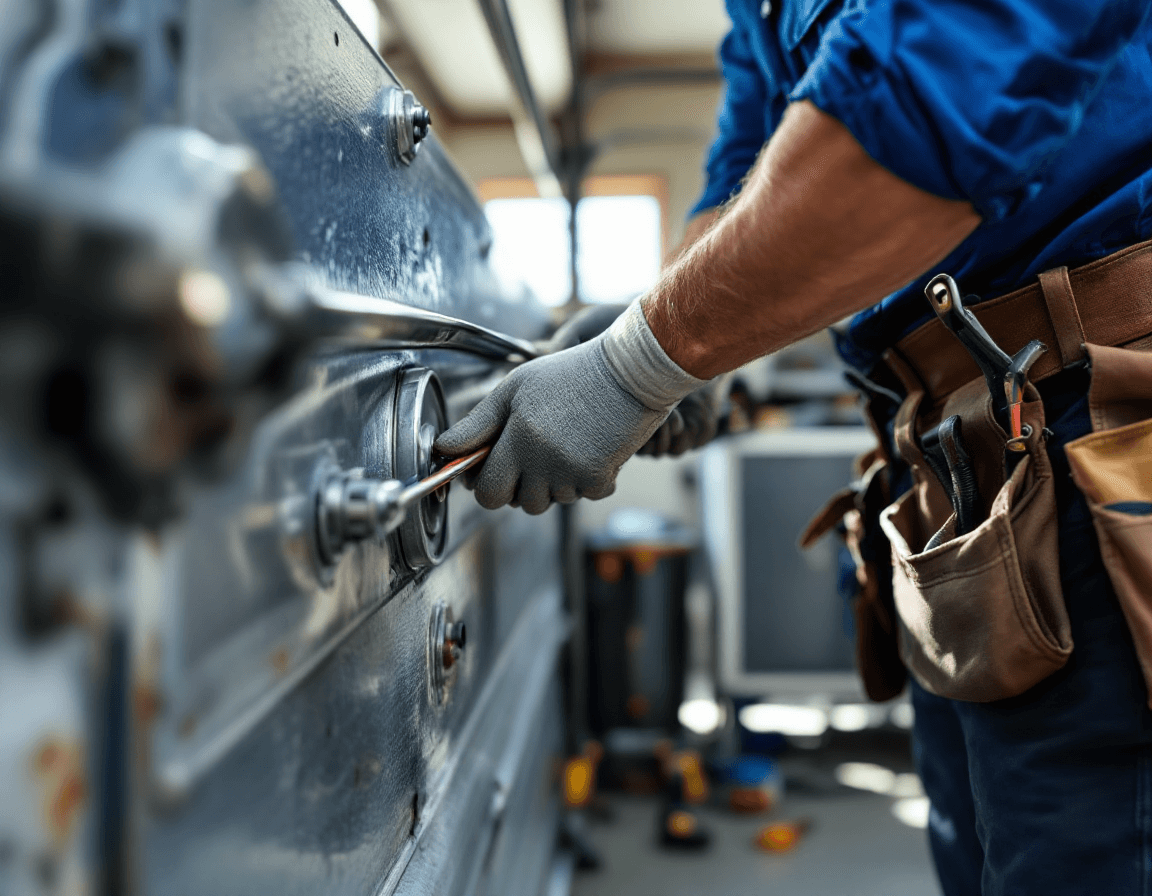
Garage door cable replacement in Puyallup, WA is one of the most common repairs we see for homes in the Pierce County foothills and the flat neighborhoods along the Puyallup River. A lift cable carries the full weight of a heavy door, so when one frays, rusts, or snaps, the door usually stops working right away. Many homeowners first notice a loud bang, a door that will not open past knee height, or a panel that sits visibly lower on one side. This page explains what the cables do, why they fail in our climate, and what to expect when you call a licensed technician.
Puyallup homes come in many styles, from older single-story ranches near the fairgrounds to newer two-car garages in the subdivisions off the main arterials. Doors in each of these homes share the same basic cable-and-spring system, but the age of the hardware, the door's weight, and how often it gets used all change how quickly the cables wear out. Our technicians see the same pattern again and again: a cable that looks fine from the floor is often badly frayed near the drum or the bottom bracket. Knowing the signs early can save you a stuck door and a more involved repair later.
Repair cost depends on the door's size, the number of cables involved, and whether the drum or spring also needs attention. For most standard cable replacements in our service area, pricing falls in the range of $110 to $300, and the exact figure is confirmed after an on-site inspection. Calling (888) 799-3819 is the fastest way to schedule a visit. The rest of this guide walks through the details so you can make an informed decision before a technician arrives.
How the Lift Cable Works Inside Your Garage Door
Every sectional garage door rises on a pair of steel lift cables, one on each side, that run from the bottom bracket up to a drum mounted on the end of the torsion shaft. When the door opens, the cables wind onto the drum and pull the panels upward along the tracks. The torsion springs above the door store the energy that offsets most of the weight, so the cables are guiding and carrying the load rather than doing all the lifting alone. Because both cables must share the load evenly, a problem on one side quickly affects the other.
The cable is made of many thin steel strands wrapped into a flexible rope, and its ends are fixed with a swaged fitting or a cable end that seats in the bottom bracket. The drum has a precisely machined groove that guides each wrap of cable so it stacks neatly without overlapping. When everything is aligned, the door climbs smoothly and stops level. A small change in tension or a damaged strand can knock that balance off, which is why cable problems often show up first as a door that looks slightly off-kilter.
Homeowners sometimes assume the cable is just a wire and that any cable will do. In practice, the cable diameter, length, and fitting type must match the door manufacturer's specifications, and the drum must match the cable. Mismatched parts can slip, wear unevenly, or fail under load. A licensed technician checks the specifications before installing a replacement so the repaired door behaves the way it was designed to.
Why Pierce County's Wet Winters Wear Down Garage Door Cables
Western Washington winters bring long stretches of rain, damp mornings, and humidity that rarely drops far enough to fully dry out a garage. Puyallup sits in a part of Pierce County where moisture settles into the air during the cooler months, and garages are often where that moisture lingers. Steel cables exposed to repeated dampness begin to surface-rust, and that rust works its way between the strands where you cannot easily see it. Over several wet seasons, the cable loses strength even if it still looks mostly intact from a distance.
Temperature swings add another layer of stress. Cold mornings make metal stiffer, and a door that has been sitting closed overnight can bind slightly when first lifted, putting extra strain on the cable and drum. Many garages in our area also have doors that open and close several times a day, especially in households with commuters or teenagers coming and going. Each cycle flexes the cable around the drum, and that repeated bending gradually fatigues the wire.
Garages attached to older Puyallup homes often lack good ventilation or insulation, which means condensation forms on cold metal and sits there for days. Doors that face the weather side of the house take the brunt of wind-driven rain, and the bottom bracket and cable ends can collect grit and water splash. Wiping down hardware and keeping an eye on rust spots helps, but once a cable has begun to corrode internally, replacement is the safer choice.
Warning Signs Your Lift Cable Is Failing Before It Snaps
A cable rarely fails without warning, and most homeowners who catch the problem early notice something first. Look at the cables from the side of the door with the door partly open and the spring tension released by a professional, never by you. Check for fraying, where individual strands poke out or the cable looks fuzzy along its length. Rust-colored streaks, flaking, or dark pitting near the drum or bottom bracket are also strong indicators that the cable is weakening.
The door itself often tells you something is wrong. A door that hangs crooked, sits lower on one side, or appears to tilt as it rises usually means the two cables are no longer sharing the load equally. You might also notice that the door closes unevenly or binds on one side as it travels down the track. These symptoms can have other causes, such as a bent track or a worn roller, so a technician should confirm the source before any parts are ordered.
Sound is another clue. A cable that is stretching or losing strands may create a faint popping, a rough scraping as it winds, or a slight rattle near the drum. Many homeowners hear a sharp crack, or a loud bang followed by a door that suddenly stops, when a cable finally breaks. Ignoring those early sounds lets a worn cable keep working until it fails at an inconvenient time.
- Visible fraying, broken strands, or fuzzy sections along the cable
- Rust, flaking, or dark pitting near the drum or bottom bracket
- The door sitting lower or tilting on one side
- A popping, rattling, or grinding noise when the door moves
- A door that closes unevenly or catches on one track
When a Snapped Cable Leaves the Door Stuck
When a lift cable snaps, the door loses the balance that the cable and spring were providing, and it often drops or sticks at an odd height. In many cases the door will not open at all, and the opener may strain, run briefly, or stop entirely. Some homeowners hear a loud snap or bang first, which is the broken cable whipping inside the track housing. The door may then hang crooked, with one side higher than the other, because the remaining cable can no longer hold it level.
If the door is stuck, resist the urge to pull, lift, or force the panels by hand. A door under spring tension can cause serious injury if the mechanism shifts unexpectedly, and forcing the door can bend the track or damage the opener. Disconnect the opener only if you know how to do so safely, and keep children and pets away from the door while it is partly raised or lowered. Many Puyallup households use the side door for access until a technician can arrive.
Replacing the broken cable typically means releasing the spring tension, removing the damaged cable from the drum and bottom bracket, installing the new cable with the correct fittings, and restoring balance to the door. Because the spring is under tension during this work, it should only be handled by trained professionals with the right tools. A licensed technician will also inspect the other cable, the drum, and the spring, since a cable that failed often means its partner is close behind.
Drum Problems: Cables Coming Off, Tangling, and Wearing Grooves
The cable drum is the heart of the cable system, and problems there can look like cable failures even when the cable itself is intact. A drum that has worn grooves may let the cable slip, bunch up, or wrap unevenly. When the cable comes off the drum entirely, the door loses its lifting path and can jam in a tilted position. Tangles happen when the cable jumps out of its groove and wraps over itself, creating a knot that can bend strands and shorten the cable's life.
Cable drums are typically attached to the torsion shaft with set screws, and those screws can loosen over time from vibration and repeated operation. A loose drum can rotate slightly out of alignment, which changes how the cable feeds and can pull the door off level. This is one reason a technician checks the set screws, drum position, and bottom bracket during every cable service, not just the cable itself.
Cable drum service may involve cleaning the drum, replacing a worn drum, realigning it, or tightening the hardware that holds it in place. Not every drum needs replacement, but a grooved or cracked drum should never be reused with a new cable, since the new cable will wear quickly against the damaged surface. A thorough inspection helps determine whether you need a simple adjustment or a full drum and cable replacement.
Why Doors on South Hill and in Downtown Puyallup Can Hang Crooked
Puyallup's terrain includes gentle slopes on the South Hill area, and many homes there sit at slightly different grades from the street. Garage floors in these neighborhoods can have a subtle slant, and that slope can affect how the door tracks as it rises. Downtown Puyallup has a mix of older homes with settled foundations and newer infill, so the level of the garage opening varies block to block. A door that looks perfectly straight in one neighborhood may show a lopsided gap in another.
Crooked doors are frequently blamed on the cables alone, but the cause may be a combination of factors. A cable that has stretched on one side, a drum that has shifted, a track that is slightly out of plumb, or a bottom bracket bent by a vehicle bump can all tilt the door. Technicians measure the door's level, check the track alignment, and compare cable tension on both sides before deciding what needs correcting. Replacing a cable without checking those other elements may only delay the problem.
When a door closes unevenly or binds on one side, the cable and drum are often part of the story, but the rollers, hinges, and weatherstripping also matter. A binding door may be fighting friction in the track rather than struggling with the cable. Asking a technician to inspect the entire door, not just the cable, gives you a complete picture and avoids paying for repairs that do not address the real issue.
What a Typical Cable Replacement Involves
A professional cable replacement follows a set sequence designed to protect both the technician and the door. The process begins with a safety check and an assessment of the door's condition, including the springs, track, rollers, and opener. Once the spring tension is safely released, the technician removes the damaged cable, inspects the drum and bottom bracket, and installs the correct replacement cable. The door is then rebalanced and tested through several full cycles to confirm smooth, level operation.
Homeowners often ask what they should expect during the visit. A good technician explains the findings before starting work, shows you the damaged cable if possible, and provides a clear estimate. They also discuss whether the second cable, drum, or spring should be serviced while the door is already open, because doing so can prevent a second repair visit. You should feel comfortable asking questions throughout the appointment.
- Safety inspection and assessment of springs, track, and opener
- Controlled release of spring tension by a trained technician
- Removal of the damaged cable and inspection of the drum and bottom bracket
- Installation of the correctly sized replacement cable with proper fittings
- Rebalancing the door and testing several full open and close cycles
- Review of any related wear, such as the opposite cable, rollers, or drum set screws
Typical Cost Expectations Between $110 and $300
For most standard cable replacements in our service area, the price falls between $110 and $300. The final figure depends on the door's size and weight, the number of cables that need replacement, the condition of the drum, and whether the repair requires additional parts. Doors with unusual sizes, heavy insulated panels, or custom hardware may fall toward the higher end of that range. A simple single-cable replacement on a common door typically lands near the lower end.
Because cable work requires specialized tools and careful handling of spring tension, you should be cautious about very low quotes that do not include a proper inspection. A reputable estimate should explain what is included, whether the drum and bottom bracket are being checked, and what warranty applies to the parts and labor. Ask whether the price covers the opposite cable if it shows similar wear, since replacing only one side can leave the door unbalanced.
Keep in mind that the lowest upfront price is not always the best value. A cable that is replaced without addressing a worn drum or a misaligned track may fail again within a short period. A thorough inspection and a repair that restores balance usually costs less over time than repeated emergency visits. Calling (888) 799-3819 lets you describe the symptoms and receive guidance on what to expect for your specific door.
Safety Rules for Homeowners Dealing With Garage Door Cables
Garage door springs and cables store enormous amounts of energy, and mistakes during DIY work can cause serious injury. Never attempt to replace a lift cable yourself, and never try to release or adjust torsion spring tension without proper training and tools. Even a small slip can send a cable or spring component flying. Cable and spring work should always be handled by a licensed, bonded, and insured technician who understands the hazards.
Homeowners can still take useful precautions while waiting for service. Keep people and pets clear of the door's path, and avoid standing beneath a door that is partly open or hanging crooked. Do not attempt to lift the door by hand, and do not use the opener to force a stuck door. If the door shows signs of a broken cable, leave the opener disconnected only if you know how to do so safely, and use a side entry until help arrives.
- Never climb on a ladder to inspect or adjust cables and springs
- Do not attempt to release spring tension or remove the drum yourself
- Avoid forcing a stuck door with the opener or by hand
- Keep children and pets away from the door and its tracks
- Call a licensed technician for any cable, drum, or spring concern
Scheduling Around Puyallup's Busy Seasons and Local Events
Garage door repair demand in Puyallup can shift with the calendar. The Western Washington Fair at the Puyallup fairgrounds draws large crowds each late summer, and many households in the area travel, host visitors, or adjust their routines during those weeks. Spring cleaning and storm season also bring homeowners out to check their doors. Scheduling a cable inspection when you first notice symptoms, rather than waiting for a full breakdown, often gives you more flexibility in booking a convenient appointment.
Weather can also affect when work is most efficient. Wet, windy days make it harder to keep garage doors open for extended periods, and cold mornings can make metal components stiffer and harder to handle. Many technicians prefer to complete cable work during drier stretches when the garage is open and the door can be tested thoroughly. If your door is failing now, a prompt visit is still worth it, because a stuck or crooked door is a security and safety concern regardless of the season.
Choosing a Technician for Cable Work in Pierce County
Choosing the right technician matters more for cable work than for many other repairs, because the job involves stored spring energy and precise balancing. Look for a company that is licensed, bonded, and insured, and that can clearly explain the work before it begins. A technician who takes time to inspect the drum, bottom bracket, track, and opposite cable is usually thinking about the whole door rather than just the most visible symptom.
Our team serves homes across Puyallup and the surrounding Pierce County communities, including the 98371, 98372, 98373, 98374, and 98375 ZIP codes. Whether your garage sits on a quiet street near the South Hill or in an established neighborhood closer to Downtown Puyallup, the same principles apply: thorough inspection, correct parts, and careful balancing. When you call, describe what you are seeing, such as a snapped cable, a crooked door, or a loud bang, so the technician can prepare for the visit.
A cable problem rarely fixes itself, and waiting can turn a manageable repair into a stuck door or a damaged track. If your Puyallup garage door shows any of the signs described here, call (888) 799-3819 to schedule an inspection and receive a clear estimate. Our licensed technicians will assess the cables, drum, and balance, explain your options, and get your door moving safely again.