
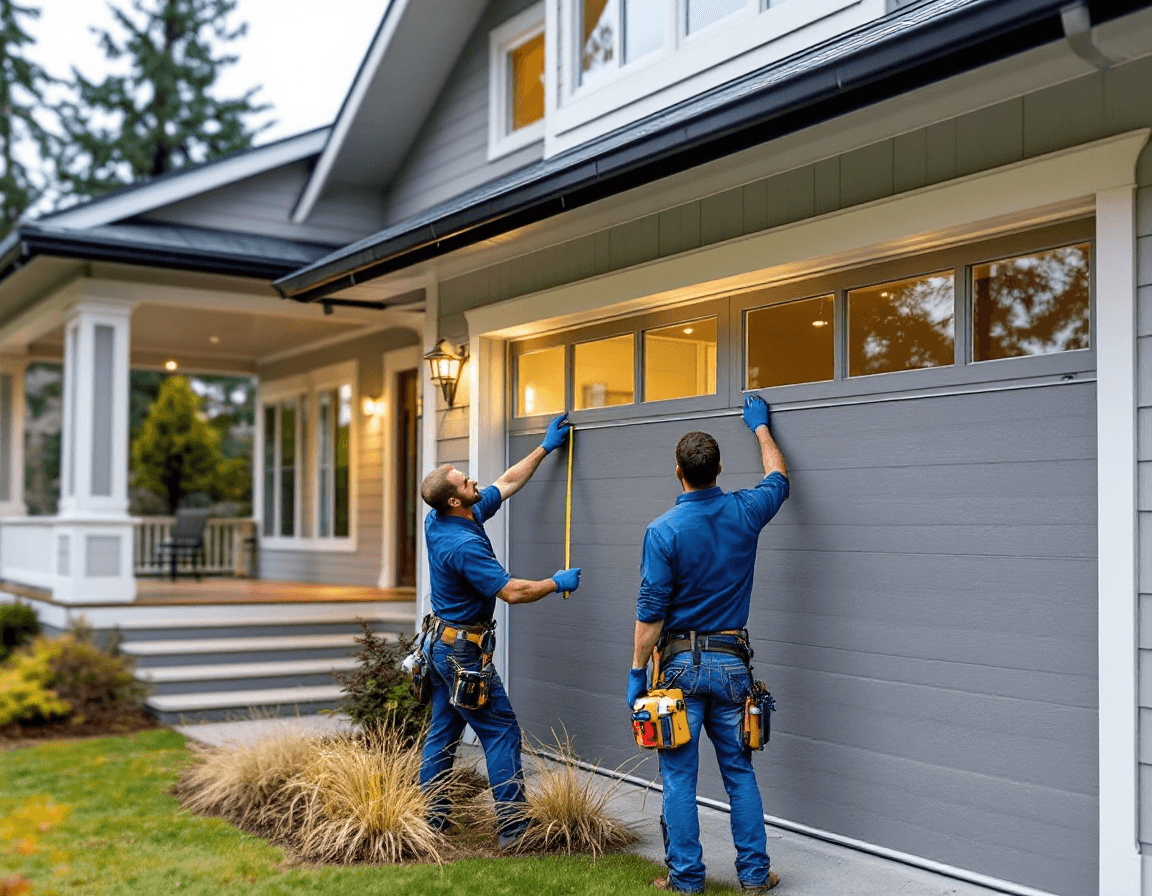
Garage Door Installation & Replacement in Puyallup, WA is the right conversation to have when a repair no longer makes financial sense, when your current door is simply worn out, or when you want a garage that looks and performs better. Puyallup sits in the Puyallup Valley at the foot of the Cascades, where the Puyallup River and its tributaries keep the air damp for much of the year. Homes here range from older craftsman-era houses near Downtown Puyallup to newer subdivisions across the city and in the surrounding Pierce County neighborhoods, and the garages on those homes take a steady beating from rain, humidity, and the occasional winter wind off the valley floor.
Replacing a garage door is a bigger decision than most homeowners expect, but it is also one of the few exterior upgrades that touches daily life, security, energy use, and curb appeal all at once. A new door can make a detached garage usable as a workshop, keep a finished space above the garage from feeling drafty, and give a tired street-facing facade a fresh identity. Installed pricing for new single and double doors generally runs from about $950 to $3,800 and up, depending on the door style, materials, insulation rating, and the hardware and openers you choose. This guide walks through how to tell when replacement is the smart move and how to choose a door that holds up in our climate.
Whether you are looking at a single-car door on a bungalow near the river or a wide double door on a newer home near the edge of town, the goal is the same: a door that closes square, seals well, operates quietly, and lasts. Below you will find practical notes on warning signs, materials, insulation, installation logistics, and what to expect from start to finish. If you want an opinion on your specific door before you commit to anything, our team is happy to take a look.
Knowing When a Door Has Crossed the Line From Repairable to Replaceable
Every garage door can be repaired to some degree, but there is a point where putting money into an old door is simply throwing money away. A door panel that is cracked through in several places, a bottom section that has rotted out, or a frame that has pulled away from the wall often signals that the structure of the door itself has failed. When the damage is spread across multiple sections, it is usually more cost-effective to replace the whole door than to keep swapping parts that will fail again within a season or two.
Repeated breakdowns are another clear signal. If you have needed service calls every few months for springs, rollers, cables, or track alignment, the door is telling you it is worn beyond its useful life. Each repair may seem reasonable on its own, but the cumulative cost and the inconvenience of a door that might fail on a school morning add up quickly. Keep a simple record of repairs for a year, and you will likely see the pattern more clearly than you would by memory alone.
Storm, rot, and rust damage deserve special attention in this part of Washington. Wind events in the Puget Sound region can bend panels, pop sections out of their tracks, or drive debris into a door until the steel dents or the wood splits. Persistent moisture is equally hard on garage doors, and wood doors in particular can swell, warp, and rot at the bottom edge where water collects. Steel doors can develop rust at scratches, along seams, and at the bottom panel where road spray and wet leaves sit against the surface.
- Panels that are cracked, split, or dented across more than one section
- Visible rot at the bottom rail or along edges of a wood door
- Rust bleeding through paint, especially at seams and bottom panels
- A frame or track system that has shifted away from the wall or the opening
- Multiple service calls in a single year for the same or related components
Choosing Between Insulated Steel, Wood, Glass, Aluminum, and Carriage-Style Designs
Material choice shapes everything about how a door performs, how long it lasts, and how much maintenance it will need. Insulated steel is the most common choice for Puyallup homes because it resists dents, is available in many styles, and pairs well with foam insulation to improve comfort. Steel doors are also less prone to the moisture problems that affect unprotected wood, which matters when a garage stays damp through November through March. Quality steel doors with a factory-applied finish and sealed edges can look sharp for many years with routine care.
Carriage-style doors have become popular across Pierce County because they recreate the look of old swing-out barn doors while operating on a modern sectional track. They suit craftsman, farmhouse, and traditional homes, and they can add real character to a street-facing facade. Many carriage-style doors are built with steel skins over insulation cores and decorative hardware, which combines the appearance of wood with the durability of metal. Real wood carriage doors are beautiful but demand regular sealing and painting, and they are not the best fit for a garage that gets little sun or sits in persistent dampness without good ventilation.
Glass and aluminum designs bring light into the garage and create a modern look, particularly on newer homes with clean lines. Frosted or tinted glass panels can offer privacy while still letting daylight in, and aluminum frames resist corrosion well. Keep in mind that glass sections typically have lower insulation values than solid insulated steel, so if you spend most of your time in a heated garage or a finished space above it, you may want glass that is mostly decorative with insulated panels elsewhere on the door. Ask about the insulation rating of any door you are considering, since style and efficiency do not always go together.
Reading Insulation Values and Energy Efficiency Without the Jargon
Many homeowners want a warmer garage, especially when the space is attached to living areas or used as a workshop, laundry, or home gym. The insulation value of a garage door is usually expressed as an R-value, and higher numbers indicate better resistance to heat transfer. A solid insulated steel door with polyurethane foam typically performs far better than a single-layer uninsulated door, and the difference can be noticeable on cold, damp mornings when the garage wall and door surface feel cold to the touch. Better insulation also helps reduce the temperature swings that stress the adjacent wall and any room above the garage.
Insulation is only part of the efficiency picture, because air leakage matters just as much. Weatherstripping along the sides, top, and bottom of the door should compress evenly when the door closes, and the bottom seal should meet the floor without large gaps. Frame seals and the threshold also play a role, since a door that is perfectly insulated but leaks air around the edges will still feel drafty. During installation, our technicians check and adjust these seals so the door closes flush against the opening instead of pressing unevenly on one side.
It helps to think of efficiency as a system rather than a single product. A well-insulated door paired with sealed weatherstripping, a tight frame, and a properly balanced operation will feel better and waste less energy than any one of those upgrades alone. If your garage is detached or unheated, the payoff may be more about comfort, moisture control, and protecting stored items than about dramatic utility savings. Honest expectations make for better decisions, and we are glad to talk through what level of insulation makes sense for how you actually use the space.
Matching a New Door to the Architecture of Your Puyallup Home
Puyallup has a wide mix of architectural styles, and the right garage door should complement the house rather than look like an afterthought. Older homes near the historic core often feature wood trim, covered porches, and gabled rooflines that suit carriage-style doors with divided panels and decorative hardware. Newer homes in the surrounding subdivisions tend to have simpler lines, larger garage openings, and stone or fiber-cement accents that pair well with flush steel panels in a modern finish. Taking a few photos of your home from the street and the driveway can help you and your installer think through color and style before you choose.
Color is one of the most underrated decisions in a garage door replacement. Darker finishes can look dramatic but may absorb more heat in summer sun, while lighter colors reflect more of it and hide dirt and water spotting more effectively in a region that sees a lot of gray days. Consider how the door will look against your siding, trim, and roof, and check the sample swatch in both shade and direct light. Many homeowners find that a door a shade or two lighter than the trim reads as balanced and modern.
The size and configuration of the opening also matters. Single doors commonly measure around nine feet wide, and double doors often run around sixteen feet wide, though standard sizes vary by builder and era. Older homes may have nonstandard openings, and a few houses have headroom or backroom limitations that affect which track and spring systems will fit. A proper measurement at the opening, including height, width, headroom, and backroom depth, is the first step toward a door that fits correctly and operates smoothly.
Planning Around a Remodel, Addition, or Converted Garage Space
Many of the calls we receive about new doors come from homeowners who are already remodeling. A garage addition, a converted workshop, or a bonus room over the garage often changes what the door needs to do. If the space will be heated and finished, a higher-insulation door becomes more valuable, and the door's appearance may need to match new siding or a changed roofline. Coordinating the door with the remodel schedule prevents the common problem of an open garage sitting exposed to weather while other trades work on the house.
When a remodel changes the opening itself, the door installation has to be planned around structural details. Widening an opening, adding a header, or relocating a wall requires careful measurement and sometimes input from the contractor or engineer managing the project. Headroom and track clearance can be affected by new ceiling heights, ductwork, or lighting, so it is worth confirming those details before the door is ordered. Surprises discovered on installation day are far more expensive to fix than problems caught during planning.
Permits can also be part of the picture, depending on the scope of the work and how the project is structured. Some door replacements in the same opening may not require a permit, while changes to the structure or related electrical work for a new opener may. We recommend checking with the City of Puyallup or the appropriate Pierce County office, or asking your contractor to handle that step, before work begins. This keeps your remodel on track and avoids delays that can leave your garage open longer than anyone wants.
What a Typical Installation Day Looks Like in Practice
A well-run installation starts before the truck arrives. Your technician should confirm the door model, dimensions, color, and opener choice, and should walk through the removal plan with you. Clear the garage floor and driveway area so the crew has room to work, and move vehicles and stored items away from the opening. If you have a remote-controlled opener or smart-home devices, make a note of your existing settings, since some systems will need to be reprogrammed after the new door goes in.
The crew will remove the old door carefully, which often involves releasing and securing the spring system. Springs under high tension are dangerous to handle without the proper tools and training, so this is work for licensed professionals only, and it should never be attempted as a do-it-yourself project. Once the old door is out, the opening is inspected for level, plumb, and square condition, and the track, rollers, and hardware are either reused or replaced depending on their condition and compatibility with the new door.
After the new door is hung and balanced, the technician tests the operation through several full cycles. The door should open and close smoothly, stop cleanly at the top and bottom, and reverse correctly when it meets resistance. Safety features like photo-eye sensors and auto-reverse functions get checked as part of the handoff, and the technician should walk you through how to operate the door manually in a power outage and how to reach the emergency release. A good installation ends with a clear explanation and a door that feels solid, not one that rattles or jerks.
Questions Worth Asking Before You Sign Anything
Choosing a contractor is as important as choosing a door. Ask whether the company is licensed, bonded, and insured, and ask who will actually perform the work, since a salesperson and a crew may be different people. Request a written estimate that lists the door model, insulation rating, hardware, track system, opener, removal and disposal of the old door, and any warranty terms for both the door and the installation labor. Vague estimates tend to produce surprise charges later.
It is also reasonable to ask how the installer handles problems found during the job, such as a damaged header, out-of-square framing, or an opener that does not fit the existing rail. You should know whether those issues will be quoted before work continues, and whether the company will explain the options in plain language. Good contractors welcome these questions because they show you care about the result, and they are usually happy to show examples of similar installations in comparable homes.
Finally, make sure you understand the warranty and the maintenance expectations. Door manufacturers and installers often provide different coverage periods for the door, the hardware, and the labor, so read the terms rather than assuming everything is covered equally. Ask what routine maintenance the door needs, such as lubricating rollers and hinges, checking balance, and inspecting weatherstripping. A few minutes of care each season can extend the life of your new door considerably.
Keeping Your New Door Performing Through Puyallup's Wet Winters and Dry Summers
Our region's weather is mild by many national standards, but it is hard on mechanical systems because of the combination of moisture, temperature swings, and long stretches of gray weather. Steel and aluminum doors resist rust best when their finish stays intact, so inspect the surface at least twice a year for scratches, chips, or areas where paint has lifted. Touching up small damage promptly keeps moisture from getting underneath the finish, and a bit of mild soap and water is usually enough for routine cleaning.
Lubrication and balance are the other major maintenance items. Apply a silicone-based or garage-door-specific lubricant to hinges, rollers, and the track rails, and avoid heavy grease that attracts dirt. Test the balance by disconnecting the opener and lifting the door partway by hand; it should stay in place without drifting. A door that is out of balance strains the opener and can shorten the life of springs and cables, which are the components most likely to cause serious injury if they fail.
Spring and cable work, including replacement, adjustment, or tension changes, should always be handled by a licensed professional. The forces involved can cause serious injury even to experienced homeowners, and that is why we recommend leaving those tasks to trained technicians. If your door makes grinding, popping, or snapping sounds, or if it hangs unevenly, stop using it and call for service rather than trying to fix it yourself. A quick inspection now is much less costly than an emergency repair later.
Serving Puyallup and Nearby Pierce County Neighborhoods
Our team regularly works throughout Puyallup, from the streets surrounding Downtown Puyallup and the historic homes near Meeker Mansion, to the hillside neighborhoods of South Hill and the newer residential areas that have grown across the city. Homes in these areas face different exposure, lot layouts, and garage configurations, so we tailor our recommendations to the specific house rather than offering a one-size-fits-all package. Whether your home is in one of the ZIP codes 98371, 98372, 98373, 98374, or 98375, the same principles apply: measure carefully, choose materials for the climate, and make sure the installation is done right.
Puyallup's calendar also shapes how people think about their homes. The Western Washington State Fair draws large crowds to the fairgrounds each late summer, and many neighbors use the fair season as a reminder to tackle projects they have been putting off. Planning a replacement before the wetter months arrive in autumn tends to give you more scheduling flexibility, though we work through every season. Let us know your timing and we will help you choose a practical window.
Getting Started With a Free Assessment
If you are weighing repair against replacement, or you already know you want a new door and are looking for the right style and insulation level, the first step is a conversation. A technician can look at your current door, check the opening, discuss the materials that fit your home and budget, and give you a clear sense of what installation will involve. There is no pressure to decide on the spot, and an honest recommendation sometimes means repairing a door that still has life left in it.
Call Seattle Garage Door Fix at (888) 799-3819 to schedule an assessment for your Puyallup garage. Tell us about your door, your home, and what you hope to change, and we will help you find a solution that fits your space and your budget.