
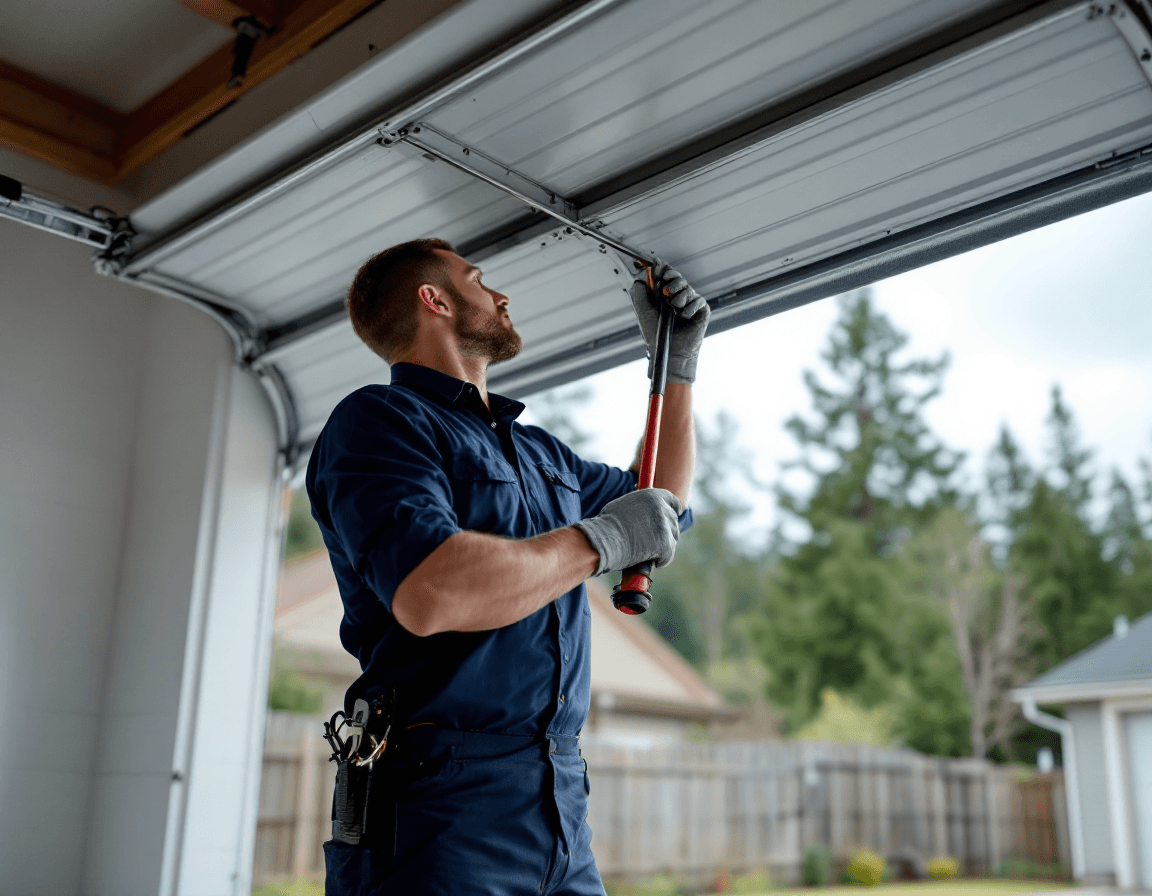
Garage Door Spring Replacement in Puyallup, WA is one of the most common repairs we handle across the Puyallup Valley, and it is also one of the most urgent when it goes wrong. The springs above your garage door carry most of its weight, so when one fails, the door can go from smooth to immovable in an instant. Homeowners from the older blocks near Downtown Puyallup to the newer subdivisions out toward the edge of town tend to call us with the same story: a loud crack, then a door that will not budge.
This page explains how spring failures happen, what the warning signs look like, and what a proper replacement involves in our service area. We also cover what drives the price, why balancing matters as much as the spring itself, and why this is a job for a licensed, insured technician rather than a weekend project. Spring systems store a large amount of tension, and even experienced DIYers have been seriously hurt by a spring that released unexpectedly.
If you are reading this with a door that is stuck halfway up, the most useful thing you can do right now is keep people and pets clear of the door and avoid forcing it. The rest of this guide will help you understand what you are dealing with so you can make a clear decision about the next step.
Why Garage Doors in Puyallup Wear Their Springs Down Faster
Springs do not fail because of a single bad day. They fail because of thousands of open-and-close cycles, each one stretching or twisting the steel a little more than the last. A typical standard spring is rated for a certain number of cycles, and a household that uses the garage as its main entry, runs a home business, or leaves for work twice a day can reach that number sooner than people expect. Puyallup has a large share of family homes with two-car garages, and many of those doors see daily use from teenagers, commuters, and weekend projects.
The Pacific Northwest climate adds its own pressure. Our region spends long stretches with moisture in the air, and steel that sits in damp conditions through fall and winter is more prone to surface rust and microscopic pitting. Those small imperfections concentrate stress when the spring is wound, and over time they can turn into a hairline fracture that eventually gives way. Garages that are not insulated also see wider temperature swings between a cold January morning and a mild afternoon, and metal contracts and expands with each change.
Older homes around the South Hill area and the established neighborhoods near Downtown Puyallup often still have original or long-serving springs that were installed years before the current door hardware. Those systems were not always matched to the weight of today's heavier insulated doors, and a mismatch can shorten spring life considerably. When we inspect these homes, we frequently find springs that were working hard for years before the day they finally snapped.
Reading the Warning Signs Before a Spring Breaks
Most spring failures give some advance notice, even if it is easy to overlook. The door may start opening more slowly, or the opener may sound like it is working harder than usual. Many homeowners treat these changes as normal wear and wait until the day the door stops entirely. A short checklist can help you spot trouble early and schedule service before you are stuck inside or outside the garage.
Here are the signs we most often hear described before a spring fails completely:
- The door feels noticeably heavier when lifted by hand, or it drifts down when left halfway open.
- You can see a gap or separation in the coils of a torsion spring, or rust-colored flaking along the coil surfaces.
- The opener motor hums, strains, or cuts out shortly after starting the door's travel.
- The door rises a few inches, pauses, and then refuses to continue without assistance.
- The door closes unevenly, slams down, or sits crooked in its track.
Any one of these signs is worth a professional look, and two or more together usually means a spring is nearing the end of its life. Waiting rarely saves money, because a spring that breaks during normal use can also damage cables, drums, brackets, and sometimes the opener itself. A service call on a damaged spring system is almost always more expensive than replacing a worn spring that was caught early.
What a Snapped Spring Sounds Like and What to Do Next
A broken spring usually announces itself with a sharp, loud bang that can be startling from inside the house. Some homeowners describe it as a gunshot or a heavy metal crack, and it is often the first clue that something has gone wrong. After the noise, the door may still look fine from the outside, which leads many people to try opening it manually. This is exactly the moment to stop and step back.
Once a spring has failed, the door is no longer balanced and the remaining hardware can be under unusual stress. Do not attempt to lift the door by hand, do not stand under it, and do not try to disconnect the opener in a rush. Keep children and pets away from the garage door area until a technician has secured the system. If the door is partially open, leave it where it is and close the door to the house so the garage can be sealed off from the living space.
For most homes in our service area, the next step is a call to a licensed garage door company that can inspect the springs, cables, and drums and confirm that the rest of the system is safe to operate. We recommend making that call promptly, since a door that is out of balance can settle unevenly and cause additional damage to tracks and rollers. A professional can also tell you whether the broken spring was the only failed component or whether the failure exposed other wear that should be addressed at the same visit.
Torsion or Extension: Identifying the Spring System on Your Door
Before any replacement can be planned, a technician needs to identify which type of spring system your door uses. Most residential doors in the Puyallup area have either torsion springs or extension springs, and the two behave very differently when they fail. Torsion springs are mounted in a steel tube above the opening and twist to lift the door, while extension springs run along the horizontal tracks on each side and stretch as the door rises.
Torsion systems are generally considered the more modern and durable choice, and many newer homes in the area came equipped with them. They are also the type most associated with a dangerous, high-energy failure, because the coiled spring is under significant tension when wound. Extension springs are often found on older garages and lighter doors, and they can be safer to handle in some respects, but they still store substantial energy and should never be replaced without the proper safety cables installed.
Identifying the system also affects the replacement itself, including the size of the spring, the cable configuration, and the winding procedure. A mismatched spring can cause the door to lift unevenly or stress the opener. This is one reason we always confirm the door's weight, height, and track configuration before quoting a replacement, rather than simply matching a spring by appearance.
High-Cycle Spring Options for Busy Puyallup Households
Standard springs are designed for a typical service life, but a growing number of homeowners in Puyallup and the surrounding area ask about high-cycle options. These springs are manufactured with heavier wire or different steel treatments to tolerate more open-and-close cycles before fatigue sets in. They are a practical choice for families with heavy garage use, for households with a home workshop, or for anyone who simply wants to extend the time between repairs.
High-cycle springs are not automatically the right answer for every door, and the upgrade should be matched to how the garage is actually used. A detached garage that is opened once a week has very different needs from an attached garage that is the main entry for a family of five. A technician can review your daily usage, the door's weight, and the local climate exposure to recommend the spring option that makes sense for your situation.
Cost is part of the decision, and high-cycle springs typically carry a higher price than standard replacements. The difference is worth discussing openly, especially if your door is heavy or insulated. We would rather explain the tradeoffs clearly than push an upgrade that does not match the way your household uses the door.
Typical Pricing for Spring Replacement Across Pierce County
Homeowners often want a clear sense of cost before scheduling a repair, and we are glad to provide that. For most spring replacements in the Puyallup area, the price falls between $180 and $450. The actual figure depends on several factors, including the spring type, whether one or both springs need replacement, the door's size and weight, and whether high-cycle components are selected.
Several things commonly influence the final quote:
- Whether one spring or both springs need replacement, since many technicians recommend replacing both at the same time to keep the door balanced.
- Whether the door uses torsion or extension springs, which affects parts and labor.
- Whether cables, drums, bearings, or brackets also show damage that should be addressed during the visit.
- Whether you choose a standard or high-cycle spring, and what size the door requires.
- Access conditions, such as a crowded garage or a door that is difficult to reach safely.
A reputable quote should explain which components are included and why each one is recommended. Be cautious of any estimate that is dramatically lower than the market range without a clear explanation, since a cheap spring installed without proper balancing can fail again quickly. A good technician will walk you through the work and answer questions before any parts are ordered.
Why Balancing the Door Matters as Much as the Spring
Replacing the spring is only half of a proper repair. Once the new spring is installed, the door must be balanced so that it holds steady when partially open and lifts with minimal effort. A correctly balanced door should stay in place when released at about halfway up, and the opener should move it smoothly without straining. An unbalanced door will wear the opener, stress the cables, and eventually cause another failure.
Balancing involves adjusting the spring tension to match the door's actual weight, which can change over time due to hardware wear, added insulation, or heavier accessories. Doors in our area that have been upgraded with thicker panels or insulated sections may need a different tension setting than the original installation. Technicians check this by lifting the door manually, observing how it behaves, and making small adjustments until the weight is evenly distributed.
This is also why we encourage homeowners to be wary of quick spring swaps that skip balancing. A door that looks fine when closed may still be dangerously uneven when it moves. Ask your technician to demonstrate the balance test before they leave, and to explain what they adjusted. A short conversation at the end of the job can prevent a lot of frustration down the road.
Cables, Drums, and the Hidden Damage a Broken Spring Leaves
When a spring breaks, the lifting cables on each side of the door often bear the sudden shock. Cables can fray, kink, or pull loose from their drums, and they may not show obvious signs until the door is operated again. A door that has been stuck for days can also develop cable slack that makes the eventual repair more complicated. Inspecting the cables is a standard part of any proper spring service for this reason.
Drums are the grooved components that the cables wrap around, and they can crack, slip on their shafts, or wear unevenly after a spring failure. Bearings and center brackets may also loosen when the door's weight shifts suddenly. These parts are not always expensive individually, but overlooking them can lead to a second service call that costs more than handling everything at once. We prefer to inspect the complete system during a spring replacement so the homeowner understands the full condition of the door.
If you notice a cable hanging loose, a drum that appears misaligned, or a bracket that has pulled away from the wall or header, do not attempt to tighten or reposition it yourself. These components are under tension and can release unexpectedly. A licensed technician can secure the system, document what needs attention, and replace damaged parts safely.
Protecting Springs Through Puget Sound Winters and Summers
While no homeowner can prevent a spring from eventually wearing out, a few practical habits can extend its life and reduce the risk of a sudden failure. Routine attention is especially useful in our region, where damp winters and occasional summer heat both affect metal components. A simple seasonal check takes only a few minutes and can catch problems while they are still minor.
Consider the following steps as part of a regular maintenance routine:
- Wipe down visible spring coils and the surrounding hardware once or twice a year to remove dust, grit, and early surface rust.
- Look for gaps in torsion coils, rust-colored streaks, or flaking metal, and note any changes from one season to the next.
- Test the door's balance by lifting it halfway with the opener disconnected, only if you are comfortable doing so safely, and watch whether it stays put.
- Keep the tracks, rollers, and hinges clean and lightly lubricated with a garage door-appropriate product.
- Schedule a professional inspection every year or two, especially if the door is heavy, insulated, or used many times each day.
Some homeowners in the Puyallup area also improve garage ventilation or add weather stripping to reduce moisture buildup. These steps help protect metal parts and keep the garage more comfortable overall. Our technicians are happy to recommend simple improvements during a service visit, whether or not you choose a full spring replacement.
When a Licensed Technician Should Take Over the Job
Spring work is one of the few garage door tasks where we strongly advise against do-it-yourself repair. Torsion and extension springs store enough energy to cause serious injury, and the risk increases when tools slip, winding bars come loose, or a spring releases during removal. Even a homeowner who has watched a professional do the job may not recognize the subtle signs of an unsafe setup. Licensed, bonded, and insured technicians are trained to handle the tension safely and to check the entire system before returning the door to service.
Calling a professional also protects the value of your home and your household's peace of mind. A correct installation includes proper winding, cable setup, balancing, and safety checks, all of which contribute to a door that operates smoothly for years. If a repair is done incorrectly, the damage may not appear right away, and it can surface at the worst possible moment.
If your door has broken a spring, makes a loud bang, or simply will not lift, we can help you understand the problem and schedule a safe, professional repair. Our team serves Puyallup and the surrounding communities across Pierce County, including the South Hill area, Downtown Puyallup, and neighborhoods near the WA State Fair grounds. Call (888) 799-3819 today to schedule your spring replacement, get a clear estimate, and have your door back in balance with a technician who takes safety seriously from the first call to the final test.