
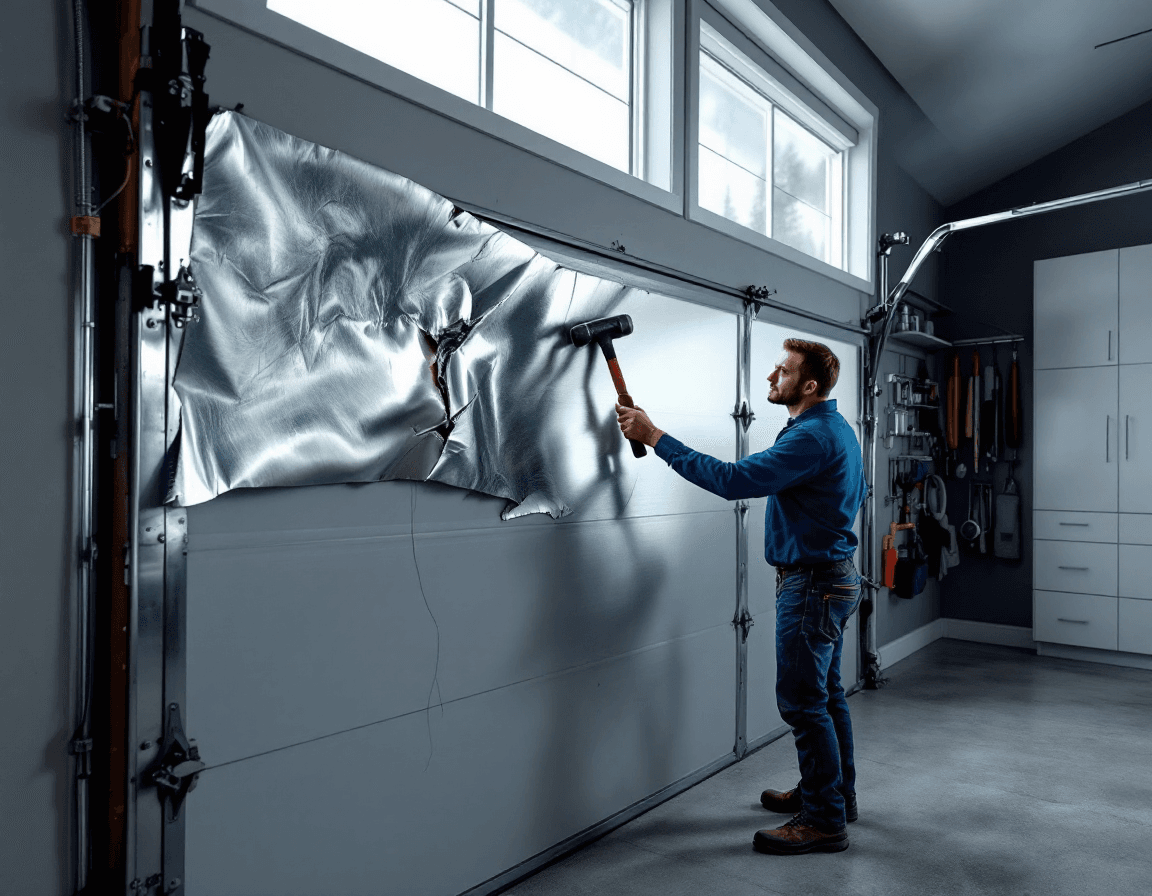
Garage Door Panel Replacement in Puyallup, WA is often the most practical fix when one section of your door is damaged but the rest still works well. A dent from a backing mishap, a cracked panel after a windstorm, or a bottom section that has soaked up months of rain can make the whole door look worn out, even when the springs, rollers, and opener are in good shape. Replacing only the affected section can restore the door's appearance and weather resistance without the cost of a full new door.
Homes across Puyallup, from the older blocks near Downtown Puyallup to the newer subdivisions on the hillsides of South Hill, deal with the same challenges: heavy rain from October through April, damp air off the Puyallup River valley, and driveways that see plenty of traffic from cars, trucks, and delivery vans. Those conditions shape how panels age and which repairs make sense. This guide explains how we assess damaged panels, when repair is smarter than replacement, what affects pricing, and where the job stops being a DIY project and becomes work for a licensed technician.
Panel swaps are a common request across our service area, including homes in the 98371, 98372, 98373, 98374, and 98375 ZIP codes. Every door is a little different, and the right approach depends on the door's age, construction, and whether the original manufacturer still makes a matching section. Our goal in this guide is to give you enough local context to ask good questions and make a confident decision before you call anyone to the house.
Reading the Damage: Which Panels Are Really Compromised
Not every dent is a reason to replace a panel. Start by looking at the door in daylight, then again at dusk with a flashlight held at a low angle, which exposes shallow dents that disappear under noon sun. A small ding that hasn't cracked the paint or creased the metal along a seam may simply be cosmetic. A crease that runs across a panel, however, often means the metal has been stretched beyond its original shape, and that section will rarely sit flat in its track again.
Pay close attention to the seams where one panel meets the next. Damage there can cause the sections above and below to bind, scrape, or leave a gap at the weatherstripping. If the door is catching or rising unevenly after a dent, the panel may be pressing against a roller bracket or a track hinge, and the fix may involve more than just swapping the panel. A technician will check whether the hinges and end caps have been bent in the impact as well.
Cracks deserve special attention. Hairline cracks in painted steel can spread quickly once moisture gets into the seam, and cracks in the vinyl or composite skins on some older or budget doors can spread even in dry weather. If you find a crack, photograph it and note its length. Those photos are useful when you talk to a technician, and they help you track whether the damage is growing between seasons.
Water, Moisture, and the Puyallup Winter Problem
Wet winters are the defining feature of Pierce County weather, and they take a particular toll on the bottom panel of a garage door. The bottom section sits closest to the driveway, takes splash from every rain, and collects grit and road spray that holds moisture against the steel. Over time, that combination leads to rust at the lower edge, bubbling paint, and in some cases a softened or delaminated bottom panel on doors with wood or composite cores.
Rot is a bigger concern on older wood doors, and it shows up in Puyallup's older housing stock more often than many homeowners expect. Soft spots that give slightly under a thumb, paint that flakes in patches, or a musty smell near the bottom rail all point to moisture that has been trapped for a long time. A rotted bottom section usually can't be patched convincingly, and replacing that one panel is generally more durable than trying to fill and repaint the wood.
Check the threshold seal and the bottom weatherstrip every fall before the rains settle in. A worn seal lets water wick into the bottom panel and then into the bottom rail, where it does the most damage. If the driveway slopes toward the garage, which many lots in the hills around South Hill do, water may be pushed under the door during heavy storms, and that's worth investigating before you commit to a new panel.
Backing-Accident Dents and Why One Panel Can Be Enough
A single panel damaged after a backing accident is one of the most common situations we see. A bumper, a tow hitch, a bike rack, or a recycling bin tipped against the door can leave a deep dent in one section while the rest of the door stays intact. Because garage doors are built from panels that interlock in sequence, the damage is often limited to that one section, which makes a panel replacement a sensible repair.
After any impact, look carefully at the springs, cables, and drums before you use the door again. An impact strong enough to dent a panel can also shift the track, bend a bracket, or put uneven strain on the cables. Do not attempt to lift or rebalance a door yourself after an accident. If the door has any noise, sag, or jerkiness after the collision, shut off the opener, disconnect it if you can do so safely, and call a licensed technician before using the door manually.
Document the damage for insurance if the accident involved a vehicle or property you're claiming against. Take photos from several angles, note the date, and keep the damaged panel if it has been removed. Some homeowners are surprised to learn that a panel replacement can be considered a direct repair cost, but the details depend on your policy and the circumstances, so review your coverage with your insurance provider.
Matching a Panel You Can't Find: Finish, Profile, and Color Fade
The hardest part of many panel jobs isn't the labor. It's finding a replacement that looks like the rest of the door. Garage door panels come in specific profiles, meaning the shape of the ribs, grooves, and embossing, and those profiles change between manufacturers and even between model years. A panel that is nearly identical but has slightly different ribbing will look wrong from the street and may not seat properly in the track.
Color is another challenge. A door that has spent fifteen years under Puyallup's sun and rain may have faded noticeably on the side facing the street, while the sections shaded by the eaves stayed darker. A brand-new panel in the original color will look mismatched next to the aged surrounding sections. Your options include ordering a panel in the closest stock color, having a panel custom-painted to match the faded finish, or in some cases refinishing the whole door so the new section blends in. Each option has a different cost and a different final look, and a good technician will show you examples before you decide.
Bring the door's model number, the manufacturer's name, and a clear photo of the door's surface to your appointment. If the label is hidden or worn, check inside the top of the door or on the hardware. A matching panel is much easier to source when those details are known, and your technician can often identify the closest available replacement if the original line has been discontinued.
Repair or Replace: A Practical Decision Guide
Deciding between a repair and a full section replacement depends on how much damage there is, how old the door is, and how much you plan to keep it long term. A few situations usually favor repair, while others point toward replacing the section or considering a new door altogether. The list below is a starting point, not a substitute for an on-site assessment.
- A shallow dent with intact paint and no crease across the panel often can be left alone or straightened in place by a skilled tech.
- A single cracked or creased panel on an otherwise solid door is usually a good candidate for a section replacement.
- Rot or rust that has eaten through the bottom panel generally calls for replacing that section rather than patching it.
- Damage to three or more panels, or damage spread across most of the door's height, may make a full door replacement more economical over time.
- A door with worn springs, bent track, or a failing opener should be evaluated for those components before you invest in cosmetic panel work.
- Doors that are no longer manufactured, with no matching panel available, may be better candidates for a full replacement that matches the rest of the house.
Age matters too. A door that is more than twenty years old may have aging hardware, thinner steel, and less insulation than modern models, so a panel swap on an older door may be a bridge repair rather than a long-term fix. Ask your technician to estimate how much life the rest of the door has left so you can weigh the panel cost against a more complete upgrade.
What a Panel Swap Involves on a Typical Puyallup Driveway
A panel replacement is more involved than it looks from the outside. The technician first confirms the door's condition, checks the springs and cables, and verifies that the damaged section can be removed without disturbing the balance of the door. Because the door is under tension, the work is performed by someone trained to secure and manage that tension safely. The affected panel is then unfastened from its neighbors and hinges, the replacement is fitted, and the door is tested through its full range of motion.
Most panel jobs follow a sequence that looks something like this:
- Inspect the springs, cables, drums, and track to confirm the door is safe to work on.
- Secure the door and release the tension according to the manufacturer's procedure, handled only by a licensed technician.
- Remove the damaged panel and check the hinges, rollers, and adjacent panels for hidden damage.
- Fit the replacement panel, align the hinges, and reattach the hardware.
- Restore tension, test the door through a full cycle, and adjust the balance and weatherstripping.
- Confirm that the seals meet the floor and that the new section sits flush with the surrounding panels.
On a typical Puyallup driveway, the technician also checks how the door sits in relation to the slope and the threshold. A panel that fits perfectly in a dry garage may need slight adjustment after a wet season, so it's worth scheduling a follow-up check after the first heavy rains.
Pricing Per Section and What Shifts the Number
Our panel replacement pricing generally falls between $250 and $800 per section, depending on the door. That range reflects differences in door construction, panel profile, insulation, glass or window inserts, and how difficult the replacement section is to source. A basic steel panel on a common model will typically sit toward the lower end, while insulated sections, custom colors, or panels with decorative windows will push the number higher.
Several factors can move the price within that range. The age and availability of the door's original panel line matter a great deal, since discontinued sections may require a custom fabrication or a closer alternate. The amount of color matching needed is another variable, especially on doors with heavy sun fading. Access can also affect cost if the door is a double-width unit or if the technician needs extra time to secure the door safely. We provide a clear estimate before any work begins so there are no surprises when the job is complete.
Ask for a written breakdown that separates the panel cost, the labor, and any finishing or matching work. A good estimate should also note whether the springs or cables need inspection, because those items are part of the safety picture even if they aren't being replaced.
Insulated Doors, Windows, and Hidden Damage
Many doors in the Puyallup area have insulated panels, particularly those installed in newer homes or upgraded in the last decade or two. Insulated sections contain foam between the steel skins, and a dent that breaks the outer skin can allow moisture into the core. Once that happens, the insulation may lose effectiveness and the panel can feel noticeably colder or warmer in the garage. If your garage is attached to living space, that difference can show up in your energy bills and in how comfortable the room feels.
Windows and decorative glass inserts add another layer of complexity. A cracked pane may need a replacement insert rather than a full panel, and the glazing must be matched to the original frame so the seal stays watertight. Some windowed sections are sold as complete panels, while others require only the insert. Tell your technician whether the door has windows before the visit so the right parts can be brought along.
Hidden damage is also worth watching for. An impact that dents one panel may bend the hinge strap, loosen a roller, or crack a track bracket that isn't immediately visible. If the door begins to sag, bind, or pop after a panel swap, do not keep operating it. Call the technician back so the hardware can be checked and adjusted.
Safety Boundaries: What Stays With a Licensed Professional
Garage door panels are heavy, and the door around them is under significant spring tension. Attempting a panel replacement without training can lead to serious injury, and that risk is the main reason we recommend a licensed professional for any work that involves the springs, cables, drums, or the door's balance. Even a seemingly minor task like removing a panel can change how the door's weight is distributed, which can cause the door to drop or shift unexpectedly.
Homeowners can safely do a few basic checks themselves. Look at the door from the inside and outside for visible damage, listen for unusual noises during operation, and observe whether the door moves smoothly and stays level. Keep children and pets clear of the door during any test, and never stand under a door that is opening or closing. If you see a frayed cable, a broken spring, or a door that will not stay open, stop using it and call for service.
Spring and cable work should always be handled by a licensed, bonded, and insured technician. If anyone suggests that you can handle spring tension on your own with household tools, decline and find a professional who can perform the work safely and in line with the manufacturer's requirements.
Protecting New Panels Through Our Wet Season
Once a new panel is installed, a little maintenance goes a long way in a region as wet as Western Washington. Wash the door with a mild soap and water every few months, paying extra attention to the bottom panel and the seams where grit collects. Rinsing away road salt and spray in winter helps prevent the early corrosion that starts at the lower edge. A soft cloth and a gentle hand are better than abrasive pads, which can scratch factory finishes and create entry points for moisture.
Check the weatherstripping and bottom seal each fall, and replace any section that is cracked, flattened, or pulling away from the door. Keep the track clean and lightly lubricated according to the manufacturer's guidance, and avoid spraying lubricant onto the springs or cables, since it can attract dirt and does nothing for their tension. Sealing exposed edges and touching up small chips in the paint can also slow moisture intrusion.
Homeowners who attend local events like the Washington State Fair in Puyallup each September often mention how much the weather shifts between late summer and late fall. That transition is a good time to inspect your door, check the seals, and schedule any panel work before the heaviest rains arrive.
Garage door panel damage rarely stays small for long, especially when Puyallup's winter moisture gets into the seams and the bottom section. A prompt inspection can usually tell you whether a single panel replacement will restore your door or whether a broader repair makes more sense. If you have a dented, cracked, or water-damaged section, or you're not sure whether repair or replacement is the better path, call Seattle Garage Door Fix at (888) 799-3819. A licensed technician can assess the door, explain your options, and give you a clear estimate before any work begins.