
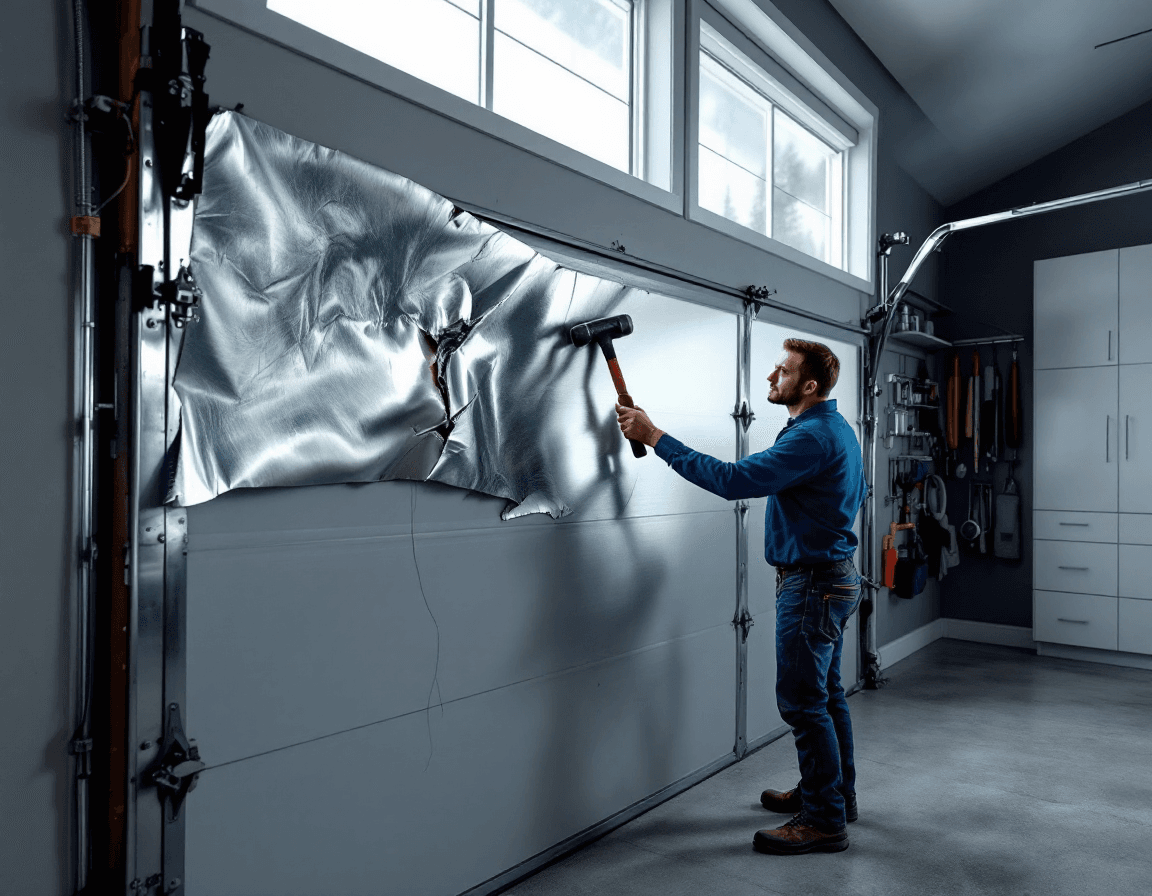
Garage door panel replacement in Edgewood, WA is often the most sensible fix when one section of your door is dented, cracked, or rusting, but the rest of the door still works. Edgewood sits in the Puyallup River valley of Pierce County, where damp winters, heavy spring rain, and the occasional backing mishap in a crowded driveway can all leave their marks on a steel or wood door. Replacing a single panel costs far less than a whole new door, and when the springs, tracks, and opener are in good shape, it can restore both the look and the weather seal without disturbing the parts that already function well.
This page explains how we assess damaged panels, what usually causes them in our part of Western Washington, and how to decide between repairing a section and replacing it outright. We also cover how panels are matched when the original manufacturer no longer makes that exact color or profile, and what you can expect to pay. Panel pricing generally runs between $250 and $800 per section, depending on the door's material, insulation, width, and finish, and we explain what moves the number up or down.
Whether you are looking at a bent bottom section after a bumper-height fender tap or a faded panel that no longer lines up with its neighbors, the goal is the same: a door that closes tightly, looks consistent from the street, and keeps moisture out. Read through the sections below, and if you still have questions about your particular door, call us at (888) 799-3819 and a technician can talk through what you are seeing.
Reading the Damage Before You Pick a Solution
Not every dent calls for a new panel. A shallow crease in a steel section that has not cracked the paint or broken the embossed grain may be cosmetic, and in some cases a technician can gently push the metal back into shape. Deeper dents, however, often stretch the metal enough that it no longer sits flat against its neighbors, which creates gaps at the seams and lets wind and rain push through. Running a hand along the seam between two panels at night, with the door closed and a flashlight held low, will often reveal light leaks that you would miss in daylight.
Cracks deserve closer attention than dents. A hairline crack along a crimped edge may be only a surface issue, but a crack that runs across the face of a panel usually means the metal has fatigued and will continue to spread. Cracks near the roller track bracket or the hinge points are especially important, because those are the areas where the door flexes most during each cycle. If a crack appears near a hinge, have the door checked before you operate it heavily, since uneven loading can make the damage worse.
Take photographs from a few angles and note where the damage sits relative to the top, middle, and bottom of the door. This information helps a technician quote the job accurately and determine whether the panel is a standard size or a custom one. It also gives you a baseline if you later need to show an insurer or a property manager what happened and when.
Why Edgewood Doors Face Their Own Kind of Weather Wear
Edgewood's climate is mild by national standards, but it is persistently damp. Long stretches of gray, drizzly weather from late fall into spring keep the surfaces of garage doors wet for days at a time, and that moisture finds its way into seams, hinges, and the lower edges of every section. Many homes in the area also sit under mature conifers and deciduous trees that shed needles, sap, and moss onto the door face, and those materials hold moisture against the finish.
The region's soil and drainage also matter. Driveways that slope toward the garage, low spots where water pools after a downpour, and gutters that overflow onto the door header all send extra water toward the bottom panel. Over several wet seasons, that repeated soaking can lift paint, separate insulation from the skin of an insulated panel, and encourage corrosion at the bottom edge where the metal is thinnest and most exposed to road splash.
Temperature swings add another layer of stress. Cool nights followed by brief sunny afternoons cause metal panels to expand and contract, and that movement works fasteners loose over time. A panel that was installed tightly may begin to rattle or pull away from its channel, and that movement is often the first sign that a panel is about to crack or buckle. Addressing a loose panel early keeps a small repair from turning into a full replacement.
Bottom Sections, Water Lines, and the Trouble Below the Rails
The bottom panel takes more abuse than any other section of a garage door. It sits closest to the driveway, absorbs splashes from passing vehicles, and bears the full weight of the door when it moves through the tracks. In wet regions like ours, the bottom edge also collects grit and standing water, and that combination quietly eats away at paint, sealant, and the metal beneath. Many homeowners only notice the problem when a light flashes on the opener or when the door starts to scrape on one side.
Water damage to a bottom section often shows up as a rust line running along the lower inch or two of the panel, sometimes with bubbling paint above it. In insulated doors, the telltale sign may be a soft or spongy spot near the bottom edge where the foam core has absorbed moisture. Once that happens, replacing only the outer skin is rarely enough, and the whole section usually needs replacing to restore insulation value and structural stiffness.
Impact damage at the bottom is also common. A snowblower, a stray tow hitch, or a kid's bike thrown against the door can dent the bottom section just enough to bind it in the track. Before ordering a new panel, a technician should check that the bottom weather seal, the end caps, and the roller brackets on that section are not also bent. Replacing the panel while leaving a bent bracket in place can lead to a repeat problem within a season.
Backing Accidents and the Single Panel Problem
A backing accident is one of the most common reasons Edgewood homeowners end up needing a panel replacement. A vehicle reversing too quickly, a delivery truck clipping the door while turning, or a bumper that catches the lower section can all produce a single, badly dented panel. Because the damage is localized, many people assume the rest of the door must be fine, but a sharp impact can also shift the adjacent sections and loosen the hardware that holds them together.
After any impact, check the door in both directions. Close it slowly, watching for the panels to stay aligned in the tracks, and listen for scraping or popping sounds. Look at the hinges between the damaged section and its neighbors, since a hinge can be bent or pulled partly out of its pocket. If the door climbs unevenly, stop using it and call a technician rather than forcing it, because an uneven door can put strain on the springs and cables.
Insurance coverage for this kind of damage varies, and we are not in a position to advise you on your policy. Many homeowners find it useful to photograph the damage, keep the receipt for the panel replacement, and note the date of the incident. A licensed technician can provide an itemized invoice that lists the panel size, the material, and any related hardware work, which is often what a claims adjuster will ask for.
Rust and Rot: When Steel and Wood Start Giving Up
Steel doors are durable, but they are not immune to corrosion. Scratches that expose bare metal, chips along the bottom edge, and worn spots near hinge points all invite rust, especially when the door sees constant moisture. Surface rust that is caught early can often be cleaned, primed, and painted, but once rust eats through the metal and begins to form flakes or holes, the panel usually needs replacing. Ignoring rust also allows it to spread under paint and into adjacent sections.
Wooden doors present a different challenge. Cedar and fir panels resist some moisture, but they swell, check, and rot when they stay wet for long periods, particularly at the bottom rail and along the edges where end grain is exposed. Soft wood that crumbles under a screwdriver tip is beyond simple repair, and at that point a matching replacement section is the practical choice. Be cautious about patching rot with filler, since trapped moisture will continue to work its way into the surrounding wood.
Composite and fiberglass doors resist rust and rot entirely, but they can still crack from impact or delaminate near the edges after prolonged UV exposure and moisture cycling. If you see a hairline crack or a bubbling surface on a composite panel, have it inspected before the damage spreads. Reputable repairs on these materials depend on identifying the exact product line, since adhesives and fasteners that work on steel will not always bond properly to composite skins.
Matching a Panel You Can No Longer Buy Off the Shelf
Matching is often the hardest part of a panel replacement. Garage door manufacturers update their profiles, change their color palettes, and discontinue older models, so the exact panel that came with your door may no longer be catalogued. Even when a manufacturer still sells a comparable section, the paint may be a shade off after years of sun and rain, which can make a new panel look like a patch from across the driveway.
Start by identifying the door. Look for a manufacturer's label or serial plate, usually on the inside of a section near the bottom or on the header or track. Note the panel width, the number of rows, the embossing pattern, and whether the door is insulated. If the label is missing or unreadable, a technician can often identify the door from its profile, hardware, and window configuration, which narrows the field considerably.
When an exact match is not available, there are workable alternatives. Some suppliers can produce a panel with the same dimensions and a close-enough profile, and a skilled painter can color-match a new section to the aged surface of the existing doors. In some cases, we recommend replacing an entire row or even the full door so that the finish is uniform, especially on a street-facing door where a mismatched patch will always be visible. We will walk through the trade-offs honestly, including when a mismatch is acceptable and when it is not.
Repair or Replace: A Practical Decision Path
Deciding whether to repair a damaged panel or replace it depends on the type and extent of the damage, the age of the door, and the condition of its other components. A panel that is only lightly dented and structurally sound may be straightened and refinished. A panel that is cracked, rusted through, or rotted usually needs replacement. The age of the door also matters: if the springs, cables, and opener are near the end of their service life, investing heavily in a single panel may not be the best use of your budget.
Here is a simple way to think through the choice:
- The panel is dented but not cracked, and the paint is intact: straightening or refinishing is often worth trying first.
- The panel has a crack across its face or along a crimped seam: replacement is usually the safer, longer-lasting option.
- The bottom section shows rust at the lower edge or a soft spot in the insulation: replace the section, and inspect the bottom seal and end caps.
- The door is more than fifteen or twenty years old and several panels are damaged: compare the cost of a full door replacement against multiple panel repairs.
- The damage is only cosmetic and the door is in good working order: consider whether the appearance matters enough to justify the expense.
These guidelines are starting points, not rules. A technician who inspects the door in person can weigh the factors that matter for your specific situation, including how the door is used and whether it faces the street.
What a Typical Panel Job Costs Around Edgewood
Panel replacement is priced per section, and most jobs in our service area fall between $250 and $800 per section. Where a panel lands in that range depends on several factors. Standard steel panels from common manufacturers cost less than insulated sections, wide or custom-sized panels, or panels in specialty finishes such as wood-grain textures or composite materials. Doors with decorative windows or unusual embossing may also require more labor to fit correctly.
Labor is a significant portion of the total. Removing a damaged section usually involves unloosening the track, lifting the door carefully, and disconnecting the hinges and rollers that attach to the panel. The new section then has to be fitted, aligned, and secured before the door is tested through several full cycles. If the door needs weather seal replacement, bottom seal work, or hinge adjustment during the same visit, those items are typically quoted separately so you know exactly what you are paying for.
We recommend asking any contractor for a written estimate that lists the panel material, the approximate size, whether the color is an exact match or a close alternative, and what is included in the labor. A clear estimate protects both you and the technician, and it makes it easier to compare options if you receive more than one quote.
Keeping the Rest of Your Door Safe While the Panel Is Replaced
A panel replacement should never involve work on the springs or cables, and this is a boundary we hold firmly. Torsion springs and extension springs store enormous amounts of energy, and mishandling them can cause serious injury. If a panel replacement reveals that a spring is worn, cracked, or out of balance, the correct response is to schedule that repair with a licensed professional who has the proper tools and training. Do not attempt to release tension yourself, and do not assume that a door that looks fine is safe to operate.
While a damaged section is out of the door, the remaining panels should be kept aligned and supported. A technician will typically check the tracks, the roller condition, and the balance of the door before and after the swap. If the door feels heavy, drags, or jerks during operation, stop using it until it has been inspected. Keep children and pets clear of the door during any testing, and never stand under a door that is not fully supported.
Homeowners can help by keeping the area around the door clear, noting any unusual sounds or movements, and reporting any changes in how the door closes. These observations give the technician useful information and can point to problems that are developing elsewhere in the door system.
Protecting Your New Panel Through Pacific Northwest Seasons
Once a new panel is installed, a little routine care goes a long way in Edgewood's damp climate. Rinse the door face and bottom edge every few months, especially after leaf fall and before the wettest part of winter. Remove moss, sap, and debris gently, using a mild soap and a soft brush rather than a pressure washer, which can force water past seals and into seams. Touch up any small chips in the paint before they expand, using a color-matched touch-up product recommended for your door's finish.
Check the bottom weather seal at least twice a year. A seal that has flattened, cracked, or pulled away from the door will let water in and reduce the effectiveness of the new panel. Replacing a worn seal is inexpensive compared with the cost of water damage to a section. Keep gutters clear above the garage so that runoff does not pour over the header and down the face of the door, and make sure the driveway drains away from the door opening.
Finally, schedule an inspection every year or two. A technician can spot loose fasteners, early corrosion, and misalignment before they turn into a larger repair, and the visit gives you a chance to ask questions about the door's condition and expected lifespan. Regular attention keeps your door looking consistent and working well through many seasons of Edgewood rain.
If one or more panels on your door are dented, cracked, rusted, or water-damaged, Seattle Garage Door Fix can assess the damage, explain your repair-or-replace options, and provide a clear estimate for the work. Our licensed, bonded, and insured technicians serve Edgewood and the surrounding Pierce County communities, including neighborhoods near Edgewood Meadows. Call us today at (888) 799-3819 to schedule an inspection, and we will help you restore your door's appearance and weather protection.