
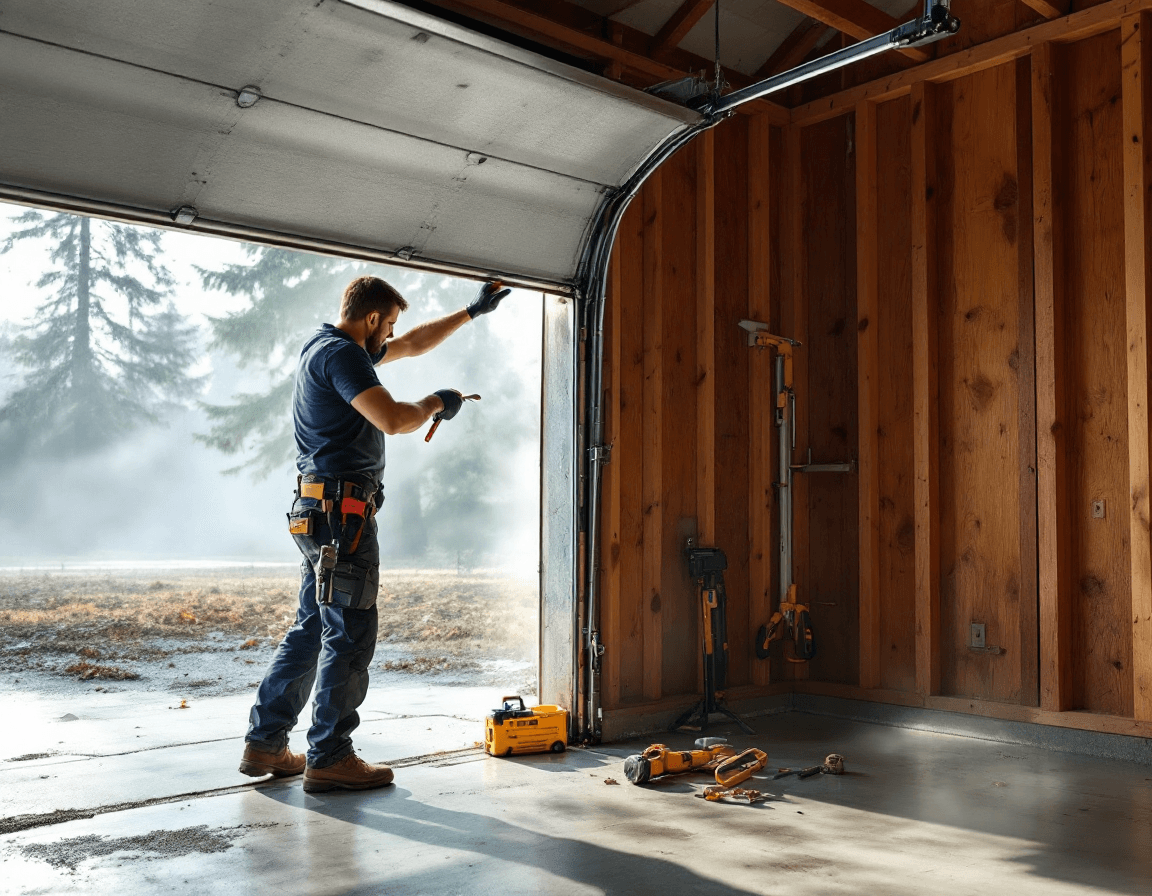
Off-track garage door repair in Edgewood, WA is one of the more common calls we answer during the wetter months, and it is also one of the most misunderstood. A door that has slipped off its tracks can look like a catastrophic failure, but the damage is often limited to a few rollers, a bent track section, or a panel that has shifted out of alignment. Homeowners in Edgewood, from the neighborhoods near Edgewood Meadows to the streets closer to the Puyallup River corridor, usually notice the problem when the door stops closing smoothly, makes a grinding noise, or sits at an odd angle. Knowing what is happening mechanically makes the next step much clearer.
This page explains why doors leave their tracks in this part of Pierce County, how to recognize the early signs before a full derailment, and what a technician typically does to put things right. It also covers realistic pricing, the safety boundaries that every homeowner should respect, and the temporary steps that can keep the door secure until help arrives. Our goal is to give you enough practical detail to make a confident decision, whether you are calling us today or simply trying to understand what went wrong.
Seattle Garage Door Fix provides this work as a licensed, bonded, and insured company, and we serve Edgewood along with more than 60 other communities across Western Washington. When you call (888) 799-3819, a technician can assess the door, explain the repair in plain language, and give you a clear estimate before any work begins. The information below is written to help you prepare for that conversation.
Why Doors in Edgewood Tend to Leave Their Tracks
Western Washington winters bring long stretches of rain, cool damp air, and frequent temperature swings that can change from one week to the next. Metal tracks, steel rollers, and wooden or composite panels all respond to moisture and temperature in different ways. Over time, these small movements can loosen mounting brackets, allow dirt and debris to accumulate in the track channel, and cause rollers to wear unevenly. A door that has been sitting in a slightly misaligned position for months may finally slip free during an ordinary open or close cycle.
Wind is another factor that deserves more attention than it usually gets. Edgewood sits in an area where gusty weather can push against a large, lightweight door, particularly on a single-car opening or a door that is partially raised for ventilation. Sudden gusts can lift or twist a panel just enough to pull a roller out of its track. Doors that are not fully latched or locked during a storm are more vulnerable, which is why we often ask about how a door was secured when the problem first appeared.
Many homes in the area also have driveways that slope slightly toward the garage, and vehicles parked close to the door can cause subtle stress. A car that is backed in too quickly or a bumper that rests against the lower panel can shift the door's alignment without leaving obvious damage. Over several seasons, this kind of repeated pressure can contribute to a gradual drift that finally results in a derailment.
Early Warning Signs That a Door Is Drifting Off Line
A door rarely jumps the track without warning. In most cases, there is a period of subtle change that a homeowner can notice if they pay attention to how the door behaves. The first sign is often a slight pause or hesitation at the beginning or end of travel, when the door seems to catch briefly before continuing. You may also hear a new scraping or ticking sound, especially near the top corners where the rollers enter the horizontal track.
Visual clues matter just as much as sounds. Look along the edge of the door where it meets the frame and check whether the gap is even from top to bottom. A gap that is noticeably wider on one side can mean that one track section has pulled away from the wall or that a roller has begun to ride outside its groove. Also check whether the door sits level when closed, because a door that leans or shows uneven light at the bottom seal may already be out of alignment.
Pay attention to the rollers themselves when you have a safe, well-lit view. Rollers that look flattened, cracked, or have visible flat spots may be wearing unevenly, and this wear often precedes a derailment. Keep in mind that inspecting from the inside of the garage with the door closed is safer than peering into the mechanism while the door is moving. If anything looks wrong, stop using the door and schedule service rather than waiting for a more serious failure.
The Components That Usually Fail During an Off-Track Event
When a door leaves its track, the rollers, the track sections, and the hinges between panels are the parts most often involved. Rollers ride inside the vertical and horizontal tracks and guide the door's movement along a predictable path. Steel rollers with worn bearings can seize or wobble, and nylon rollers can crack or deform over time. Once a roller has been forced out of its channel, it may bend the track edge or pull the adjoining section slightly out of plumb.
Track sections are bolted together and secured to the wall, the ceiling, and the header above the opening. A hit from a vehicle, a stuck door that has been forced, or a loose bracket can bend the track or separate a joint. Even a modest bend can keep rollers from running smoothly, so a technician must inspect each section rather than assuming the whole track is damaged. Mounting brackets that have pulled out of drywall or weakened wood should also be checked, because they support the entire door during movement.
Hinges connect the individual panels, and they carry the stress of the door's weight as it travels. A hinge that has bent, cracked, or lost its fasteners can allow one panel to separate from its neighbor, which causes the door to bind or twist. This is why an off-track repair often involves more than simply pushing a roller back into place. A thorough technician will look at the full door assembly to confirm that the panels still move together as designed.
Repairing Bent, Dented, or Separated Track
Track damage is one of the more involved parts of an off-track repair, and it is also where a qualified technician earns their fee. A minor dent in the track may be straightened with careful tools and controlled pressure, restoring the smooth channel that the rollers need. A section that is kinked or badly deformed may need to be replaced entirely, which requires matching the track profile and gauge so that the new piece lines up with the existing system. Mixing mismatched components is a common cause of repeat problems.
Separated track sections typically result from a loose joint, a failed bracket, or a collision that pulls the track away from its mounting point. In these cases, the technician reconnects the sections, checks that they are square and level, and reinforces the attachment points. Walls and headers in older Edgewood homes can vary in condition, so the technician may need to add or upgrade fasteners to hold the track securely. Where the surrounding framing is compromised, we will tell you before proceeding.
Track work also involves a careful check of the door's travel along its full path. After any straightening or replacement, the door should move evenly from closed to fully open without binding, and the panels should stay aligned at every point. Testing the balance with the door partially raised is an important step, because it reveals issues that might not appear during a quick open and close. A technician who skips this check may leave you with a door that works for a day and then drifts again.
What Happens During a Typical Off-Track Service Visit
When a technician arrives, the first task is to make the door safe and stable. This usually means securing the panels, confirming that the door is not under tension in a way that could cause sudden movement, and clearing the area around the opening. The technician will then assess the position of the door, the condition of each roller, the straightness of the tracks, and the state of the hinges and brackets. A good assessment takes time, and rushing it often leads to missed damage.
Once the damage is mapped out, the technician will explain the repair options and the expected cost. Many off-track jobs involve re-seating rollers, straightening a section of track, tightening or replacing brackets, and checking the balance of the door. More extensive jobs may include replacing a damaged roller set or a track section, and in rare cases, a panel may need replacement if it has been severely bent. Your technician should walk you through each recommendation so you can decide what to approve.
Before leaving, the technician should test the door through several full cycles and confirm that it moves smoothly in both directions. They should also show you how the door behaves when it is operated manually, and explain any limits on use until final adjustments are complete. If a related component appears to be nearing failure, such as a worn cable or a weakened spring, they should describe it clearly. Those components are part of a separate safety discussion, and they are not something a homeowner should attempt to adjust without training.
Realistic Pricing for Off-Track Repairs in Edgewood
For most off-track repairs, our pricing falls in the range of $125 to $400. Where the job lands within that range depends on how many rollers need attention, whether a track section must be straightened or replaced, and how much hardware has been affected. A door that simply popped a single roller out of the track and shows no other damage usually sits near the lower end of the range. A door that has bent track, several damaged rollers, and separated brackets typically falls toward the higher end.
Several factors can push a repair toward the upper range. Track that has been crushed by a vehicle may require replacement of multiple sections, and older tracks may not match current components, which increases the labor involved. A door that has been forced open repeatedly may also have damaged hinges or panel edges that need correction. Access can matter as well, especially if the opening is tall or the track is mounted at an unusual height.
We recommend asking for a written estimate before the work begins. A reputable technician will explain what is included, what is not, and what might change if additional damage is found during the repair. If the diagnosis reveals a larger problem, such as a broken spring or a compromised cable system, the scope of work should be discussed separately. Transparency about cost is part of building trust, and you should expect it from any company you hire.
Work You Should Never Attempt Yourself
Off-track garage doors are heavy, and the forces stored in their springs and cables can cause serious injury. Even when a door appears to be simply sitting crooked, the tension in the spring system remains active. Attempting to lift, pry, or push a door back onto its track without proper training can cause the door to drop, twist, or release stored energy. For this reason, we strongly advise homeowners not to try to correct an off-track door on their own.
Spring and cable work is especially dangerous. Torsion springs and extension springs hold a great deal of energy, and adjusting or removing them without the correct tools can result in serious injury. Cables can snap under tension, and loose cable ends can whip with considerable force. If a door has come off its track and you suspect the cable has jumped its drum or the spring has been affected, do not touch it. Always call a licensed professional for spring and cable work, because the risk is simply too high for untrained hands.
Disconnecting the opener is sometimes recommended as a safety measure, but this step should be handled carefully and only if you understand how your system is configured. Never stand under a door that is partly off its track, and keep children and pets well away from the opening. If the door is blocking your only vehicle exit or the door is sagging in a way that looks unstable, keep everyone clear and call for service.
Temporary Steps to Take Until a Technician Arrives
While you wait for service, there are a few precautions that can reduce the risk of further damage. Keep the door closed if it is still stable and does not appear to be leaning or sagging. If it is partly open and seems secure, leave it in that position and avoid operating the opener, since running the motor can pull rollers further out of the track or bend the damaged sections. Make sure no vehicles, bicycles, or stored items are positioned close enough to be struck by a shifting panel.
Document what you see before anything else changes. Take photographs of the door from inside and outside, noting where the gap is widest and where the rollers appear to have left the track. These images help the technician understand the cause of the derailment and can be useful if the damage was caused by a collision or a storm. If a vehicle struck the door, note the time and any details that might help with insurance or repair coordination.
Keep the area clear of tripping hazards and maintain a clear path around the opening. Do not attempt to fix the track with tools, and do not use clamps, straps, or improvised supports to hold the door in place. Improvised fixes can shift unexpectedly and turn a repairable problem into a more costly one. A short wait with the door secured is far better than a rushed attempt at a repair that goes wrong.
Keeping Your Door Aligned Through Pacific Northwest Winters
Preventing another derailment starts with a few simple habits that suit the local climate. Keep the track channels free of mud, leaves, and debris, which are common in Edgewood during the fall and winter. A soft brush and a small amount of mild cleaner can clear the grime that builds up along the rollers' path. Avoid heavy lubricants that attract grit, and use a light lubricant recommended for garage door components on the hinges and rollers.
Schedule an inspection before the wettest months arrive. A technician can check the tightness of brackets, the alignment of the tracks, and the condition of the rollers before they cause trouble. This is also a good time to ask about the balance of the door and whether any components are showing early signs of wear. Preventive attention costs far less than an emergency call during a storm.
Pay attention to how the door is used. Avoid forcing a stuck door open or closed, and if the door stops, find out why rather than pushing harder. Keep vehicles parked a comfortable distance from the door and consider bollards or wheel stops if cars tend to nose in too close. Small changes like these can significantly reduce the stress that leads to off-track events over time.
Choosing a Crew That Knows Edgewood and the Surrounding Area
When you choose a company for off-track repair, look for a licensed, bonded, and insured team that can explain the work clearly and provide a written estimate. Ask whether the technician will inspect the entire door assembly, not just the roller that appears to be the problem, because a thorough diagnosis prevents repeat calls. A company that works across Western Washington should understand the typical construction of homes in Edgewood and nearby communities, including how garage openings are framed and how tracks are commonly mounted.
It is also reasonable to ask how the technician plans to handle spring and cable components if they become involved. A responsible company will tell you when a repair falls outside the scope of a simple realignment and will recommend the appropriate next step. You should feel comfortable asking questions about the parts being used, the expected timeline, and the warranty on labor. Clear answers are a sign of professionalism.
Seattle Garage Door Fix has served homeowners across Pierce County and the broader Seattle area, and we bring the same careful approach to every off-track call in Edgewood, from homes near Edgewood Meadows to properties farther out along the surrounding roads. If your door has left its track, has a bent section, or is binding and will not move, do not wait for it to get worse. Call us at (888) 799-3819 to schedule a licensed technician who will assess the damage, explain your options, and get your door back on track safely.