
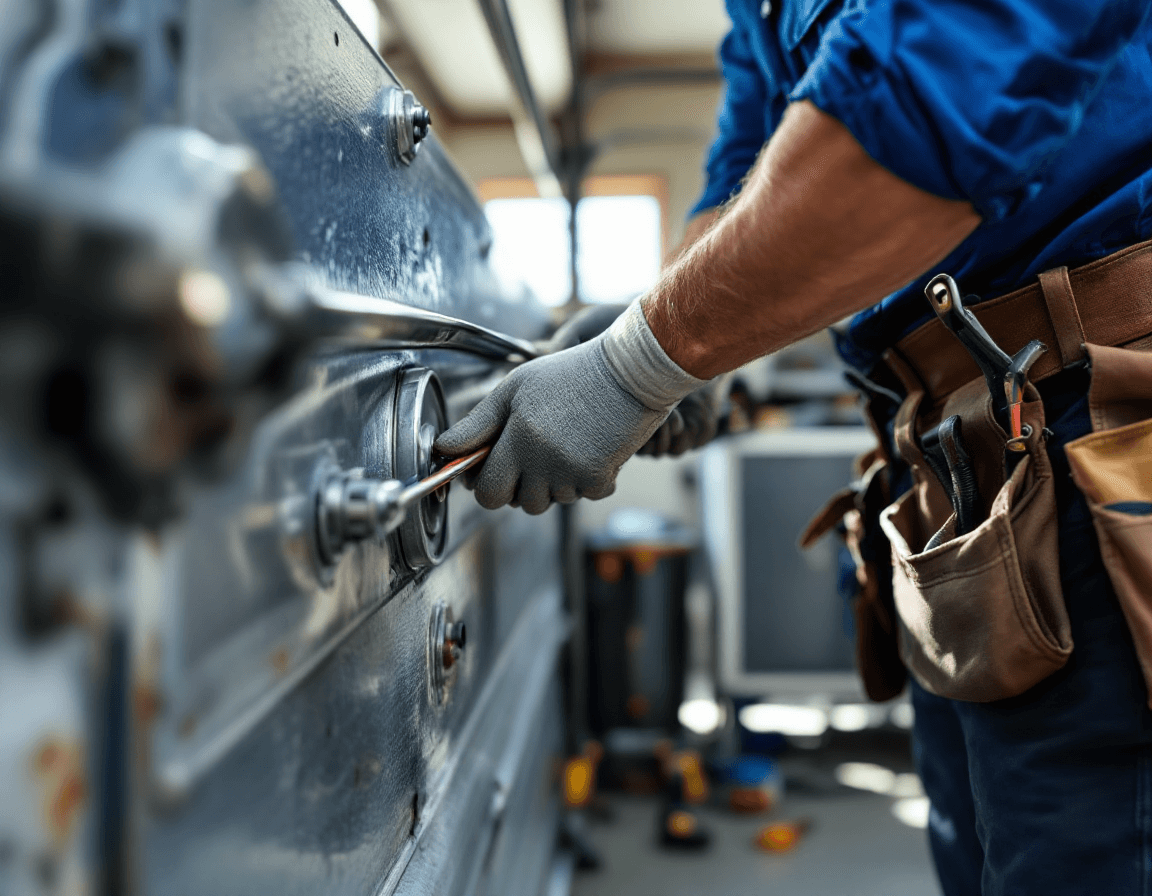
Garage door cable replacement in Edgewood, WA is one of the more common repairs we handle for homeowners in the Edgewood Meadows area and across southeast Pierce County. A lift cable does a lot of quiet work every time the door opens, and when one fails, the door usually stops working all at once. Many households first notice the problem when a loud bang echoes through the house, followed by a door that sits crooked or won't move at all. This page explains how lift cables work, what the warning signs look like, why our regional weather shortens their life, and what a safe, professional repair involves.
Edgewood sits in a part of Pierce County where garages see a lot of moisture, cool temperatures, and long stretches of damp weather. Many homes in the area have two-car doors that carry more weight than single-car doors, and the cables on those doors take a heavier load every cycle. Garages here also tend to be used for more than parking, including storage, workshops, and laundry, so doors get opened and closed at all hours and in all kinds of conditions. Understanding how the system is built makes it much easier to tell whether a problem is a simple cable issue or something that needs a wider inspection. Our goal in this guide is to give you enough background to make a good decision, without suggesting that you attempt the repair yourself.
If you are dealing with a door that has just come off track, hangs lopsided, or made a sharp crack, call (888) 799-3819 and we can schedule a visit. Please keep the door closed and avoid using the opener until someone has looked at it, because a door with a broken cable can drop unevenly and cause further damage. The sections below walk through the system from the inside out, so you can see what is happening and why the right fix is almost always a licensed technician with the right tools.
How the Lift Cables Carry the Weight of Your Door
Most residential sectional garage doors rely on a pair of lift cables, one on each side of the door, to raise and lower the panels. Each cable runs from the bottom bracket near the lowest panel, up through a pulley at the top corner of the door, and then wraps around a drum mounted on the horizontal shaft above the opening. When the torsion spring unwinds, it turns that shaft, the drums rotate, and the cables lift the door in a smooth, balanced way. The cables are essentially the connection between the spring's stored energy and the weight of the door itself. Because each cable has to carry a share of that load, a cable that is weakened or damaged affects the whole door.
The drum is shaped to accept the cable in a specific pattern, and the cable must wind onto it evenly on each turn. Drums are often grooved or tapered so that the cable spirals in a precise path, and that design is part of what keeps the door level as it moves. When both cables are the same length, properly seated, and under equal tension, the door rises in a straight line. If one cable loosens, slips out of its groove, or develops a stretch, the door will start to tilt, and the side with the problem will usually lag behind. Many people never see this mechanism because it sits inside the header area above the door, but it is the heart of how the door operates.
Cables are made from braided steel and are rated for a specific load and cycle life. They look sturdy, but they are sensitive to kinks, abrasion, and corrosion, which is why they can fail without much warning. Each cable also has a fitting at the bottom where it attaches to the door bracket, and that fitting can loosen or pull out of its sleeve over time. Because the entire assembly works under substantial tension, even a small change in one part can throw the balance of the whole system off. This is one reason cable work is treated as a specialist repair rather than a quick adjustment.
Warning Signs a Lift Cable Is Failing Before It Snaps
A cable rarely goes from perfect to broken in a single day. In most cases, the early signs show up weeks or months before the cable actually lets go, and a homeowner who notices them early can often avoid a stuck door in the middle of a busy morning. The most common early symptom is a door that looks slightly uneven when it is halfway open, with one side visibly higher than the other. You might also notice a door that closes unevenly, touches the floor on one corner, or seems to bind or drag on one track. These are good reasons to schedule an inspection rather than waiting for a complete failure.
Visible wear on the cable itself is another clue. Look at the cable where it runs over the pulley and where it wraps the drum, keeping your hands clear of any moving parts. Frayed strands, flattened sections, or a rough, bristly texture usually mean the cable is nearing the end of its service life. Surface rust, especially a reddish or brown film that appears where the cable meets the drum or bracket, is a sign that moisture has been working on it for a while. Our area's damp seasons make rust more likely, so it is worth checking these spots during the wetter months.
Here are the symptoms we most often hear about from Edgewood homeowners before a cable fails completely:
- The door rises or lowers at a visible slant, even when the opener is working normally
- One side of the door sits lower than the other when the door is closed
- The door pauses, jerks, or bounces at one point in its travel
- The cable shows fraying, kinks, or rust-colored spots along its length
- A loud metallic pop or snap is heard during operation, followed by the door sagging or stopping
If you see any of these signs, stop using the door as your main entrance until a technician has inspected it. Continuing to operate a door with a suspected cable problem can lead to a sudden drop, which is dangerous for people and vehicles in the garage. It can also damage the opener, the tracks, or the panels, turning a moderate repair into a larger one.
Why Pierce County Weather Shortens the Life of Garage Door Cables
Western Washington's climate has a major influence on how garage door hardware ages, and lift cables are no exception. Long, damp winters bring frequent rain and high humidity, and those conditions allow surface rust to form on steel components that are not well protected. Even in a closed garage, moisture from wet shoes, damp outerwear, firewood, and driveway runoff can increase the humidity inside the space. Over several seasons, this slow exposure can thin the outer strands of a cable and weaken the fittings at each end. Homeowners often don't realize how much moisture a garage can hold until they see rust on a tool, a hinge, or a door track.
Temperature changes add another layer of stress. Cold snaps and freezing nights cause the steel to contract, and then the warmer days cause it to expand again, which can gradually loosen fittings and fatigue the wire. In a garage with an uninsulated door or an open gap at the bottom, cold air can move in and out in ways that speed up this cycle. Moisture that condenses on metal during cold nights and then dries during the day can produce a repeated wet-dry pattern that favors corrosion. We see these effects most often on doors that have been in place for more than a decade, but newer doors can be affected too if the surroundings are damp.
Pierce County's rainfall also means driveways and yards stay saturated for long periods, which can draw more moisture toward the lower part of the garage. Doors that sit close to wet ground or lack a good bottom seal may see more condensation along the lower brackets, where the cable connects. Keeping the garage ventilated, sealing gaps where water can enter, and keeping the floor clear of standing water all help protect cables and the hardware around them. Those small habits can extend the life of the entire lift system, even though they will not stop normal wear entirely.
What Happens When a Cable Snaps or Comes Off the Drum
When a lift cable breaks, the result is usually more dramatic than the actual failure. You may hear a sharp bang, often followed by a rattling sound as the free end of the cable whips against the track or drum. The door will typically drop slightly on the affected side, and it may stop entirely if the other cable cannot hold the balance on its own. Some doors slump at an angle and stay stuck halfway open, while others fall closed with a jolt. In either case, the door is no longer moving evenly, and the opener may try to run and then shut off as a safety measure.
A cable can also come off the drum without breaking. This happens when the cable slips out of the groove and sits loosely around the drum or the shaft, sometimes tangling as the drum turns. A cable that has jumped the drum may still be attached at the bottom bracket, which can make the door look fine from the outside while the other side hangs unevenly. Homeowners sometimes assume the door just needs a nudge, but forcing the door open or closed while a cable is off the drum can damage the drum, the shaft bearings, and the track. It can also put the cable under uneven load, which increases the chance of another snap.
The safest response is to close the door if it is open and stop using the opener. Keep children, pets, and vehicles away from the door area, and do not climb onto the door or try to reattach the cable yourself. If the door has dropped to the ground, do not try to lift it manually, because the spring may still hold significant energy and the door can move unexpectedly. A licensed technician can secure the door, inspect the drum and spring, and then replace the cable in a controlled way. Calling (888) 799-3819 is the best first step if you are unsure what you're seeing.
Drum, Pulley, and Bracket Problems That Mimic a Cable Failure
Not every symptom that looks like a cable problem actually starts with the cable. A worn drum can cause a cable to slip or wind unevenly, even if the cable itself is in good shape. Drums can crack, lose their grooves, or develop a flat spot where the cable has been rubbing for years. When a drum is damaged, a replacement cable may not seat properly, and the door can still hang crooked after the repair. For this reason, a thorough inspection checks the drum and shaft alongside the cable.
Pulleys and rollers can also cause binding or uneven motion. A pulley that has seized or lost its grease can pull the cable at a bad angle, creating extra friction and wear. Bent brackets or loose mounting bolts can change the path the cable follows, which can lead to fraying at the same point every time the door cycles. Cable bottom brackets that have shifted or cracked can allow the cable to pull free from its anchor. These problems are often hidden behind the track or inside the header, so they are easy to miss without a close look.
This is why a good cable visit usually includes a check of the full lift system. The technician will look at the drum grooves, the pulleys, the shaft, the bearings, and the brackets, then make sure the door tracks smoothly through its full travel. Replacing only the cable when the drum is worn is a common source of repeat calls, because the new cable will wear out quickly against a damaged surface. Taking the time to inspect the whole system helps prevent a second failure a few months later.
Why Torsion Spring Tension Makes Cable Work a Professional Job
Lift cables are not connected to a simple, relaxed system. They are tied to the torsion spring above the door, and that spring is wound under very high tension. Even when the door appears to be at rest, the spring may be holding a large amount of stored energy that can release suddenly if a cable, drum, or spring component is disturbed. Many serious garage door injuries happen during DIY cable work, when a homeowner loosens a fitting or removes a drum without properly securing the spring first. This is why we always recommend a licensed professional for spring and cable work.
Professionals use winding bars, locking pins, and specific safety procedures to control the tension before they touch the cable. They also check the spring's condition, because a spring that has been overworked or has fatigued can fail at the same time as a cable. If the spring needs to be replaced or re-wound, that work requires specialized tools and training that most homeowners do not have. Attempting it without those tools can cause serious harm, even if the job looks straightforward in a video.
Our technicians are licensed, bonded, and insured, and they treat every cable job as a safety-first repair. We will explain what we see, show you the damaged parts if you would like, and give you a clear recommendation before any work begins. If you are considering a repair yourself, please reconsider and call a professional instead, because the risk is not worth the savings. A cable replacement done correctly protects both your household and your investment in the door.
The Typical Steps in a Professional Cable Replacement
A professional cable replacement usually follows a clear sequence, and understanding the steps can help you know what to expect during a service call. The technician will begin by assessing the door, checking the spring, and confirming which cable has failed and why. They will then secure the door and the spring so that the system is stable before anything is disconnected. Once the area is safe, they remove the damaged cable from the drum and bottom bracket, inspect the hardware, and choose a replacement cable that matches the door's size and weight.
Next, the new cable is routed through the pulley and attached to the drum and bracket, with care taken to seat it correctly in the drum grooves. The technician will then restore the spring tension in a controlled way and check that both cables are balanced. The door is tested through several full cycles to confirm that it rises and lowers evenly, closes firmly, and tracks smoothly. Any loose fasteners, worn pulleys, or damaged brackets found during the process are addressed before the visit ends.
Here is a general overview of what the work typically includes:
- Safety assessment of the door, spring, and surrounding hardware
- Securing the door and spring before any disconnection
- Removal of the damaged cable from the drum and bottom bracket
- Inspection of the drum, shaft, pulleys, and brackets for wear
- Installation of a properly rated replacement cable
- Controlled restoration of spring tension and balance check
- Full-cycle testing to confirm even, level operation
Every step matters, and skipping any of them can lead to a door that looks repaired but still operates unevenly. This is one of the reasons we encourage homeowners to ask questions and make sure the technician explains the process clearly.
What Garage Door Cable Replacement Costs in Edgewood
Cost is one of the first questions homeowners ask, and the answer depends on the door, the damage, and what else the inspection finds. For most cable replacements, our pricing falls in the range of $110 to $300. That range generally covers the cable itself, the labor to install it safely, and a balance check of the door. More involved repairs, such as those that also require drum replacement, bracket repair, or spring work, will be priced separately after the technician has evaluated the system.
Several factors affect the final number. A single-car door is usually less complex than a larger two-car door, and a door with heavier insulation or a longer track may need additional attention during balancing. The age of the door, the condition of the drum, and whether the cable has damaged other components all play a role. A well-maintained door with a clean drum and intact brackets will generally be quicker and less expensive to repair than one with multiple worn parts.
We would rather you have a clear estimate than a surprise bill, so the technician will explain what they found and what it will cost before starting any repair. You can ask questions about alternatives, timing, and whether any other parts should be addressed while the door is open. If you want to discuss a specific door or symptom before scheduling, call (888) 799-3819 and we will do our best to outline what to expect.
Choosing the Right Cable Material for Our Local Climate
Not all lift cables are the same, and the material matters in a damp region like ours. Many cables are made from galvanized steel, which has a protective zinc coating that resists rust better than untreated steel. Some installations use coated cables with additional protection, and in certain cases a technician may recommend a particular cable based on the door's weight and the garage's conditions. The right choice depends on the door's specifications, so the replacement should always match the manufacturer's guidance and the rating needed for the door.
Matching the cable's load rating is just as important as choosing a rust-resistant finish. A cable that is too light for the door can fail early, even if it looks good when installed. Using the correct diameter, length, and end fittings ensures that the cable seats properly on the drum and bracket and carries its share of the load. A technician should verify these details before installation rather than guessing from the old cable alone.
Local conditions can also guide decisions about maintenance and upgrades. If your garage tends to hold moisture, the technician may suggest improving ventilation, adding a bottom seal, or reviewing drainage near the door. These steps won't replace a cable, but they can slow corrosion on the hardware that supports the cable. Asking about material options during your visit is a good way to plan for longer-lasting results in our wet, temperate climate.
Simple Habits That Extend Cable and Drum Life Between Visits
Routine care will not prevent every cable failure, but it can catch small problems before they turn into emergency calls. Once a month, with the door closed and the opener disconnected or powered off, take a careful look at the cables from a safe distance. Check for fraying, rust, or any part of the cable that looks out of place, and make sure the drum still appears to be seated neatly. If you notice something unusual, do not attempt to adjust it; simply schedule a service visit.
Keeping the door's moving parts clean and properly lubricated can also reduce wear. A licensed technician can recommend the right lubricant for the rollers, hinges, and bearings, because using the wrong product can attract dirt or damage components. Avoid spraying lubricant directly onto the cables themselves unless a technician has specifically advised it. Wiping away dust and moisture from the lower brackets and tracks can help limit corrosion during the wetter months.
Finally, pay attention to how the door behaves across the seasons. A door that starts to hesitate in cold weather or that begins to show uneven motion after a stretch of heavy rain may be giving you an early warning. Taking that information seriously and calling for an inspection is much easier and less costly than waiting for a cable to snap. A few minutes of attention now can save a great deal of hassle later.
If your garage door is hanging crooked, has a frayed or rusted cable, or made a sudden loud snap followed by a stuck door, please don't wait for the problem to get worse. Call Seattle Garage Door Fix at (888) 799-3819 to schedule a licensed technician who can inspect the cables, drum, and spring, explain your options, and complete a safe, balanced repair for your Edgewood home.