
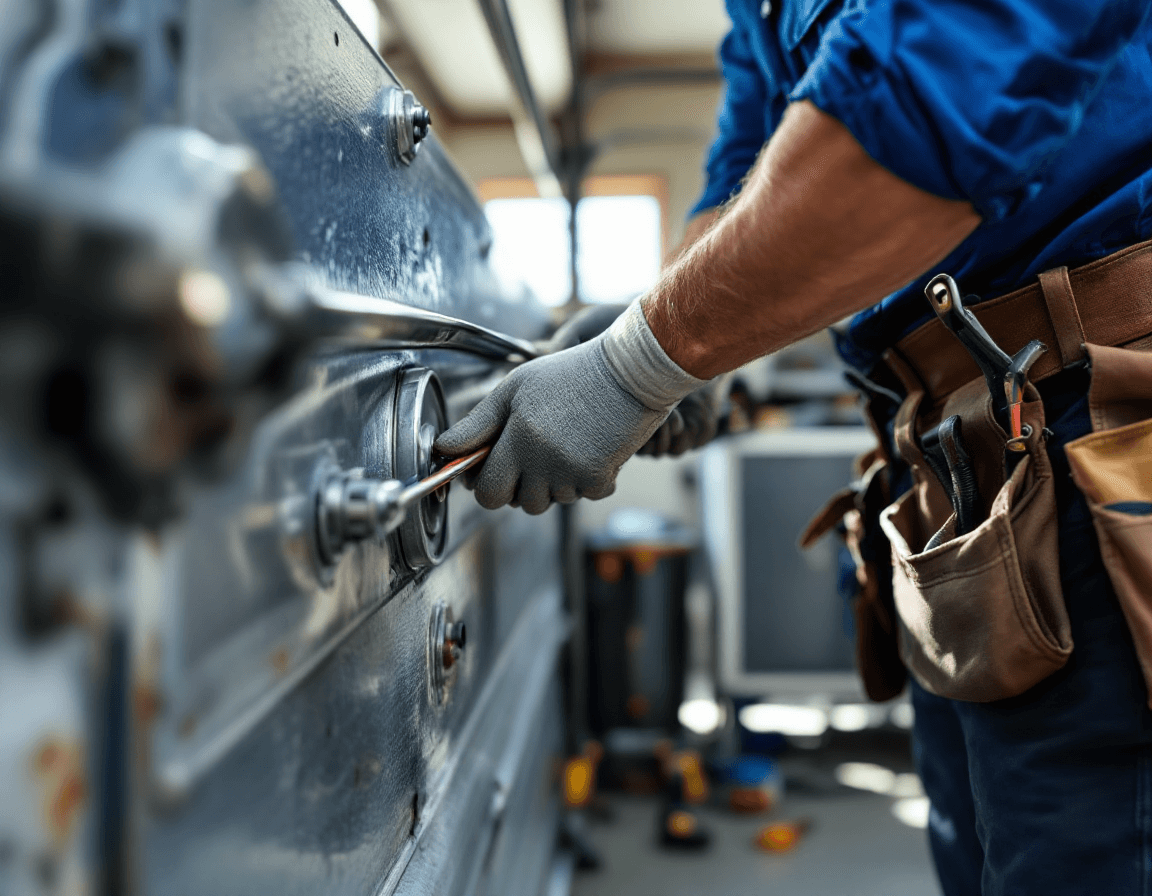
Garage door cable replacement in Fife, WA is one of the most common repairs we see on the south side of Tacoma, and it usually starts with a sound most homeowners remember for years: a sharp crack from the garage, followed by a door that sits crooked or refuses to move. Fife sits in a dense mix of warehouses, light manufacturing, trucking yards, and residential streets, so the garage doors here work harder and face more weather than the average door in a quiet suburb. A lift cable that frays, rusts, or jumps off its drum can leave a two-car door dangling at an angle or stuck halfway up, and it rarely fixes itself. This page explains what the failure looks like, why it happens so often in our part of Pierce County, and what a safe, professional repair involves.
Lift cables are steel wire ropes that carry the weight of your door as it travels along the tracks. On most residential sectional doors, a pair of cables runs from the bottom corners of the door up to drums mounted on the ends of the torsion shaft above the opening. As the spring winds and unwinds, the drums wind and unwind the cables, lifting or lowering the door in a controlled way. When one cable breaks, the balance between the two sides is lost, and the door can no longer rise or fall evenly. Because the cables are under constant load, even a small defect can grow into a full failure without much warning.
What Fife Homeowners Notice First When a Lift Cable Lets Go
Most cable failures announce themselves, though not always clearly. The most dramatic version is a loud snap, often heard from inside the house, after which the door may drop slightly or hang at an angle. Some homeowners instead notice a door that rises on one side faster than the other, or a door that stops partway with a visible gap at the bottom corner. Others only notice that the opener is straining, the motor hums without much movement, or the door has started to bind in the track. If you catch any of these signs early, you can often avoid a further problem such as a damaged drum, a bent track section, or a panel that has been pulled out of alignment.
- A loud crack or bang from the garage, sometimes followed by the door dropping or sagging
- A door that hangs crooked, sits lower on one side, or looks visibly lopsided when closed
- Frayed strands, bird-caged wire, or orange-brown rust along the length of a cable
- A cable that appears loose, slack, or sitting outside its groove on the drum
- A door that closes unevenly, binds on one side, or grinds against the track near the bottom
Do not try to test the door by pushing it or adding weight to the opener. A door with a broken cable can shift unpredictably, and the opener may keep trying to pull a load that is no longer balanced. Disconnect the opener if you can do so safely, keep people and pets clear of the door, and call a technician to inspect it before anyone uses it again.
Why Western Washington Weather Wears Down Steel Cable Faster Than You Expect
The Pacific Northwest is famous for its long, gray, damp stretches, and those conditions are hard on steel. Fife gets a lot of rain, and in the cooler months the air often stays humid for days at a time, which encourages surface rust on exposed wire. Cable that sits behind a door with a poor seal or an uninsulated garage can cycle through temperature and moisture changes every day, and those cycles speed up corrosion at the points where strands rub against drums and pulleys. Over several years, a cable can lose enough cross-section to fail without any obvious sign from the outside.
Proximity to the water and the industrial zone adds another layer of wear. Homes and businesses near the Port of Tacoma and the broader tideflats can experience more airborne moisture and fine particulate matter than inland neighborhoods, and that dust can settle into the drum grooves and track rollers. When grit mixes with lubricant that has dried out, it acts like sandpaper on the cable each time the door cycles. We also see more frequent wear on doors in garages that double as workshops or storage for equipment, where humidity, shop dust, and occasional vibration from heavy vehicles all add up.
Heat is less of a factor here than in drier regions, but it is not zero. Summer afternoons can warm a closed garage considerably, especially on south- or west-facing walls, and repeated expansion can loosen cable clamps and fittings over time. Clamps that work their way loose allow the cable to slip, which then strains the drum and the cable termination at the same time. A good inspection looks at the whole system together, not only the wire.
Reading the Drum: How Cable Winds, Slips, and Tangles
The drum is a grooved, cone-shaped spool that guides the cable as it winds. Its shape is deliberate: the larger end of the cone takes up cable when the door is closed, and the smaller end takes up cable when the door is open, which helps the spring and cable work together through the full travel. When a cable slips off the drum, it often lands in the wrong groove and tangles or bunches on the shaft. A cable that comes off in one direction can jam the drum against the bracket, and a cable that comes off in the other can kink the wire so badly that it must be replaced rather than repositioned.
Look closely at the drum surface if you can see it safely from the floor. Grooves that are deeply worn, chipped, or filled with rust indicate that the drum itself may need attention, because a new cable on a damaged drum will wear quickly. Cable that has been bent sharply during a tangle may show kinked sections that weaken the wire even if the outer strands look intact. A technician should also check the cable anchor at the bottom bracket, because the termination point takes a lot of load and can fail alongside the cable.
Drum service sometimes includes cleaning old lubricant and grit, reseating the cable correctly in its groove, and checking the set screws or collars that hold the drum to the shaft. In many repairs, the drum is reused, but when the grooves are compromised or the drum is cracked, replacing it is the safer choice. Any drum work should be done with the spring fully secured by a licensed professional, because the drum and spring are connected and cannot be safely separated without the right tools and training.
Safety Lines You Should Not Cross: Torsion Springs and Tension
Lift cables are only one part of a balanced system, and that system stores a great deal of energy. On most homes with torsion springs, the spring sits on a steel shaft above the door and is wound to a high tension that holds the door's weight. The drum and cable are attached to that shaft, which means releasing or adjusting a cable without controlling the spring can cause the shaft to rotate suddenly. This is one of the most dangerous situations in residential garage repair, and it is the reason we recommend that every cable replacement be handled by a licensed, insured professional.
Some homeowners consider replacing a cable themselves to save money, especially after watching a video or reading a parts listing. We understand the impulse, but a cable job is not a simple swap. A technician needs to lock the door, release tension in a controlled way, verify the drum and shaft condition, install the new cable with the correct length and termination, and then rebalance the door and test the opener's safety reversal features. Doing any part of that without the right equipment can lead to serious injury, and it can also void the warranty on your door or opener.
If you see a cable that has snapped and the spring looks cracked, the shaft is bent, or the spring has visible gaps between coils, stop and call for service right away. Those signs suggest the spring itself may be failing or may have been stressed beyond its rating. A technician can determine whether the spring can be safely reused or needs to be replaced along with the cable.
What a Typical Cable Replacement Visit Looks Like
A thorough cable visit follows a predictable sequence. The technician begins by confirming the door type, panel size, and spring style, and by checking that the opener and safety sensors are working. The door is then secured so it cannot move unexpectedly, and the damaged cable is removed from the drum and bottom bracket. The replacement cable is measured to match the original length and routed through the correct groove, and the termination is secured with the appropriate fittings. Finally, the door is balanced, tested through several full cycles, and checked for even travel along both tracks.
- Inspection of the door, springs, drums, shaft, brackets, and tracks before any work begins
- Secure locking of the door and controlled release of tension by a licensed technician
- Removal of the damaged cable and inspection of the drum grooves and anchor points
- Installation of a new cable sized to the door, with correct routing and termination
- Rebalancing, lubrication of moving parts, and testing of opener reversal and sensors
Ask the technician to explain what they found and what they changed. A good visit leaves you with a clear understanding of the condition of the rest of the system, including any rollers, hinges, or springs that may need attention soon. If the technician recommends additional work, you should receive a clear written estimate that separates the cable repair from any other items.
Understanding the $110–$300 Range and What Moves It
For most residential cable replacements, our pricing falls in the range of $110 to $300. That range reflects the typical scope of a single cable repair on a standard sectional door, but the final figure depends on the details of your system. A door with two cables, a straightforward drum, and easy access will usually land near the lower end of that range. A door with heavier panels, a damaged drum, a bent shaft, or a need for additional hardware may move the total higher.
Several factors affect the final number. The type of spring system matters, because torsion-spring doors and extension-spring doors use different components and different procedures. The condition of the drum and bottom bracket also matters, since a cable that has damaged other parts may require more time. Access to the work area, the number of panels that need to be lifted or supported, and whether the door needs rebalancing after the repair all influence the total. We provide a quote before any work begins so you can make an informed decision.
Be cautious of any offer that seems far below the typical range for a complete, safe cable repair. Very low prices can mean that important steps, such as drum inspection, rebalancing, or safety testing, are skipped. A properly done repair protects your household and gives the door a better chance of lasting through another season of Fife rain.
Fife's Industrial Corridor and the Doors That Work Hardest
Many homes in Fife share streets with or sit close to commercial and industrial operations, and garages in these areas often see heavier use than the typical suburban door. Some homeowners run small businesses from their garages, store trade equipment, or park work vehicles that come and go at odd hours. Doors used this often complete far more cycles per year, and each cycle places repeated stress on the cables, rollers, and springs. A cable that might last many years on a light-use door can show wear much sooner on a heavily used one.
Garages near major freight routes and the Port corridor can also experience vibration from heavy trucks and rail activity. That vibration can gradually loosen fasteners, shift track brackets, and create uneven load on the cables. When the door starts to sound rougher or the cables show uneven wear, it is worth having a technician check the track alignment and mounting hardware along with the cables. Addressing these issues together prevents the same problem from returning within a short time.
If your garage is used for work, consider scheduling a periodic inspection rather than waiting for a failure. Many homeowners find it helpful to have the door checked once a year, especially before the wet season sets in. During that visit, a technician can look at cable condition, drum grooves, lubrication, and balance, and recommend changes before a snapped cable turns into an emergency.
Matching Replacement Cables to Your Door's Make and Track Layout
Not every garage door uses the same cable size, length, or fitting. Standard residential doors commonly use cables of a specific diameter and length determined by panel height, track radius, and spring type. Using the wrong cable can cause the door to bind, hang unevenly, or fail prematurely. For this reason, replacement should always begin with identifying the door manufacturer, model or series, and the exact track layout, which may be standard lift, high lift, or low headroom.
Cables are also sized to the drum, which means a cable that fits one drum groove profile may not seat correctly on another. Some doors have drums with specific bore sizes and set screw configurations, and a technician needs to confirm these details before ordering parts. Matching the cable to the existing hardware keeps the door balanced and reduces the chance of a repeat failure.
Do not rely on the length of the old cable alone when ordering a replacement. Old cables may have stretched or been cut at the wrong length during a previous repair, and a replacement that copies those errors will carry the same problem forward. A proper measurement takes into account the door's height, track geometry, and how the cable terminates at the bottom bracket.
Preventive Habits for Damp Winters Near the Tideflats
While you cannot control the weather, you can slow down cable wear with a few sensible habits. Keep the garage as dry as practical by checking door seals and weatherstripping each fall, and address any water intrusion at the bottom of the door before it reaches the tracks. Good ventilation helps reduce condensation on metal surfaces, which in turn slows rust on cables and hardware. If the garage is unheated, pay attention to how moisture builds up on cold mornings and wipe down visible metal surfaces when needed.
Lubrication is another important part of preventive care, but it should be done with the right products. Use a lubricant designed for garage door components on the rollers, hinges, and track surfaces, and avoid spraying oil directly onto the cables themselves unless a technician recommends a specific cable product. Excess lubricant can attract dust and grit, which then grinds against the drum and cable. A clean, lightly lubricated system is far more reliable in a Fife winter than one that is simply coated in oil.
Finally, watch for early warning signs and act on them. A cable that looks slightly frayed, a door that starts running unevenly, or a drum that sounds rough should be inspected promptly. Early repair is almost always less expensive and less disruptive than waiting for a complete failure.
When a Snapped Cable Means More Than One Repair
A cable that breaks does not always mean the cable is the only problem. The sudden load change can strain the spring, bend the shaft, damage the drum, twist a track, or pull hinges and rollers out of position. This is why a technician should inspect the whole door after a cable failure rather than simply replacing the cable and leaving. A complete assessment protects your investment and helps prevent a second, more expensive failure soon after the first.
Look for signs that the damage has spread. Track sections that are no longer parallel, rollers that have flattened or cracked, hinges with visible deformation, and panels that sit out of line all suggest that more than the cable was affected. A technician can address these items during the same visit, which often avoids the cost of a second service call. If the spring or shaft is compromised, the repair plan will change, and you will receive a clear explanation of the options.
Keeping records of repairs also helps. Note the date of each service, the parts replaced, and any recommendations that were made. This history makes it easier to plan future maintenance and to recognize patterns, such as repeated cable wear that may point to alignment or environmental problems.
A cable failure is a serious event, but it is also a manageable one when handled by a qualified professional. If your door has snapped a cable, shows fraying or rust, hangs crooked, or has come off its drum, do not wait for the problem to get worse. Keep people and vehicles clear of the door, avoid trying to force it, and call Seattle Garage Door Fix at (888) 799-3819 for licensed, insured cable replacement and drum service in Fife and throughout the surrounding Pierce County area. We will inspect the full system, explain your options clearly, and get your door moving safely again.