
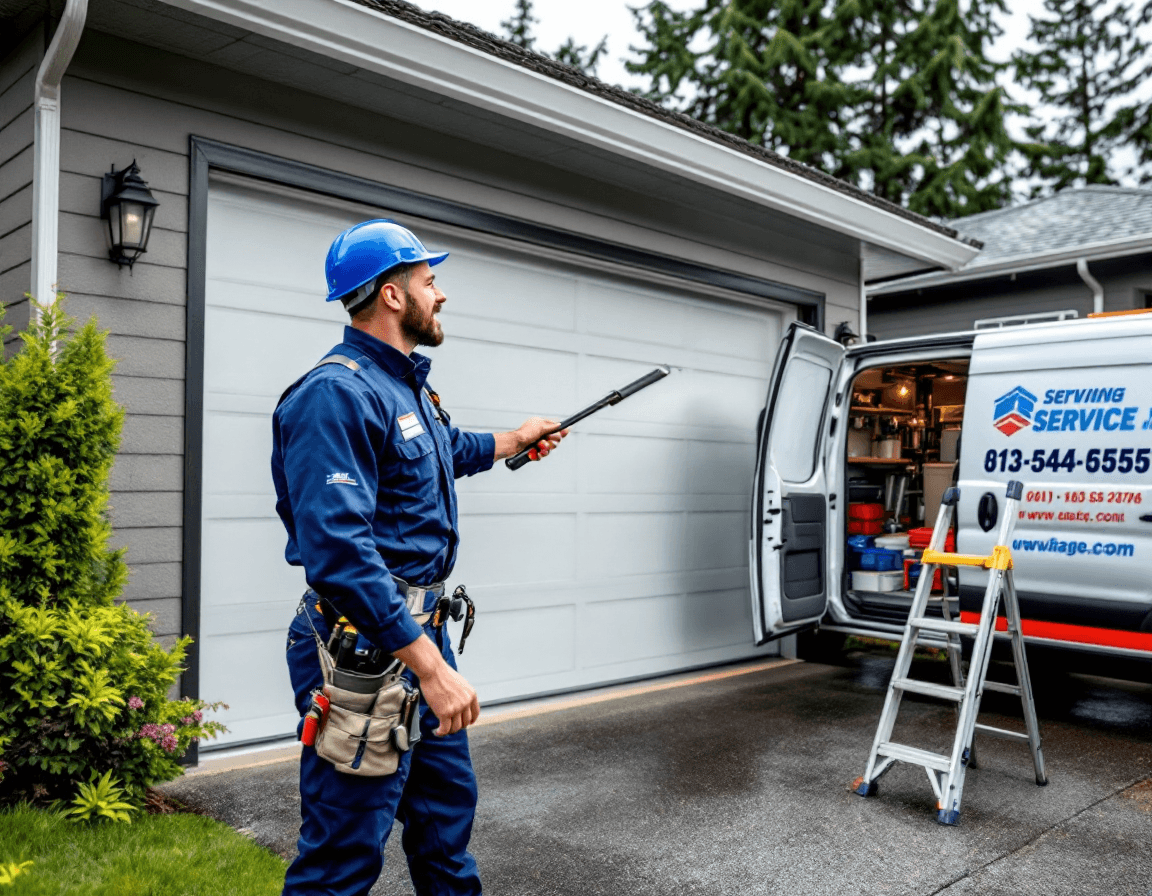
Garage door repair in Fife, WA is a common need for homeowners across the city, from the older ranch-style houses near the Pacific Highway corridor to newer homes tucked into the hillsides above the Puyallup River valley. A door that stops halfway, refuses to respond to its remote, or lurches up and down like it has a mind of its own can turn a routine morning into a scramble. Because your garage is often your main entry point and sometimes the only secure way to store a vehicle, a malfunction usually needs attention quickly. Seattle Garage Door Fix provides fast, reliable residential repair for doors that won't open, won't close, or won't move smoothly, and our technicians are licensed, bonded, and insured.
Fife sits in a practical position: close to Interstate 5, a short drive from downtown Tacoma, and surrounded by a mix of light industry, warehouse traffic, and residential neighborhoods. That blend means many garages in town see daily use, whether a family is loading kids into a minivan before school or a tradesperson is pulling a work truck in and out at odd hours. Doors that get used several times a day accumulate wear faster than those that open once a week, and a repair that might have been a simple adjustment can become a larger problem if it sits unaddressed. Most residential repairs we handle in the area fall in the range of $95 to $450, depending on the part involved and how much diagnostic time the job requires.
This page walks through the most common problems we see in Fife homes, explains what each symptom usually points to, and describes what you can check safely before calling for help. It also covers what to expect from a professional visit and why certain tasks should never be attempted by a homeowner. If your door is currently stuck, the most important step is to avoid forcing it. Read the sections below, note the symptoms you're seeing, and call (888) 799-3819 when you're ready for a technician to take a look.
How Fife's Climate and Coastal Air Shape Your Door's Wear
Western Washington's weather is famously damp, and Fife is no exception. Winters bring long stretches of rain and humidity that linger in garages with poor ventilation, and summer nights can be cool enough that metal and wood components go through repeated expansion and contraction cycles. Over several years, that moisture finds its way into hinges, roller bearings, and the steel track itself, leading to surface rust and sticky movement that makes the door feel heavier than it should. Garages with uninsulated walls or concrete floors that never fully dry out tend to show these effects sooner.
The proximity to the Port of Tacoma and the broader industrial shoreline adds another layer to the picture. Salt-laden air and airborne industrial particulates don't travel far inland, but they can reach neighborhoods on the more exposed edges of town, where they settle on metal surfaces and accelerate corrosion. Galvanized tracks and powder-coated hardware hold up well, but the protective finish eventually wears through at the points where the rollers contact the track. Once bare metal shows, oxidation spreads quickly under humid conditions.
Wood doors and steel doors respond differently to Pacific Northwest moisture. Real wood panels can swell and warp when they absorb water, which causes them to bind in the track or rub against the weatherstripping. Steel doors are more dimensionally stable but can develop rust at panel seams and bottom brackets if the paint or primer is compromised. Knowing which material your door uses helps you understand the kinds of problems you're likely to face and how often the finish should be inspected.
Reading the Early Warnings Before a Door Stops Working
Garage doors rarely fail without warning. In most cases, the first signs are subtle: a slight hesitation at the start of the cycle, a faint squeak that wasn't there last spring, or a door that seems to need a second push from the remote before it responds. Paying attention to these small changes gives you time to schedule a repair during a convenient window instead of waiting for a complete breakdown on the morning you're running late. Early intervention also tends to cost less because the fix is usually a minor adjustment rather than a replacement component.
Several everyday checks can reveal developing problems. You can perform these safely without tools, and they help you describe the issue accurately when you call for service. Use this list as a starting point:
- Watch the door through one full open-and-close cycle and note any pauses, jerks, or sections where it seems to strain.
- Look along the bottom edge of the door for uneven gaps between the panel and the floor on either side.
- Check the track for visible dents, loose bolts, or areas where the rollers appear to ride on the edge instead of the center.
- Listen for new sounds, especially those that appear only during the first few feet of travel or only when the door is nearly closed.
- Test the auto-reverse feature by placing a flattened cardboard box in the doorway, which should cause the door to stop and reverse upon contact.
If you notice any of these signs, avoid repeated attempts to force the door open or closed. Continued strain can damage the opener, bend the track, or stress the springs in ways that turn a manageable repair into an urgent one. A short note on your phone describing when the problem happens and what it sounds like can make the diagnostic process faster when a technician arrives.
When the Door Reverses Before It Reaches the Floor
One of the most frustrating symptoms is a door that starts closing, then immediately springs back up before it touches the ground. This behavior is usually a safety feature working as designed. The opener is detecting an obstruction or a sudden change in resistance, and it reverses to prevent injury or property damage. In Fife, we often find that the cause is less dramatic than people expect, such as a shifted safety sensor, debris in the sensor path, or a sensor bracket that has been knocked out of alignment.
The safety sensors mounted near the bottom of each track must face each other and maintain a clear line of sight. Their indicator lights should be steady, and any blinking pattern usually points to a wiring or alignment issue. Spider webs, dust, or a bit of rain-blown grime on the lenses can interrupt the signal, which is more common in covered driveways where insects and debris collect. Wiping the lenses and confirming that both units are aligned often resolves the problem, but a loose wire or a damaged sensor may require more involved work.
If the sensors appear fine, the door itself may be the issue. A bottom seal that has become stiff, a bent section of track, or a panel that has shifted can all create enough resistance to trigger the reverse function. Your technician will check whether the door closes evenly, whether the force settings on the opener are appropriate, and whether the travel limits have drifted. Adjusting these settings is a task for a professional, because incorrect limits can prevent the door from closing fully or fail to reverse when it should.
Grinding, Squealing, and Banging: Matching the Sound to the Source
Noise is one of the most useful diagnostic clues a garage door provides, but it can be difficult to interpret without experience. A high-pitched squeal often comes from dry or corroded rollers, which is a common result of Western Washington's damp winters. A low grinding sound may indicate worn gears inside the opener, while a sharp bang at the top or bottom of the travel path often points to a loose bracket, a worn roller stem, or a track section that has come out of its proper alignment. Each of these sounds suggests a different fix, so matching the noise to the source saves time and money.
Homeowners sometimes assume that a loud noise means the entire door is failing. In reality, many noises come from a single worn component that can be replaced at modest cost. Nylon rollers, for example, are inexpensive and quick to swap, and they dramatically reduce noise compared with older steel rollers. Lubricating the hinges and rollers with a silicone-based or lithium-based product can help, but applying heavy grease or oil to the track itself can attract dirt and make the problem worse over time. Your technician will assess whether the noise is coming from the opener, the rollers, the bearings, or the springs.
Banging sounds deserve special attention. If a bang is accompanied by a visible shift in the door, a sagging panel, or a sudden jolt, stop using the door and call for service right away. A loose or broken component can allow the door to drop unevenly, which places stress on the remaining hardware and creates a safety hazard. Continuing to operate a door in this condition is not worth the risk.
Doors That Stall, Jam, or Look Crooked on the Track
A door that stops halfway through its cycle or appears to lean to one side is one of the more serious symptoms, and it should be treated with caution. Uneven movement often means the cables, drums, or spring tension are out of balance, or that one side of the track has come loose from its mounting point. In many Fife homes, the problem begins with a single roller that has seized in the track, forcing the rest of the door to compensate. Over time, the added strain can bend the track or damage the opener's drive mechanism.
Jamming can also result from debris in the track, a missing roller, or a panel that has separated from its neighbor. If the door is stuck halfway, do not pull on the emergency release cord while the door is partially raised or while someone is under it. Releasing the door while the springs are under tension can cause it to drop suddenly. Instead, keep the area clear, keep children and pets away, and call a licensed technician to secure the door safely.
A crooked door is a clear sign that the system needs attention before further damage occurs. Uneven tension between the two sides of the door can cause one side to rise faster than the other, which wears the rollers unevenly and can twist the panels. Correcting this usually involves rebalancing the springs, realigning the track, or replacing damaged rollers and hinges. These repairs require specialized tools and training, so they should always be performed by a licensed professional.
Remote and Wall Button Failures: Start With the Simple Checks
When a remote or wall button does nothing, the cause is often simpler than a major mechanical failure. Batteries in key fobs and wall-mounted keypads can drain over time, and the cold, damp conditions in many Fife garages can shorten battery life. Replacing the battery is a quick and inexpensive first step, and it resolves the problem more often than people expect. If the remote works at one location but not another, the signal may be blocked by a metal shelf, a vehicle, or nearby electronics.
Next, check whether the opener's light is blinking or whether the motor makes any sound when the button is pressed. A completely silent opener may have lost power, which could be caused by a tripped breaker, a loose outlet connection, or a damaged cord. Some openers also have a lockout setting that disables the remote and wall button, which is useful for security but easy to activate by accident. Consult your opener's manual to confirm how the lockout feature works on your particular model.
If the basic checks don't solve the issue, the receiver inside the opener may be failing, or the wall control wiring may have worn through. Replacing a receiver or rewiring a wall button is a modest repair in most cases, but it involves electrical components that should be handled by someone trained to work with them. Your technician will test each part of the system before recommending a replacement, which helps avoid unnecessary expenses.
Slamming Shut Too Fast and Other Balance Problems
A door that drops quickly, slams into the floor, or rushes down without control is usually dealing with a balance problem. Garage doors rely on springs that counteract most of the door's weight, allowing the opener to lift and lower it smoothly. When the springs lose tension or break, the door becomes heavier than the opener was designed to handle, and it can fall unpredictably. Even a door that appears to close normally may be placing excessive strain on the opener if the balance is off.
The springs on a garage door are under very high tension, and attempting to adjust or replace them without proper equipment is extremely dangerous. Torsion springs store enough energy to cause serious injury if they release unexpectedly, and extension springs can snap and fly across the garage. Homeowners should never try to wind, unwind, or remove springs, and they should never attempt to repair cables or drums. These tasks belong to licensed technicians who have the training and tools to perform them safely.
Balance problems also affect the life of the opener itself. An unbalanced door forces the motor to work harder, which can overheat the unit and wear out the gears prematurely. If you notice your opener running longer than usual or making new sounds during operation, have the balance checked before the motor fails. Early correction typically costs less than replacing an opener that has been overworked for months.
Sagging Panels, Visible Gaps, and Doors Knocked Off Their Tracks
Visible gaps around the edges of a door, sagging sections along the bottom, or a door that has popped out of its tracks all point to structural or hardware problems. Sagging often results from worn hinges, bent panels, or broken brackets that no longer hold the sections in their proper alignment. Gaps can allow rain, cold air, pests, and dust into the garage, which is especially noticeable during Fife's wet months. A door that has jumped off its track is a serious issue that requires immediate attention.
If a door has come off its track, do not attempt to force it back into place by pushing or pulling. Doing so can bend the track further, damage the rollers, or cause the door to drop. Disconnect the opener only if you are trained to do so and the manufacturer's instructions allow it, and keep the area clear until a technician arrives. Our crews are equipped to reset tracks, replace damaged sections, and restore the door to proper alignment.
Gaps and sagging are often addressed through hinge replacement, bottom seal upgrades, and track adjustments. Some homeowners are surprised to learn that weatherstripping and bottom seals wear out faster in coastal and humid conditions, so replacing them as part of a repair can improve comfort and energy efficiency. Your technician can recommend whether a simple adjustment will restore the door or whether a more substantial component replacement is needed.
Typical Repair Costs in Fife and What Shapes the Final Price
Most residential garage door repairs we perform in Fife fall between $95 and $450. The final cost depends on several factors, including the type of door, the specific component that needs attention, the complexity of the diagnosis, and whether the repair involves parts that must be ordered. A simple remote battery replacement or sensor realignment will sit at the lower end of that range, while a track repair, opener replacement, or multi-part hardware job will be higher. We recommend asking for a clear explanation of the work before any repair begins so you understand what you are paying for.
Several details influence how long a repair takes and what it costs. Doors that have been neglected for years often need more extensive work because corrosion and worn parts spread to neighboring components. Custom or non-standard door sizes can require special-order hardware, which adds lead time. Openers with proprietary components may cost more to repair than models with widely available parts. Knowing these factors in advance helps you make informed decisions and avoid surprises at the time of service.
Homeowners sometimes wonder whether it's worth repairing an older door or opener instead of replacing it. A useful approach is to consider the age of the system, the frequency of recent problems, and the availability of parts. If a repair restores reliable operation for a reasonable cost, it is often the sensible choice. If multiple components are failing at once, a replacement may offer better long-term value. Your technician should be able to give you an honest assessment without pressuring you toward a larger purchase.
Why Springs and Cables Belong Only in Licensed Hands
Safety must come first when a garage door needs spring or cable work, and this is a non-negotiable principle for every repair we perform. Torsion springs and extension springs hold significant tension even when the door appears to be at rest, and a sudden release can cause severe injuries. Cables that fray or snap can cause the door to drop unevenly, creating hazards for anyone standing nearby. These components require specialized tools, correct measurement, and careful handling that homeowners should never attempt on their own.
We strongly encourage every Fife homeowner to leave spring and cable work to licensed professionals. Our technicians are licensed, bonded, and insured, which means that if something goes wrong during service, the protections are in place for you and your property. Attempting a do-it-yourself spring replacement is one of the most common causes of garage door injuries, and the risk is not worth the savings. If a technician tells you a spring or cable needs replacement, take that recommendation seriously and schedule the work promptly.
It also helps to understand what a safe repair visit looks like. A qualified technician will secure the door before beginning any tension-related task, inspect the entire system for wear, test the safety reversal function, and confirm that the door operates smoothly before leaving. You should expect clear communication about what was done, what parts were replaced, and whether any additional maintenance is recommended. These steps protect both your household and the longevity of your equipment.
Keeping the Door Running Through Wet Pierce County Winters
Preventive maintenance is one of the most effective ways to extend the life of your garage door and avoid emergency calls. In Fife's damp climate, a simple seasonal routine can make a meaningful difference. Each spring and fall, take a few minutes to inspect the door, clean the tracks, check the weatherstripping, and listen for new sounds. Addressing small issues early keeps the system running smoothly through the rainy months when moisture is most likely to cause problems.
A basic maintenance routine might include wiping down the tracks with a dry or lightly damp cloth to remove grit, checking that all bolts and brackets are snug without overtightening them, and inspecting the rollers for cracks or flat spots. Keep the garage well ventilated to reduce humidity, and consider a dehumidifier if the space stays damp for long periods. Replacing worn bottom seals and side weatherstripping also helps keep out water, wind, and pests during winter storms.
Finally, keep the area around the door clear. Stored items placed too close to the track can get bumped and knocked out of alignment, and boxes stacked against the door can interfere with the safety sensors. Establishing a simple habit of checking the door after heavy storms or cold snaps helps you catch problems before they become emergencies. When you do notice something unusual, a prompt call to a licensed technician is almost always the most cost-effective path forward.
If your Fife garage door won't open, won't close, reverses on its own, makes alarming noises, or sits crooked on its track, do not wait for the problem to get worse. Call Seattle Garage Door Fix at (888) 799-3819 for fast, reliable residential repair from licensed, bonded, and insured technicians who understand the Pacific Northwest conditions that affect local garages.