
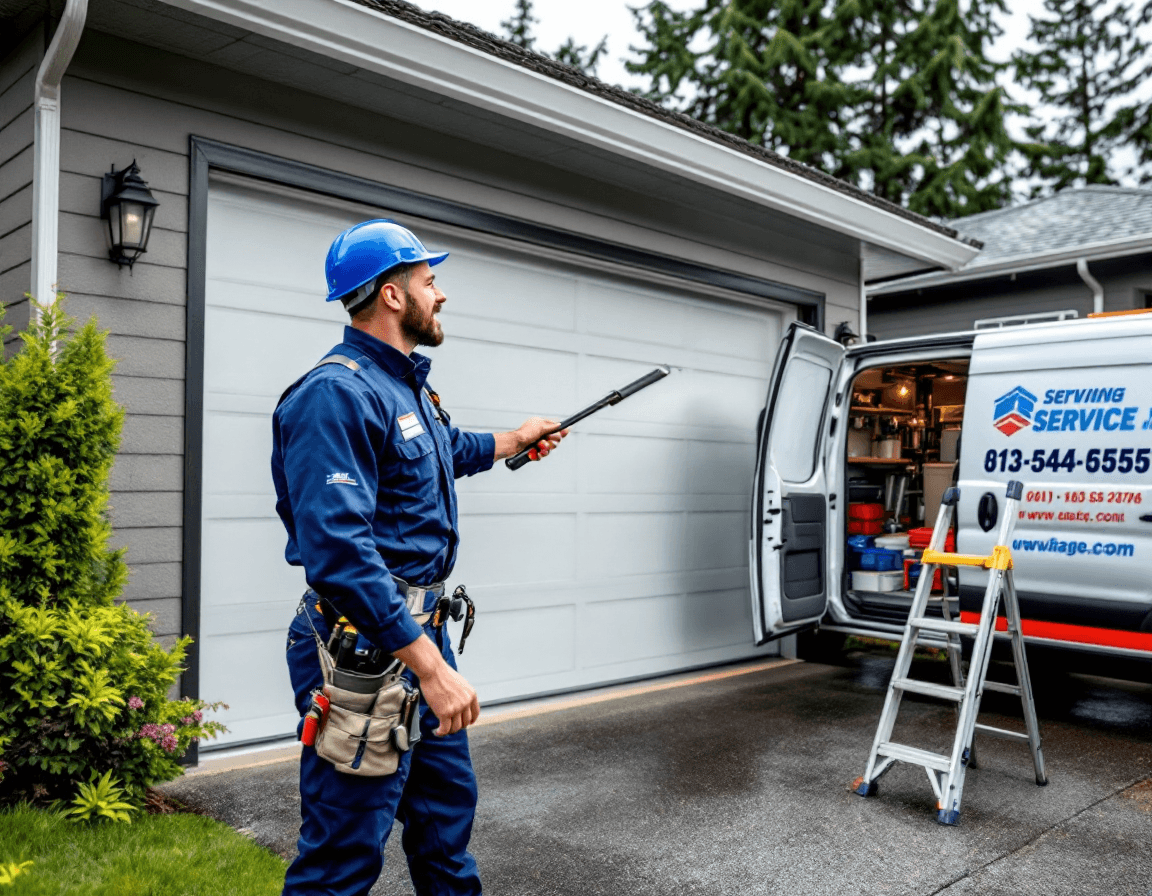
Garage door repair in Milton, WA is often a matter of hours, not days, when a door refuses to open, closes halfway, or makes a sound it never used to make. Homes around the Milton City Hall district range from older single-story houses with attached two-car garages to newer builds with insulated steel doors and quieter openers. Whatever your setup, a door that stalls or jerks is telling you something about its balance, its tracks, its safety sensors, or its power supply. Catching that signal early usually means a smaller repair and a lower bill.
This page is written for Milton homeowners who want to understand what they are dealing with before a technician arrives. You will find plain explanations of the most common symptoms we see, from doors that reverse before touching the floor to panels that look slightly crooked when they come down. We also explain what drives the typical repair cost, which for most residential jobs falls between $95 and $450 depending on the part and the labor involved. Knowing the likely causes can help you describe the problem accurately when you call.
Seattle Garage Door Fix provides fast, reliable residential repair for homes in Milton and throughout Western Washington. We are a licensed, bonded, and insured company, and we follow a simple rule for the most dangerous work: springs and cables are handled only by trained, licensed professionals. The sections below walk through the symptoms, the reasoning behind them, and the practical steps you can take safely while you wait for help.
What a Door That Stalls or Stops Is Really Telling You
A garage door is a heavy, counterbalanced machine, and nearly every failure shows up as a change in how it moves. When a door that used to glide begins to hesitate, the first thing to observe is where the hesitation happens. Does it stop right at the start of travel, somewhere in the middle, or just before it reaches the floor? Each location points toward different components, so noting the exact spot will help a technician narrow things down quickly.
Several symptoms show up again and again in Milton homes. Doors that refuse to open or close, doors that reverse before reaching the ground, doors that jam halfway, and doors that sag or drop off their tracks all reflect a problem somewhere in the balance, drive, or guidance system. A door that does nothing at all when you press the wall button is often a different issue, usually electrical or related to the remote, and it is worth separating from mechanical trouble. Try to observe the door through a full open and close cycle and write down what you see and hear.
Here are the observations that help most when you describe your door to a technician:
- The exact point where the door stops, reverses, or slows
- Whether the door responds to the wall button, the remote, or both
- Any sound that accompanies the movement, including when it starts, stops, or changes pitch
- Whether one side of the door appears higher or lower than the other
- Whether the problem began suddenly or developed over several weeks
How Pacific Northwest Moisture Works Against Garage Doors
Western Washington's climate is gentle on lawns and tough on metal and wood. Milton's wet winters bring long stretches of drizzle, cold mornings, and humidity that lingers in attached garages even when the rest of the house feels dry. Steel tracks, hinges, rollers, and fasteners can develop surface rust in the seams and corners where water sits, and that corrosion slowly increases friction. A door that once rolled quietly may start to protest in November after months of damp air settle into the hardware.
Temperature swings add their own challenge. On a cold morning, lubricant thickens and metal contracts, so a door that worked fine the previous evening can drag or squeal until it warms up. Wood garage doors and wood trim are especially vulnerable to swelling and warping in persistent moisture, which can change how the panels sit inside the tracks. Weatherstripping along the bottom seal may also harden or split, allowing water and cold air in and making the door appear uneven at the threshold.
Moisture also affects the opener and wiring. Damp conditions can corrode terminals in the safety sensor wires and loosen connections over time, which sometimes produces intermittent faults that come and go with the weather. If your door behaves well in dry August but struggles in wet January, the cause is often environmental rather than a single broken part. A technician can inspect for corrosion, check the tracks for rust scale, and recommend a maintenance routine that suits a Pacific Northwest garage.
When the Door Reverses Before It Reaches the Floor
A door that starts down, then suddenly climbs back up, is one of the most common complaints we hear from Milton homeowners. In most cases this is a safety feature doing its job. Modern openers are required to reverse when something interrupts the path of the door, and the photo-eye sensors mounted near the floor on each side are designed to detect obstructions. If the beam is broken or misaligned, the opener assumes something is in the way and sends the door back up.
Before calling for service, check the sensors yourself. Look for two small units, one on each side of the door, roughly six inches above the floor. Confirm that both lenses are clean, free of cobwebs, dust, or spider droppings, and that their indicator lights are steady rather than blinking. Make sure nothing is blocking the beam, including a bicycle, a trash can, a pet bowl, or a rolled-up rug. If one sensor has been bumped and now points slightly away from the other, gently adjust it until both indicator lights hold steady.
If the sensors are clean and aligned but the door still reverses, the problem may lie in the wiring, the sensor mounting, or the opener's force settings. Wiring can wear where it passes through the door frame, especially on doors that move daily. Force adjustments that have drifted can also cause reversal when the door encounters slightly more resistance than expected, such as a mild imbalance or friction in the tracks. These adjustments are part of standard residential repair, and they usually take less time than many homeowners expect.
Decoding Grinding, Squealing, and Banging Noises
Sound is one of the best diagnostic tools a homeowner has, as long as you know what to listen for. A high-pitched squeal that begins when the door starts moving usually points to dry or dirty rollers, hinges, or bearings. A low, rhythmic grinding often suggests the opener's drive components, such as the chain, belt, or gear assembly, are under strain or running without enough lubrication. Sharp banging or clunking at the top or bottom of travel can signal loose hardware, worn rollers, or a panel that is not seating properly in its track.
Each noise narrows the possibilities. Listen closely and note when the sound occurs. If it appears only during the first few inches of travel, the cause may be the cable or spring tension, though those components should be inspected only by a licensed technician. If the noise is constant throughout the cycle, the rollers or track alignment are more likely. If the sound happens only when the door reaches the top, check the stop position and the bracket that anchors the track to the wall or ceiling.
Here are common noise patterns and what they usually suggest:
- Squealing during movement often indicates dry rollers, hinges, or bearings that need proper lubrication
- Grinding from the opener head typically points to drive system wear or a need for a professional inspection
- Banging at the top or bottom of travel can mean loose track brackets, worn stops, or a misaligned panel
- Rattling that changes with temperature may come from loose fasteners that expand and contract with the weather
One caution applies to every noise. Do not try to silence a loud or unusual sound by forcing the door, hammering on the track, or adjusting high-tension components. A noise that suddenly becomes sharp or is accompanied by a visible shift in the door should prompt you to stop using the door until it has been inspected.
Crooked Panels, Uneven Travel, and Doors Pulled Off Track
A door that moves unevenly, sits lower on one side, or looks visibly crooked is telling you that the two sides are no longer working in harmony. Garage doors rely on balanced tension and identical track alignment on both sides. When one side lags, the door can twist, bind, or pull a roller out of its track. Left alone, this can damage panels, bend tracks, and put strain on the opener.
Start by looking at the tracks. The vertical and horizontal runs should be straight, parallel, and firmly fastened to the wall and ceiling. Check whether any track has shifted, whether bolts are loose, or whether a bend has formed where the door might have struck it. Also look at the rollers. A roller that has popped out of its track, a cracked roller, or a stem that has worn flat will cause the door to ride unevenly. Do not attempt to force a door back into the track while it is under tension or while you are standing beneath it.
If a door has come completely off its track, step back, keep hands and feet clear, and do not try to lift the door manually. Disconnect the opener only if you can do so safely, and call a professional for the reinstallation. A door that has jumped its track often has hidden damage to rollers, hinges, or the spring system, and a proper inspection is essential before it is put back into regular use. Uneven travel that persists after a technician realigns the tracks may also point to a worn cable or spring on one side, which again is work for a licensed professional.
Remote and Wall Button Failures That Look Like Bigger Problems
When your remote or wall button does nothing, it is easy to assume the opener has failed completely. Often the issue is much simpler. Start with the remote batteries, which are inexpensive and are the most frequent cause of a silent transmitter. If the remote's indicator light does not flash when you press a button, replace the battery before doing anything else. Make sure you are using the correct battery type for your model.
Next, check the wall control. Confirm that the wall button is receiving power, that the wiring is intact, and that the button is not stuck or cracked. If the opener's light flashes when you press the wall button but the motor does not run, the issue may be a motor fault or a control board problem. If nothing happens at the opener at all, check the circuit breaker and the outlet the opener is plugged into. A tripped breaker or loose plug can mimic a serious failure.
Remote programming can also drift, particularly after a power outage or after a new remote has been added. Your opener's manual explains how to reprogram the transmitter, and the process typically takes only a few minutes. If you have checked the batteries, the power supply, and the programming and the system still does not respond, a technician can test the receiver, the wall control, and the safety circuit to find the source. Many of these checks are quick, which is why a service visit for a non-responsive remote is often one of the more affordable repairs on the list.
When a Door Slams Shut or Drops Too Quickly
A door that comes down faster than it should, or that thuds into place with a loud bang, is more than an annoyance. A door that drops too quickly can injure someone and can damage the floor, the bottom seal, and the opener. Rapid closing usually means the balance has been compromised, the travel speed settings have changed, or a component inside the drive system has worn. In some cases, a broken spring or cable is the root cause, and a door in that condition should not be used until it has been inspected.
Some causes are simple to observe. If the door seems heavy when you lift it by hand, or if it drifts down slowly when released halfway, it may be out of balance. A door that is noticeably lighter on one side than the other, or that appears to pull unevenly, deserves immediate attention. Check the bottom seal as well, because a torn or missing seal allows the door to hit the floor with more force than designed.
Speed and close-force settings on the opener can be adjusted, but these settings should be changed by a technician who understands how the force interacts with the safety reversal system. Improper adjustments can create a door that will not reverse when it should. If your door slams shut or drops unexpectedly, keep people and pets away from the opening, avoid standing underneath it, and schedule service promptly.
Understanding Repair Pricing in Milton
Homeowners often ask what a garage door repair should cost before they book a visit. For most residential repairs in the Milton area, prices fall between $95 and $450. The final figure depends on what is broken, how much labor is required, and whether replacement parts need to be ordered. A simple sensor realignment or a remote programming session sits at the lower end of that range, while a multi-component repair involving rollers, hinges, drive parts, or track work will usually land higher.
Several factors shape the estimate. Parts vary widely in cost depending on door size, weight, insulation type, and whether the door is wood, steel, or aluminum. Time on site also matters, particularly when a technician has to diagnose an intermittent fault that does not appear during the first visit. Access can add complexity too, such as a detached garage, a tight space, or an older opener that is no longer manufactured and requires a specific replacement.
Before approving any work, ask the technician to explain what is failing, what the repair includes, and whether any related components should be inspected at the same time. A good technician will tell you when a lower-cost fix will solve the problem and when a higher-cost repair is necessary for safety. You should never feel pressured into a larger job without a clear explanation of why it is needed.
Why Springs and Cables Belong to Licensed Professionals
Garage door springs and cables store enormous amounts of tension. A torsion spring or extension spring carries most of the door's weight, and when it fails it can release energy suddenly enough to cause serious injury. For that reason, spring and cable repair or replacement should never be attempted by homeowners, regardless of how handy they are. Even experienced DIY enthusiasts can be caught off guard by stored tension that is far greater than it appears.
If you notice a broken spring, a frayed or snapped cable, or a door that is hanging unevenly with a visible gap, stop using the door manually. Keep children and pets away from the area, and avoid lifting the door by hand. Your opener may still be able to move the door on its own, but operating a door with a broken spring or cable can cause further damage and increase the risk of a sudden drop. Licensed technicians have the training and tools to release tension safely and install the correct replacement parts.
When you contact a professional, mention the specific symptoms you have observed, such as a loud snap, a sagging door, or a gap at the top of the panel. This information helps the technician arrive prepared and can help them identify whether the damage is limited to one component or extends to the rest of the system. Doing the job correctly the first time protects your home and the people who live in it.
Preventive Habits for Milton Garages
A few simple habits can extend the life of your garage door and reduce the likelihood of emergency repairs. Once or twice a year, inspect the tracks for loose bolts, visible rust, or debris. Wipe down the rollers and hinges, then apply a silicone-based or manufacturer-recommended lubricant to moving parts. Avoid petroleum-based products on rubber seals and nylon rollers, since they can break down those materials over time. Keep the tracks free of leaves, dirt, and pet hair, especially in the damp months when debris clings more easily.
Pay attention to the weatherstripping along the bottom and sides of the door. Replacing a cracked or flattened seal helps keep out rain, cold air, and pests, and it can reduce the strain caused by a door that binds against an uneven threshold. Test the auto-reverse feature every month by placing a flat object, such as a piece of wood, on the floor in the door's path and confirming that the door reverses when it contacts the object. If it does not reverse, stop using the door and call for service.
Finally, keep the sensors clean and make sure the area around the door stays clear of items that could interrupt the beam. Schedule a professional inspection every year or so, especially if your door is more than a decade old or has seen heavy daily use. A routine check often catches small wear before it becomes a stuck or unsafe door during a cold, wet January morning.
If your garage door is stuck, noisy, reversing, crooked, or refusing to respond, call Seattle Garage Door Fix at (888) 799-3819 for fast, reliable repair in Milton and across Western Washington. Our licensed, bonded, and insured technicians will diagnose the problem, explain your options clearly, and handle springs and cables with the care they require. Call today and get your garage moving safely again.