
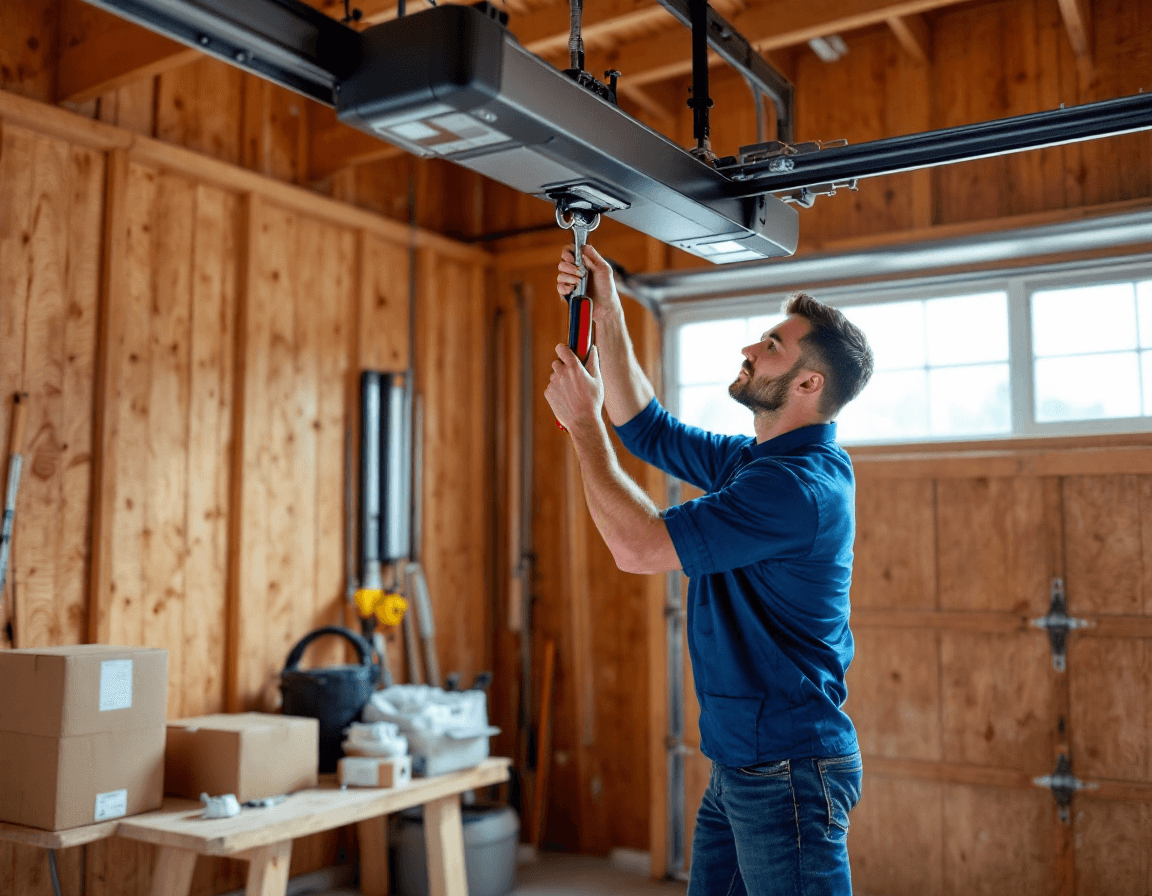
Garage door opener installation and replacement in Milton, WA is one of the most practical upgrades a homeowner can make, and it's often overdue. An opener that has run for ten or more years tends to get louder, slower, and less dependable, and it can leave you stuck in the driveway on a rainy morning. Our technicians serve Milton and the surrounding Pierce County communities, including the 98354 ZIP code, and we see the same pattern again and again: a unit that still technically works but no longer fits how the household uses the garage. Replacing it is usually faster and less disruptive than most people expect.
This page covers how we approach opener work in Milton, from spotting the signs that a unit has reached the end of its useful life to choosing a drive style, understanding security and smart-home options, and planning for power outages. We also explain what installed pricing typically covers, which runs from $275 to $650 depending on the opener model and the hardware it needs. Our goal is to help you make a sound decision with clear information, not to push you toward the most expensive option on the shelf.
Garage doors in this part of the Puget Sound region work hard, and the openers that drive them work harder than manufacturers' brochures sometimes suggest. Whether you are dealing with a noisy motor, a unit that stalls halfway up, or a remote that has stopped responding, the sections below will walk you through what to look for and what to ask a technician before any work begins.
Why Milton Garages Wear Openers Down Faster Than Expected
Milton sits in the Puyallup River valley, and that matters for the equipment in your garage. Winters bring long stretches of cool, damp air, and the moisture that settles into a garage can work its way into wiring connectors, limit switch contacts, and the metal rail hardware over time. Many homes in the area were built with detached or attached garages that aren't fully climate controlled, so the opener is exposed to temperature swings that cycle the lubricants and seals in its drive system. Those swings are gentle compared with some regions, but they add up across a decade of rainy seasons.
Local conditions also shape how often an opener gets used. Many households in Milton run two cars in and out daily, plus a dog trip, a recycling run, or a trip to the Milton City Hall district for errands and appointments. A door that cycles several times a day puts far more stress on the motor and the trolley than a door that opens twice a week, and the wear accumulates quickly. When a unit has been asked to do this kind of duty since the early 2010s or before, it often shows age in the gears and the logic board before it fails outright.
Wind is another factor, particularly during the autumn and winter storm season that moves through Western Washington. Gusts can push on a large panel door, and an opener that is already marginal may strain to reverse or start with the extra load. Power interruptions during storms also cause repeated restarts that can stress older electronics. Taken together, the damp, the frequent cycling, and the storm loads explain why an opener that seemed fine for years can suddenly start to feel tired.
Reading the Warning Signs That Your Opener Has Reached Its Limit
Not every opener problem means replacement. A dirty rail, a loose mounting bolt, or a sensor that has been knocked out of alignment can often be corrected in a single visit. The trouble starts when the same symptoms keep returning or when several appear at once. If the door hesitates at the start of travel, stops midway, or reverses for no obvious reason, the motor or control board may be struggling in ways that adjustment alone will not solve.
Noise is often the first clue homeowners notice. A healthy opener makes a steady hum or a soft whir, while a failing unit may grind, clatter, or produce a rattling sound at the end of its travel. Some older chain-drive models are inherently louder, and many people tolerate that noise for years until it starts to bother someone in the bedroom above the garage. Pay attention if the sound changes pitch or grows worse over a few months, since that usually points to worn gears or a loose drive component.
Reliability problems are the strongest argument for replacement. Watch for remotes that work only some of the time, keypads that intermittently refuse codes, or a door that will not respond after a power flicker. Many people also find that the opener has become unreliable because it has no working battery backup, so a single outage leaves them manually lifting a heavy door. When repairs keep stacking up, or the parts cost approaches the price of a new installed unit, replacement becomes the more economical choice.
- Door pauses, stalls, or reverses without an obvious cause
- Grinding, clattering, or a noticeably louder motor than before
- Remote or keypad signals fail intermittently
- Opener does not respond after a power outage or flicker
- Unit is more than about ten years old and repairs keep recurring
Choosing Between Belt, Chain, and Wall-Mount Drive Systems
The drive style determines how the opener moves the door, and it has a large effect on noise, maintenance, and cost. Chain-drive openers are the traditional, budget-friendly option. They are sturdy and handle heavy doors well, but they produce more sound because the metal chain runs over a sprocket. For a garage that is detached and far from living space, a chain drive can be a perfectly reasonable choice, especially for a solid wood or steel door that needs plenty of pulling force.
Belt-drive openers use a reinforced rubber or polymer belt instead of a chain, and the difference in sound is striking. They run noticeably quieter, which is why many Milton homeowners choose them when the garage shares a wall with a bedroom, a home office, or a finished room above. Belt drives generally require less lubrication and tend to hold up well in damp conditions, provided the belt is kept properly tensioned. They typically cost more upfront, but the quieter operation is often the reason people are willing to pay the difference.
Wall-mount openers attach to the wall beside the door instead of mounting to the ceiling. This design frees up overhead space, which is helpful in garages that also store bikes, kayaks, or ceiling racks, and it can be a good fit for lower-clearance installations. Wall-mount units are often paired with belt or screw drives, depending on the model. Your technician will confirm the mounting surface, the header height, and the clearance around the door before recommending a configuration.
Quieter Operation in Homes With Shared Walls and Upstairs Rooms
Noise deserves its own discussion because it is one of the most common reasons Milton homeowners call about an opener upgrade. Many local homes have attached garages with a living space directly above or beside, and sound travels through framing more readily than people expect. An opener that sounds acceptable at the curb can feel intrusive at two in the morning when a family member is trying to sleep in an adjacent room.
Beyond choosing a belt drive, there are practical steps that reduce vibration and noise. Proper installation matters a great deal, including a solid mounting bracket attached to framing rather than drywall, and a secure header bracket that keeps the rail from flexing. Isolating the opener from the ceiling with appropriate vibration pads can also help, and balancing the door so the motor is not working against its weight reduces strain. A technician who has seen many installations can often make an old, noisy setup dramatically quieter without replacing the door itself.
If quiet operation is your top priority, ask about the decibel ratings listed for specific models, and compare them honestly rather than relying on marketing language. Keep in mind that the door panel, the track rollers, and the hinges all contribute to noise. Replacing worn rollers with nylon or sealed bearing types during an opener job is a simple way to improve the overall sound of the system, and it is a good example of why a full evaluation beats a quick drop-in swap.
Rolling Code Security and Why an Older Unit Is a Liability
Security is a serious reason to replace an aging opener, and it is one that many homeowners underestimate. Older openers, especially those manufactured before rolling-code technology became standard, transmit a fixed signal that can be copied by a determined person with inexpensive equipment. A rolling-code system changes the transmitted signal every time the remote is used, which makes simple copying far less effective. If your current unit still relies on a fixed code or uses old dip-switch remotes, it is worth treating replacement as a home security improvement.
Modern openers also include safety features that protect people and property. Photo-eye sensors near the floor stop and reverse the door if something breaks the beam, and they are required to meet the safety standards that govern automatic gate and door operators. Force-sensing systems add another layer by reversing the door when it meets resistance. Older units may have sensors that have drifted out of alignment or were never installed to current expectations, and an upgrade is a good moment to verify that the entire safety system works as designed.
When we replace an opener, we test the reversal force, confirm the sensors are aligned and clean, and program the new remotes and keypads to a secure setup. We also recommend turning off or removing any old remotes that may still be in circulation. Many homeowners forget that a former tenant, a babysitter, or an old vehicle may still have a working clicker, so reviewing who has access is part of the job.
Smart Control, Wi-Fi, and Practical Day-to-Day Convenience
Smart control is one of the most popular upgrades, and it can be genuinely useful when chosen with care. Wi-Fi-enabled openers and compatible smartphone apps let you check whether the door is open, close it from a car that has already driven away, or allow a delivery driver temporary access. Some systems integrate with voice assistants or home automation platforms, which many households find helpful for routine tasks. Brands such as myQ offer app-based ecosystems that work with a range of compatible openers.
Before committing to a smart system, think about the practical details. Your home network needs to reach the garage, and in some houses that means a Wi-Fi extender or a repositioned router, since concrete walls and metal framing can weaken signals. Consider who will use the app and whether everyone in the household is comfortable with notifications and remote access. Smart features also add cost, so it helps to decide which functions matter to you, whether that is basic status alerts, scheduled closing, or integration with other devices.
Security for smart systems deserves attention too. Choose a unit that receives firmware updates, use a strong and unique password for the associated account, and enable two-factor authentication when it is available. A smart opener is only as secure as the account protecting it, so treat the app login with the same care you would give your banking credentials. A technician can help you set up the network connection and walk through the settings so you understand what the system can and cannot do.
Keeping the Door Moving During Power Outages
Battery backup is a feature that many people only appreciate after a storm knocks out the power for hours. Battery backup kits allow the opener to run for a limited number of cycles when the electricity goes out, which can be enough to get a car in or out during an emergency. Some systems also include a manual release cord, which lets you disconnect the door from the opener and operate it by hand. Knowing how that release works, and making sure everyone in the household understands it, is an important part of any installation.
Backup options vary by model, and the number of cycles a battery supports depends on the unit and the age of the battery. Batteries do lose capacity over time, so they should be checked during routine maintenance and replaced according to the manufacturer's guidance. In Milton, where winter storms occasionally bring extended outages, a battery backup can be a worthwhile investment for households that rely on the garage as their primary entrance or that need access for medical equipment or a vehicle that must be moved.
It is also wise to plan for the times when the door itself is the problem rather than the power. A battery backup does not fix a broken spring or a damaged cable, and if the door will not move manually, the issue needs professional attention. We recommend keeping the manual release cord within reach, avoiding forcing a door that will not lift, and calling a licensed technician if the door feels unusually heavy or unbalanced.
What Installation Day Looks Like at a Milton Home
A typical opener replacement begins with a conversation about your goals, your door, and your garage. The technician will check the door type and weight, the track condition, the header height, and the available ceiling or wall space. This assessment shapes which drive style and model make sense, and it helps avoid surprises such as a door that needs additional bracing or a header that cannot support a heavier unit. We also check the electrical outlet, since a properly grounded dedicated circuit is important for reliable operation.
Once the model is confirmed, the old opener is removed and the new unit is mounted according to the manufacturer's specifications. The rail is assembled, the trolley is attached to the door, and the limit settings are programmed so the door stops at the correct open and closed positions. The safety sensors are installed and aligned, and the force settings are tested to confirm the door reverses properly when it meets an obstacle. Remotes, keypads, and any smart-device pairing are completed before the technician leaves.
Before wrapping up, we walk through the controls with you and the people who use the garage most often. You will learn how to program additional remotes, how to use the manual release, and how to check that the sensors are clean and unobstructed. We also explain basic maintenance, such as keeping the rail lubricated when recommended and checking the belt or chain tension periodically. A well-explained installation tends to lead to fewer service calls down the road.
Understanding Realistic Costs From $275 to $650
Installed pricing for opener replacement in our Milton service area typically falls between $275 and $650. The range reflects the difference between entry-level chain-drive models and higher-end belt or wall-mount units with advanced features such as battery backup and smart connectivity. The model you choose is the largest factor, but the final price also depends on whether the installation needs additional hardware or minor repairs to make the system work safely.
Several details can influence the total. A heavier door may require a more robust opener, and a garage with an unusual header height or limited clearance may need a different mounting configuration. Replacing worn rollers, adjusting the track, or correcting a misaligned sensor adds time, and those tasks are often worth doing during the same visit because they improve reliability and noise. Smart features and battery backup kits add to the cost, but they are optional, so you can choose the level of functionality that suits your household.
When comparing quotes, look at what is included. A low number may leave out the safety sensors, the remotes, the programming, or the haul-away of the old unit. Ask whether the price covers the warranty on the opener and labor, and whether the technician will test the force reversal and sensor function before leaving. Clear answers to these questions make it easier to compare offers on equal footing.
When Repair Still Makes Sense, and When Replacement Does Not Wait
Sometimes a repair is the right answer. If the opener is relatively new, the problem is a single failed part such as a remote board or a limit switch, and the replacement cost is modest, fixing the existing unit can extend its life for a reasonable price. The same is true when the problem is an external cause, such as a sensor knocked out of line by a bicycle or a damaged wire that a technician can easily reroute. A good technician will tell you honestly when repair is the smarter spend.
Replacement becomes the better choice when the opener is old, the parts are discontinued or hard to find, and the repair cost starts to approach the price of a new installed unit. It also makes sense when the existing system lacks rolling-code security, cannot be made quiet enough for the household, or has repeatedly failed during power outages. Waiting too long can leave you without reliable access to the garage, and a sudden failure often happens at the least convenient time, such as before work or during a storm.
Whether you repair or replace, the decision should rest on the condition of the whole system, not just the opener. A door that is out of balance, worn at the rollers, or missing proper safety reversal will strain any opener. A thorough evaluation helps you spend money where it matters most and avoids paying twice for the same underlying problem.
Where Our Technicians Draw the Line on Spring and Cable Work
Safety is the foundation of every garage door job we perform, and it shapes how we handle opener work that touches other parts of the system. Torsion springs and extension springs store enormous amounts of energy, and mishandling them can cause serious injury. Cables, drums, and brackets under tension carry similar risks. For that reason, we always recommend that spring and cable repairs be performed by a licensed, trained professional, and we do not encourage homeowners to attempt those tasks themselves.
During an opener installation, our technicians will check the door for signs of spring or cable trouble, such as a door that is out of balance, cables that look frayed, or a spring that appears broken. If we find a problem in those components, we will explain what we see and recommend the appropriate repair before completing the opener work. We would rather delay a job and address the underlying issue than install a new opener on a door that cannot be operated safely.
If you notice a broken spring, a door that drops suddenly, or cables hanging loose, keep everyone clear of the door and avoid trying to lift it by hand. Disconnect the opener only if you can do so safely, and call a licensed technician for assessment. Protecting your household from these hazards is part of responsible homeownership, and it is one of the reasons we keep our focus on work that we can perform safely and to a high standard.
Replacing an aging opener is one of the most effective ways to restore reliable, quiet, and secure access to your Milton garage. If your opener is loud, slow, unreliable, lacking rolling-code security, or unable to keep working through a power outage, we can help you choose the right drive style and model for your home. Call Seattle Garage Door Fix at (888) 799-3819 to schedule an evaluation, and we will walk you through your options, your installed price range, and the steps for a safe, lasting upgrade.