
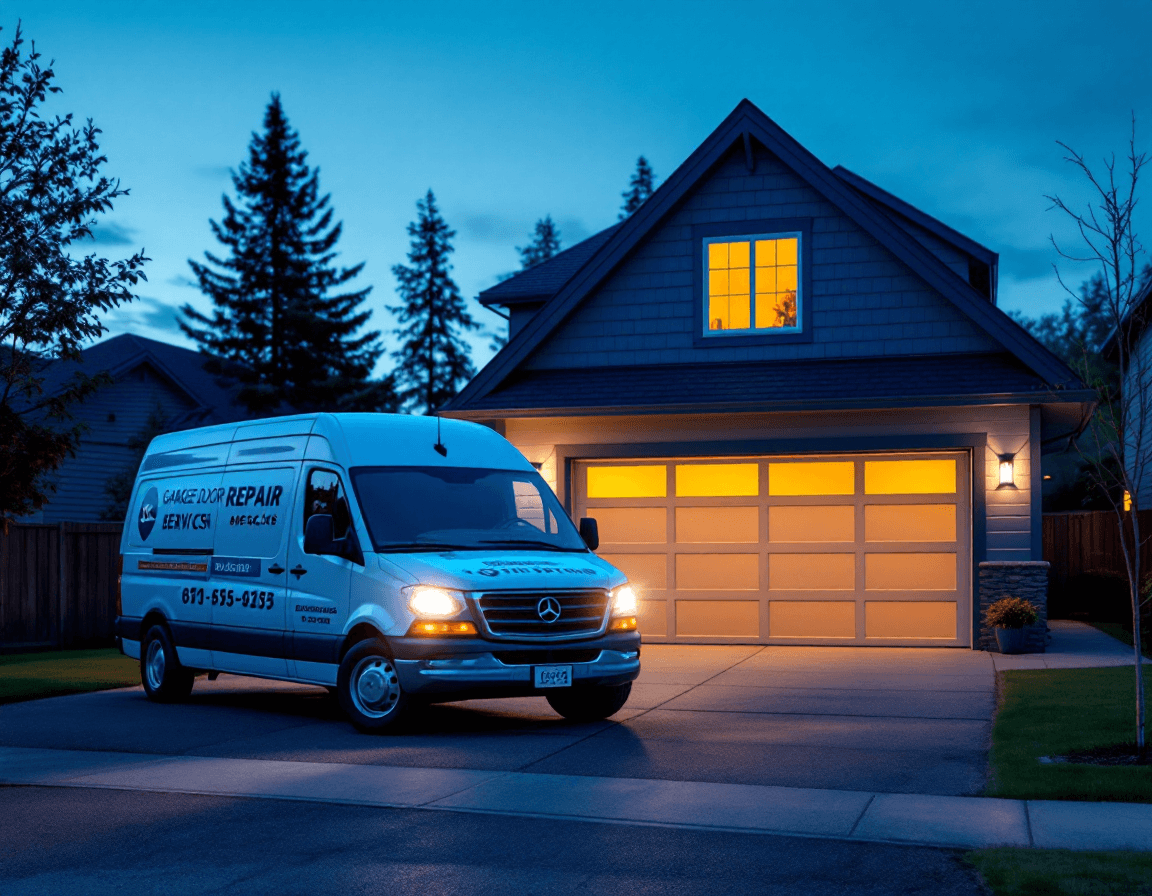
Emergency Garage Door Repair in Milton, WA is the kind of call that rarely waits for a convenient time. A door can seize halfway up on a Sunday evening, leave a car stranded in the driveway before a work shift, or stand wide open while everyone in the house is asleep. Seattle Garage Door Fix dispatches technicians around the clock to Milton and the surrounding Pierce County neighborhoods, including the 98354 ZIP code, for situations that cannot wait until morning. Our goal on every emergency call is to make the door safe, secure your home or vehicle, and explain exactly what needs to happen next.
Milton's mix of older residential blocks, newer subdivisions, and properties tucked near the Puyallup River corridor means garage doors here face a wide range of wear. Some doors have been running for decades on original hardware, while others are only a few years old but have already taken a beating from wind, damp winters, or an unexpected impact. Our technicians understand these local conditions and arrive prepared to work with a variety of door sizes, spring setups, and opener brands. Whether the problem is a trapped vehicle, a door stuck in the open position, or a broken component that has turned a daily habit into a hazard, we aim to stabilize the situation quickly and safely.
Calling for help does not have to be stressful, and knowing what to expect can make a late-night visit much smoother. This page walks through the most common emergency scenarios we see, the warning signs that often come before a failure, the local factors that accelerate wear, and the steps you can safely take while you wait. It also explains how our same-day visits are structured and how upfront pricing works on emergency calls. If your door is down, open, or hanging wrong right now, call (888) 799-3819 and we will talk through the safest next step.
When a Garage Door Traps Your Car Inside or Outside
A car trapped inside a garage is one of the most common reasons homeowners in Milton reach out after hours. Usually the door has simply stopped responding, either because the opener lost power, a safety sensor is blocked, or a spring has failed and the door is too heavy for the motor to lift. In other cases the door closes partially, reverses, and stays stuck at an awkward height, leaving the vehicle locked in with no clear way out. Our first priority is always to confirm that the door is not under tension in a way that could cause sudden movement.
If you are trapped inside, do not try to force the door up by hand while it is partly raised, and do not pull the emergency release cord while a vehicle is running or someone is standing under the door. Most openers have a red emergency release handle that disconnects the trolley from the carriage so the door can be operated manually, but on a door with a broken spring, even a disconnected door can drop suddenly. Keep children and pets clear of the opening, and turn off the engine if the vehicle is inside. These precautions matter more than speed, because a door that falls unexpectedly can cause serious injury or damage to the vehicle.
When a car is stuck outside because the door will not open, the situation is less dangerous but still frustrating. Often the cause is a dead remote battery, a misaligned safety sensor, or a power interruption that is easy to correct once a technician checks the wiring. Our crews carry replacement sensors, remotes, and common control parts, so many trapped-car calls are resolved on the first visit. If the problem traces back to a broken spring or cable, the technician will explain the repair options before any work begins, and will not proceed without your approval.
Recognizing the Warning Signs Before a Spring or Cable Fails
Most emergency calls do not come out of nowhere. Garage door springs and cables give off warning signs for days or weeks before they finally let go, and noticing those signs early can turn a midnight emergency into a scheduled repair. Homeowners often hear a sharp bang from the garage, see the door sag a few inches at the bottom, or notice that the opener sounds strained as it lifts. Each of these symptoms points to added load on the hardware, and each deserves a professional look before the next cycle.
Here are some of the signs our technicians most often hear described before a spring or cable failure:
- A loud snap or bang from inside the garage, sometimes followed by the door suddenly feeling much heavier to lift
- The door sitting crooked, with one side noticeably lower than the other when closed
- Visible gaps between the coils of a torsion spring, or a spring that looks stretched or unevenly wound
- Frayed, kinked, or slack lift cables, especially near the bottom bracket
- An opener that runs longer than usual, reverses unexpectedly, or shuts off partway through a cycle
- Rust-colored flakes or a sticky residue on spring coils, often a sign of moisture exposure over time
If you notice any of these, avoid using the door until it has been inspected. Continuing to operate a door with a damaged spring or cable can turn a manageable repair into a larger one, because the stress shifts to the drums, brackets, and tracks. Keeping a short written note of when you first noticed each symptom can also help the technician understand how quickly the problem developed. That information is useful when diagnosing the cause and recommending parts.
How Western Washington Weather Quietly Wears Down Door Hardware
The Pacific Northwest climate is famously gray and damp, and that moisture plays a bigger role in garage door wear than many homeowners expect. Milton's wet winters bring long stretches of rain, and the Puyallup River valley can hold humidity close to the ground for days at a time. Steel springs and metal hardware are prone to surface corrosion in these conditions, and corrosion weakens the metal over time. A spring that has been quietly rusting for several seasons may fail suddenly on a cold morning, when metal is most brittle and the door has been sitting closed overnight.
Temperature swings add another layer of stress. Cold snaps common to the region can make lubricants thicken and rollers stiffen, which forces the opener to work harder and puts extra strain on the springs and cables. When the weather warms and the door expands and contracts again, small misalignments in the tracks can grow into bigger problems. Wind storms, which are not unusual in Pierce County, can also push a lightweight door against its tracks or rattle hardware loose, especially on older, single-layer doors that were never designed for heavy gusts.
Debris is a local factor that often gets overlooked. Fir needles, leaves, and moss accumulate along the bottom seal and in the track channels, particularly on driveways shaded by mature trees. That debris can trap moisture against the door and hold grit in the rollers, speeding up wear. Our technicians often clean and lubricate the tracks during emergency visits, not only to restore movement but to prevent the same failure from returning in the next storm. Annual maintenance is one of the most practical ways to reduce emergency calls in a damp climate.
Doors Knocked Off Their Tracks by Impacts or Hard Wind
When a garage door comes off its tracks, the damage is often visible right away. The bottom panel may be bent out of the channel, rollers may have jumped from their track, or one side of the door may be sitting noticeably lower than the other. Impacts are the usual cause. A car backing out a little too quickly, a delivery vehicle clipping the frame, or a tree limb dropping onto the door can all knock sections out of alignment. Strong wind can produce a similar result if the door is not fully engaged in its tracks when a gust hits.
It is tempting to try pushing the door back into the track by hand, but that can bend the track further or cause the door to bind. Some doors are also lighter than they look and can shift unexpectedly once one side is freed. A technician will usually inspect the track geometry, straighten or replace damaged sections, re-seat the rollers, and check whether the springs or cables were stressed during the incident. In many cases the door is repairable without full replacement, but a thorough inspection is essential before the door is put back into regular use.
Our crews also check the opener and safety sensors after an off-track event. An impact can shift the photo-eye sensors near the floor, which may cause the door to reverse for no obvious reason. Taking care of these alignment issues during the same visit prevents a second service call a few days later. Any time a door has been off track, we recommend having it fully checked rather than relying on a temporary fix that may not hold through the next rain.
Cables, Drums, and Why a Crooked Door Is a Safety Problem
A door that hangs crooked is usually a sign of a cable problem, and it deserves prompt attention. Lift cables run from the bottom bracket up to a drum at the top of the door, and when one cable snaps or slips off its drum, the door loses even support on one side. The result is a door that tilts, binds in the tracks, or stops partway up. Cables are under significant tension, and a snapped cable can whip or drop the door in a way that is dangerous to anyone nearby.
Repairing cables and springs is specialized work that requires proper tools, correct tension calculations, and a clear understanding of how the door's weight is balanced. For that reason, spring and cable replacement must be performed by a licensed professional. Homeowners should not attempt to wind springs, remove drums, or adjust cable tension on their own, no matter how handy they are. Our technicians carry the appropriate equipment and will explain what has failed, what parts are needed, and how the replacement will restore balance to the door.
A crooked door can also strain the opener, the rollers, and the track on the side that is carrying more load. If the problem is caught early, the repair can often be limited to the cable and a quick track adjustment. If the door has been operating crooked for a long time, the technician may find additional damage to hinges, panels, or the bottom bracket. Addressing the entire system at once is typically more cost-effective than fixing one part and waiting for the next component to fail.
Keeping a Door Secure When It Refuses to Close
A garage door stuck in the open position creates an immediate security concern. Homes near busy roads and within walking distance of town-center businesses can attract unwanted attention when a garage is left open overnight. Tools, bicycles, and stored items may be visible from the street, and the interior door to the house may be exposed if the garage is not otherwise locked. Our technicians take this seriously and will explain temporary options for securing the opening until a repair can be completed.
Depending on the cause, the technician may be able to restore closing function the same day. If the problem is a sensor, a control board, or a limit setting, correction is often straightforward. If the door has a broken spring or a damaged track, the repair may take longer, and the technician may recommend temporary measures such as a secured padlock on a manual latch, a sturdy bar across the track where safe, or a short-term barrier to keep the opening closed. We will never suggest any measure that could cause the door to fall or that would compromise the door's safety mechanisms.
Homeowners near the Milton City Hall district and along the main commercial corridors sometimes ask whether an open door can be left unattended until morning. The honest answer is that it depends on the condition of the door and the value of what is stored inside. Our team can help you weigh those factors and make a decision that balances safety, cost, and convenience. If you are uncertain, calling us at (888) 799-3819 gives you a clear answer based on what the technician sees on site.
Storm Damage and Break-In Repairs: Document First, Then Repair
Storm damage and break-in incidents require a slightly different approach because insurance and law enforcement may be involved. If a tree limb, windstorm, or vehicle impact has damaged your door, take photographs before the technician arrives and before anything is moved. Note the time, the weather conditions if relevant, and any visible debris. If your garage was broken into or the door was forced, contact local law enforcement for a report, since your insurance provider will likely ask for it. Keeping a clear record makes the claims process far less stressful.
Our technicians can document the damage in writing as part of the service visit, including photographs of the springs, cables, tracks, panels, and opener. That documentation can help when discussing repair scope with an insurer, though coverage decisions are made by your carrier and not by us. We will tell you what we find and what we recommend, and we will provide an itemized explanation of the work performed. If the door has been forced open, we can also discuss reinforcement options such as upgraded locks, stronger tracks, or sensor alignment checks that help prevent future damage.
Break-in damage often extends beyond the door itself. The interior access door, the opener's wiring, and the frame may all show signs of tampering. A thorough inspection looks at each of these areas and identifies anything that affects safety or security. Addressing these issues during the same visit gives you a complete picture of what has been compromised and what it will take to restore your garage to full working order.
What a Same-Day Emergency Visit Looks Like
When you call us about an emergency, our dispatcher will ask a few focused questions about the symptoms, the door type, whether anyone is trapped or at risk, and whether the opener is responding. Those answers help us determine what equipment to bring and how quickly a technician can reach your home. We work to get same-day service to Milton and the surrounding Pierce County areas whenever possible, and we will give you a realistic arrival window rather than an overly optimistic promise.
Once on site, the technician begins with a safety check. They confirm that the door is stable, look for signs of tension or damage, and identify any hazards before touching the hardware. Next comes diagnosis, which may include testing the opener, inspecting the springs and cables, checking track alignment, and reviewing the safety sensors. The technician then explains what they found in plain language, shows you the damaged parts when appropriate, and outlines the repair options before any work begins.
If you approve the repair, the technician completes the work and tests the door through several full cycles to confirm smooth operation. They check that the safety reversal features respond correctly and that the door closes fully and stays aligned. Before leaving, the technician will walk you through any adjustments, explain basic care steps, and note what maintenance will help prevent a repeat emergency. Our goal is for you to leave the visit understanding both the fix and the reason it was needed.
Upfront Pricing on Emergency Calls Without the Guesswork
Emergency calls are stressful enough without wondering what the final bill will look like. We provide upfront pricing for same-day emergency service, which means the technician explains the cost of the proposed repair before work begins, and you decide whether to proceed. There are no surprise add-ons hidden in the paperwork. If the technician discovers an issue that was not part of the original concern, they will explain it and give you a clear option before doing any additional work.
Pricing depends on the type of door, the parts required, the complexity of the repair, and the time of the visit. Replacing a spring, for example, involves different components and labor than resetting a sensor or straightening a track. Rather than quoting a general number that does not reflect your situation, our technicians give you a specific estimate after they have diagnosed the problem. That approach protects you from paying for work you did not need and ensures you understand exactly what is being done.
We also believe transparency should extend to repair options. Sometimes the most cost-effective choice is a repair that restores function for now, while a more comprehensive fix can be scheduled later. Other times, a worn spring or cable has reached the point where replacement is the only responsible option. Our technicians will be candid about which approach makes sense for your door, your budget, and your timeline, and they will never pressure you into a decision.
Safe Steps You Can Take While Waiting for a Technician
While you wait for an emergency technician, there are a few safe steps that can reduce risk without putting you in harm's way. The most important is to keep everyone clear of the door and its path, including children, pets, and anyone standing near the tracks. Avoid attempting to lift, push, or pull a door that is stuck or misaligned, because sudden movement can cause injury. If a vehicle is trapped, make sure the engine is off and nobody is inside the garage with the door in an unstable position.
Here are a few general precautions our technicians recommend while you wait:
- Keep people and pets well away from the door, springs, and tracks until the technician arrives
- Do not pull the emergency release cord while the door is partly open or a vehicle is inside the garage
- Turn off the opener's power at the wall outlet if the motor is making grinding noises or behaving erratically
- Take clear photographs of the door, tracks, and any visible damage to share with the technician
- Secure the interior access door and any valuables if the garage is open to the outside
- Note the time you first noticed the problem and any sounds or movements that preceded it
These steps help protect people and property until a licensed professional takes over. They are also useful for the technician, who can often diagnose the problem faster when they know what happened before they arrived. If you are unsure whether a step is safe, the best course is to wait and describe the situation to our dispatcher, who can guide you through the next move.
Choosing a Crew for Late-Night Garage Door Work in Milton
When you need emergency garage door service in Milton, it helps to choose a crew that is licensed, bonded, and insured, because spring and cable work carries real risk. Ask whether the technicians are trained for the specific type of door in your home, whether they carry common parts on the truck, and how they will communicate the cost before starting. A reputable company will be willing to answer these questions clearly and will not rush you into a repair you do not understand. We are a licensed, bonded, and insured garage door repair company, and we apply that same standard to every emergency call in Western Washington.
It is also worth considering how a company handles the less dramatic parts of the job. A technician who takes time to explain the springs, sensors, and tracks, who cleans up after the visit, and who gives you a written summary of the work is showing the kind of professionalism that matters when you are dealing with a stressful situation. Good emergency service is not only about speed. It is about making the door safe, getting you back to normal, and leaving you with enough information to avoid the next emergency.
Seattle Garage Door Fix serves Milton and more than sixty cities across the greater Seattle and Western Washington region, and our same-day emergency team is available around the clock. Whether your car is trapped, your door is stuck open, a spring has broken, a cable has snapped, the door has come off its tracks, or storm or break-in damage has left your garage vulnerable, we are ready to help. For fast, professional assistance in Milton, WA, call (888) 799-3819 and a technician will get your garage door back under control.