
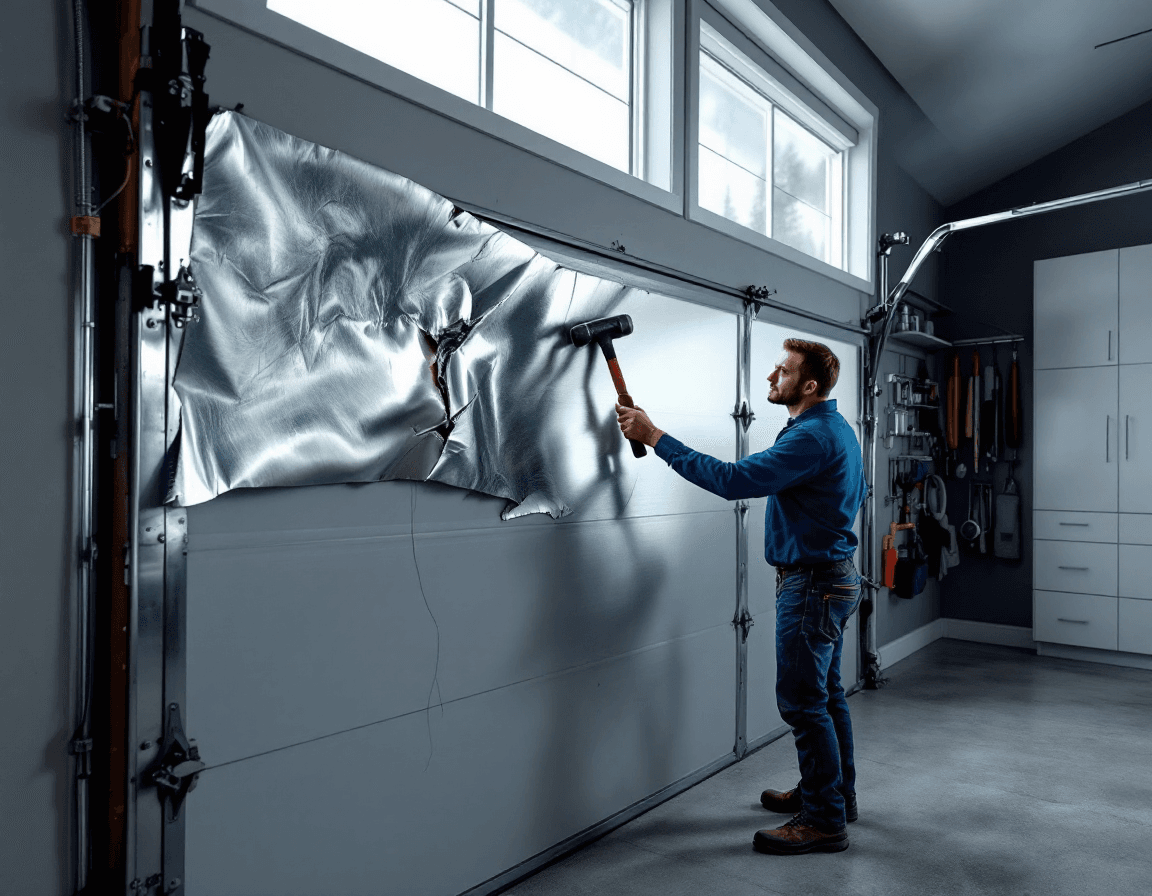
Garage door panel replacement in Milton, WA is often the most cost-effective fix when a single section of your door is damaged but the rest of the system still works well. Milton sits in the Pierce County corner where homes, older driveways, and busy arterial roads meet, and many garage doors here take hits from wind-blown debris, delivery carts, and the occasional backing mishap. A dented or cracked panel can look dramatic, yet it does not always mean the whole door needs to go. Knowing how to read the damage will help you decide what to do next.
The good news is that panel work is one of the more predictable garage door repairs. Most residential doors are built from modular sections joined by hinges and tracks, which means a technician can remove and replace an individual panel without disturbing the rest of the assembly. Our team at Seattle Garage Door Fix handles this work across the Milton area and throughout Western Washington. If you have a damaged section and want an honest assessment, call (888) 799-3819 for guidance tailored to your door.
Reading the Damage Before You Call
Start by walking out to the driveway and looking at the door from a few angles, ideally in daylight when shadows reveal creases that are easy to miss. Dents that look shallow can hide a fractured skin on steel doors, and small cracks in insulated panels often spread from the edges inward. Run your hand along the surface to feel for raised ridges, soft spots, or areas where the panel flexes more than its neighbors. Pay attention to whether the damage sits on a single section or spans a row, because that difference changes the scope of the repair.
It also helps to note exactly where the damage falls relative to the hinges and tracks. A dent in the middle of a panel usually means the section can be swapped on its own, while a crack running along a hinge line may point to a bent hinge or a loosened roller that needs attention at the same visit. Take a few clear photos before anyone touches the door, since they make it easier to describe the problem over the phone and give a technician a head start. Those photos are also useful for your insurance claim if the damage came from a storm or collision.
- Shallow dents with intact paint: often cosmetic, but check the inner skin for stress
- Hairline cracks in vinyl or composite panels: watch for spreading, especially after freezing nights
- Dents concentrated near a hinge: inspect hardware along with the panel
- Soft or spongy spots on wood or fiberglass: possible moisture damage that needs deeper inspection
When a Backing Accident Leaves One Panel Behind
Backing accidents are a common cause of single-panel damage in Milton driveways, especially on lots where the garage sits close to the street or where a vehicle has to turn tightly. A bumper or trailer hitch can crease a section near the bottom while the rest of the door remains untouched. Because the impact is localized, the panels on either side often hold their shape, which makes single-section replacement a practical option. The key is confirming that the impact did not also bend the track or shift the springs.
After a collision, do not try to force the door open or closed if it binds, catches, or sits crooked in its frame. Stop using the opener and keep children and pets clear of the area. A licensed technician should inspect the tension system and tracks before any panel is removed, because a damaged section can conceal a problem with the torsion components that carry the door's weight. Spring and cable work is never a do-it-yourself job, and it belongs with a licensed professional who has the right tools and training.
Water Lines and Rot at the Bottom Section
The bottom section takes more punishment than any other panel on the door. In Pierce County, rain that splashes off the driveway, runoff from a sloped approach, and standing water along the threshold all work against the lowest panel. Over time, moisture can soak into the seams, reach the insulation or wood core, and cause softening, swelling, or rot. Homeowners often notice the first sign as a dark stain along the base or a faint musty smell when the door opens after a wet week.
When bottom-section damage comes from water, it is worth checking the weatherseal and threshold at the same time. A worn bottom seal lets water wick under the door, and a damaged panel only gets worse once that cycle begins. Replacing the affected section and the seal together usually prevents the same problem from returning within a season. A technician can also check whether the bottom bracket has pulled loose, since water-damaged panels sometimes sag and stress their attachment points.
Rust Along the Seams in Damp Winter Air
Steel garage doors are durable, but they are not immune to the damp conditions that settle over the Puget Sound lowlands for much of the year. Milton's mild, wet winters keep surfaces moist for long stretches, and salt-laced road spray from nearby arterials can accelerate corrosion on exposed edges. Rust often starts at the seams where two sections meet, where paint is most likely to chip, and where condensation pools after cold nights. Left alone, surface rust can eat through the metal and weaken the panel's ability to hold its shape.
Rusted sections are not always a replacement candidate. Light surface oxidation can often be cleaned, treated, and repainted, but once rust perforates the skin or affects the structural ribs, a new panel is the more durable choice. Ask your technician to probe the rust with a screwdriver or similar tool to gauge how far it has spread. If you decide to repaint, use a rust-inhibiting primer and an exterior-grade topcoat, and recheck the area each season.
Repair or Replace: Making the Call on One Section
Deciding between repair and replacement depends on the type of damage, the age of the door, and how well the replacement will match. Minor dents that have not cracked the finish may be straightened or filled, which costs less than a new section. Cracks, punctures, rot, and deep rust usually call for full replacement, because patching those problems rarely holds up under daily operation. A section that has been bent out of alignment can also strain its neighbors, so replacement often prevents uneven wear.
Age matters too. On a newer door, a single panel can usually be ordered and installed without much trouble. On an older door, the original manufacturer may no longer produce that exact profile, which can complicate the decision. In those cases, a technician may recommend replacing multiple sections for a uniform look, or weighing whether a full door replacement makes more sense. Get a clear quote for both options so you can compare the costs and long-term value.
- Repair is often appropriate for cosmetic dents without cracks or rust perforation
- Replacement is usually better for cracks, rot, punctures, and structural rust
- Consider a full door upgrade if the panel profile is discontinued and matching is unreliable
- Ask whether the surrounding hardware, seals, and tracks should be inspected at the same visit
Matching a Panel That Has Faded Out of Step
Even a perfectly sized replacement panel can stand out if it does not match the rest of the door. Sun exposure fades paint over the years, and the south- and west-facing sections of a garage door often look noticeably different from the north-facing ones. A new panel that arrives with a fresh finish can create a visible patch that draws the eye every time the door opens. Homeowners in Milton frequently ask whether this can be avoided, and the honest answer is that it depends on the door and the available finish.
Start by identifying the manufacturer, model, and color code if you can find them on the door's label or in your paperwork. Bring a sample of the existing finish or a clear photo in daylight to the consultation. Some suppliers offer custom color matching, and a technician can sometimes paint or clear-coat a replacement panel so it blends better. If an exact match is not possible, consider whether painting the full door or adding decorative hardware would produce a more cohesive appearance than a single mismatched panel.
What a Section Replacement Typically Costs
Panel replacement pricing depends largely on the door's design, the material, and how difficult the section is to access. In our area, the price for replacing a single section generally falls between $250 and $800, with the final figure shaped by those factors. Steel sections on common residential doors tend to sit at the lower end, while insulated, glass-accented, or custom-profile panels usually cost more. Ordering a discontinued section can add time and expense, and a matching job may require additional labor.
A proper estimate should itemize the panel itself, labor, any hardware replaced during the visit, and whether the price includes disposal of the old section. It should also indicate whether the technician has inspected the springs, cables, and tracks. Be cautious of any quote that skips that inspection, because a damaged panel can mask a larger problem that would be expensive to discover later. Ask questions until the scope of the work is clear to you.
Inside a Typical Panel Swap
A panel replacement usually begins with securing the door and relieving tension from the components that work with it. This step is important, and it is performed only by a licensed technician with the proper equipment. Once the door is safe to work on, the technician loosens the hinges and rollers that attach the damaged section to its neighbors, then slides the old panel out of the track system. The new section is fitted into the same position, aligned with the adjacent panels, and fastened in place.
After the new panel is set, the technician checks the door's movement through its full range, looking for binding, rubbing, or uneven gaps. The seals are inspected and adjusted so the replacement sits flush against the weatherstripping. Hinges and rollers are tightened, and any worn components identified during the process are noted for repair or replacement. The door is tested several times with the opener before the technician leaves, so you can see how it runs.
Keeping the Door Sound After the New Section Goes In
Once your new panel is installed, a few simple habits will help the door hold up through Milton's wet seasons. Wipe the surface periodically to remove road grime and salt residue, especially in winter. Check the bottom seal every few months and replace it if it is cracked, flattened, or no longer making contact with the driveway. Keep the tracks clear of debris and make sure the rollers still roll smoothly, since sticking rollers force the panels to flex.
Watch for early warning signs such as new gaps at the seams, a door that sits slightly crooked, or a section that begins to rattle. These symptoms can indicate loosening hardware or developing stress that is easier to correct when caught early. Schedule a periodic inspection with a licensed technician, particularly if the door sees heavy use or sits in a spot prone to wind-driven rain. Preventive attention costs far less than an emergency call on a cold morning.
Choosing a Local Crew for Panel Work
When you are picking a company for panel replacement, look for proof of licensing, bonding, and insurance, and ask for it before work begins. A reliable contractor should be willing to explain the damage in plain terms, show you the options, and provide a written estimate that describes the scope of the job. They should also be comfortable discussing matching limitations honestly rather than promising a perfect color match they cannot guarantee. Clear communication about timing and access to the driveway helps everything go smoothly.
Seattle Garage Door Fix serves Milton and more than 60 cities across the greater Seattle and Western Washington area. Our technicians are licensed, bonded, and insured, and we handle panel replacement alongside spring, cable, opener, and track service so your door is evaluated as a complete system. If you have a dented, cracked, rusted, or water-damaged section, or you are unsure whether it can be repaired, we are glad to help you sort out the best path. Call (888) 799-3819 to schedule an inspection and receive a clear, itemized estimate for your Milton home.