
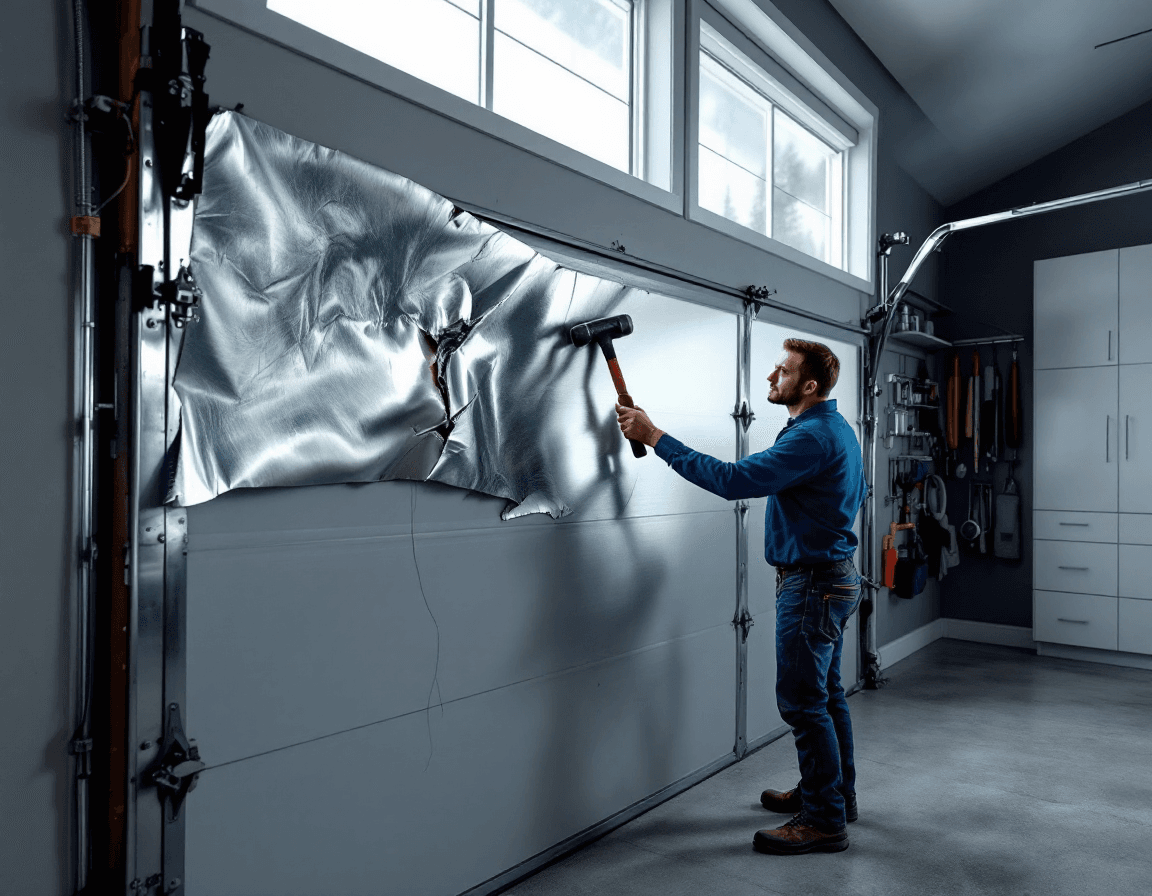
Garage door panel replacement in Algona, WA is often the most practical fix when one section of your door is damaged but the rest still works well. A dent from a backing mishap, a cracked panel after a cold snap, or a bottom section that has soaked up months of rain can make the whole door look worn out, even when the springs, tracks, and opener are in good shape. Replacing only the damaged section can restore the door's appearance and weather protection without the cost of a new door. At Seattle Garage Door Fix, we help Algona homeowners sort out which damage calls for a single panel and which points to a bigger decision.
Algona sits in the South King County area where the Green River valley meets the foothills, and homes here face a steady rhythm of wet winters, damp springs, and summers that are mild but can still bring sudden dry spells. That mix is hard on steel and wood alike. Many garage doors in our service area are insulated steel or aluminum with polyurethane cores, and each one responds to moisture and temperature swings differently. Understanding how your particular door was built is the first step to deciding whether a single panel can be swapped out cleanly.
If you have a damaged panel and aren't sure what to do next, call us at (888) 799-3819. We'll look at the door in person, explain what we see, and give you a clear recommendation without pressure. The sections below walk through the most common situations we see around Algona, from dents and cracks to water damage and mismatched finishes.
Why a Single Dented Panel Still Matters in a Rainy Climate
A dent may look like a cosmetic issue, but on a steel or composite panel it can break the paint or coating at the point of impact. Once the protective finish is compromised, moisture from rain and morning condensation can work its way into the metal, and in the Pacific Northwest that process can start within a few wet weeks. Over time the dented area may begin to rust from the inside, which is harder to spot than surface corrosion. Addressing a dent early, before it spreads, is usually less expensive than waiting.
Dents also affect how the door performs. A panel that has been pushed inward can rub against neighboring sections as the door rolls up and down, causing scraping, extra noise, and uneven tracking. In an insulated door, a deformed panel can compress the foam core and reduce its thermal value, which means the garage may feel colder in winter and the door may sweat more on the inside. For homes that use the garage as a workspace or a mudroom, those changes add up quickly.
We recommend checking the panel edges and the gaps between sections after any impact. Run your hand along the seams and look for daylight around the perimeter when the door is closed. If the gap has changed, or if the door hesitates or jerks at a particular height, the damaged panel may be pressing into the track or the adjacent section. Those signs are worth reporting even if the dent itself seems minor.
Reading the Damage: Dents, Cracks, and Hidden Rot
Not every dent is the same, and the type of damage shapes the repair. A shallow dent with the paint intact is often a simple fix, while a crack that runs through the skin of the panel usually means the section needs to be replaced. On wood or wood-composite doors, which still appear on some older Algona properties, rot tends to start at the bottom edge and along joints where water collects. Metal doors can hide rust under the surface film, so a panel that looks acceptable from a few feet away may be failing at its seams.
When we inspect a panel, we press gently around the damaged area to see whether the metal flexes more than it should and whether the foam core feels soft or wet. We also look at the hinges and roller brackets attached to the panel, because a sharp impact can bend hardware and misalign the section without leaving an obvious mark. A panel that appears to be the only problem sometimes turns out to be stressing its neighbors, and that is worth catching before a second section is damaged.
Cracks deserve special attention because they open the insulation to the weather. A crack along the rib or near a window insert can let rain penetrate behind the outer skin, where it can stay trapped for weeks. Tape or sealant can slow the leak, but it does not restore the structural integrity of the panel. Our general rule is that cracks through the panel face or along a load-bearing rib call for replacement rather than patching.
Water Damage on the Bottom Section and Why It Spreads
The bottom section of a garage door takes more abuse than any other panel. It sits closest to the driveway, catches splashing from puddles, and often absorbs water that pools against the threshold during heavy rain. On Algona properties where the driveway slopes toward the garage or where gutters discharge near the door, that bottom panel can stay wet for long stretches. Repeated wetting softens the base of the panel, and in older doors the bottom rail or weatherstripping can rot away entirely.
Water damage at the bottom edge often spreads upward through the panel's internal structure. Moisture travels along the foam core and collects at the seams between sections, where it can reach the panel above before anyone notices. Symptoms to watch for include a musty smell in the garage, a bottom seal that looks flattened or cracked, white or brown staining on the lower panel, and a door that feels heavier than it used to. If the bottom section is soft to the touch, replacing it promptly often prevents a larger repair later.
Replacing a bottom section usually also means checking the bottom weatherstrip, the threshold seal, and the astragal if your door has one. These components work together to keep water out, and a new panel will not perform well if the seal around it is worn. We often recommend updating the seal during the same visit, since it is a relatively small cost compared with the labor already involved in the job.
Backing Accidents and the Panels Most Likely to Take the Hit
Backing accidents are one of the most common reasons homeowners in Algona call us for panel work. A car reversing too quickly, a delivery truck clipping the door edge, or a child's bicycle hitting the lower section can all leave a single panel dented or cracked. Because the impact usually lands in one spot, the damage tends to stay confined to one or two sections, which is good news for repair costs. Still, the force can also knock a section out of alignment in its track.
After a backing incident, take a few minutes to look at how the door moves. Open and close it slowly while watching the panels pass through the tracks, paying attention to any section that bulges, scrapes, or sits at a different height from its neighbors. If the door binds or the opener strains, stop using it until the damage has been evaluated, since continuing to run a misaligned door can bend tracks and strain the opener. Photograph the damage for your insurance records if the incident involved a vehicle.
Driveways around the Algona Blvd area and along the Pacific Algona corridor often have tight turning radii, and drivers sometimes misjudge the distance to the garage opening. Installing a simple bumper or a reflective marker on the floor can reduce future impacts, but it will not prevent every mistake. When a single panel is damaged, replacing it promptly preserves the rest of the door and keeps the repair affordable.
Repair or Replace: A Practical Decision Path
Deciding whether to repair a panel or replace it depends on how deep the damage goes, how old the door is, and whether a matching panel is still available. For a shallow dent with intact paint, a skilled technician may be able to pop or reshape the metal and touch up the finish. For a cracked, rusted, or water-logged section, replacement is usually the more durable option. Repairs that merely cover the problem tend to fail again within a season or two.
Age matters as well. If the door is relatively new and the damaged panel is an isolated problem, replacing one section is a clear win. If the door is older, the remaining panels may be fatigued, the finish may be worn throughout, and the opener and springs may be near the end of their service life. In that situation, a series of single-panel replacements can cost more than a new door, and we will say so plainly during the inspection.
Here is a simple way to think about the decision:
- Replace the panel when the damage includes cracks, rust-through, rot, or soft foam.
- Consider repair when the dent is shallow, the paint is intact, and the panel still sits square in the track.
- Look at full door replacement when several sections are failing, the door no longer matches its frame, or parts are no longer available.
- Schedule a professional inspection before deciding if the door is binding, noisy, or unbalanced, since those issues can affect the best choice.
Matching a Faded or Mismatched Panel
Matching is one of the trickiest parts of panel replacement. Garage door finishes fade over time, especially on the sun-facing side of a home, and a new panel installed beside a ten-year-old section can look noticeably different. Even when the color code is listed as the same, weathering can make a fresh panel appear brighter or cooler in tone. Wood-grain patterns on steel doors can also vary between production runs, which adds another layer of complexity.
We start matching by identifying the manufacturer and model, usually from a label or stamp inside the door or on the tracks. With that information, we can check whether the original panel profile is still available and whether the finish can be closely matched. In some cases the nearest available panel differs in rib spacing or window style, which may be noticeable from the street. We explain these tradeoffs before ordering so there are no surprises when the panel arrives.
When an exact match is not possible, you still have options. A professional can sometimes refinish adjacent panels so the whole door looks more uniform, or you can choose to replace the damaged section with a panel of a slightly different tone and accept a visible difference. Homeowners sometimes prefer to replace an entire door when the color gap is significant, and that is a reasonable choice. We'll help you weigh the cost of each path against how important a seamless appearance is to you.
What a Typical Panel Replacement Involves
A panel replacement is a more involved job than many homeowners expect, because the work must be done without disturbing the door's balance and spring tension. A technician will first secure the door in the open position and confirm that the springs are safely managed before removing any hardware. Removing the damaged section requires taking apart the hinges, rollers, and brackets that connect it to its neighbors, and each of those parts must be inspected for wear before reassembly. Rushing this step can lead to misaligned panels or a door that won't close evenly.
Once the old section is out, the replacement panel is fitted, checked for square, and attached with the original hardware or new hardware if the originals are worn. The seals and weatherstripping are then checked against the new panel to make sure water will not find a way in at the seams. Finally, the door is cycled several times by hand and then with the opener to confirm smooth travel, even tracking, and proper sealing at the bottom. A good replacement should be quiet and level, with no visible gaps.
Here are the steps we typically follow during a single-panel job:
- Inspect the full door and the springs, cables, and tracks before starting.
- Confirm the panel model and finish, and order the correct replacement.
- Secure the door and remove the damaged section with the proper hardware.
- Fit the new panel, check alignment, and reattach hinges and rollers.
- Test the door by hand and with the opener, then check seals and tracking.
Pricing a Panel Replacement Between $250 and $800
Panel replacement pricing in our service area generally falls between $250 and $800 per section, and the exact figure depends on the door. A standard steel panel on a common residential door usually costs less than a panel with windows, decorative trim, or a specialty finish. Insulated panels, wood-look designs, and doors from manufacturers that are harder to source can push the price toward the higher end of the range. The size of the section and how difficult it is to access on the particular door also play a role.
We give a firm quote after inspecting the door in person, because the number of sections involved, the condition of hardware, and the availability of the panel all affect the final cost. If a panel can't be matched closely and you choose to replace more than one section to achieve a uniform look, the total will reflect that. We also point out when a repair or adjustment should be done alongside the panel work, since addressing a worn roller or a sagging seal at the same visit can prevent a second service call.
Keep in mind that a lower-priced option is not always the better value. A panel that is poorly fitted can cause tracking problems, drafts, and premature wear on the opener, which costs more to fix later. We'd rather give you a clear, honest estimate and explain what it covers than promise a number that doesn't reflect the actual work.
When the Mechanics Are Fine but a Panel Still Needs Attention
Some of the calls we take in Algona come from homeowners whose door opens and closes perfectly but simply looks damaged. A dented panel that hasn't affected operation may seem like something that can wait, but it is often worth addressing for the reasons already discussed: protective coatings break down, moisture collects, and the damage grows. A door that works well but looks broken can also affect curb appeal and, in some neighborhoods, the impression a home makes when it's listed or shown.
In these cases, our goal is to explain the options without pushing a bigger project than necessary. We can often replace a single panel while the rest of the door remains in service, and the replacement usually requires less time than a full door installation. If the remaining panels are in good condition and the springs and tracks have ample life left, a targeted repair may be the most sensible route. We'll tell you honestly if the door is near the end of its life, so you can plan ahead.
If you are unsure whether your situation calls for a panel replacement or something else, describe what you're seeing when you call. Photos can help us prepare, but an in-person look is the best way to be certain. We'll explain what we find in plain language and let you decide how to proceed.
Spring, Cable, and Safety Work Belongs to a Licensed Professional
Panel replacement is often a reasonable project for an experienced technician to tackle in one visit, but it can quickly reach into territory that should never be handled by a homeowner. Torsion springs and extension springs store enormous energy, and a single mistake while adjusting or removing them can cause serious injury. Cables, drums, and the lift system are under similar tension and should be serviced only by trained, licensed professionals. For that reason, we recommend that any work involving springs or cables be left to a qualified technician, even if you feel comfortable with basic repairs.
Panel work sometimes reveals that a spring is worn, a cable is frayed, or a drum has slipped. When that happens, we stop, explain the issue, and recommend the appropriate repair before continuing. We never ask homeowners to adjust tension themselves or to remove a spring to make a panel fit. If your door is bound, unbalanced, or making a grinding or popping noise, keep the door closed and call a professional rather than trying to free it.
Some general precautions apply to anyone around a garage door:
- Never stand under a door that is being lifted or lowered, and keep children and pets clear of the travel path.
- Do not attempt to open a door by hand if the opener is malfunctioning and the spring system may be damaged.
- Avoid using bungee cords, clamps, or makeshift supports on a door that has lost balance.
- Leave all spring, cable, drum, and bracket work to a licensed, bonded, and insured technician.
Scheduling Service Across Algona and Nearby ZIP Codes
We provide garage door panel replacement and related repairs across Algona and surrounding communities in King County, including properties within the 98001 and 98047 ZIP codes. Homes near Algona Blvd and along the Pacific Algona corridor are among the neighborhoods we visit regularly, and we know the driveway layouts, lot sizes, and door styles common in those areas. Whether you live on a quiet residential street or a property with a long, sloped approach, we'll plan the visit around your schedule.
When you call, have a few details ready to speed up the process. Knowing the approximate age of your door, the brand if you can find the label, the number of damaged sections, and whether the door is currently operating will help us prepare the right parts and tools. Photos of the damage taken from inside and outside the garage are also helpful. If the door is stuck or unsafe, let us know so we can prioritize the visit.
We serve more than 60 cities across the greater Seattle and Western Washington area, so if you live near Algona but outside these specific neighborhoods, we may still be able to help. Reach out to confirm coverage for your address before the visit.
Ready to Talk About Your Algona Garage Door Panel
If a dented, cracked, rotted, or mismatched panel is affecting your garage door, you don't have to guess at the next step. Call Seattle Garage Door Fix at (888) 799-3819 to describe the damage and schedule an in-person inspection. We'll explain your repair-or-replace options, give you a clear price within the typical $250 to $800 range per section for your specific door, and handle the work with the care your home deserves.