
Replacing a garage door is one of the bigger home improvements a homeowner in Algona can make, and it affects far more than curb appeal. The door is the largest moving object on your property, it governs how much heat and moisture reach your garage and living space, and it carries a great deal of stored spring tension. Garage Door Installation & Replacement in Algona, WA is a service we provide for homeowners who have reached the point where repairs no longer make sense, whether that is a door that has been damaged beyond repair, a unit that keeps failing, or a home that simply needs something better. This page explains how we approach those decisions in Algona and the surrounding King County communities.
Algona sits in a part of King County where the seasons shape daily life more than most people realize. Winters bring long stretches of rain, cool damp air, and the occasional windstorm that rolls up the valley and rattles everything with loose hardware. Summers are usually mild and dry, but a few warm weeks can push garage temperatures well above the outdoor reading, especially if the door has little insulation. Those conditions put steady demands on a garage door, and they explain why a door that performed well for ten years may start showing wear that seems to appear all at once.
Our goal in this guide is to help you decide whether a new door is the right move, which style and material fit your home, and what to expect from the installation process. We also want to be direct about safety. Garage door springs and cables are dangerous to handle without training and the right equipment, and any work on that system should be done by a licensed professional. Everything below is written from the perspective of a technician who spends his days in driveways across the area, so the advice is practical rather than theoretical.
Reading the Signs That Your Algona Door Has Reached Its Limit
Most homeowners do not wake up one morning and decide to replace a door. The decision usually builds over months, through small problems that each seem manageable on their own. A door that stops halfway up, a panel that bows after a windy night, or a motor that strains and grinds can all be fixed in isolation, but when the same issues keep returning, the math changes. Recognizing the pattern early saves money and avoids the inconvenience of a door that fails with the car inside the garage.
Several warning signs tend to show up together when a door has run its course. Here is what we most often see in Algona homes:
- Panels that are cracked, dented past straightening, or separated at the seams
- Visible rust that has spread through the bottom section or along the track brackets
- Soft, spongy, or crumbling wood near the bottom rail, hinges, or frame
- Repeated service calls for the same component within a single year
- Noticeable drafts, light around the edges, or a garage that stays cold in winter and hot in summer
- A door that is loud, jerky, or uneven in its travel even after adjustment
If you see two or more of these, it is worth having a technician assess whether repair or replacement makes more sense. A single broken roller or a worn opener is often a reasonable repair. A door whose panels, frame, and hardware are all showing age is usually better replaced outright, because you will keep paying for small fixes on a structure that is wearing out everywhere at once.
How Wet Winters and Valley Weather Shape the Right Door for Algona
The Pacific Northwest climate is hard on garage doors in ways that are easy to underestimate. Persistent moisture finds its way into seams, hinges, and the lower edge of wood doors, which can lead to swelling, warping, and rot over time. Steel doors resist rot but are vulnerable to rust wherever the protective coating is scratched or where condensation sits against the metal for long periods. In a valley location like Algona, where cool air and moisture can linger, these issues tend to accumulate faster than many owners expect.
Wind is the other factor we plan for. Storms that move through the region can push against a large, flat door with enough force to bend tracks, pop panels loose, or pull a poorly anchored section out of alignment. When we recommend a door for a home in this area, we look at the construction of the panels, the thickness of the steel, the bracing, and the quality of the weatherstripping, because those details determine how the door behaves when the weather turns. Choosing hardware and reinforcement suited to local storms is one of the most useful things a replacement can do.
Moisture also affects the garage floor and the threshold. If water pools at the base of the door or flows underneath during heavy rain, the bottom seal and threshold need to be part of the replacement plan. A new door that seals well at the top and sides but leaks at the bottom will still let in water and cold air. We measure the opening and check the slab before recommending a specific seal and threshold configuration, so the new door works with your actual conditions rather than an idealized one.
Choosing Among Insulated Steel, Carriage-Style, Wood, Glass, and Aluminum
Material choice is where many homeowners feel the most uncertain, so it helps to understand what each option does well and where it falls short. Each one suits a different kind of home, budget, and maintenance tolerance, and the best choice depends on how you use the garage and how you want the exterior to look.
Insulated steel is the most common choice for Algona homes that prioritize durability, low maintenance, and energy performance. A steel skin bonded to an insulating core produces a door that resists dents, handles moisture well when properly coated, and reduces heat transfer compared with a single-layer door. Carriage-style doors, which are typically built from steel or insulated steel with decorative grooves and faux hardware, give a traditional look without the upkeep of solid wood. Wood doors offer a warm, custom appearance but require regular sealing and painting to hold up in a wet climate. Glass and aluminum designs bring in natural light and suit modern architecture, though they generally offer less insulation than insulated steel unless paired with thermal glazing.
Here is a quick comparison we walk through with most customers:
- Insulated steel: Strong performance, good insulation, low upkeep, many styles and finishes
- Carriage-style: Classic look, often insulated steel underneath, works well on traditional homes
- Wood: Custom character, needs regular finishing and inspection in damp weather
- Glass and aluminum: Light and modern appearance, insulation depends heavily on glazing and frame quality
Whichever material you choose, ask about the insulation rating, the panel construction, the warranty terms on the finish, and the weatherstripping package. Those details matter more to long-term satisfaction than the brand name on the door.
What a Typical Installed Price Covers in the $950 to $3,800+ Range
Pricing for a new garage door in Algona typically falls between $950 and $3,800 or more once installation is included. That range is wide because the cost depends on the door size, the number of sections, the material, the insulation package, the style and hardware, and whether the opening needs any modification. A basic single door in a standard opening will sit at the lower end, while a large insulated double door with glass inserts or custom wood can move well above the top of the range.
It helps to understand what the installed price usually includes. A quote generally covers the door itself, the tracks, rollers, hinges, spring system, and weatherstripping, along with removal and disposal of the old door and labor for a complete installation. If you want a new opener, a smart-control system, or other upgrades, those are typically quoted separately. We also review the opening for any framing issues, such as a header that needs reinforcement or a header height that affects clearance, because these affect both safety and the final cost.
We always recommend asking for an itemized estimate rather than a single lump number. A clear breakdown lets you compare options fairly, understand which features are driving the price, and decide where you might save without sacrificing performance. Transparent pricing also makes it easier to match the door to your budget before any work begins, which is far better than discovering additions halfway through a project.
Single Versus Double Doors on Algona Lots and Driveways
The width of your opening shapes almost every decision that follows. Single-car doors, usually around nine feet wide, are common on older homes and narrower lots, while double doors that span roughly sixteen feet suit two-car garages and homes with larger vehicles. Some properties have a single opening with a wider driveway, and others have two separate single doors side by side. Each arrangement changes the weight of the door, the spring specification, and the way the panels handle wind.
Double doors deliver more curb appeal and make it easier to load bulky items, but they carry more weight and stress on the system. That makes spring quality, track bracing, and opener capacity more important. For double doors on homes near busy stretches of Algona Blvd or along the Pacific Algona corridor, we pay particular attention to wind resistance, because wide, flat panels are more exposed when storms move through. Reinforced panels and sturdy hardware are worth the modest difference in cost.
Driveway slope and the depth of the garage also matter. A short garage with a long driveway may need a different track configuration than a deep garage with limited headroom. We measure the vertical clearance, the back-track length, and the side room before ordering, so the door will operate smoothly without forcing you to park differently or lose storage space. These measurements are one of the reasons we prefer to visit the property in person before finalizing any specification.
Insulation Goals for Homes Along the Pacific Algona Corridor
Many homeowners replace a door because the garage feels uncomfortable, and that discomfort is worth taking seriously. An uninsulated garage can transfer cold into an attached living space through the shared wall and the floor above, while a sun-exposed door can heat the garage enough to make a workshop or laundry area unpleasant in summer. A better-insulated door reduces those temperature swings, which can make the adjacent rooms easier to keep comfortable and can reduce the load on your heating and cooling in the areas closest to the garage.
The best energy results come from treating the door as part of a system. Insulation in the door panels, quality weatherstripping on the sides and top, a bottom seal that meets the slab, and a tight threshold all work together. If the garage itself is uninsulated, a high-performance door will still help, but the overall results depend on the walls and ceiling as well. We will tell you honestly when the door alone will not solve the problem and when other improvements might make sense.
Along the Pacific Algona corridor, where many homes have been built over several decades, we often see older weatherstripping that has hardened or split, along with thresholds that no longer meet the floor. Replacing those components during a door installation is often inexpensive relative to the overall project and can make a noticeable difference in draft and temperature control. Ask us to inspect the full opening rather than focusing only on the panels.
Matching a New Door to a Remodel or Home Addition
Garage doors often become part of a larger project. A homeowner might be converting a garage into a living space, building an addition, updating the exterior siding, or changing the front elevation to refresh the look of the house. In these situations the door has to match the design intent of the project, and it has to fit the framing and structural plan that accompanies the work. Planning the door early prevents costly surprises when the framing crew is already on site.
When a door is part of a remodel, we coordinate with your contractor or designer to confirm the opening dimensions, header height, and clearance for the opener. We also discuss color, panel pattern, and window placement so the door complements the siding, trim, and roofline. A door that looks right in a catalog can look out of place on a particular house, so we encourage homeowners to bring photos of the home and any samples of the siding or paint so we can think through the options together.
If the project changes how the garage is used, such as adding a workshop or a finished room, the door choice may also change. Better insulation, a quieter opener, and additional weatherstripping become more important when the space will be occupied for long periods. Thinking about the future use of the room now will help you choose a door that serves the space well for years to come.
Damage From Storms, Rot, and Rust That Calls for Full Replacement
Some damage is simply too extensive to repair economically. A panel can sometimes be swapped, but when the frame, bottom section, and hardware are all compromised, replacement is usually the sounder investment. Storm damage is a common example. A windstorm can bend tracks, crack panels, and warp the frame in ways that look manageable from the outside but affect alignment, safety, and operation. Trying to force a warped door back into its tracks can stress the springs and openers and create further problems.
Rot is particularly common in wood doors in damp climates. It often begins at the bottom rail, around hardware, or where the finish has worn away. Soft wood can look fine on the surface while the core has lost strength, and that weakness can make the door unpredictable. Rust on steel doors is also a concern when it has spread through seams or into the structure. Surface rust can be treated, but deep corrosion that has reached the internal framing usually means the door has reached the end of its useful life.
If your door has suffered storm or moisture damage, have a technician inspect the entire assembly, including the springs, cables, drums, and opener. Damage to one component can hide problems in others, and an inspection will show whether replacement should include new hardware and a new spring system. Any spring or cable work should be handled by a licensed professional, because the tension stored in these components can cause serious injury if mishandled.
Our Installation Process From First Measurement to Final Test
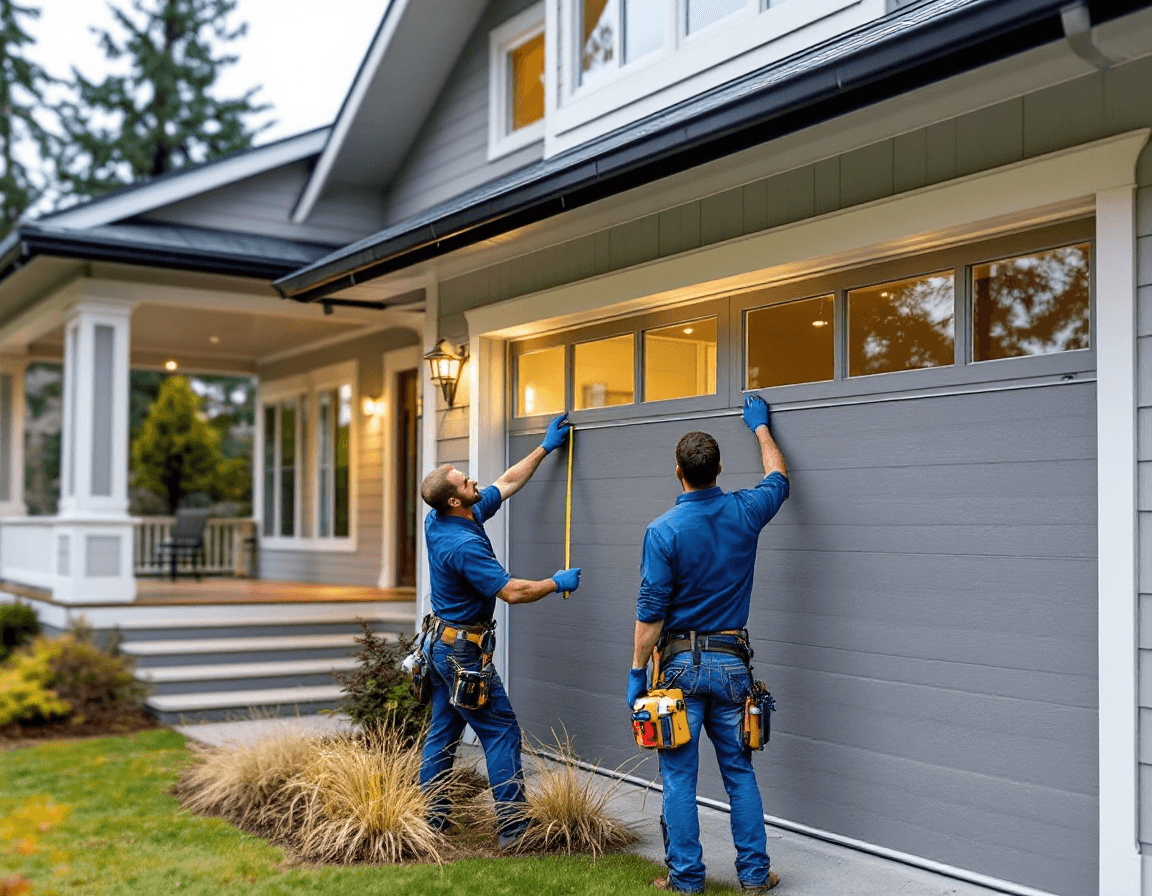
A well-run installation begins long before the old door comes down. We start with a visit to measure the opening, check the header, inspect the slab and threshold, and evaluate the opener if one is in place. We also talk through your goals, whether they center on insulation, appearance, durability, or budget, so the recommendation fits your priorities. Taking the time to measure accurately is what allows the new door to fit cleanly and operate quietly.
On installation day, the crew removes the old door and hardware, prepares the opening, and assembles the new door according to the manufacturer's specifications. Tracks are aligned, springs are set and tensioned by trained technicians, and weatherstripping is fitted to the frame. Once the door is in place, we balance it, test the opener and safety reversal system, and confirm that the door reverses properly when it meets resistance. Those safety checks are a required part of every job, not an optional extra.
Before we leave, we walk you through how the door operates, what routine care looks like, and when to call for service. We will also explain the warranty coverage on the door and hardware so you know what to expect over the years ahead. A short final test with you present gives you a chance to ask questions and confirm that the door performs the way you expected.
Permits, Openers, and Safety Habits for Algona Homeowners
Some door replacements require permits or inspections, particularly when the work changes the structural opening or involves electrical connections for a new opener. Requirements can vary depending on the scope of the project, so we recommend confirming with the City of Algona or the appropriate permitting authority before scheduling major changes. We can explain what is typically involved and help you understand whether your project falls under those rules.
Openers deserve attention as well. A modern opener with a safety reversal system and photo-eye sensors is an important protection for children, pets, and anyone who might be near the door when it moves. Sensors should be mounted at the proper height, kept clean and aligned, and tested regularly. Keep remote controls out of reach of children, and avoid letting anyone stand under a moving door. Those simple habits prevent most injuries associated with garage doors.
Finally, remember that springs and cables are the most hazardous part of the system. The high tension in these components can cause severe injury if released unexpectedly, and attempting to adjust or replace them without training and proper tools is dangerous. Leave all spring and cable work to licensed professionals. If you notice a broken spring, frayed cable, or a door that will not lift, keep everyone clear of the door and call for help.
Preparing Your Garage Before the Installation Crew Arrives
A little preparation makes installation day smoother for everyone. Clear the space in front of the door and along the driveway so the crew can set up safely and move materials in and out. Remove items from shelves or hooks near the door track, and make sure the opener and its wiring are accessible. If you have a vehicle parked in the garage, plan to move it to the driveway or street for the day, since the door will be out of service for part of the project.
It also helps to gather any documents you already have, such as the original warranty, the opener manual, and details from prior repairs. Those records can tell us what hardware is installed and how the door has performed, which speeds up the assessment. Note any problems you have noticed, including drafts, noises, or intermittent operation, because those observations often guide the final recommendation.
Finally, think about the look you want. Bring photos of your home, the siding color, the trim, and any neighboring houses whose style you admire. A few minutes of planning can help you choose a door that suits the architecture and feels right every time you pull into the driveway. The installation itself is the final step in a process that starts with a clear understanding of your home and your goals.
Garage Door Installation & Replacement in Algona, WA is a practical, long-term investment when the current door is worn out, damaged, or no longer meeting your needs for security, insulation, or appearance. If you are weighing a replacement, our team can measure your opening, review material and insulation options, and provide an itemized estimate for your property. Call Seattle Garage Door Fix today at (888) 799-3819 to schedule an assessment and talk through the best door for your Algona home.