
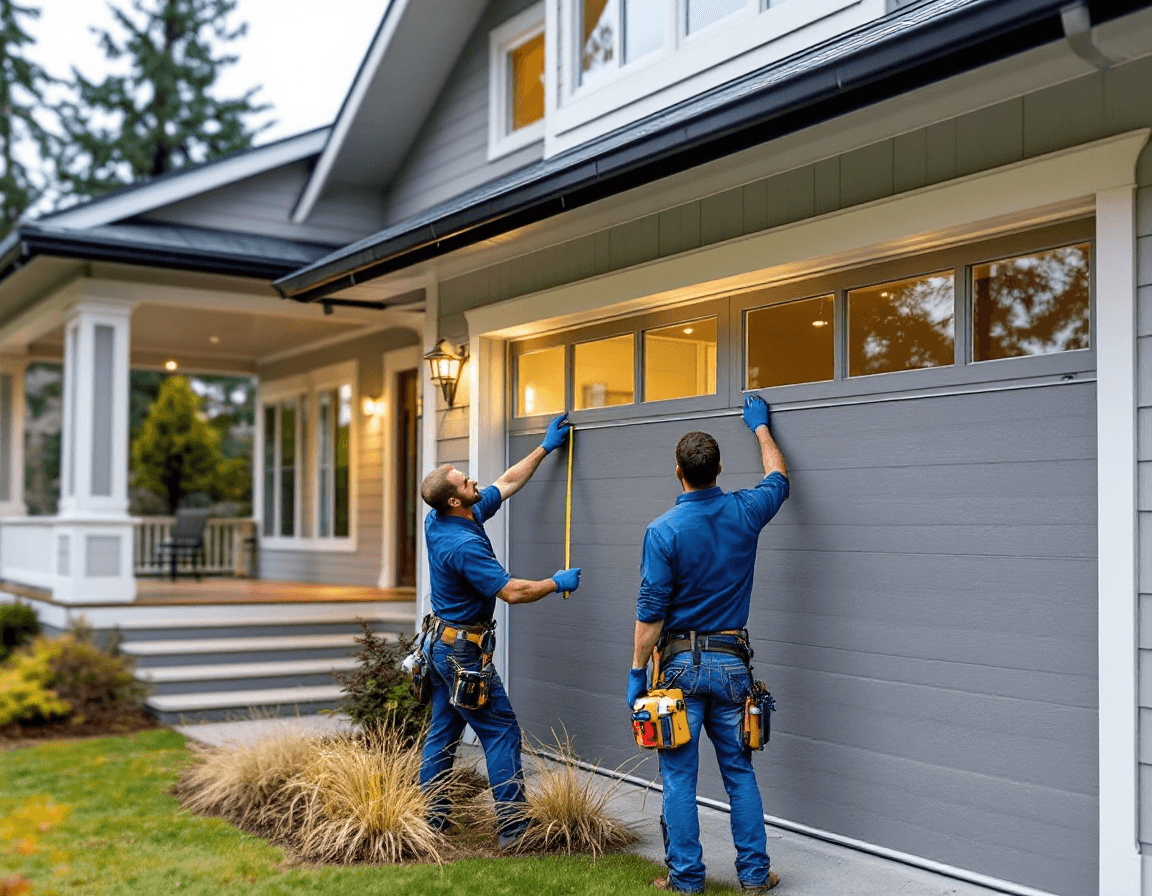
Garage Door Installation & Replacement in Federal Way, WA is often the smartest fix for a homeowner whose door has moved past the point of sensible repair. Federal Way sits in south King County, where damp winters, salty sea air drifting in from the Sound, and the occasional windstorm all take their toll on garage doors. When a door is bent, rotted, rusted through, or simply worn out, replacing it can improve safety, security, insulation, and curb appeal in one project. This page explains how to tell when replacement makes more sense than another repair, which materials hold up best in our climate, and what to expect from a professional installation.
Many local homeowners wait far longer than they should. A door that has been patched, re-railed, and rebalanced three times may still be running, but each repair adds cost and stress to a system that was never designed for endless fixing. A new door, properly sized and installed with matched hardware, usually runs quieter, seals better, and gives you a predictable warranty period rather than a guessing game. Seattle Garage Door Fix is a licensed, bonded, and insured company serving Federal Way and more than 60 cities across Western Washington, and we are glad to walk you through your options at (888) 799-3819.
Installation pricing generally runs from about $950 to $3,800 or more, fully installed, depending on the door style, materials, size, insulation package, and hardware. The sections below explain what drives those differences so you can compare quotes with confidence.
Reading the Damage: When Replacement Beats Another Repair
Not every dented panel calls for a new door, but some conditions make replacement the more economical choice over time. Sections that have cracked or separated from their frames, track that no longer sits true, and rust that has eaten through the bottom rail are all signs the door's structure is compromised. Replacement also makes sense when a door has suffered storm damage that bent the frame or when repeated spring, cable, and opener problems keep returning because the door itself is out of balance. A technician can usually tell within a single visit whether a repair will hold or whether you are paying to delay the inevitable.
One practical test is to add up the cost of the last two or three repair calls. If the total approaches a meaningful fraction of a replacement door, the math often favors the new door, especially when you factor in the improved insulation and reduced wear on the opener. Ask your technician to explain which components are original and which have already been replaced, because a door can have a fresh opener and new rollers while its panels and hinges are still failing. That distinction matters when you are deciding how much of the old system to keep.
Safety is part of the same equation. An older door that drops unexpectedly, reverses poorly, or shows signs of a cracked spring is a hazard, particularly in households with children or pets. Replacement lets you choose a door with a modern balance system and a reliable opener setup from the start, rather than hoping the aging components last one more season.
Matching Materials to Federal Way's Wet, Mild Winters
Federal Way's climate is milder than much of the country, but the moisture is relentless. Long stretches of gray, damp weather, plus heavy rain in the cooler months, can slowly work into wood, swell panels, and encourage rust at fasteners and seams. For that reason, material selection deserves more thought here than it might elsewhere. The right choice depends on how much maintenance you are willing to do, how exposed the door is to rain or salt air, and what look you want for your home.
Insulated steel remains the most common choice for good reason. Steel panels with a polyurethane foam core resist rot entirely, stand up well to rain, and offer solid insulation values for the price. Wood doors can be beautiful and are a strong match for classic homes, but they require regular sealing and repainting in a region where moisture never really takes a holiday. Glass and aluminum options bring in natural light and a modern profile, though glass sections need careful attention to insulation and privacy.
- Insulated steel: low maintenance, strong moisture resistance, and a wide range of colors and textures.
- Wood or wood-composite: warm, traditional appearance, with ongoing sealing and finishing needed in damp weather.
- Aluminum with glass: contemporary look, good natural light, and light weight, though insulation is typically lower than foam-filled steel.
- Carriage-style or faux-wood steel: the look of timber with the durability of steel, a popular middle ground.
Whichever material you pick, ask about the weather seals, bottom seal, and top and side weatherstripping. In a region with wind-driven rain, a door that seals poorly can let moisture creep under the threshold and into the garage floor, which is an avoidable headache.
Carriage-Style Looks for Craftsman and Traditional Homes
Many homes in and around Twin Lakes and the neighborhoods stretching toward Dash Point have architectural character that a plain flat panel door can undercut. Carriage-style doors, with their vertical or horizontal grooves, decorative hardware, and sometimes faux hinges, help a garage blend into the overall facade. They are especially effective on homes with gable roofs, stone or lap-siding accents, or front porches that already feature warm wood tones.
Carriage styles can be built in insulated steel with textured faces that mimic timber grain, which gives the look without the same upkeep as real wood. Color choices matter a great deal here. Deeper shades such as espresso, slate gray, or forest green tend to hide the mottled effect that rain and tree debris leave on lighter finishes. Pairing the door with complementary exterior lighting and house numbers can dramatically raise the perceived value of the entire front elevation.
It is also worth thinking about how the door will read from the street during the long gray months. A pale door can look washed out under overcast skies, while a richer color with subtle texture tends to hold its appeal. Bring a few physical samples home and look at them outside on a cloudy afternoon before you commit.
Insulation Values and What Your Heating Bill Is Telling You
For attached garages, the door is often the largest opening between the living space and the outdoors, and an uninsulated door can make adjoining rooms noticeably colder in winter. If you have a bonus room above the garage or a laundry area next to it, you may already feel drafts or temperature swings. An insulated door with a continuous foam core and a well-fitted perimeter seal reduces heat transfer and cuts down on cold air leaking in around the edges.
Insulation ratings can be confusing, so ask for the R-value of the specific door you are considering and whether the figure applies to the entire panel or just the core. Also check the quality of the seals, because even an excellent panel can underperform if the bottom seal is worn or the side seals are misaligned. Insulated doors also tend to be quieter when they operate, since the foam core dampens vibration in the panels. Many homeowners notice that the garage feels more usable as a workshop or gym once the temperature stabilizes.
Be realistic about expectations. A new door will not turn an unheated garage into a living space, but it can make a real difference in comfort for adjacent rooms and reduce how often a garage heater or dehumidifier works overtime during our wet season.
Sizing, Openings, and Planning Around a Remodel
Replacement is not always a like-for-like swap. Homeowners in Federal Way often add a new door when they are finishing a remodel, converting a carport, extending a garage, or adding a bay for an RV or extra vehicle. In these cases, the technician needs accurate measurements of the rough opening, the headroom above it, the depth needed for the track, and the clearance on each side. Overlooking any of these can lead to a door that fits but cannot be opened fully, or a track that collides with ceiling joists or a new light fixture.
For a double-car opening, the choice between two single doors and one wide door is a practical decision. Two narrower doors are often easier to handle and can be more forgiving in older openings, while one wide door provides a clean, uninterrupted look and can be well suited to a modern design. If you plan to upgrade the opener at the same time, confirm the motor and rail length will match the door's weight and width. A remodel is also an ideal moment to add weatherproofing, a new door threshold, and updated lighting around the opening.
Before any work begins, check whether your project needs a permit. Requirements can depend on whether the work changes the structure of the opening or affects fire separation between the garage and the house, so confirm with the City of Federal Way permitting office or your contractor before the old door comes down.
Wind, Salt Air, and Protecting the Door From Local Weather
Western Washington is not a hurricane zone, but windstorms do come through, and a large, lightweight door can be vulnerable when gusts hit at the right angle. Wind-rated doors use reinforced panels, sturdier bracing, and tougher tracks to resist pressure changes. If your home sits on an exposed lot or you have seen past storms bend door sections, ask about wind-load ratings for the models you are considering. Good bracing also helps when the door is opened or closed in gusty conditions.
Salt air is less of an issue in Federal Way than right on the water, but moisture-laden breezes and proximity to the Sound can still accelerate corrosion on hardware, springs, and hinges. Galvanized or coated hardware, sealed fasteners, and stainless components where available will serve you better over the years. Rot is the other big concern for wood and wood-look doors, particularly at the bottom panel where splash and standing water collect. Keep gutters and downspouts clear and direct runoff away from the garage apron, because a new door will not last long if it sits in a puddle every winter.
Ask your technician about maintenance that protects your investment. A simple annual check of the bottom seal, hinge bolts, roller condition, and track alignment costs little and catches small problems before they become door failures.
What a Professional Installation Typically Involves
A professional installation is more than hanging a new panel. The process usually starts with an inspection of the opening, the existing track and header, the wall anchors, and the condition of the floor and surrounding trim. The technician then confirms the door dimensions, selects the correct springs and hardware for the weight, and prepares the new door for assembly. Once the door is mounted, the crew checks balance, adjusts tension, tests the opener, and verifies that the auto-reverse safety features work properly.
Here is a typical sequence many homeowners find helpful to understand:
- Site assessment: measuring the opening, checking the header, and noting any structural or clearance concerns.
- Material confirmation: verifying style, color, insulation package, and hardware before the door is ordered or cut.
- Removal of the old door: safely disassembling and removing the existing panels, springs, and track under controlled tension.
- New door installation: setting tracks, mounting the door, and fitting seals and weatherstripping.
- Balance and testing: adjusting spring tension, confirming smooth travel, and testing the opener and safety reversal.
- Walkthrough: showing you the controls, explaining warranty coverage, and reviewing basic care steps.
Because torsion springs store a great deal of energy, all of this work should be performed by trained professionals. Springs, cables, and drums are not a place for DIY experiments, and that is a safety rule we hold firmly.
Choosing Between Single and Double Doors for Your Layout
Single and double doors each have a place in Federal Way homes. A single-car door is common on older lots and narrower driveways, and it can be paired with an additional door or bay if you need more room. Double-car doors are the standard for families with two or more vehicles, and they offer a balanced, substantial appearance on most modern facades. The right choice depends on your vehicles, your storage needs, and how the door will look from the street.
Some homeowners find that a double door made of two panels provides more flexibility than a single wide door. If one side is damaged in the future, you can replace only that panel in many cases, although matching color and style over time can be tricky. A single wide door may be easier to keep uniform visually, but it is heavier and may require a more robust opener and track system. Ask your technician to explain the tradeoffs for your specific opening.
Consider your daily routine as well. If you enter and exit through the garage often, a quiet, reliable door with a smooth opener matters more than any single design feature. Test-run any model you are considering if possible, so you can hear how it moves and how quickly it responds.
Understanding the Budget and Where the Price Range Comes From
Installed prices for new garage doors in our area commonly fall between about $950 and $3,800 or more. The spread reflects real differences in construction and labor. A basic insulated steel single door with standard hardware will sit at the lower end, while a large custom wood, glass, or specialty aluminum door with upgraded insulation, decorative hardware, and a premium opener will move the total higher. Door size, the number of panels, the complexity of the installation, and any structural modifications all play a role.
When comparing estimates, look at what is included. A low quote may leave out old door removal, new weatherstripping, opener adjustments, or disposal fees. Ask whether the springs and cables are rated for the new door's weight and cycle life, and whether the warranty covers the door panels, hardware, and labor separately. A clear written estimate makes it easier to compare apples to apples.
Financing and seasonal scheduling are also worth discussing. Some homeowners plan replacements for times when the weather is drier and schedules are more flexible. If your door is already failing, do not wait so long that a sudden breakdown leaves your car trapped or your garage exposed.
Scheduling Service Across Federal Way and Nearby Communities
Seattle Garage Door Fix serves homes throughout Federal Way, including the 98003 and 98023 ZIP codes, along with the surrounding communities of south King County and beyond. Whether your home is near Twin Lakes, closer to the Wild Waves corridor, or tucked into a quieter neighborhood on the way toward Dash Point, the process begins with a conversation about your door, your goals, and your budget. We can often discuss options by phone before a visit, which helps you understand the likely scope of work before a technician arrives.
Bring a few details with you when you call. Note the door's approximate width and height if you know them, the material you currently have, any visible damage, the age of the opener, and whether the garage is attached to living space. Photos of the door and the opening can also help. Ask about lead times for the style you want, since custom colors and special glass can take longer to arrive.
Whatever stage you are in, a knowledgeable local technician can help you move from a failing door to a reliable, attractive, and well-insulated replacement. For a free discussion of Garage Door Installation & Replacement in Federal Way, WA, call Seattle Garage Door Fix today at (888) 799-3819. Our licensed, bonded, and insured team is ready to help you choose the right door for your home and your budget.