
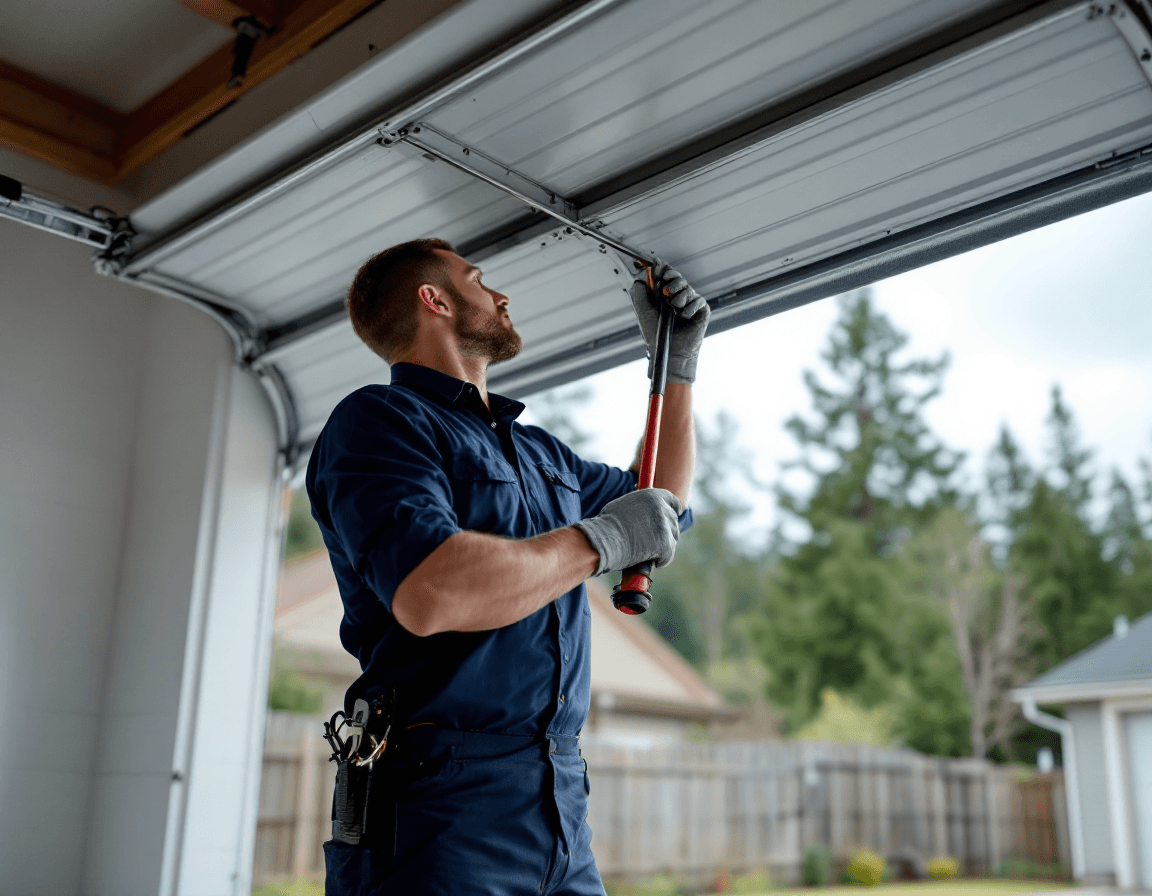
Garage Door Spring Replacement in Federal Way, WA is one of the most common repairs we handle for homeowners across King County, and it is also one of the most important to get right. The springs carry most of your door's weight, so when one fails, the door can go from smooth to unusable in a single cycle. Homes from the older neighborhoods near Twin Lakes to the newer subdivisions off the main arterials all share the same mechanical reality: a spring that has reached the end of its rated life will eventually let go, usually at the least convenient moment.
This page explains what a failed spring looks like, why our wet Pacific Northwest climate influences how quickly springs wear out, and what a professional replacement involves from start to finish. We also cover how torsion and extension systems differ, what high-cycle springs offer busy households, and what drives the cost of a typical job. The goal is to help you make informed decisions, recognize when a repair cannot wait, and understand why spring work belongs in the hands of a licensed technician.
Whether your door is on a quiet cul-de-sac in the 98003 area or closer to the 98023 side of town, the core principles are the same. Springs store tension that can exceed what most people would guess, and that stored energy is the reason we treat every spring job with respect. Read through the sections below, and if you hear a bang, see a gap, or feel your door refusing to move, call us at (888) 799-3819 so we can look at it before a small problem becomes a bigger one.
Hearing a Snapped Spring at Dawn in a Federal Way Garage
Most homeowners describe a broken spring as a loud crack or bang that seems to come from the garage, sometimes followed by a rattling sound as loose parts settle. Because many Federal Way homes have attached garages with shared walls to the kitchen or a bedroom, that noise can be startling, especially when it happens early in the morning. The sound is the coil releasing its stored tension all at once, and it is rarely a gentle event. If you hear it, the safest first move is to stay clear of the door and the lower tracks.
After the bang, check the door without touching the springs. Look for a door that sits lower than usual, sags unevenly, or stays partly open. You may also notice the opener running without the door moving, or the door dropping slightly when released. Do not try to lift the door by hand to test it, and do not attempt to pry or unwind anything. A door that has lost its spring balance can drop unexpectedly, and people have been injured by doors that seemed stable one moment and fell the next.
Once the door is secured, call a licensed professional rather than trying to self-repair. A technician will confirm which spring failed, inspect the cables and drums for damage, and check the opener for strain. In many cases, a snapped spring is also the first sign that a companion spring is near the end of its life, so replacing both at the same visit is often the most economical path. Our crews can usually assess the situation during a single visit and explain the options before any parts are ordered.
Reading the Early Warning Signs Before a Spring Gives Out
Springs rarely fail without warning, even though the final break feels sudden. Over months and years, metal fatigue builds, and the coil starts to show subtle changes that a trained eye can spot. Catching these signs early can turn an emergency call into a planned appointment. Homeowners who pay attention to their door's behavior often avoid the stress of being locked out of a car or unable to leave for work.
Here are the symptoms we see most often in Federal Way garages, and they are worth checking during routine inspections:
- A loud bang from the garage, especially when the door is first opened in the morning
- A door that won't lift or feels extremely heavy when operated by hand
- A visible gap in the torsion spring coil, often where the coil looks stretched or separated
- A door that opens a few inches and then stops, sometimes accompanied by sagging
- An opener that strains, hums, or labors while the door barely moves
- Cables that have come loose or slack after a spring break, sometimes sitting off the drum
- A door that closes too fast, drops hard, or closes crooked
Any one of these symptoms justifies a professional look, and several together almost always mean the spring system is failing. A door that closes too fast can indicate that the spring no longer holds enough tension to control the weight, which places added stress on the opener and the cables. A crooked close often points to uneven spring wear between the left and right sides. When you spot these signs, do not wait for the spring to complete its failure, since a damaged cable or drum can cause a second, more expensive problem.
Torsion or Extension: Knowing Which System Your Door Uses
Before any replacement can be planned, a technician needs to identify the spring system your door uses. The two main types are torsion and extension. Torsion springs are mounted on a steel shaft above the door opening, usually running across the width of the garage, and they twist to lift the door. They are the more common choice for modern residential doors because they run more smoothly and tend to last longer under normal use. Extension springs run parallel to the horizontal tracks on either side of the door and stretch as the door opens.
Torsion systems are typically the ones that show a visible gap in the coil when they fail, and they can be particularly dangerous because they store a large amount of rotational energy. Extension springs also carry significant tension, and they often have safety cables running through their centers to prevent whiplash if they break. Both types require the correct wire size, inside diameter, length, and cycle rating for your specific door weight. Installing a spring that is merely similar is not good enough, and this is one reason we measure and confirm specifications before ordering.
Many Federal Way homes have older doors that were installed with extension springs, while newer builds may have torsion systems. Some garages have been upgraded over time, which can leave a mix of hardware and wiring that needs careful review. A professional inspection will identify the system, verify the door's weight and track configuration, and confirm that the replacement will match the door's design. That attention to detail is what keeps the door balanced after the new spring goes in.
How Pacific Northwest Moisture Shortens the Life of Garage Springs
Western Washington's climate is a major factor in spring wear, and it is one reason our technicians pay close attention to corrosion during every visit. Our winters bring long stretches of rain, damp air, and temperatures that hover near freezing in some years, and that moisture can settle on the metal coil. Over time, surface rust weakens the steel and creates pitting that becomes a starting point for cracks. Garages that are not well ventilated, or that sit near areas with heavy condensation, tend to see this wear sooner.
Homes closer to the water, including those in the Dash Point direction, can face an added layer of exposure. Salt-laden air moves inland on the right conditions, and it accelerates corrosion on exposed hardware such as bearing plates, drums, and hinges. Even homes farther inland can experience humidity swings that cause the metal to expand and contract, which adds fatigue to the spring. When we inspect a garage, we often find that the spring coil looks fine at first glance but shows light rust under the winding that signals reduced strength.
Moisture also affects the lubrication that keeps the spring and bearings moving freely. Dried or washed-out lubricant can leave metal parts grinding against each other, creating extra resistance that the spring must overcome each time the door moves. Regular maintenance helps, but the most effective strategy is to schedule an inspection after particularly wet seasons and before the coldest months. Doing so gives a technician the chance to spot wear early and recommend replacement on your terms rather than during an emergency.
Choosing High-Cycle Springs for a Busy Household
Not every household uses its garage door the same way. A family with teenagers who come and go at all hours, a home-based business with frequent deliveries, or a household that uses the garage as a main entrance can cycle the door many more times than average. Standard springs are commonly rated for a set number of cycles, and when that rating is exceeded, the spring is living on borrowed time. High-cycle springs are designed with heavier wire and improved temper to handle more openings and closings before fatigue sets in.
High-cycle options are not a universal upgrade, and they should be matched to how you actually use the door. A technician will ask how many times the door opens on a typical day and whether anyone uses the opener late at night or early in the morning. That information helps determine whether a standard replacement is appropriate or whether a higher-cycle rating will provide better value over the long term. In some cases, the difference in price is modest compared with the cost of repeating a failed spring replacement a few years later.
It is also worth remembering that high-cycle springs must still be installed with precise balance. A stronger spring installed on an unbalanced door can overload the opener, strain the cables, and shorten the life of the entire system. For this reason, we treat the spring choice and the balancing as one step rather than two. The best result comes when the spring rating, the door weight, and the opener's capability all work together.
What a Professional Spring Swap Looks Like From Start to Finish
A proper spring replacement follows a predictable sequence, and understanding it can help you know what to expect when a technician arrives. The first step is a full inspection of the door, springs, cables, drums, tracks, rollers, and opener. The technician confirms the spring type, measures the existing hardware, and checks the door's weight so the correct replacement can be selected. If the cables or drums show damage, those components are addressed before the new spring goes in.
Once the parts are confirmed, the technician secures the door in a way that prevents movement during the work. This usually involves locking pliers or clamps on the track and using specialized winding bars in a controlled manner. The old spring is released in a planned sequence, and the new spring is installed with the correct tension and orientation. Every step is performed with the understanding that the stored energy in a spring can cause serious injury if it is mishandled. This is why we insist that spring work be done by licensed, bonded, and insured professionals rather than by homeowners with general tools.
After installation, the technician tests the door through several full cycles. The door should lift smoothly, hold its position when partially open, and close without bouncing or drifting. Cables should seat correctly on the drums, and the opener should operate without strain. Only after these checks are complete does the job end, and a good technician will walk you through what was replaced and how to tell whether the door is performing as it should.
Balancing the Door So the Opener Stops Fighting Its Own Weight
A door that has been re-springed but not properly balanced will still cause problems. Balance refers to the spring tension being set so that the door stays in place when left halfway open and moves freely in both directions with minimal help from the opener. If the door is out of balance, the opener must work harder than it was designed to, which leads to noise, wear, and premature failure of the motor and gears. Many homeowners notice a humming or straining opener long before they notice a balance issue, and that sound is often the first clue.
A simple test can reveal balance problems. With the door closed, disconnect the opener carefully following the manufacturer's instructions, then lift the door by hand to about waist height and let go. A balanced door will stay in place, while an unbalanced door will drift up or down. Because this test involves working near a heavy door, we recommend leaving it to a professional. A technician has the tools and training to adjust tension safely, and the adjustment may involve changing the number of turns or the spring rating.
Balance also depends on the condition of the rest of the door system. Worn rollers, bent track sections, and loose hinges can make a properly tensioned spring feel wrong. Our technicians check these components during balancing so the door moves freely from start to finish. The result is a quieter door, a longer-lasting opener, and a smoother ride every time you pull into the driveway.
Cables, Drums, and the Damage Hidden Behind a Broken Spring
When a spring breaks, the cables that connect the spring to the bottom bracket can go slack or jump off the drum. In some cases, the cable is frayed, kinked, or partly separated from its fitting, and that damage must be corrected before the new spring is installed. Cables are under significant tension during normal operation, and a damaged cable can snap without warning, creating a second hazard. A complete inspection of the cable system is therefore a required part of any spring replacement, not an optional extra.
Drums deserve similar attention. A drum that has slipped on its shaft, cracked at the edge, or worn at the cable groove can cause uneven lifting and place stress on the new spring. Drums are often overlooked during quick repairs, but they are central to the door's smooth operation. When a drum shows wear, replacing it at the same time as the spring can prevent repeated service calls and protect the investment you have made in the new hardware.
Shaft condition matters as well, particularly on torsion systems. A bent or flexing shaft can misalign the spring and drums, which causes the door to rise crookedly or bind. Bearing plates and center brackets should be firmly attached and free of rust. Taking the time to address these components is what turns a basic spring swap into a complete, reliable repair.
Understanding Spring Replacement Costs in Federal Way
Homeowners often ask what a spring replacement costs, and the answer depends on several factors. For most spring replacements, our pricing falls in the range of $180 to $450, with the final figure determined by the spring type, the door's weight and size, and the scope of related repairs. A standard torsion or extension spring on a single door typically sits at the lower end of that range, while high-cycle springs, double-door setups, or jobs involving cable and drum replacement tend to move higher. Your technician will explain the specific figure after the inspection.
Several elements influence the final price. The door's weight and dimensions determine the spring size needed, and heavier insulated doors often require larger, stronger springs. The number of springs being replaced matters too, since many doors use two torsion springs and replacing both at once is often recommended. Access can also play a role, particularly in garages with limited headroom or unusual track layouts. If cables, drums, or bearings need attention, those parts will be added to the estimate, and each adds its own cost.
Below are the main factors that shape a Federal Way quote:
- Spring type and whether the door uses torsion or extension hardware
- Door weight, size, and whether the door is insulated or a double-width model
- Choice between standard and high-cycle springs based on household use
- Whether one spring or both springs are being replaced during the visit
- Condition of cables, drums, bearings, and the center bracket
- Any balancing adjustments or opener checks needed after installation
We encourage homeowners to ask for a clear explanation of every line item before work begins. A transparent estimate should identify the parts, explain why each is needed, and show how the final price was determined. If something is unclear, ask questions until the picture is complete. That approach helps avoid surprises and makes it easier to decide between a quick fix and a more complete service.
Keeping New Springs Healthy Through Western Washington Seasons
Once new springs are installed, a little attention can extend their working life considerably. Start with a visual check every few months. Look for rust on the coil, gaps between winding layers, and any change in how the door moves. Keep the area around the spring clean, and avoid spraying harsh chemicals near the hardware. Because our damp seasons can bring moisture into the garage, consider improving ventilation if the space feels consistently humid.
Lubrication should be handled carefully. Use a lubricant recommended for garage door hardware, and apply it to rollers, hinges, and bearings rather than directly onto the spring coil. Over-lubricating can attract dirt and create a sticky residue that makes the door harder to balance. A light, periodic application after wet months is usually sufficient, and it helps the moving parts stay quiet during cold mornings.
Finally, pay attention to how the door behaves across the seasons. A door that feels fine in summer but starts to strain in winter may need a balance check, while a door that drifts or bounces could signal a need for adjustment. Scheduling an inspection before the rainy season begins is one of the most effective habits a homeowner can build. It gives a professional the chance to catch small issues early and keep your Federal Way garage operating safely year-round.
Spring work is one of the few garage door repairs where waiting can turn a manageable problem into a costly, dangerous one. If your door has bounced, sagged, strained, or simply stopped, call Seattle Garage Door Fix at (888) 799-3819 to schedule a licensed technician who can inspect, replace, and balance your springs the right way.