
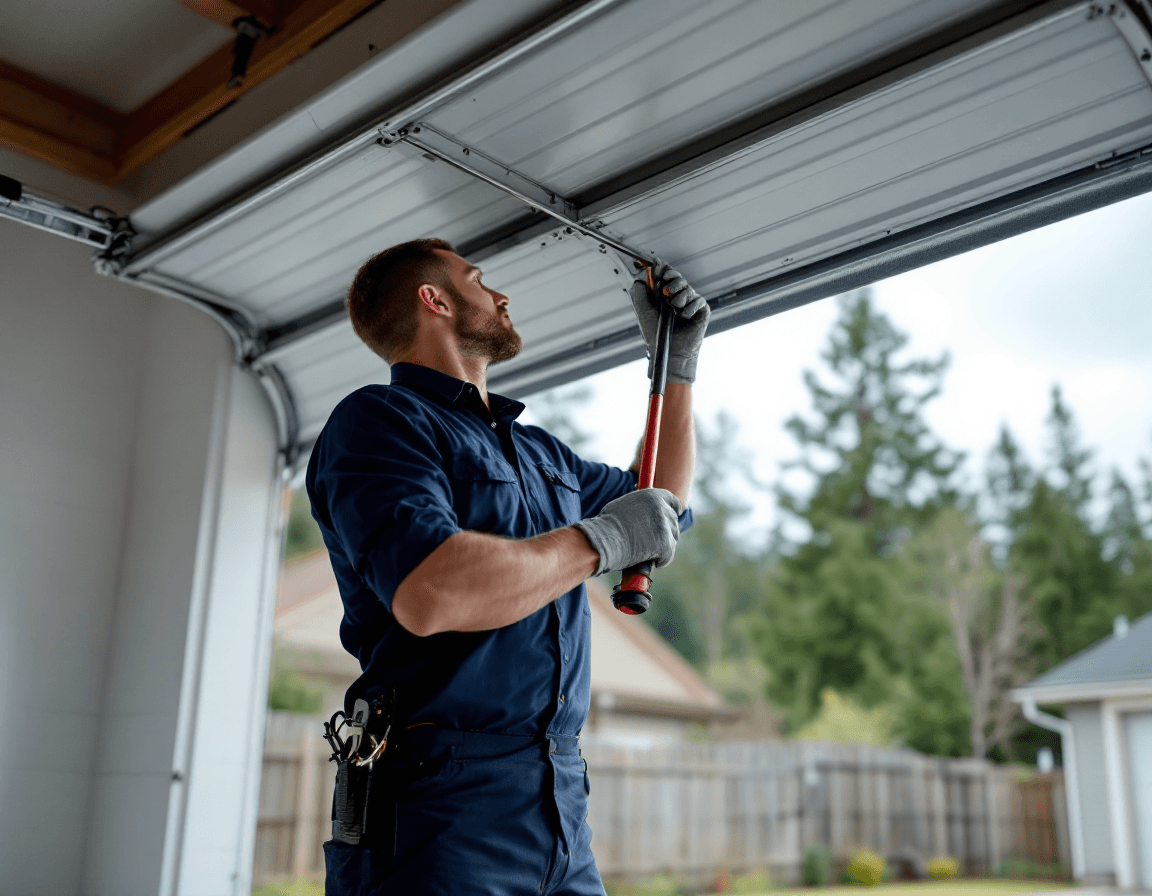
Garage Door Spring Replacement in Des Moines, WA is rarely a job that waits for a convenient weekend. A door that worked fine on Friday can refuse to lift on Saturday morning, and the failure often starts with a spring that has been quietly losing its strength for months. Homeowners across the 98198 area, from the older streets near the waterfront to the newer subdivisions further inland, call us after discovering that the heavy steel panel above their car has become a serious hazard. Our technicians see the same pattern again and again: the spring gives out, the door becomes unbalanced, and the opener is left straining against weight it was never designed to carry alone.
This page explains how springs fail, what the warning signs look like, and why replacement is a job for trained hands and not a weekend project. We cover the difference between torsion and extension springs, when high-cycle options make sense, and why balancing the door matters as much as the spring itself. You will also find practical guidance on local conditions, realistic price expectations, and what to expect when a technician arrives at your home. Our goal is to give you enough information to make a confident decision, whether you are troubleshooting a noisy door tonight or planning ahead before the next wet season.
Springs carry the load that would otherwise fall on your opener and your household, so their condition affects both convenience and safety. If you suspect a spring has broken, do not wait to see if it gets worse. Call (888) 799-3819 and a licensed, bonded, and insured technician can assess the situation, explain your options, and get your garage back in working order.
Why Des Moines Garages Work Harder Than Average
Living in Des Moines means living with Puget Sound air, and that air is a quiet enemy of metal. Salt-laden moisture drifts inland on westerly winds, settling on exposed hardware, and even homes a few blocks from the water can see its effects on springs, bearings, and cable drums. Winters bring long stretches of drizzle and fog, followed by brief dry spells that cause the steel to expand and contract. Over several years, that cycle can weaken the protective coating on a spring and invite surface rust that reduces its ability to hold tension.
Many homes in the area also have garages that double as workshops, storage rooms, or the main entry point for daily traffic. A door that opens five or six times a day, every day, accumulates cycles far faster than one used only on weekends. Families with teenagers who come and go at odd hours, or households with a second vehicle, often put more wear on the system than they realize. The springs do not know whether the door was opened for a commute or a quick trip to the recycling bin; they simply count each rotation.
Temperature swings matter too. A cold snap in January can make a spring stiffer and more prone to stress, particularly if it has already developed a hairline crack or a thin spot in the wire. When the first warm afternoon arrives, the metal relaxes and the failure sometimes happens right then. Technicians often hear that a spring broke "out of nowhere," but in most cases the weakness had been building through several months of moisture and temperature changes.
Reading the Warning Signs Before the Spring Lets Go
Springs rarely fail in silence, although the signals can be easy to dismiss. One of the earliest clues is a door that feels noticeably heavier when lifted by hand, especially if it seemed effortless a year ago. Another is a door that rises unevenly, with one side climbing faster than the other. Either symptom suggests the spring tension is no longer distributed correctly, and the door is starting to fight its own weight.
Visual inspection can also reveal trouble before a break occurs. On a torsion system, look at the spring mounted on the steel shaft above the door opening. A visible gap between coils, a spring that looks stretched or has noticeably wider spacing on one end, or flaking rust along the wire are all reasons to call for an evaluation. On extension springs, check the lengths for sagging, rust, or any section that looks deformed. Never attempt to tighten, adjust, or remove a spring yourself, because stored tension can cause serious injury even when the spring looks intact.
Several other symptoms commonly appear shortly before or after a spring failure. Keep an eye out for the following warning signs:
- The door opens a few inches, then stops or reverses, often because the remaining tension cannot lift the panel.
- The opener motor hums, clicks, or strains loudly while the door barely moves or does not move at all.
- The door closes faster than normal, drops suddenly, or sits crooked in its tracks.
If you notice any of these symptoms, avoid using the door until a technician has inspected it. Continuing to force a door with a weakened spring can damage the opener, bend tracks, and put the panel at risk of falling unexpectedly. Taking a few photos of the spring and noting when the problem started can also help the technician diagnose the issue faster when they arrive.
The Bang in the Night: What a Snapped Spring Sounds Like
A broken torsion spring usually announces itself with a loud bang that can rattle windows and startle everyone in the house. Many homeowners describe it as sounding like a gunshot or a heavy metal pipe dropping onto concrete. Some people wake up thinking someone has broken into the garage, only to find the door hanging crookedly or sitting partly open. The noise is the spring releasing its stored energy all at once, and it is a clear sign that the system needs immediate attention.
After the break, the door typically becomes much harder to operate. The opener may still try to lift it, but without balanced spring tension it will strain, stop, or refuse to move. You might see the door sag at one side or hang lower on one track than the other. In some cases the cables loosen as the drum rotates without enough tension, which creates a second problem that must be corrected before the door can operate safely.
Do not attempt to lift the door by hand or force it open once a spring has broken. The remaining springs and cables may be under unusual stress, and the door can shift unexpectedly. If the door is partly open, keep children and pets away from the area and avoid standing beneath it. Disconnect the opener only if you know how to do so safely; otherwise, leave the system alone and call a professional to secure the door until repairs can be made.
Torsion Versus Extension: Matching the Right Spring to Your Door
Not all garage doors use the same spring design, and understanding the difference helps homeowners communicate clearly with a technician. Torsion springs are mounted horizontally on a steel shaft above the door opening. They twist to store energy and generally provide smoother, more balanced lifting, which is why they are common on newer residential installations. When a torsion spring breaks, the job usually requires precise measurement of the wire size, inside diameter, length, and cable drum configuration before a matching replacement can be selected.
Extension springs run along the horizontal tracks on either side of the door, stretching as the door lowers and pulling it back up when it opens. They are often found on older homes and on some lighter doors, and they can be an economical option when the existing hardware is in good condition. However, extension springs usually include safety cables that run through the coil and help contain the spring if it fails. Those safety cables must be inspected and replaced correctly, because a spring without proper containment can become a dangerous projectile.
Choosing between the two designs is not simply a matter of preference. The door's weight, size, track configuration, and the existing opener all influence which spring type will perform reliably. A technician will check the door panel, the hardware, and any signs of previous repairs before recommending a replacement. Replacing a torsion system with extension springs, or the reverse, is a significant modification that should be handled only by a professional who understands the mechanical requirements.
High-Cycle Springs and When They Pay Off
Standard springs are designed to last for a specific number of cycles, and that rating reflects the typical use of a residential garage. High-cycle springs are engineered with heavier wire or specialized materials that tolerate more frequent use before fatigue sets in. For households that open the door several times a day, or for garages used as a primary entry point, a high-cycle option can extend the service life of the system and reduce the chance of an unexpected failure.
The decision depends on how you actually use the door. If you leave for work at dawn, return in the evening, and make frequent trips for groceries or errands, the door may cycle far more often than a standard rating anticipates. A commercial-style or contractor garage with heavy daily traffic may also benefit from upgraded hardware. Your technician can review your typical usage and recommend a spring that matches your household rather than defaulting to the cheapest option.
High-cycle springs are not always the right choice for every door. A lightweight door with modest use may perform perfectly well with standard springs, and an upgrade would add cost without a meaningful benefit. The goal is to match the spring to the real demands on the door, including its weight, the number of daily openings, and the local climate. A candid conversation with a licensed technician will help you decide whether the higher investment makes sense for your situation.
Why Balance Matters as Much as the Spring Itself
Replacing a broken spring is only part of the job. Once the new spring is installed, the door must be balanced so it lifts smoothly and stays where you leave it. A properly balanced door should remain partly open at about waist height when released, without sliding down or rising on its own. If the door drifts, slams, or hesitates, the tension is probably off, and continued operation can wear out the opener and related parts prematurely.
Balancing requires careful adjustment of the spring tension and attention to the cable drums, which must wind evenly as the door moves. Small differences in tension between the two sides of a double door, or between the spring and the drum, can make the door tilt or bind in the tracks. A skilled technician tests the balance multiple times, checking the door at several heights and making fine corrections until the movement is consistent and controlled. This step is often overlooked by do-it-yourself attempts, which is one reason unprofessional repairs frequently fail within weeks.
Balance is also a safety issue. An unbalanced door places extra load on the opener, and the opener's safety reversal system may behave unpredictably when the door resists movement. When a door is set up correctly, the opener can do its job without straining, and the door is less likely to drop suddenly if a component begins to fail. Ask your technician to demonstrate the balance test before they leave, so you understand what a correctly functioning door should feel like.
Cables, Drums, and the Hidden Damage After a Break
A spring failure rarely damages only the spring. Cables and drums carry the door's load through the lifting system, and a sudden release of tension can cause cables to fray, unwind, or slip out of their grooves. Drums can crack or loosen on the shaft, and bearings or brackets may bend if the door dropped unexpectedly. These secondary problems are easy to miss unless a technician inspects the entire assembly.
Cable damage often appears as frayed strands, kinks, or a cable that no longer sits neatly in the drum groove. Once a cable has been overstressed, it should be replaced rather than reused, since the weakened strands may fail under the new spring's tension. Drums that show cracks, deformation, or looseness on the shaft also need attention, because a drum that slips can cause the door to jam or fall unevenly. Good technicians check every component before finalizing the repair, rather than only installing the spring.
Homeowners sometimes ask whether they can save money by replacing only the spring and skipping cable or drum inspection. In practice, that approach can lead to a second failure within a short period, and the cost of a return visit often exceeds the savings. A thorough assessment protects the entire system and gives you a clearer picture of what the door needs now and what may need attention soon.
What Replacement Typically Costs Around South King County
Spring replacement pricing depends on several factors, including the spring type, the door's size and weight, the amount of hardware involved, and whether cables or drums also need replacement. For most spring replacements in our service area, including Des Moines, pricing typically falls between $180 and $450. Higher-end options, such as high-cycle springs or additional hardware upgrades, may fall toward the upper portion of that range, while straightforward replacements on standard doors often land closer to the lower end.
A reliable quote should always be based on an actual inspection of your system. Be cautious of anyone who promises an exact price over the phone without seeing the door, the spring, and the opener. Ask the technician to explain what is included, whether cables and bearings are being inspected, and what warranty applies to the parts and labor. A transparent estimate helps you compare options without surprises.
Keep in mind that the lowest quote is not always the best value. A rushed installation that skips balancing, cable inspection, or proper safety procedures can cost far more in the long run. Look for a licensed, bonded, and insured company that explains the work clearly and is willing to answer questions. Our team can walk you through the options for your specific door at (888) 799-3819.
Safety Rules Every Des Moines Homeowner Should Follow
Garage door springs store enormous amounts of energy, and that is why spring replacement is classified as work for trained professionals. Even experienced homeowners can be seriously injured by a spring that releases unexpectedly during adjustment or removal. Winding bars, tension rods, and loose hardware can strike with force, and a single mistake can cause lasting harm. The safest approach is always to leave spring work to a licensed technician with the right tools and training.
There are several habits that help keep your household safe while you wait for service. Keep children, pets, and visitors away from the door, and do not allow anyone to stand beneath a door that is hanging crookedly or partly open. Avoid pulling on emergency release cords when the door is under heavy tension or appears damaged, since that can cause the door to drop quickly. If you must move a vehicle in or out of the garage, use the manual release only after confirming that the door is intact and the spring is not visibly broken.
Make sure the opener's safety features are working as designed. Photo-eye sensors should align and respond when an object passes through the beam, and the door should reverse if it meets resistance during closing. Test these features periodically, and report any malfunction to a technician promptly. Safety systems are only effective when they are maintained, and a door that continues to operate with a faulty sensor creates unnecessary risk.
Protecting Springs Through Rainy Seasons in the Pacific Northwest
Preventive care can extend the life of your springs, particularly in a climate where moisture is a constant factor. Start by inspecting the door at least twice a year, ideally before the wet season begins and again in late spring. Look for rust, flaking coatings, and any change in how the door moves. Wiping down visible metal with a dry cloth can remove surface moisture, though technicians should handle any deeper corrosion.
Lubrication matters, but it should be applied to the correct components. Hinges, rollers, and bearings typically benefit from a light lubricant recommended for garage door hardware, while springs themselves are usually best left to a professional who can assess their condition. Avoid spraying lubricant broadly across the entire assembly, since excess product can attract dirt and create buildup in the tracks. A technician can tell you exactly which parts need attention for your particular door.
Consider the environment around your garage as well. Keep gutters clear so water does not drip directly onto the door's top section, and make sure the door seals are intact to limit moisture and debris entering the space. If your garage is near the water or exposed to salt air, ask your technician about corrosion-resistant hardware during your next service visit. Small steps like these can make a noticeable difference over the years.
What Happens During a Professional Visit
Knowing what to expect can make a service appointment less stressful. When a licensed technician arrives, they will usually begin by inspecting the door, the opener, the springs, the cables, and the drums. They will test the door's movement, listen for unusual noises, and check the balance before recommending any repairs. This assessment typically takes place before any parts are ordered or installed, so you can discuss the findings and options in plain language.
If spring replacement is needed, the technician will confirm the correct size and type, explain any upgrade options such as high-cycle springs, and provide a clear estimate. Work is performed with the door secured and the tension released in a controlled manner. Once the new spring is installed, the technician will adjust the balance, verify the cable and drum alignment, and test the door several times. They should also confirm that the safety reversal system functions correctly before leaving.
Before the technician departs, ask them to walk you through the finished work. A good visit ends with a clear explanation of what was replaced, what was inspected, and what maintenance is recommended. If anything seems unclear, this is the time to ask. A knowledgeable local technician will be happy to explain the details and answer your questions about your door.
Garage door springs are one of the most important and most overlooked parts of your home, and a failure can disrupt your daily routine in an instant. Whether your door is making a new noise, refusing to lift, or has already broken with a loud bang, prompt professional help protects both your property and your household. Call Seattle Garage Door Fix at (888) 799-3819 to schedule a licensed, bonded, and insured technician for your Des Moines home, and get your garage door operating safely again.