
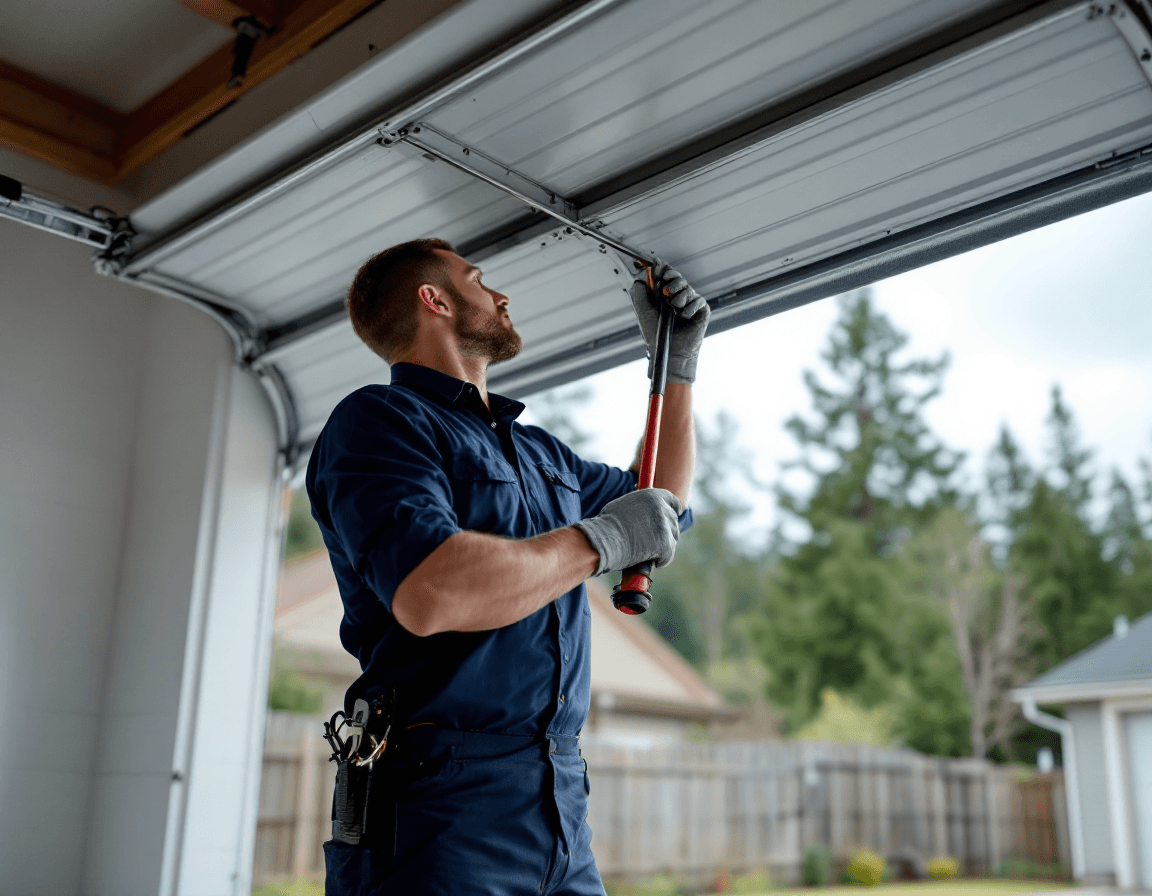
Garage Door Spring Replacement in Normandy Park, WA is one of the most common repairs we handle on the south end of King County, and for good reason. The springs that counterbalance your door are under enormous tension, and they wear out after a predictable number of open-and-close cycles. When one finally gives way, the door that was moving smoothly yesterday can suddenly refuse to lift at all. Homeowners in Normandy Park often notice the failure first as a sound or a sudden change in how the door behaves, and that is usually the moment they start searching for help.
Normandy Park sits on the Puget Sound shoreline, with a mix of older single-family homes, newer builds, and detached garages that get a lot of daily use. Many households here run two or three vehicles, so a door may cycle several times a day during busy weeks. Add in the Pacific Northwest's long wet season and the salt air that drifts in from the water, and the hardware on your garage door is working harder than it might in a drier climate. Understanding what spring replacement involves, what it costs, and what warning signs to watch for can save you from a stuck door, a damaged opener, or a dangerous situation.
This guide walks through the practical side of spring work from the perspective of a technician who handles these calls regularly in and around Normandy Park, including the neighborhoods near Normandy Park Cove and the stretches along Marine View. You will find plain-language explanations, a clear look at symptoms, realistic pricing context, and guidance on why spring work belongs in the hands of a licensed, bonded, and insured professional. If your door is stuck open, sagging, or making a sound you have never heard before, the information below should help you decide what to do next.
Hearing the Bang: What a Snapped Spring Actually Sounds Like
Most homeowners remember the moment a spring breaks. It is often described as a sharp crack or a loud bang that seems to come from the middle of the garage, and it can be startling enough to make someone jump. In many cases the sound happens while the door is closed, so the first sign is simply a door that will not open when the opener is pressed. If the break happens while the door is moving, you may hear a sudden thud as the door drops a few inches and then stops.
After the bang, check the springs above the closed door without touching them. A torsion spring is a long coil mounted on a steel shaft across the top of the door opening, while extension springs run along the horizontal tracks on either side. A broken torsion spring often shows a visible gap in the coil, and a broken extension spring may appear stretched, detached from its end bracket, or hanging loose. Do not climb on a step stool to inspect these components closely, because the force stored in an intact spring can be dangerous even when the break is obvious.
Some people hear a noise that is not a clean bang but a series of popping or grinding sounds over several days. This usually means a spring is fatiguing and beginning to fail, with individual coils separating or the wire losing its temper. A door making new noises should be checked before the spring fails completely, since a sudden break can also damage cables, brackets, and the opener. Recording the sound on your phone can help a technician diagnose the problem faster when you call.
Why Springs in This Part of King County Wear Out on Their Own Schedule
Garage door springs are rated in cycles, meaning one full open and one full close counts as one cycle. Standard torsion springs are commonly built for a specific cycle count, and the exact rating depends on the spring's wire size, length, and manufacturer. Because the lifespan is a function of use rather than calendar years, a lightly used door may last a long time while a door that cycles constantly can wear out sooner than its owner expects. Households that run early commutes, late returns, and frequent trips to pick up kids or groceries tend to hit their cycle count faster.
The Pacific Northwest adds its own pressures. Long stretches of rain and humidity encourage surface rust on the steel, especially on springs and hardware that are not kept protected. Winter temperatures in western Washington usually stay moderate, but the damp air holds moisture against metal, and a cold morning after a wet night can make a tightly wound spring more brittle at the point of stress. Homes near the water also deal with salt-laden air that accelerates corrosion on exposed components, including the bearing plates, end brackets, and the metal parts of the opener that connect to the door.
Gardens, leaf litter, and the damp moss that spreads across roofs and driveways in this region also find their way into garages. Debris on the tracks can increase friction and make the door work harder, which shortens the life of the springs even when the door looks fine from the street. A technician who services Normandy Park regularly will often check the rollers, hinges, and track alignment at the same time as the springs, because a problem in one area usually puts extra strain on the others.
Torsion or Extension: Understanding the Spring Setup on Your Door
Before any spring can be replaced, a technician needs to identify exactly what type of system your door uses. A torsion system mounts one or two long springs on a horizontal shaft above the opening, and it uses steel cables wrapped around drums at each end to lift the door. Because the torsion spring twists rather than stretches, it tends to be the quieter and more durable option for heavier doors, and it is common on newer residential installations. Torsion springs also carry the highest stored energy, which is why they demand the most respect during any repair.
An extension system uses springs that run parallel to the horizontal tracks on each side of the door, with pulleys and cables routing the force to the door panels. These springs stretch as the door opens and retract as it closes, and they are often found on older garages or on lighter doors. Extension springs are typically mounted with safety cables running through the coils, which are designed to limit the damage if a spring lets go. Even so, a broken extension spring can still whip or swing unpredictably, so the same rule applies: stay clear and call for service.
Knowing which system you have changes the replacement process, the cost, and the parts list. A good technician will confirm the door weight, the track radius, the height of the opening, and the cycle rating before ordering the correct spring. Mismatched springs can cause a door to close too fast, lift unevenly, or strain the opener, so precision matters more than speed. If you are unsure which system you have, a photo of the springs and the top of the door is enough to start the conversation with a service team.
Five Signs Your Door Is Asking for Spring Service
Many spring failures give warning signals hours, days, or weeks ahead of time. Paying attention to these clues allows you to schedule service on your terms rather than during a rainy weekday when you need the car out of the garage. The following list covers the most common symptoms that technicians see on calls in and around Normandy Park:
- A loud bang from the garage, often followed by a door that will not lift or lifts only partway
- A door that feels extremely heavy when opened by hand, or one that stops a few inches off the ground and refuses to continue
- A visible gap or stretched section in a torsion spring coil, or an extension spring that looks loose or detached
- Cables that have come off the drum or hang loose after a spring break, sometimes with visible slack along the track
- A door that closes too fast, slams down, or sits crooked in the opening
Each of these signs points toward the springs or the components that depend on them. A door that lifts unevenly, with one side higher than the other, often indicates a spring that has lost tension or a cable that has jumped the drum. A door that closes rapidly may be releasing stored energy because a spring has weakened, which places the rollers and tracks under extra stress. Any of these symptoms justifies a service call, and the sooner the door is inspected, the less likely the problem is to spread to the opener and other parts.
When the Opener Hums but the Door Barely Moves
One of the most confusing symptoms for homeowners is an opener that runs, hums, or strains while the door stays almost motionless. It is tempting to assume the opener has failed, and sometimes that is true, but in many cases the real issue is a broken spring that leaves the motor trying to lift the full weight of the door alone. The opener is designed to assist a balanced door, not to carry the entire load from a dead stop, and the strain can damage the gear assembly or trolley over time. Continuing to press the button repeatedly only increases that risk.
A practical way to narrow the problem is to disconnect the opener by pulling the emergency release cord, which should be done only with the door closed and the car out of the garage. Then lift the door gently by hand a short distance. If the door feels extremely heavy or drops suddenly, the springs are likely the cause, and the opener should not be used until a technician has inspected the system. If the door moves freely by hand and the opener still strains, the trouble may lie in the trolley, the drive chain or belt, or the wiring.
This is also a good moment to check for obstructions along the track, such as tools, bikes, or debris that may have fallen into the path. Ice is rarely the issue in Normandy Park, but a damp winter can cause sticky track residue or rust that increases drag. Whatever you find, avoid forcing the door open or closed manually when the springs are in doubt. A technician can determine whether the opener is safe to reconnect after the springs and cables are verified.
Cables, Drums, and the Damage a Broken Spring Can Leave Behind
When a torsion spring breaks, the cables attached to the drums can lose their tension and jump off the grooves. Once a cable slips, it may tangle, fray, or stretch, and the drum itself can crack or become misaligned on the shaft. Even if the spring is the only part that visibly failed, a technician should inspect the cables, drums, bearing plates, and the shaft for wear before reinstalling the system. Replacing only the spring while ignoring a damaged cable is a common mistake, and it often leads to another failure within months.
Extension systems have their own weak points. The pulleys, the safety cables, and the end brackets can take a beating when an extension spring lets go, and a bent bracket or worn pulley can cause uneven movement that is difficult to correct without the right parts. In coastal areas, the metal on these components may show surface rust or pitting that looks minor but weakens the connection over time. A thorough inspection looks beyond the broken part to the full set of hardware that carries the load.
Sometimes the most useful part of a service visit is the discovery of a problem that was not yet causing symptoms. A frayed cable, a cracked roller stem, or a bearing plate that is starting to loosen can be replaced during the same appointment, which avoids a second trip and a second round of disruption. Ask the technician to show you what was found and what was replaced, and request an explanation of any recommended work so that you can decide what fits your budget and timeline.
Pricing for Spring Replacement Around Normandy Park
Pricing for spring replacement depends on the type of system, the size and weight of the door, the parts required, and the complexity of the job. For most spring replacements, the typical range is $180 to $450, with the final number determined after a technician inspects your specific door. Torsion work on a double-wide door, high-cycle springs, or a system that needs cable and drum replacement at the same time will usually fall toward the upper end of that range, while a straightforward single-spring swap on a standard residential door often lands near the lower end.
Homeowners near Marine View and the Normandy Park Cove area sometimes ask why their quote differs from a neighbor's, even when the doors look similar. The answer usually comes down to details that are invisible from the driveway: the spring wire size, the door's weight after years of added insulation or hardware, the condition of the cables, and whether the opener needs adjustment after the new spring is installed. A quote that is significantly lower than the typical range may indicate that important steps, such as balance testing or hardware inspection, are being skipped. Ask what is included before you agree to the work.
Keep in mind that the cost of a spring is only one part of the picture. A door that is left in a broken state can damage the opener, the track, the rollers, and the panels, which often costs more to repair than the spring itself. Scheduling service promptly is usually the more economical choice, and it reduces the risk of an unsafe door that could fall or close unexpectedly. A clear estimate before work begins should spell out parts, labor, and any optional upgrades so there are no surprises at the end of the visit.
High-Cycle Springs and Precise Door Balancing
Standard springs serve many households well, but some properties benefit from high-cycle springs that are designed for more openings over their lifespan. These springs use heavier-gauge or specially treated wire and are often a sensible choice for families with frequent trips, home businesses that rely on regular garage access, or anyone who wants a longer interval before the next replacement. The upgrade typically carries an additional cost over a standard spring, and a technician can explain whether the added durability fits your usage pattern.
Balance is the other half of a good spring job. A properly balanced door should stay in place when raised manually to about halfway, without drifting up or down, and it should lift with moderate effort rather than strain. A technician adjusts the spring tension to match the door's actual weight, which can change over time as hardware wears and insulation or decorative elements are added. Poorly balanced doors place extra load on the opener and can cause the door to close too fast, slam, or sit crooked in the opening.
Precision matters because even a small imbalance can shorten the life of the entire system. After replacing a spring, a careful technician will test the door through several cycles, check that the cables are seated correctly on the drums, verify that the tracks are plumb and level, and confirm that the safety reversal features on the opener respond properly. This final testing is not an optional extra; it is part of making sure the door works as designed and does not present a hazard to people or vehicles passing beneath it.
Why Spring Work Belongs in Licensed Hands
Garage door springs are one of the few household components that can cause serious injury during repair, and the risk is not theoretical. A torsion spring holds a large amount of stored energy even when it looks relaxed, and improper handling can cause the winding bars to slip, the spring to release, or the steel to strike the person doing the work. Extension springs can also snap back with enough force to cause harm, particularly when the safety cables are missing or damaged. For these reasons, we strongly recommend that homeowners in Normandy Park leave all spring and cable work to a licensed, bonded, and insured professional.
Trying to replace a spring with online instructions, borrowed tools, or improvised methods is one of the most common ways that a simple repair becomes a trip to the emergency room. Even experienced hobbyists tend to underestimate how much tension is involved, and a single mistake on a winding bar can be enough to cause a serious incident. A licensed technician carries the proper tools, understands the specific tension for each door, and follows procedures designed to keep both the technician and the homeowner safe. Insurance and bonding also provide a layer of protection that a do-it-yourself attempt does not.
If you are ever unsure whether a situation is safe, the answer is to step back and call for help. Keep children and pets away from the door area, avoid standing directly beneath a door that is partially open or hanging, and do not attempt to lift or unwind any part of the spring system. A clear, safe approach protects your property and your family, and it gives the technician the best possible starting point when they arrive.
What Happens During a Spring Service Visit in Normandy Park
When you call for spring service, the first step is usually a brief conversation about what you have observed. Describe the sound, the door's behavior, whether the opener runs, and whether you have noticed any visible damage on the springs or cables. Mention your garage's location and any access considerations, such as a gated driveway or a shared lot. This information helps the scheduling team arrange the right tools and parts before the technician arrives.
On site, the technician will first secure the door, confirm the system type, and inspect the springs, cables, drums, rollers, hinges, and track alignment. The visit typically includes a check of the opener and its safety features, as well as a review of how the door moves through its full range. If the spring is broken, the technician will explain the replacement options, including standard and high-cycle choices, and provide a clear estimate before beginning work. You should feel free to ask questions at each stage, and a reputable technician will take the time to answer them.
After the work is complete, the technician should walk you through the results. Ask to see the door move through several cycles, and confirm that it balances properly and closes without drifting. Review the parts that were replaced and any recommendations for future maintenance. A well-run service visit ends with a door that operates smoothly, a clear explanation of what was done, and a plan for keeping the system healthy over the long term.
Keeping Springs Healthy Between Service Calls
Routine care will not prevent every spring failure, but it can extend the life of your system and help you catch problems before they become emergencies. A simple monthly check is enough for most homeowners, and it takes only a few minutes. Look for visible rust, loose hardware, frayed cables, or changes in how the door moves, and note anything unusual so you can mention it to a technician during the next visit.
- Once a month, visually inspect the springs from a safe distance and look for gaps, rust, or stretching
- Check that the cables sit neatly on the drums and show no fraying, kinks, or slack
- Listen for new squeaks or grinding as the door travels, and note whether the sound changes with the season
- Keep the tracks clear of debris, leaves, and standing water, especially during the wet months
- Test the door's balance by lifting it halfway by hand, with the opener disconnected and the door closed, to see whether it stays put
- Schedule a professional inspection every year, or sooner if the door has been cycling heavily
Lubrication is also worth discussing with your technician, because the right product and the right points matter. Over-greasing or using the wrong lubricant can attract dirt and make the system worse, so ask for specific guidance rather than applying products at random. Good maintenance is less about constant attention and more about consistent, informed habits that keep the door balanced and the springs working within their rated life.
Your garage door is one of the largest moving objects on your property, and it deserves the same attention you give your vehicles and your roof. If your Normandy Park garage door is stuck, sagging, making a new noise, or showing any of the warning signs described above, do not wait for the next bang to decide that it is time for help. Call Seattle Garage Door Fix at (888) 799-3819 to schedule a licensed, bonded, and insured technician who can diagnose the problem, explain your options clearly, and get your door moving safely again.