
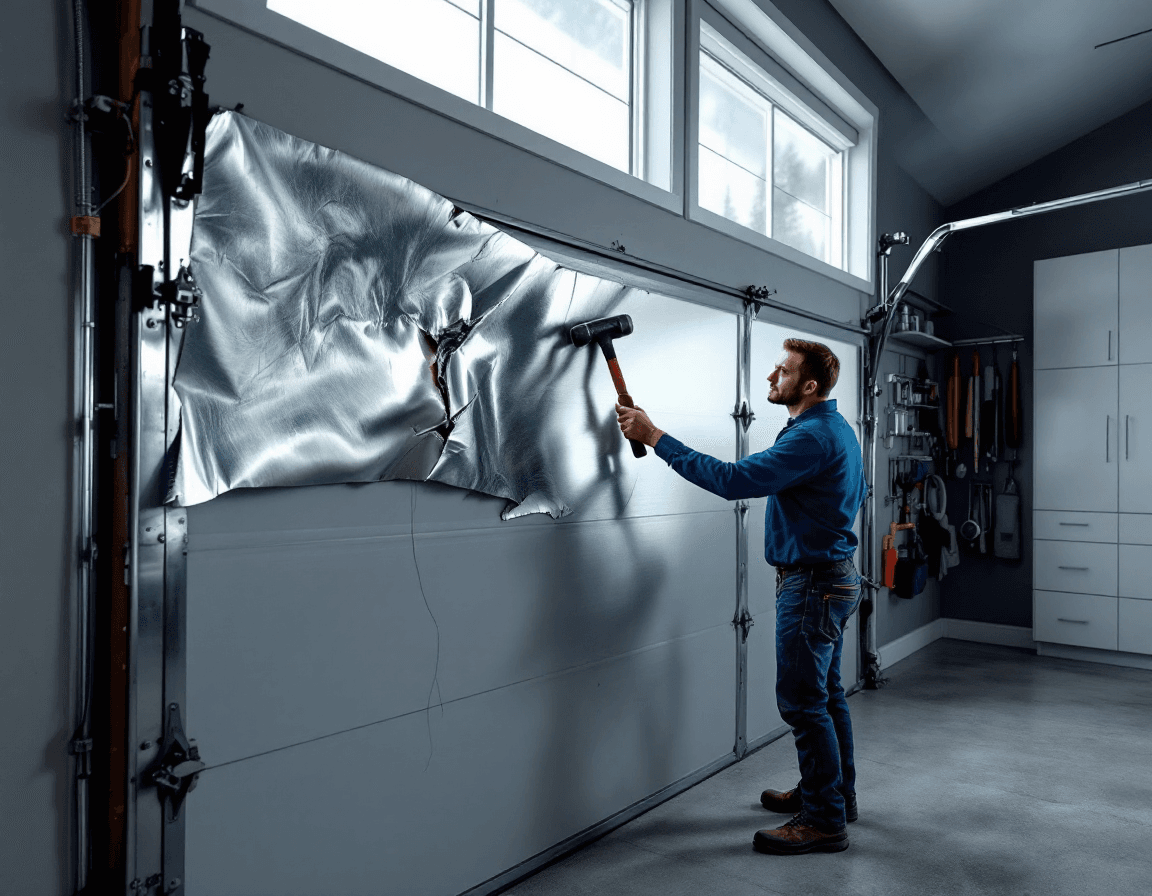
Normandy Park sits along the western edge of King County, where wooded lots and quiet residential streets run toward the Puget Sound shoreline. For homeowners here, a garage door panel that has been dented, cracked, or worn through is more than a cosmetic problem. A damaged section can weaken the door's rigidity, let moisture into the insulation core, and make the whole door look neglected from the street. Seattle Garage Door Fix replaces individual damaged panels on residential doors throughout the area, including homes near the Normandy Park Cove and along the Marine View corridor, with work typically priced between $250 and $800 per section depending on the door.
Many homes in this part of the 98166 ZIP code were built decades ago, and their garage doors have been through a lot of weather, road grit, and the occasional bumped bumper. A door that still opens and closes smoothly can hide a panel that has started to crack along a rib or bulge where a backing vehicle clipped it. Replacing only the affected section is often a far better choice than living with the damage or paying for a complete door, especially when the rest of the door is sound. This page explains how to read the damage, what causes it in our climate, how to decide between repair and replacement, and what to expect when a technician swaps out a panel.
Whether your door is a traditional raised-panel style, a flush steel design, a carriage-style wood look, or an older insulated model with a foam core, the principles are similar. The key questions are which section is damaged, how far the damage extends, whether the panel can be sourced to match, and whether the door's hardware and springs are in good condition. We will walk through each of these so you can make an informed decision before anyone picks up a tool.
Reading the Damage on a Normandy Park Door Before You Call
Start by looking at the door from both inside and outside the garage with the door closed, then again with it partly raised. Many dents are easiest to spot in low, raking light, such as early morning or late afternoon, when shadows show where the metal has pushed inward or outward. Run your hand gently along the panel to feel for sharp creases, soft spots in insulated panels, or places where the surface has separated from the frame. Note the exact section number if your door has multiple panels, counting from the top, since this helps a technician quote the right part quickly.
Pay attention to whether the damage is confined to the outer skin or extends through the panel. A shallow dent in a steel face might only affect appearance, while a split along a seam can let rain run behind the panel and collect at the bottom edge. Check the hinges and roller brackets at the ends of the damaged section, because a bent panel often pulls on hardware and can cause rollers to ride off their track. If the door rubs, sticks, or makes a new grinding noise, mention that when you call, since it changes the scope of the job.
It also helps to photograph the damage with a coin or tape measure beside it for scale. Photos let a technician estimate whether a panel can be sourced quickly or whether a custom order will be needed. Write down the approximate height and width of the affected section and the door's brand or model if you know it, usually printed on a label near the bottom edge or inside a top panel. Having this information ready makes the first conversation faster and more accurate.
Why Coastal Air and Wet Winters Work on Steel and Wood Panels
The Pacific Northwest climate is gentle compared with some regions, but it is persistent. Long stretches of damp weather, salt-tinged air drifting in from the Sound, and frequent rain keep moisture in contact with garage door surfaces for months at a time. Steel panels rely on their protective coating, whether factory-applied galvanizing or paint, and once that coating is scratched or chipped, moisture can begin working at the bare metal. Over several seasons, that small breach can grow into a rust patch that eats through the panel from the inside.
Wood and wood-composite doors face a different challenge. Wood absorbs water, swells during wet months, and shrinks as it dries, which can open seams and loosen fasteners over time. If the finish has worn thin on the lower sections, where splashed water and road spray collect, the wood can begin to soften and rot. A panel that looks merely weathered on the surface may have soft, spongy material underneath, which is why a quick visual check is not always enough to judge its condition.
Insulated steel doors add another layer of concern. The foam core inside the panel is sealed between two metal faces, and once the outer skin is breached, water can wick into the core and sit there. Trapped moisture does not dry quickly, and it can compromise the insulation value while adding weight to the section. If you notice a panel that feels heavier than its neighbors or has a cold, damp spot near the bottom, the panel may need replacement sooner rather than later.
Dents, Cracks, and Creases: What Each Damage Type Means
Not all damage is equal, and recognizing the type helps you understand whether a panel can be repaired or must be replaced. A shallow dent with the paint intact is often a cosmetic issue, though it may still signal that the panel's internal structure has been bent. A crease, which is a sharp fold in the metal, usually indicates the panel has lost much of its original strength along that line. A crack or split, especially at a seam or near a stiffening rib, is generally more serious because it creates a path for water and reduces the panel's ability to resist wind load.
Here is how technicians typically sort common panel problems:
- Shallow dents with intact finish, often cosmetic, sometimes suitable for careful reshaping if the metal is not stretched
- Creases or folds that run across the panel, usually requiring full panel replacement because the metal has lost temper
- Cracks or splits along seams, ribs, or edges, which typically call for replacement to keep water out
- Holes or punctures, which almost always mean replacement, particularly on insulated doors
- Rust-through or soft wood, where the damage extends beyond the surface and the section needs to be swapped
Keep in mind that a panel can look minor on the outside while the damage underneath is more significant. A technician will check the back of the panel, the rails and stiles it attaches to, and the fasteners before recommending a fix. If the adjacent sections show stress marks, such as paint lifting in a line or fasteners pulling through, the impact may have reached further than the single panel you noticed.
Water Lines and Bottom Panels After a Puget Sound Winter
The bottom section of a garage door takes more abuse than any other panel. It sits closest to the driveway, where runoff from rain, leaf litter, and winter slush pools, and it is the first place a rolling door meets the ground when the seal wears thin. In many Normandy Park driveways that slope gently toward the street, water finds its way under the door during heavy storms and soaks the lowest one or two sections. Over time this produces a dark staining line, lifted paint, or soft spots that reveal where the bottom edge has been sitting in moisture.
Water damage often shows up as a tide line that runs horizontally across the panel at roughly the same height on each section, which tells you water has been pooling rather than splashing. Check the bottom weather seal, the threshold, and any gaps where the door meets the floor, since fixing the seal alone will not repair a panel that has already absorbed moisture. In wood doors, press firmly along the bottom rail with a screwdriver tip; if it sinks in or crumbles, rot has set in and the section needs replacement. In steel doors, look for flaking paint or small rust bubbles along the lower edge.
Bottom panel replacement is common in this region, and a good technician will also look at the door's tracks and rollers while the section is off. Water that has reached the bottom panel may also have reached the bottom roller brackets, where rust can lock up movement. Addressing the seal and drainage at the same visit prevents a repeat of the same problem next season, which is far less expensive than replacing the same panel twice.
Backing Accidents on Tight Driveways Near the Cove
A single panel damaged in a backing accident is one of the most frequent repair calls for residential doors, and it is easy to understand why. Driveways in many neighborhoods are compact, garages are sometimes set close to the street or property lines, and a quick reverse with a bumper or tailgate can strike the door's lower or middle section. The impact often leaves a dent, a crease, or a cracked panel, and occasionally bends the rail behind it, which is why a full inspection after any collision matters.
After a backing incident, resist the urge to pry the dent out yourself. Pulling on a damaged panel with improvised tools can stress the spring system, the cables, or the track, and those components store significant energy even when the door looks stationary. If the door is stuck, unevenly lifting, or hanging crooked, disconnect nothing and avoid standing under it; call a licensed technician instead. Spring and cable work should always be left to trained professionals, because the tension involved can cause serious injury.
Document the damage with photos and note the date, since this can matter for insurance purposes if your policy covers vehicle impact to property. Some homeowners are surprised to learn that a panel-only repair can often be completed without replacing the entire door, which may reduce the claim cost and the time the garage is out of service. Ask your technician to check the rollers, hinges, and reinforcing rails along the affected section so that no hidden damage is missed.
Matching a Panel That Has Faded Over the Years
Matching a new panel to an existing door is often harder than the replacement itself. Garage doors exposed to decades of sun, rain, and salty air fade unevenly, and a panel that was installed new will look different from the originals around it. Even doors from the same manufacturer can vary slightly between production years, with changes to embossing patterns, panel thickness, color formulations, or hardware spacing. A visible mismatch can make a door look patched and may bother you every time you pull into the driveway.
Start by identifying the door's manufacturer and model number, which may be stamped on a label near the bottom edge, the top section, or inside a panel. Take a close photo of the panel face in natural daylight, and if possible note the color name from the original paperwork or a previous repair invoice. When an exact match is not available, a technician can often source a panel with a close profile and color, then recommend options such as repainting adjacent sections to blend the difference. In some cases, a full door refinish may be worth considering if several panels have faded together.
It is worth being honest about what can and cannot be matched. Fading on a 20-year-old door will never perfectly align with a brand-new section, and a good technician will tell you that plainly rather than promising an invisible repair. Discussing color and profile before ordering prevents disappointment and helps you decide whether to replace one panel, several, or the entire door.
Repair or Replace: A Straightforward Way to Decide
Deciding whether to repair a panel or replace it depends on how far the damage reaches, how old the door is, and how much the rest of the door is worth to you. A dent that has not cracked the metal and does not affect movement may be a candidate for a careful reshape, while a split, a rusted-through patch, or soft wood usually points toward replacement. The goal is to restore strength and weatherproofing, not just appearance, so a repair that looks acceptable but leaves gaps or weak points is rarely the best value.
Consider the door's overall condition as well. If the springs are near the end of their service life, the tracks are bent, or several panels show damage, replacing one panel may be a short-term fix on an aging system. In those situations, a technician can help you weigh the cost of a single-section repair against the cost of a broader door upgrade. A door that opens smoothly, has solid rails and tracks, and simply has one damaged section is usually an excellent candidate for panel replacement.
Ask your technician to explain the reasoning behind the recommendation. A reputable service will show you the damage, explain whether it affects structure or only appearance, and give you a clear price for each option. You should never feel pressured into a larger project when a targeted panel replacement will solve the actual problem.
What a Single Section Replacement Typically Costs Here
Panel replacement is generally priced per section, and the range we commonly quote for residential doors is $250 to $800 per section, depending on the door. The spread reflects real differences in the work: a standard steel panel from a common door line is usually at the lower end, while insulated panels, wood or wood-look sections, custom colors, and older or less common models often sit higher. The height and width of the panel, the number of stiffening ribs or windows, and whether the replacement must be special-ordered all affect the final figure.
Several factors can push the cost up or down. If the damage is limited to one panel and the hardware is in good shape, the job is more straightforward and typically faster. If the adjacent rails or brackets also need attention, or if the door needs new weather seals or tracks to function correctly, the scope expands. Color matching, panel refinishing, and accessing a door that is difficult to reach can also add to the total. Always ask for a written estimate that breaks down the panel cost, labor, and any additional parts before work begins.
Here are the items typically included or discussed in a panel replacement quote:
- The replacement panel itself, matched as closely as practical to the existing door
- Removal and reinstallation labor, including safe handling of the door section
- Fasteners, brackets, and any reinforcing hardware needed for the new panel
- Inspection of rollers, hinges, and tracks adjacent to the repaired section
- Recommendations for weather seals or drainage if moisture damage is present
How Our Technicians Handle Panel Swaps Safely
A panel replacement involves more than unbolting a damaged piece and fitting a new one. Garage doors are heavy, and their springs and cables are under high tension even when the door appears still. Our technicians are licensed, bonded, and insured, and they follow established safety procedures on every job, including securing the door before any section is disturbed. Spring and cable work is never something a homeowner should attempt, and any job that touches those systems is handled by a licensed professional.
On a typical panel swap, the technician will first assess the door's balance and confirm that the section can be removed without stressing the remaining panels. The door is supported, the damaged panel is detached from its hinges and rails, and the replacement is aligned carefully so the new section sits flush with its neighbors. Fasteners are checked and tightened to the correct torque, and the operation is tested through several full cycles to confirm smooth movement. Any unusual noise, rubbing, or uneven travel is investigated before the job is considered complete.
Clear communication matters throughout. You should know what the technician is doing, why it is necessary, and what the finished result will look like. If an issue arises that falls outside the panel replacement, such as a worn spring or a cracked roller, the technician should explain the finding and provide an estimate for your review rather than proceeding without your approval.
Keeping Replacement Panels Looking Right for Years
Once a new panel is installed, a little routine care helps it blend in and last. Rinse the door periodically during dry spells to remove salt residue and road grime, particularly on the lower sections that catch splash from the driveway. Inspect the bottom seal each fall and replace it when it flattens or cracks, since keeping water out of the bottom edge protects the new panel and the old ones alike. Look at painted surfaces every few months for early chips, and touch them up promptly with a matching product recommended by your technician.
For wood or wood-look doors, a finish refresh every few years helps repel moisture and slows fading. Avoid abrasive cleaners and pressure washing at close range, which can strip paint and force water into seams. Check the fasteners around the replaced section after the first few months, since panels can settle slightly as the door cycles. Small adjustments at that stage prevent rattles and keep the new section aligned with the rest of the door.
Finally, keep an eye on the surrounding hardware. A panel that has been replaced once may be a sign that the door has been taking hits or moisture for a long time, and a periodic check of rollers, hinges, and tracks can catch small problems before they become expensive. If you notice new damage, a change in how the door moves, or any sign of rust spreading from a seam, call for an inspection early.
If you have a dented, cracked, water-damaged, or faded panel on your Normandy Park garage door, call Seattle Garage Door Fix at (888) 799-3819 to schedule an inspection. We will examine the damage, explain whether a single-section replacement makes sense, and give you a clear price before any work begins. Our licensed technicians serve homeowners across the Normandy Park area and the wider Western Washington region, and we are happy to answer your questions by phone.