
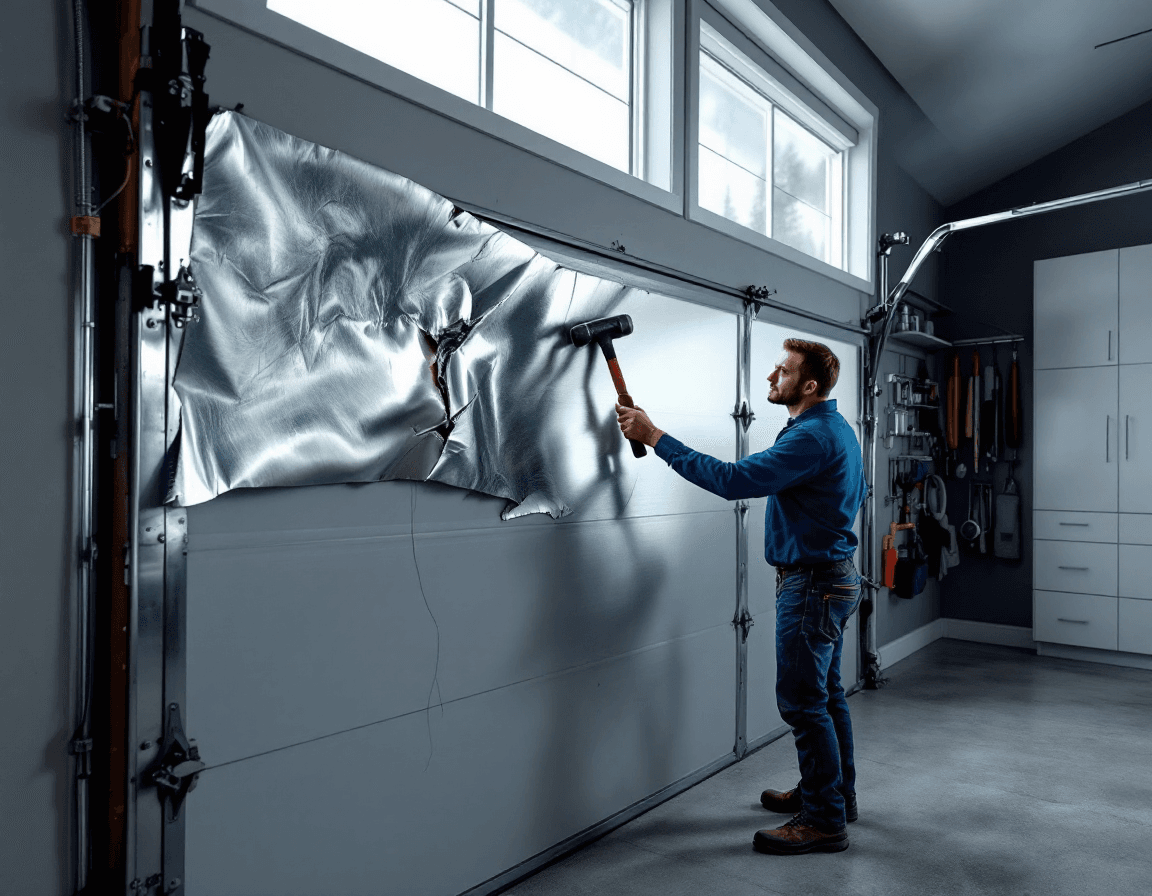
Garage door panel replacement in Burien, WA is one of the most cost-effective ways to fix a door that still works well but looks worn, dented, or broken. A single damaged section can make an otherwise sound door look neglected, and it can let water, cold air, and pests into the garage. Our technicians work across Burien and the surrounding King County neighborhoods, and we see the same pattern repeatedly: a homeowner assumes the whole door needs replacing when only one or two panels are actually compromised. Knowing what is wrong and what can be swapped out saves money and keeps a perfectly functional door in service.
This page explains how we assess damaged panels, when a section can be replaced instead of the entire door, what affects pricing, and how we match new panels to aging hardware and finishes. It also covers the particular challenges Burien homes face, from wet winters and salt air near the water to the impacts that happen when a busy driveway meets a tight turnaround. If you are looking at a dent, a crack, or a stain spreading along the bottom of your door, the information below should help you decide what to do next. For any question about your specific door, a licensed technician can inspect it in person and give you a straight answer.
Reading the Damage: What a Dent or Crack Actually Tells You
Not every dent is equal, and the location and shape of the damage often reveal more than the dent itself. A shallow crease across the middle of a steel panel may only affect appearance, while a crack that starts at a hinge line or a roller track can indicate that the panel is under stress from something else. Sections that have been struck near the bottom often carry the impact into the bottom seal and the track alignment, so a quick look at the panel alone is never enough. We check whether the damage has gone through the outer skin, whether the insulation core is exposed, and whether the edges still sit flush with neighboring sections.
Homeowners in Burien often notice damage after a windy night or after a delivery truck has squeezed past a parked car. In many cases the dent is accompanied by a slightly sticky roll or a gap that did not exist before. Those signs suggest the panel has shifted in its channel, and that shift can cause the door to bind when it opens. Pay attention to any new scraping sound, because it may point to a panel edge catching on a track or a roller working harder than normal.
Before calling for service, take a few clear photos from inside and outside the garage, including one shot showing the full door width. Note whether the damage is on the exterior face, the interior face, or both. Those details help a technician estimate how many sections need attention and which replacement parts to bring on the first visit.
Why Burien Doors Face a Special Kind of Wear
Burien sits in the Puget Sound lowlands, where winters bring long stretches of rain, cool damp air, and very little drying sun. Garage doors here rarely suffer from one dramatic event; instead, they absorb moisture over many months. Steel and wood panels that trap water along their lower edges can begin to swell, warp, or corrode well before the top sections show any problem. Vinyl and composite sections handle moisture better, but they can still crack when trapped water freezes during the occasional cold snap that moves through the region.
The neighborhoods around Olde Burien have many older homes, and some of those garages were built when door designs were simpler and sealing details were less refined. A door that has been in place for two or three decades may have seals that have hardened and no longer shed water. Over time, that moisture finds its way to the bottom panel, where it can soften the core material or rust through the metal skin. Replacing that bottom section before the damage spreads often prevents a larger repair later.
Burien garages also see a steady mix of traffic: family cars, work trucks, and the occasional boat or trailer being loaded in a narrow driveway. Those daily movements add up. A door that rubs against a bumper, a tow hitch, or a stacked bin of recycling will eventually show the marks, and the panel nearest the impact point usually absorbs the damage first.
Shoreline Air and Corrosion Near Three Tree Point
Homes near Three Tree Point and other shoreline pockets of Burien face an extra challenge: salt-laden air carried in from Puget Sound. Salt particles settle on exterior surfaces and attach to metal, where they accelerate corrosion, especially along seams, hinge hardware, and any scratch that has broken through the paint or galvanized coating. A door that appears clean from a few feet away can show surface rust on the lower panels when examined closely. We recommend a close look at the bottom two sections twice a year, particularly after a windy stretch when spray and moisture linger.
Corrosion does not always appear as an orange patch. Sometimes you will see a faint bloom of white or gray powder along the edge of a panel, or a line of bubbling paint that lifts when pressed. Those are early warning signs that the metal underneath is breaking down. Replacing a corroded section promptly is usually far less costly than letting the rust work its way into the reinforcing ribs of the door.
Coastal exposure also affects replacement choices. Galvanized steel with a quality paint system holds up well in most Burien conditions, while low-grade finishes can fail within a few years. When we recommend a replacement panel for a shoreline property, we weigh the finish and coating as carefully as the thickness and insulation rating.
When a Single Section Is Enough and When It Is Not
Repair-versus-replace decisions depend on the condition of the surrounding panels, the age of the door, and the availability of matching parts. If the damage is limited to one or two sections and the rest of the door is square, level, and sealed, replacing those sections is almost always the sensible choice. The cost is contained, the door keeps its existing tracks and springs, and the finished result blends with the rest of the house.
Replacement stops making sense when several sections are damaged, when the frame itself is bent, or when the door has reached the point where repairs would be repeated every few years. A door with rusted hinges, worn rollers, and a warped top section may be a better candidate for full replacement, especially if the opener is also aging. We will tell you plainly when a section swap is a good investment and when money is better directed toward a new door.
Here are a few factors we weigh when giving repair-versus-replace advice:
- The number of damaged sections and whether they sit next to each other or are spread across the door
- The age of the door and whether the panel style is still manufactured
- The condition of the frame, tracks, and bottom seal, which affect how the new section will perform
- Whether the springs and cables have been serviced recently, since replacing panels does not address hardware wear
- The overall cost of a section replacement compared with the price of a new door in the same style
Matching Old Panels With Fading Finishes and Discontinued Styles
One of the most common questions we hear is whether a new panel will match the rest of the door. The honest answer is that a perfect match depends on how long the original door has been exposed to sun, weather, and salt. Paint and factory finishes fade at different rates, and a panel that was fresh in one season can look noticeably different after ten years of Pacific Northwest weather. We compare the existing door under the same light before deciding on a finish.
Some older door styles have been discontinued, which makes matching more involved. In those cases we look at panel profile, groove spacing, window placement if applicable, and color family. Sometimes the closest match is a slightly different style that still integrates well with the door's overall lines. We always explain the tradeoffs before ordering so you know what to expect when the new section arrives.
Homeowners who want a seamless look sometimes ask about repainting the whole door. That can work for certain steel doors, but it adds cost and time, and it does not fix structural damage. We can discuss whether refinishing the adjacent sections makes sense as part of the project.
Inside the Replacement Visit: How a Panel Swap Usually Goes
A typical section replacement begins with a full inspection of the door, opener, springs, cables, and tracks. We confirm that the door is balanced and that the rollers and hinges are in good shape before removing any panel. Our technicians then secure the door so it cannot move unexpectedly, and they use the correct tools to detach the hinges and rollers connected to the damaged section. Because springs and cables store significant tension, that work requires training, and it should never be attempted by a homeowner.
Once the damaged panel is free, the new section is fitted, hinged, and aligned with its neighbors. The technician checks that the joints sit flush, the weatherstripping seals properly, and the door travels smoothly along its tracks. Finally, we test the door through several full cycles and confirm that the opener reverses correctly if it encounters an obstruction. A well-executed panel swap should leave the door looking and operating as if nothing had happened.
Some replacements require the door to be partially disassembled to reach a damaged bottom section. Those projects take longer, and they are a good reason to schedule the visit during daylight hours when the technician has full access to the work area.
Understanding the Price Range for a Single Section
Panel replacement is usually priced per section, with a typical range of $250 to $800 depending on the door. Several factors drive where a particular job falls in that range. The material and insulation rating of the panel matter, as do the width and design of the section, and whether it is a standard panel or a window or decorative insert. Matching a discontinued style or a specialty finish can push the price toward the upper end because the parts may need to be sourced separately.
Labor complexity also influences cost. A simple top or middle section on a standard steel door can be swapped quickly, while a damaged bottom section on a heavy wood or custom door takes more time and care. Access matters too. A garage that is packed with storage or a door that is difficult to reach may add time to the visit. Our estimates reflect those variables, and we explain the price before any work begins.
We cannot give an exact figure without seeing the door, because every installation has its own details. What we can say is that a repair confined to one or two sections is often far more affordable than a full door replacement, which is why we start with a thorough inspection before recommending any larger project.
Backing Accidents, Bumps, and the Single-Panel Problem
A backing accident is one of the most common causes of single-panel damage we encounter in Burien. A car reversing too quickly, a delivery van clipping the edge of the driveway, or a child's bicycle thrown against the door can leave a dent that seems minor at first. Over time, that dent may stress the joint on either side of the panel, causing rattling, a crooked gap, or a seal that no longer closes evenly. Addressing the damage early keeps the rest of the door from being pulled out of alignment.
After an impact, check the door's movement carefully. Open and close it slowly, watching for places where the panel edges do not line up, and listen for new grinding noises. If the door stops or reverses unexpectedly, do not force it; call a technician instead. Damage near the track or roller line can create hazards, and a damaged opener safety sensor should be inspected before the door is used again.
Insurance claims for vehicle or property damage sometimes cover garage door repairs, depending on the policy and circumstances. We can provide documentation of the work performed, but we recommend contacting your insurer before scheduling so you understand what information they will require.
Bottom Sections, Water Lines, and Rot Near the Threshold
The bottom section of a garage door takes more abuse than any other part. It is closest to the ground, it meets the threshold where water pools, and it often bears the brunt of salt spray, mud, and pressure from snow shoveling or runoff. Water lines on the lower panels are a sign that moisture is working its way into the door. Staining, softening, or a musty smell near the bottom edge can indicate that the core material is deteriorating.
Rot is a particular concern on wood and wood-composite doors common in older Burien homes. A panel that feels soft when pressed or shows a dark, spongy patch has likely absorbed water for an extended period. Replacing the bottom section and checking the door's bottom seal, threshold, and drainage path can stop the problem from spreading upward. Ignoring it often leads to damage to the bottom rail and the lift hardware.
Preventing water-related damage starts with a good bottom seal and clear drainage outside the garage. Keep the threshold free of debris, and check that the seal compresses evenly when the door closes. These small steps reduce the chance that a bottom panel will need replacement in the first place.
Keeping Replacement Panels Looking Right for the Long Haul
Once a new section is installed, a little attention helps it age alongside the rest of the door. Rinse the exterior of the door periodically during dry spells to remove salt and grime, especially on homes near the water. Inspect the paint and coating once or twice a year, and touch up small scratches before they expose bare metal. Keep vegetation trimmed so branches and damp leaves do not hold moisture against the lower panels.
Lubricate hinges, rollers, and tracks as recommended for your door type, but avoid spraying lubricant onto the panels themselves. Check the weatherstripping and bottom seal for cracks or flattening, since a failing seal lets water reach the new section. If you notice a new dent, crack, or gap, schedule an inspection while the problem is still limited to one area.
Spring and cable systems deserve special mention. Springs are under extreme tension and can cause serious injury if they are adjusted or replaced improperly. Always call a licensed professional for spring, cable, or drum work, even if the problem appears to be only a panel issue. Our technicians can inspect the entire system during a panel visit and tell you whether any hardware needs attention.
If you are dealing with a dented, cracked, rusted, or mismatched panel in Burien or nearby ZIP codes including 98146, 98148, 98166, and 98168, our team can inspect the door, explain your options, and give you a clear estimate before any work begins. Call Seattle Garage Door Fix at (888) 799-3819 to schedule a visit and find out whether a single-section replacement is the right fix for your home.