
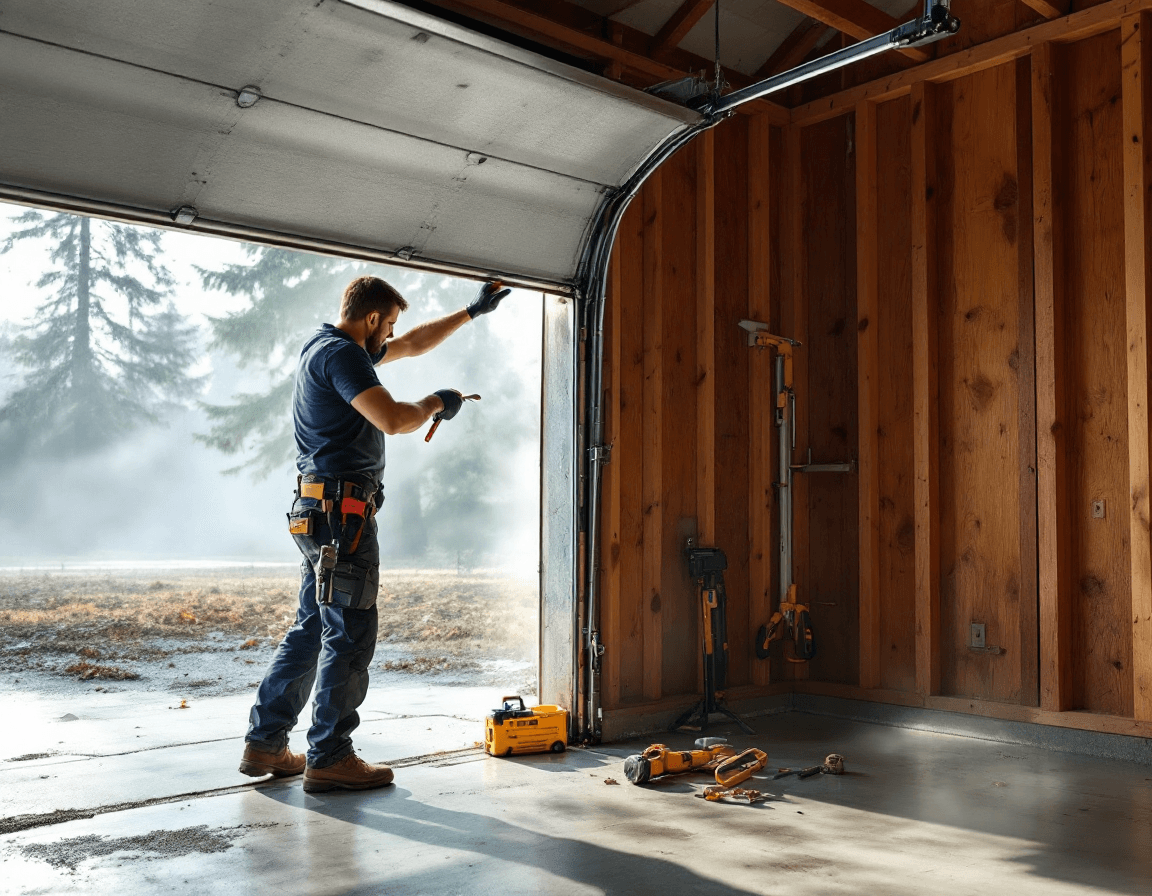
Off-track garage door repair in Burien, WA is one of the more common calls we handle, and it often starts with a sound that's hard to ignore: a sharp bang, a grinding noise, or a door that suddenly sits at an angle. When a door leaves its track, the panels can wedge against the frame, the rollers can pop loose, and the opener may strain against a door that no longer moves freely. Most homeowners want to know two things right away: whether the door is safe to operate, and what a fix will cost. For most off-track repairs in our service area, the typical range is $125 to $400, depending on what's bent, what's loose, and how much labor is involved.
This page is written for homeowners in Burien and the surrounding King County neighborhoods, including addresses within ZIP codes 98146, 98148, 98166, and 98168. We work on everything from older single-car doors in the blocks near Olde Burien to newer insulated doors in the quieter developments on the hill. The advice here comes from the kind of day-to-day work our technicians see across the area, and it's meant to help you understand what happened, decide what to do next, and recognize when a job needs a licensed professional's hands on it.
Seattle Garage Door Fix is licensed, bonded, and insured, and we take a conservative approach to any door that has come off its track. A door that's partly off its track can shift without warning, and the tension stored in its springs and cables can be dangerous to anyone standing nearby. The sections below explain what off-track problems look like, why they happen so often in our climate, and how we approach the realignment process from start to finish.
What a Derailed Door Looks Like in a Burien Driveway
The first sign of trouble is often visual. One side of the door may sit noticeably lower than the other, or the top panel may appear to lean away from the header. Some homeowners notice a gap between the top or side edge of the door and the metal track, with light or daylight showing where the door should be snug. In other cases, the door looks perfectly straight from the street but refuses to close all the way, stopping a few inches short of the floor.
Sounds tell a story too. A rhythmic clicking or scraping as the door travels usually means a roller is riding on the wrong surface or the track has a small bend. A loud pop followed by a sudden stop often means a roller or a whole section has jumped out of its channel. When the opener motor hums but the door barely budges, the door may be jammed in the track rather than simply out of alignment, and continuing to run the opener can damage the motor and the operator's gear.
Many of our Burien calls involve a door that worked fine the day before and then failed overnight. That pattern usually points to a roller that finally gave way after months of minor wear, or a track bracket that loosened enough to let the door drift sideways. Recognizing these early signs gives you more options, because a door caught before it jams fully is typically simpler and less expensive to correct.
Why Our Damp, Salty Air Puts Extra Strain on Tracks
Western Washington's mild, wet climate is easy on lawns and hard on moving metal. Long stretches of drizzle and humidity encourage corrosion on track sections, hinge pins, and roller bearings, especially on doors that sit close to the ground where splashed water collects. Over several seasons, that moisture can stiffen rollers, roughen the inside of the track, and make a door that once glided feel sticky or uneven.
Homes closer to the shoreline, including parts of the Three Tree Point area, face an added factor. Salt-laden air accelerates oxidation on exposed steel, and garage doors near the water often show flaking paint, rust bloom at track joints, and bracket bolts that loosen more quickly than they do further inland. We recommend that homeowners in these neighborhoods look at their hardware more often than the general advice suggests.
Freeze-thaw cycles are less severe here than in colder regions, but they still happen during the occasional hard cold snap. Moisture that gets into a roller bearing or a track seam can freeze, expand, and push a section of track slightly out of line. The result may not be visible at first, but the door will begin to rub or bind when it's raised or lowered. Because these changes are gradual, many homeowners don't connect them to the eventual derailment until the door is already off the track.
A Practical Checklist Before You Pick Up the Phone
Before scheduling service, a few simple observations can help you describe the problem accurately and avoid unnecessary risk. Our technicians appreciate it when customers can share these details, because they help us arrive prepared with the right parts and tools. Please keep in mind that the checks below are for observation only, and none of them involve touching springs, cables, or the tension system.
- Note whether the door is off one track or both, and whether the damage is at the top, middle, or bottom of the track.
- Look for rollers that are visibly out of their channels, cracked, or flattened on one side.
- Check for gaps larger than a finger's width between the door edge and the track, especially near the top corners.
- Watch the door travel slowly with the opener turned off and the door manually disconnected only if your model allows that without any tension work, and stop immediately if it binds.
- Look for dents, kinks, or sections of track that appear separated from the mounting brackets.
- Photograph the problem from inside and outside the garage, since photos help technicians assess the situation before arriving.
If the door has come off completely, if a vehicle has struck it, or if you see any sign that a spring or cable has snapped, keep everyone away from the door and do not attempt to lift it by hand. Those situations call for prompt professional attention.
Rollers, Hinges, and How a Derailment Actually Happens
Understanding how the parts work together makes it easier to see why off-track problems develop. Each section of a sectional door rides on rollers that fit inside a steel track. Hinges connect the panels, and the rollers are attached to hinge brackets at the panel edges. As the door travels, the rollers guide the panels through the curve from vertical to horizontal, and the track keeps everything aligned.
A derailment happens when one or more of those rollers leaves the track channel. This can occur because a roller stem has worn or broken, a roller has cracked and lost its shape, or the track has been pushed out of position enough that the roller no longer has a clear path. Once a roller is out, the adjacent panel can tilt, which puts sideways force on the next roller and sometimes pulls it out too. That chain reaction is why one small roller failure can end with the entire door sitting crooked.
Rollers themselves are inexpensive parts, and replacing them is often a straightforward task for a trained technician. The labor is usually the larger share of the bill, particularly when several rollers have been damaged or when the technician needs to lift the door safely to get at them. Because the door's weight and spring tension are involved in that process, the job is best handled by someone with the training and equipment to do it without putting anyone at risk.
Straightening Bent Track Without Making Things Worse
Track damage is a common result of a vehicle bumping into the door, a child or pet pulling on a lower panel, or a heavy object leaning against the track during a move. Even a modest bend can throw off the entire door, because the rollers must pass through every section of track in sequence. A dent that looks cosmetic may be enough to make the door bind halfway up.
When we straighten a track, the goal is to restore the original channel shape and reconnect the track to its brackets so that the door runs parallel to the header and jambs. Light dents can often be worked back into shape with careful, measured adjustment. More severe bends may require replacing a track section entirely, particularly if the metal has cracked at a joint or if the bracket holes have elongated.
Homeowners sometimes try to hammer a bent track back into place with a mallet or a pry bar. We discourage that approach, because it can crack the steel, distort the channel further, or introduce sharp edges that tear rollers and weather seals. A short visit from a technician usually gets the track back to specification faster and with less risk to the rest of the door.
Why Cable and Spring Work Belongs to Licensed Technicians
Every sectional garage door depends on a counterbalance system, usually torsion springs mounted on a shaft above the opening or extension springs running along the tracks, along with lift cables that carry the load. These components store a large amount of energy. When a spring or cable is under tension, it can cause serious injury if it's released unexpectedly, and that risk doesn't disappear just because the door is off its track.
Off-track situations sometimes involve cables that have slipped off their drums, springs that have loosened on their mounting, or doors that have dropped unevenly because one side has lost tension. Any of those conditions calls for licensed professionals who know how to relieve or balance spring tension safely. Our technicians use specialized tools and follow a set sequence for every spring and cable operation, and they will never ask a customer to attempt those steps.
If you suspect a spring or cable is involved, please do not try to wind springs, adjust cable drums, or pry a door up by hand. Keep children and pets away from the door, avoid standing under it, and call for licensed service. We'd much rather hear from a worried homeowner who called early than receive a call after an injury.
What Influences the $125 to $400 Price Range
Most off-track repairs in our service area fall between $125 and $400, but the final number depends on several factors. A single roller that has popped out with no other damage is generally at the lower end, while a door with bent track sections, multiple damaged rollers, and a loosened bracket will land higher. Access matters as well, since a door with a damaged opener mounting or an obstructed track may take more time to correct.
Other considerations include the door's construction and age. Insulated steel doors, wood carriage-style doors, and older tracks that are no longer manufactured in common sizes may require different parts or additional fitting. Some doors also have heavier panels, which make controlled lifting and repositioning more involved. None of this makes the price unpredictable, but it does mean every estimate should reflect the specific door in front of the technician.
We provide an explanation of the work and the parts involved before beginning any repair, so you know what you're paying for. If the problem turns out to require additional components such as a spring replacement or a full track section, our technician will explain the reasons and the options before proceeding. You should never feel pressured into work you didn't expect or want.
Keeping Your Door Tracking True Through Wet Winters
Preventive care won't stop every derailment, but it can reduce the odds considerably. Many homeowners in Burien find that a simple seasonal routine catches small problems before they turn into emergencies. Start by wiping the inside of the track with a dry cloth to remove grit and debris, and then check that the track bolts and bracket fasteners are snug without overtightening them.
Lubrication also matters. Use a silicone-based or garage-door-specific lubricant on the rollers, hinges, and bearings, and avoid heavy grease, which attracts dirt and can gum up the rollers over time. In our damp climate, a light application once or twice a year is usually enough, and wiping away excess is just as important as applying it. Keep the lubricant off the weatherstripping and the track surface itself, since that can cause slipping.
Finally, pay attention to the area around the door. Keep the driveway and threshold clear of gravel and leaf litter that can get kicked into the track, and trim shrubs that scrape or stain the panels. If a vehicle or delivery cart has come close to the door, inspect the bottom panels and track after the incident, even if the damage looks minor. Early attention is almost always cheaper than waiting for the door to fail on a cold morning.
Neighborhood Notes from Olde Burien, Three Tree Point, and Gregory Heights
Our technicians spend a lot of time in Burien's older residential areas, and each neighborhood has its own character. Homes around Olde Burien often have single-car garages with doors that have seen decades of use, which means older hardware, aging brackets, and track systems that may need careful matching when parts are replaced. Our crews bring a range of components to these jobs, but the most reliable repairs begin with a close look at what's already installed.
In the Three Tree Point area, shoreline exposure is the dominant factor. Garage doors facing the water or sitting near the bluff tend to show corrosion sooner, and track brackets can loosen as the surrounding structure shifts with soil and moisture. We often recommend a thorough hardware check for homes in this part of town, particularly after a windy winter season when doors may have experienced unusual stress.
Gregory Heights includes a mix of home styles and garage configurations, and many doors in the area have been upgraded over the years with insulated panels and newer openers. Mixed-age installations can create small alignment challenges, because a newer opener may apply force differently than an older one. Whatever the neighborhood, the most useful thing a homeowner can do is describe the symptoms clearly, so the technician arrives ready to address the actual cause.
Scheduling Off-Track Repair Across Burien and Nearby ZIP Codes
Seattle Garage Door Fix serves Burien and more than 60 cities across the greater Seattle and Western Washington area, including homes within ZIP codes 98146, 98148, 98166, and 98168. We schedule service around the realities of local traffic and weather, and we'll give you a clear window for arrival so you can plan around work, school pickups, or other obligations. Because off-track doors are often urgent, we prioritize calls where the door is jammed, partially open, or unsafe to operate.
When you call, have your address, the door size if you know it, the make of the opener if it's visible, and a short description of what you've observed. If you've taken photos, be ready to share them. Those details help our team estimate the likely scope of the repair and bring the right parts on the first visit, which is often the difference between a single appointment and a return trip.
Our technicians are licensed, bonded, and insured, and every repair involving springs or cables follows safety procedures designed to protect your household. We'll walk you through what we found, explain the options, and provide the price before work begins. If your door has come off its track, the best next step is to stop operating it and reach out to us.
For prompt help with an off-track garage door in Burien, call Seattle Garage Door Fix at (888) 799-3819. Our licensed technicians can assess the problem, explain your options, and get your door running straight and safely again.