
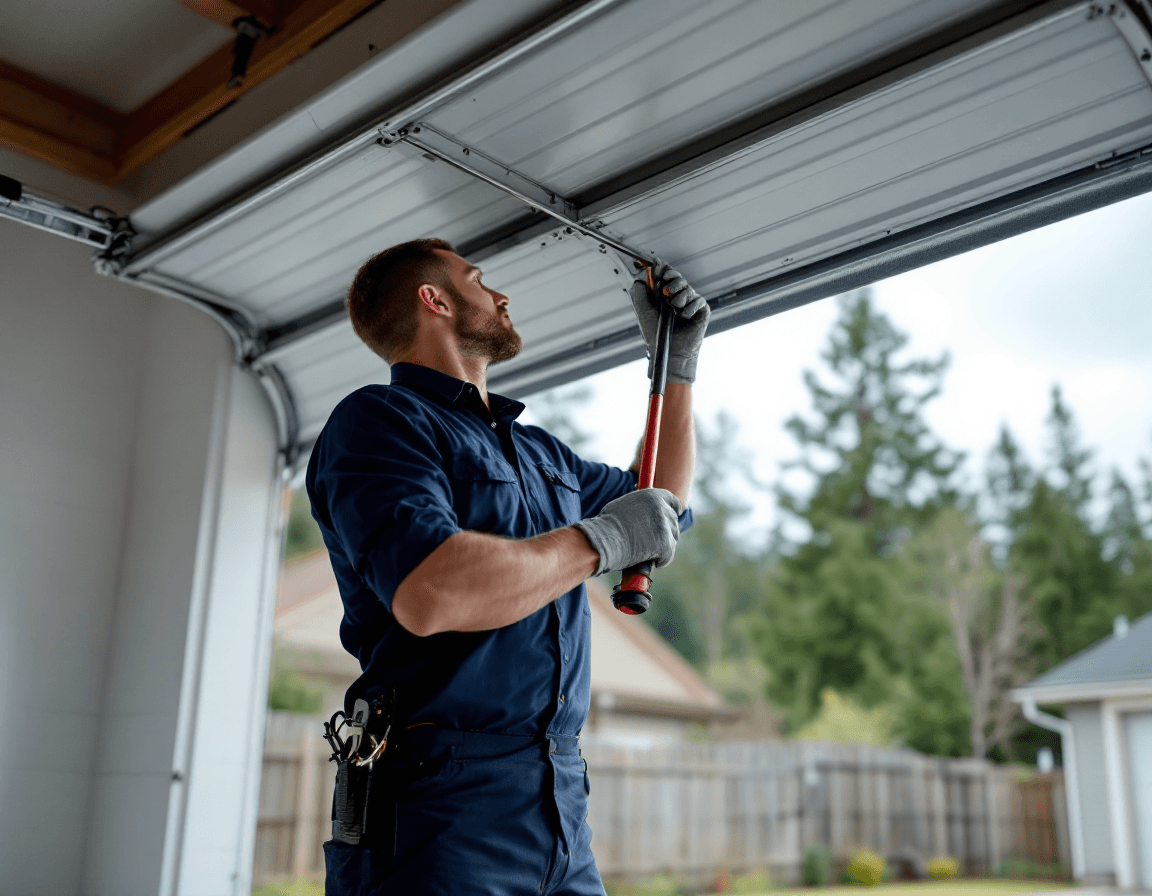
Garage door spring replacement in Burien, WA is one of the most common repairs we handle, and it is also one of the most dangerous to attempt yourself. The springs carry most of the weight of your door, often more than 150 pounds on a standard two-car door, so when one fails the door can go from perfectly balanced to suddenly heavy or unpredictable in a fraction of a second. Homeowners from Olde Burien to the blocks near Gregory Heights often notice the problem first as a strange noise or a door that simply refuses to lift, and they want to know whether a quick fix exists. For a broken spring, the honest answer is no, but understanding what is happening will help you make a safer, better decision.
Our team serves Burien and the surrounding King County neighborhoods, including homes in the 98146, 98148, 98166, and 98168 ZIP codes, along with the shoreline stretch near Three Tree Point. We work on residential doors of nearly every make and size, and we see the same few failure patterns repeatedly. This page explains how to recognize a failing or broken spring, why local weather plays a role, what a professional replacement involves, and what you can reasonably expect to pay. Price ranges here reflect what most spring replacements cost, but every door is different, so a technician should always confirm the scope on site.
Nothing in this guide is meant to encourage you to climb a ladder with a winding bar or to pull on a loose cable. Springs store enormous energy, and that energy can cause serious injury even when the door looks still. Use this information to diagnose what you are hearing and seeing, then call a licensed, insured technician to make the repair.
The Bang That Usually Means a Spring Has Let Go
Most homeowners remember the sound. A sharp crack or a loud bang echoes through the garage, sometimes loud enough to rattle the windows in the house, and then the door sits lower or looks slightly off. That noise is typically a torsion spring breaking along its coil, which releases stored tension all at once. Extension springs can also snap, though they tend to make a sharper, more metallic sound as the coil stretches past its limit.
After a spring break, the symptoms often show up in a predictable pattern. The door may still close, but it will feel heavy when you lift it by hand, or it may refuse to rise at all. Many people notice that the opener motor labors, clicks, or hums without moving the door. These are all signs that the balance system has lost its counterweight, and the door is now relying on the opener and the remaining hardware in ways it was never designed to handle.
If you suspect a break, keep the door closed if it is already closed, and avoid running the opener repeatedly. Keep children and pets out of the garage until a technician has inspected the system. Do not attempt to lift the door manually to test it. Instead, note the time of the noise and any changes you observed, because that information helps a technician identify which component failed first.
- A single loud bang followed by a door that is suddenly heavy or stuck
- The door hanging lower on one side than the other after the noise
- An opener that hums or clicks but does not raise the door
- A door that rises a few inches and then stops or drifts back down
Why Burien Garages Tend to Wear Springs Differently
The Pacific Northwest climate is kind to lawns and hard on metal. Burien sits in a region with long, damp stretches during fall and winter, frequent drizzle, and humidity that rarely drops far in the cooler months. Those conditions encourage surface rust on torsion springs, especially on older doors where the galvanizing has thinned or where the garage door was installed without much ventilation. A spring that is slightly corroded on the outside can lose strength and fatigue faster than one in a dry climate.
Proximity to Puget Sound adds another factor for homes near the shoreline and the Three Tree Point area. Salt-laden air settles on exposed hardware, including springs, drums, and hinges, and it accelerates corrosion when moisture stays in contact with the metal. Garages that open toward the water or sit in a breezy spot can collect a fine residue that is easy to miss during a casual glance. Over several years, that residue can weaken the coil and make the eventual break more abrupt.
Temperature swings also matter. Seattle-area winters are usually mild compared with much of the country, but the spread between a cold morning and a warm afternoon can still cause metal to expand and contract. Repeated cycling is part of why springs wear out, and the cumulative number of door cycles over the life of a spring is what determines when it fails. A household that uses its garage as the main entry, or that leaves a car idling inside in the morning, may reach that cycle count sooner than a household that rarely opens the door.
Telling Torsion Springs From Extension Springs
Before you schedule service, it helps to know which type of spring your door uses, because the replacement process and the safety precautions differ. Torsion springs mount on a steel shaft above the door opening, usually directly above the closed position. They twist to store energy and are wound with special tools. Extension springs run along the horizontal tracks on either side of the door and stretch as the door opens. Many older residential doors use extension springs, while many newer doors use torsion systems.
Look above the door for a long steel tube, which is the torsion shaft, and check for one or two cone-shaped bearing plates at the ends. If you see a coil wrapped around that tube, you have a torsion spring. If the coils run along the horizontal track and connect to a pulley at the rear of the track, you have extension springs with safety cables running through the center. Do not attempt to determine this by touching the springs under tension.
Some doors combine features or have been modified over the years, which is why a professional inspection is valuable. A technician can identify the spring type, the wire size, the cycle rating, and the door weight before recommending a replacement. Matching those specifications correctly is essential, because a spring that is too light will strain the opener and a spring that is too heavy will make the door dangerous to operate.
Reading the Coil for a Gap, a Stretch, or a Rust Band
Torsion springs often give visible clues before they fail completely. The most obvious sign is a visible gap between coils, where the spring has partially separated and the coils no longer sit tight against each other. Other warning signs include a reddish-brown rust band along the coil, uneven spacing, or a coil that appears to have shifted on the shaft. If you notice any of these, take a clear photograph from a safe distance and send it to your technician when you call, since photos help us prepare the right parts before arriving.
Extension springs show wear differently. They may appear stretched, with coils spaced farther apart than they were originally, or they may have a dull, flaking finish that indicates corrosion. Pay attention to the safety cable running through the spring, which should be intact and tight. A frayed or kinked cable is a sign that something has already gone wrong, and it should be addressed during the same service visit.
Please avoid touching or prodding any spring to test its strength. Even a spring that looks intact can hold dangerous tension, and a broken spring can still shift when disturbed. Simply observe from a safe distance, take a few photos with the door closed, and let a licensed technician handle the inspection.
When the Door Stops Halfway or Feels Impossibly Heavy
A common complaint in Burien is a door that rises a few inches, pauses, and then stops, as if it has hit an invisible wall. This behavior often indicates that one spring has broken while the other remains intact, leaving the door unbalanced. The opener tries to compensate, and the door may hesitate or refuse to continue because the load on each side is no longer equal. Some doors will bind in the tracks as they stop, which can strain rollers and hinges.
A door that feels extremely heavy when you lift it by hand, even when the opener seems to be working, often points to a spring that has lost tension. The door may still move, but the opener has to work much harder, which shortens the motor's life and can burn out the logic board. Repeated struggling also puts stress on the cables, drums, and bearing plates, so a single spring problem can cascade into several more repairs if left alone.
When you encounter any of these symptoms, shut off power to the opener if you can do so safely, usually by pulling the emergency release cord. Do not force the door open or closed. If the door is partly open, keep people and vehicles clear of the opening, since a partially raised door can drop unexpectedly if a component gives way.
Opener Strain and the Mistake of Blaming the Motor
Many homeowners assume the opener is failing when they hear humming, grinding, or clicking. While openers do wear out, a strained motor is frequently a symptom of a spring problem rather than the root cause. When springs lose tension, the opener must lift the full weight of the door, and it can overheat or trip its internal safety features. Replacing the opener without fixing the spring means the new unit will face the same overload.
A useful test is to disconnect the opener and lift the door manually only after confirming the door is fully closed and the springs are intact. If the door feels extremely heavy or drops suddenly, the spring system is the likely culprit. If the door moves smoothly, the issue may lie with the opener, track alignment, or the wiring. A technician can perform this comparison safely as part of a diagnostic visit.
Because spring problems and opener problems can look alike, it is smart to have both checked at once. We typically confirm spring tension, inspect the cables and drums, test the safety reversal sensors, and verify that the opener's force settings match the balanced door. That broader view prevents you from paying twice for the same underlying issue.
Cables, Drums, and Why a Loose Cable Is Never a Quick Fix
After a spring breaks, the cables attached to the bottom bracket and the drums may come loose, slip off the drum grooves, or fray from the sudden load change. Homeowners sometimes try to reseat a cable themselves, but this is one of the most hazardous garage door tasks. Cables are under tension, and the drums can rotate unexpectedly when they are not properly restrained. A technician needs to secure the door, release residual tension, and reset the cable with the correct winding pattern.
Drums also deserve attention because they are part of the same load path as the spring. A cracked, worn, or misaligned drum can cause the cable to bind or jump off, which may create a repeated problem even after the spring is replaced. Shafts, bearing plates, and center brackets should be inspected for bending or wear, especially if the door took a hard drop when the spring failed. Replacing the spring without checking these parts can leave the new spring working against a compromised system.
If a cable has come loose and you are tempted to fix it yourself, do not. Keep the door closed, disconnect power to the opener, and call a professional. Once the new spring is installed and balanced, the cables and drums can be set to the correct tension so that the door travels smoothly and evenly.
What a Professional Spring Visit in Burien Typically Includes
A proper spring replacement is more than swapping one coil for another. A technician will usually begin by confirming the spring type, measuring the door, and checking the existing hardware. They will then secure the door using clamps or locking pliers, release the remaining tension in a controlled manner, and remove the broken components. Only after the door is safely restrained do they install the new springs with the correct winding procedure.
Once the springs are in place, the technician tests the door's balance. A balanced door should stay in place when lifted partway, without drifting up or down, and it should move smoothly through its full range. The technician will also check the track alignment, roller condition, hinges, and bottom seal, since these components affect how the door carries its load. Safety reversal sensors and the opener's force settings should be verified as part of the final test.
Ask your technician to walk you through the work and explain any additional parts they recommend. A reputable company will show you the old spring, describe its condition, and explain why the replacement is needed. You should feel comfortable asking questions about warranty coverage, cycle ratings, and what maintenance will help the new system last.
High-Cycle Springs and Balance Adjustments Worth Discussing
Not every spring is the same. Standard springs are rated for a certain number of cycles, and many households that use their garage daily will benefit from high-cycle options. These springs are manufactured with materials and wire sizes designed to handle more opening and closing before fatigue sets in. The additional cost is often worthwhile for families with frequent traffic, home offices in the garage, or multiple drivers.
Balance is equally important. Even a new spring can make a door feel off if the tension is not matched to the door's weight, insulation, hardware, and any added accessories such as heavier windows or upgraded hardware. A precise balancing process adjusts the spring tension so the door performs as designed and places less strain on the opener. This step is especially useful for insulated doors in Burien homes, where added panels can change the weight distribution.
When you receive a quote, ask whether it includes a high-cycle upgrade and whether the technician will perform a full balance test after installation. These are reasonable questions, and the answers will help you compare offers on equal terms.
What the $180 to $450 Range Usually Covers
For most residential spring replacements, the typical price falls between $180 and $450. The exact cost depends on the spring type, the door size, the cycle rating, and the amount of additional work required. A single torsion spring on a standard door usually costs less than a full pair with higher cycle ratings, while doors with extension springs or unusual dimensions may require more time and parts.
Other factors can affect the final number. If the cables, drums, bearing plates, or center brackets are damaged, those parts may add to the total. If the opener needs adjustment or the safety sensors require realignment, the technician may include that work in the visit. A transparent quote should explain each line item and separate required repairs from optional upgrades.
Be cautious of any estimate that promises a dramatically lower price without inspecting the system. Springs must be matched to the door's weight and cycle needs, and a cheap, mismatched spring can cause repeated failures. Paying for a correctly sized, properly balanced replacement is generally the more economical choice over the long run.
Keeping New Springs Healthy Through Wet Burien Seasons
Once your springs are replaced, a few simple habits can extend their life. Wipe down the torsion coils and shaft with a dry cloth periodically to remove dust and salt residue, especially if your garage is near the water. Apply a light lubricant recommended by your technician to the springs and bearings, but avoid over-greasing, since excess lubricant can attract grit. Keep an eye on the door's movement through the seasons, since cold, damp mornings can reveal stiffness that warm afternoons hide.
Ventilation helps as well. A garage that stays damp for long periods encourages rust on hardware, so make sure weatherstripping is intact and that the garage is not trapping condensation after hosing off vehicles or equipment. Replacing a worn bottom seal can reduce moisture entering the space, which protects both the springs and the opener.
Finally, schedule periodic inspections. A technician can spot early signs of corrosion, cable fraying, or uneven balance before they turn into a breakdown. Preventive service costs far less than an emergency call on a cold weekday morning.
Your garage door is one of the heaviest moving objects in your home, and its springs deserve respect. If you hear a bang, notice a gap in the coil, or find your door stalling, stop operating it and call the professionals. Seattle Garage Door Fix provides licensed, bonded, and insured spring replacement for Burien and surrounding King County neighborhoods, with clear pricing and careful balancing. Call (888) 799-3819 today to schedule your inspection and get your door moving safely again.