
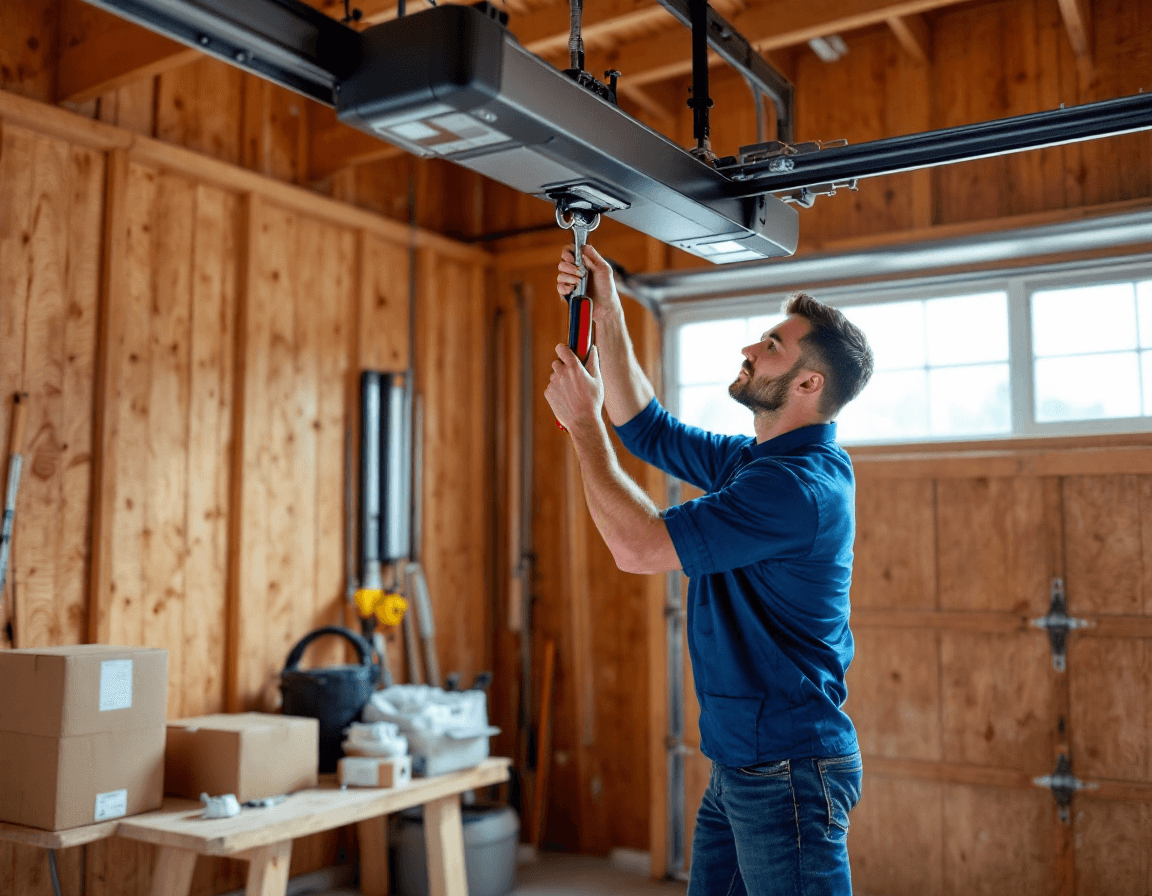
Garage door opener installation and replacement in Burien, WA is one of the most practical upgrades a homeowner can make, especially if your current unit is loud, sluggish, or simply stops responding on a damp morning. Burien sits in the south end of King County, where wet winters, salt-laden coastal air near the Sound, and steady traffic noise from the Sea-Tac corridor all put extra demands on hardware. A modern opener can make a noticeable difference in how your garage feels to live with every day. This page explains what to look for, how the options compare, and what to expect when a licensed technician comes out to do the work.
Our crews serve homes across Burien and nearby neighborhoods in ZIP codes 98146, 98148, 98166, and 98168, including the older blocks around Olde Burien, the waterfront-adjacent streets near Three Tree Point, and the family neighborhoods of Gregory Heights. Every area has its own mix of housing ages, garage styles, and electrical setups, so a good installation starts with a careful look at your specific door and opener rather than a one-size-fits-all swap. Whether you are replacing a unit that has served you for fifteen years or upgrading a builder-grade opener that never felt quite right, the goal is the same: reliable motion, solid security, and a unit that matches how you actually use your garage.
Reading the Warning Signs Your Opener Is Winding Down
Most openers do not fail in a single dramatic moment. They fade gradually, and homeowners often adjust without realizing how much the performance has slipped. The door takes a few extra seconds to start moving, the motor hums louder than it used to, or the light flickers during the travel cycle. Some units stop midway and reverse for no obvious reason, while others need a second press of the remote before they respond. These are signs of worn gears, a failing logic board, weakened capacitors, or a motor that has simply run through its service life.
Burien's climate adds its own wear pattern. Damp winter air encourages corrosion on exposed metal, and the constant moisture can work its way into wiring connections and sensor lenses over time. If your opener sits near a door that gets hit by rain blowing in off the Sound during windstorms, the sensors and receiver may become unreliable long before the motor itself gives out. Pay attention to whether problems appear more often after a stretch of wet weather, because that pattern points toward moisture and connection issues rather than a single component.
It helps to be honest about the age of the unit and the cost of ongoing fixes. If you have already replaced the remote batteries, realigned the photo-eyes, and paid for one board repair in the past two years, the math often favors replacement. A new opener brings updated safety features, a current motor design, and warranty coverage on the major parts, which can be more reassuring than another round of patch repairs on a unit that is nearing the end of its useful life.
Matching the Drive Type to Your Burien Garage
Choosing the right drive style is one of the most important decisions in the replacement process. The three common configurations each have different strengths, and the best fit depends on your door, your garage layout, and how much noise you can tolerate. Our technicians will measure your door weight, track configuration, headroom, and available ceiling space before recommending a specific model, because a drive that works beautifully in one garage can be a poor match in another.
- Belt-drive openers use a reinforced rubber belt instead of a metal chain, which keeps operation noticeably quieter. They suit attached garages where the opener is mounted near living space, and they tend to feel smoother during startup and stop.
- Chain-drive openers are the traditional, budget-friendly option. They are strong and durable, handle heavy doors well, and are often a good choice for detached garages or workshops where noise is less of a concern.
- Wall-mount openers attach to the side wall rather than the ceiling. They are useful when ceiling space is limited, such as in garages with a low-slung overhead storage rack or a ceiling-mounted heater that would otherwise interfere with a standard rail.
Belt-drive models are often the top choice for Burien homes with a bedroom or home office sharing a wall with the garage. Chain-drive units remain a sensible pick when you want strong lifting power at a lower price point. Wall-mount options solve a space problem rather than a sound problem, so they make the most sense when the ceiling simply cannot accommodate a rail.
Rolling-Code Security and Why Older Openers Fall Behind
Older openers often relied on fixed-code remotes, meaning the signal between remote and receiver stayed the same every time. That design is vulnerable because someone with a basic code-grabbing device could capture and reuse the signal. Modern openers use rolling-code technology, where each press generates a new code that the receiver recognizes but a thief cannot easily replay. If your opener was built before rolling codes became standard, upgrading is one of the simplest ways to close a real security gap.
Rolling-code security matters most for homes with street-facing garages, attached garages that connect to the main house, and properties where the garage door is the most likely point of entry. Burien neighborhoods vary in lot size and spacing, so a quick look at how your garage faces the street and whether it shares an entry with the kitchen or mudroom can help you decide how much this upgrade matters to you. Even if your neighborhood feels quiet, a fixed-code system is an outdated feature that few homeowners would choose on purpose today.
Security also depends on the rest of the system. A new opener with rolling codes should be paired with updated keypads, secured remotes, and a review of any automation rules you have set up. Our technicians will walk you through how to delete old remotes from memory after installation, which is a step many homeowners overlook when a previous owner or a former tenant still has access to the door.
Smart Wi-Fi Control, myQ, and Practical App Setup
Smart control has moved from a novelty to a genuinely useful feature. A Wi-Fi-enabled opener, including compatible myQ-style systems, lets you open and close the door from your phone, check whether it is closed when you are away, and receive alerts if it has been left open. For busy households in Burien, where school drop-offs, errands on the Ambaum corridor, and early airport runs can all stack up in the same morning, that visibility is a real convenience.
Setup works best when the opener sits within a reliable Wi-Fi signal. Garages are often the farthest point from the router, and a thick wall or a metal shelving unit can weaken the connection. Before installation, we check signal strength at the opener location and can recommend a mesh extender or a relocated access point if needed. A smart opener that drops offline every few days quickly becomes frustrating, so a few minutes of planning goes a long way.
Smart features also come with a few tradeoffs worth considering. Some homeowners prefer to keep certain functions local so the system does not depend on an internet connection for basic operation. Others want full remote access but set up notifications only for the door being left open. We will help you decide which features to turn on, how to share access with family members, and how to remove access for anyone who no longer needs it. Good security habits matter as much as good hardware.
Quieter Operation for Homes Near Flight Paths and Shared Walls
Noise is one of the most common reasons homeowners decide to replace an opener. A loud chain-drive unit can rattle through the framing and into adjacent rooms, which is especially noticeable in homes with a bedroom on the other side of the garage wall. Burien's proximity to Sea-Tac means that many residents already live with aircraft noise, and a garage door that adds a harsh mechanical sound on top of that can wear on the household, particularly early in the morning or late in the evening.
Belt-drive openers are the most effective choice for quieter operation. Their rubber belt reduces the metallic clatter that chain-drive units produce, and many models include soft-start and soft-stop functions that ease the door into motion rather than jolting it. Pairing a belt-drive opener with proper rail isolation and a balanced door can further reduce vibration. Our technicians also check the door's roller condition and hinge tension, because a noisy opener is sometimes blamed for problems that actually start with worn rollers or a door that is out of balance.
If your garage is attached and shares a wall with a living space, ask about isolation mounting and whether the ceiling bracket can be reinforced. Small changes in how the opener is anchored can reduce the sound that travels through the structure. The goal is not silence, since an opener always makes some noise, but a steady, muted operation that does not disrupt your evening or your neighbors on quiet blocks.
Battery Backup for Windy Winter Nights and Power Dips
Power outages are a fact of life in the Pacific Northwest, and windstorms that bring down lines during the wetter months are a familiar part of the season. When the power goes out, a standard opener is dead weight, and you may find yourself stuck inside or outside the garage without a way to open the door. A battery backup system keeps the opener running during an outage, typically long enough to get the door moving and provide access during the event.
Battery backup options vary by model and battery capacity. Some units include a basic backup that allows a limited number of cycles, while others offer a larger battery designed for longer outages. The right choice depends on how often you rely on the garage as your main entry point, whether you have an electric vehicle that needs to get out during a storm, and how long you want the backup to last. We can explain the cycle count and recharge time for each option so you can decide with realistic expectations.
Backup also matters for security and safety. If the door cannot be opened during an outage, you may be tempted to force it manually, which can damage the spring system or the door itself. A backup battery offers a more controlled way through the situation. Most homeowners are glad they chose backup after the first winter storm, when the lights go out and the garage door is the only way in.
Understanding the $275–$650 Installed Price Range
The installed price for a new opener in our service area generally falls between $275 and $650, and the exact number depends largely on the model you choose and the work the installation requires. Entry-level chain-drive units sit at the lower end of that range, while belt-drive models with smart features and battery backup typically land higher. The price reflects the equipment, the labor for mounting and wiring, and the testing needed to confirm that every safety function works as designed.
Several factors can shift the final figure. A garage with an older wiring setup may need a dedicated outlet or a minor electrical adjustment. A door that needs new safety sensors, updated remote hardware, or a fresh set of mounting brackets may add to the total. Wall-mount installations and units requiring extended rails can also change the scope. We walk through these details during the estimate so there are no surprises when the job is complete.
- Opener model and drive type (chain, belt, or wall-mount)
- Battery backup capacity and smart-control features
- Condition of the door, rollers, and safety sensors
- Electrical work needed, such as a nearby outlet or circuit adjustment
- Removal and disposal of the old opener and hardware
Keep in mind that a lower price is not always the better value. A slightly higher investment in a quieter, more secure, or better-supported model often pays off in daily comfort and long-term reliability. Ask about warranty terms and what the coverage includes before you decide.
What Installation Day Looks Like in Olde Burien, Three Tree Point, and Gregory Heights
A typical installation begins with a thorough inspection. The technician checks the door balance, the spring condition, the track alignment, and the existing opener's mounting points. In older Olde Burien homes, garage ceilings and framing can vary considerably from one block to the next, so measuring the header height and confirming the rail length is an important early step. Homes in the Three Tree Point area may have garages that are exposed to more moisture and salt air, which makes a careful look at fasteners and corrosion worth the extra attention.
Once the plan is confirmed, the old opener is removed, the new rail and motor head are mounted, and the door is connected to the drive system. Safety reversal sensors are aligned at the correct height and tested, and the force settings are adjusted so the door reverses properly if it meets an obstruction. Wiring is checked and secured, and the wall control and any keypad are programmed. Our technicians then run the door through several full cycles to confirm smooth operation, correct limit settings, and reliable remote response.
Gregory Heights homes often include attached two-car garages with newer door styles, which can call for a different rail length or a specific bracket arrangement. Regardless of neighborhood, we finish each installation by walking the homeowner through the controls, showing how to test the auto-reverse feature, and explaining how to maintain the system with periodic checks. Clear communication at the end of the job is part of the service, not an afterthought.
Repair or Replace? A Practical Decision Checklist
Not every opener problem calls for a new unit, and not every older opener should be kept running. The right decision depends on the cost of repair, the expected life of the existing unit, and how well the current setup meets your needs. A simple way to think it through is to ask a few direct questions about the opener's condition, its features, and what you want from it over the next several years.
- Is the opener more than ten to fifteen years old, and does it lack modern safety or security features?
- Have you already paid for multiple repairs in a short period, such as board replacements or motor work?
- Does the unit operate loudly or unreliably even after adjustments and sensor cleaning?
- Would you benefit from smart control, battery backup, or a quieter belt-drive design?
- Is the opener difficult to find parts for, or is it no longer supported by the manufacturer?
If you answered yes to several of these questions, replacement is usually the more practical path. If the opener is relatively recent and the problem is isolated, such as a worn remote or a misaligned sensor, a targeted repair may be the better choice. Our technicians will give you an honest assessment and avoid pushing you toward a purchase you do not need.
Safety Notes for Springs, Cables, and Door Balance
Opener installation involves the drive system, wiring, and safety sensors, but it does not include the high-tension components that make the door move. Torsion springs and extension springs store enormous energy, and the cables that work alongside them can cause serious injury if they fail or are handled improperly. Any spring replacement, cable repair, or door rebalancing should be performed by a licensed, trained professional with the right tools and experience. Please do not attempt these tasks yourself, even if you have seen a video that makes the process look simple.
During an opener installation, the technician checks the door's balance as a routine safety step. A door that is out of balance places extra strain on the opener, shortens its lifespan, and can make the system feel unreliable. If the door sticks, drags, or falls unevenly when the opener is disengaged, call a licensed professional before running the opener again. Continuing to operate a door with a failing spring or damaged cable can turn a manageable repair into a dangerous situation.
Keeping your system safe is also about habits. Test the auto-reverse feature monthly by placing a small object in the door's path, and confirm that the door reverses as expected. Keep the photo-eyes clean and free of cobwebs or dust, and make sure nothing blocks their line of sight. If the opener starts behaving strangely, shut off power at the disconnect and contact a professional rather than attempting internal repairs. Good safety practice protects your home and everyone who uses the garage.
If you are ready to upgrade your garage door opener in Burien, the team at Seattle Garage Door Fix is ready to help. Our licensed, bonded, and insured technicians can assess your current system, recommend the right drive type and features for your home, and install your new opener with careful attention to safety and quiet operation. Call (888) 799-3819 today to schedule an inspection or request a clear estimate for your Burien home.