
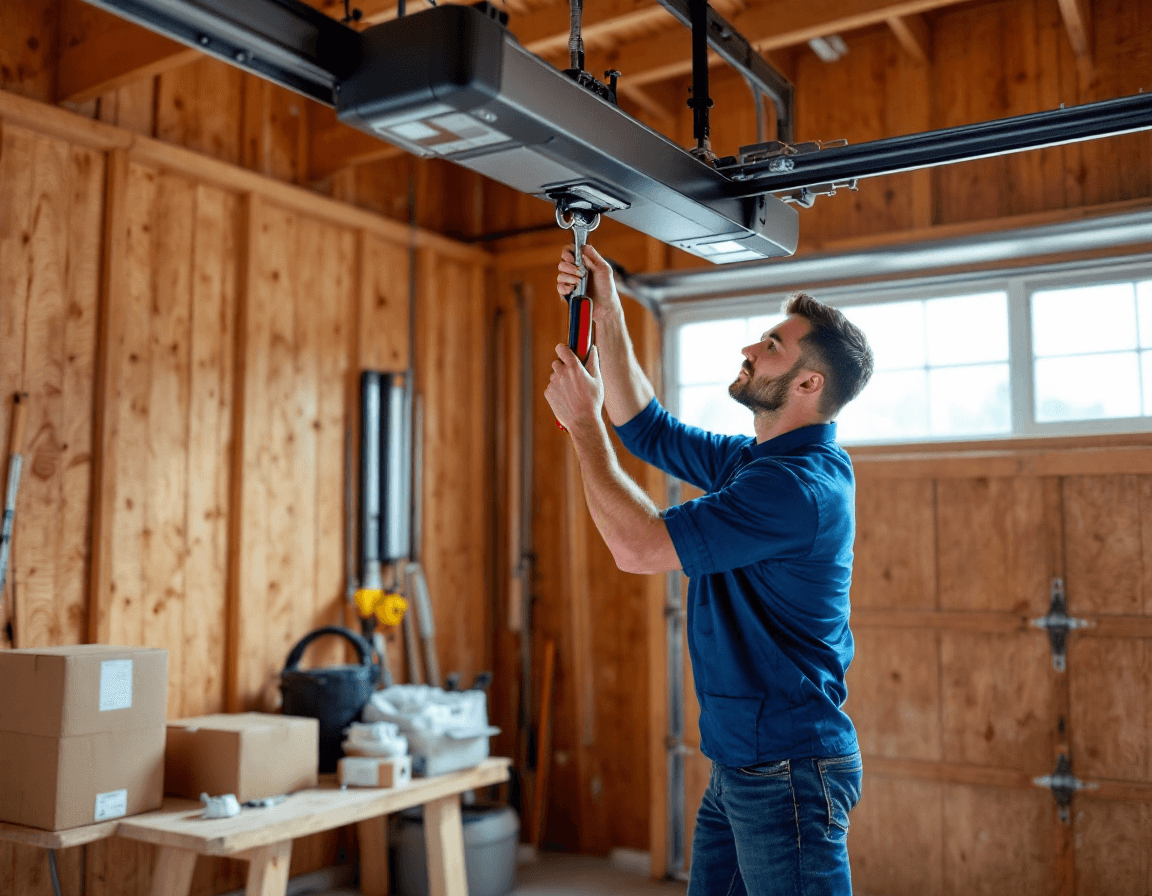
Replacing a garage door opener in Des Moines, WA is often the single most useful upgrade a home can get, because the opener does its job every day and tends to fail without much warning. Homes in the 98198 ZIP code see a mix of older builds, from mid-century ranchers to newer subdivisions, and many of them still run openers installed decades ago. A unit that worked fine for years can start grinding, stalling, or refusing to close once the damp months arrive, and that is usually the point where homeowners start looking for a replacement.
This guide walks through when a new opener makes sense, how to choose between belt-drive, chain-drive, and wall-mount designs, and what smart features and battery backup actually add to daily life. We also cover what drives the installed price, which typically falls between $275 and $650 depending on the opener model, and where the job should stay in the hands of a licensed technician. If you are weighing a repair against a full replacement, the sections below should help you sort out the trade-offs.
Whether you live near the Des Moines Marina, up the hill in Woodmont, or in the Redondo area, the same principles apply. The details that matter most are your door's weight, your ceiling height, how often the garage is used as the main entrance, and how well your home holds up during the wet, windy stretches that Western Washington is known for. Those factors shape which opener fits, and a local technician can usually confirm the right match in a single visit.
Why Des Moines Garages Ask More From Their Openers
Des Moines homes face a particular combination of conditions that puts steady stress on garage hardware. Winters bring long stretches of drizzle and humidity rather than hard freezes, which means moisture lingers on rails, sensors, and electrical connections for weeks at a time. Summers are generally mild, but the marine air that drifts in from Puget Sound can carry enough salt and moisture to speed up corrosion on exposed metal, especially for homes closer to the water. An opener that sits in a damp garage for years will often show that wear through sluggish travel and intermittent faults before it fails outright.
Power reliability is another local factor. Windstorms and heavy rain periodically knock out electricity across south King County, and an outage can leave you with a door that cannot be opened from the remote or wall button. Many households only discover that their opener has no backup until the lights go out on a dark evening and the car is stuck inside or outside. Planning for that scenario is one of the main reasons people upgrade to a newer unit with battery backup.
Finally, many Des Moines garages are used as the primary entrance, storage area, and workshop all at once. That heavier daily use means an opener gets cycled far more often than the manufacturer's original assumptions for a single-car parking space. A replacement lets you match the drive system and motor capacity to how the garage is actually used, rather than how it was used when the house was first built.
Reading the Warning Signs That Your Opener Is Done
Most openers give several signals before they quit, and recognizing them early can save you from being stranded. A unit that is loud enough to wake the neighbors, stops partway through its travel, or reverses for no apparent reason is telling you something about the motor, the gear assembly, or the safety sensors. Some owners also notice the door opening slowly or hesitating at the top and bottom of its path, which can point to a worn drive component or a limit setting that has drifted over time.
The list below covers the symptoms we see most often in older units around Des Moines. Several of them can have simple causes, such as a dirty sensor lens or a loose connection, but when two or more appear together, replacement is usually more economical than repeated repairs.
- The opener is noticeably louder than it used to be, with rattling or grinding during operation.
- The door takes longer to open or close, or stalls partway through its cycle.
- The unit reverses direction without an obvious obstruction in the path.
- The remote works intermittently, or you need to press the button several times.
- Replacement parts are hard to find because the model is discontinued or the manufacturer no longer supports it.
- The unit lacks modern safety features, or the existing sensors have been bypassed in the past.
If you hear a sharp snap, see the door come down unevenly, or notice that the springs or cables look frayed, stop operating the door and call a professional. Those conditions involve tension components that can cause serious injury, and they should be inspected by a licensed technician before anyone attempts to use the door again.
Choosing Between Belt-Drive, Chain-Drive, and Wall-Mount Designs
The three main drive styles each have a place, and the right choice depends on your garage layout, budget, and tolerance for noise. A chain-drive opener uses a metal chain running along a rail, which makes it durable and generally the most affordable option. The trade-off is noise, since the chain makes a distinct rattle during operation. For a detached garage, a workshop, or a home where the opener is not located near bedrooms, a chain drive remains a sensible, dependable choice.
A belt-drive opener uses a reinforced rubber belt in place of the chain, and the difference in sound is immediately noticeable. Belt-drive units run much more quietly, which is why many homeowners choose them when the garage shares a wall with a living area or when the door is used in the early morning or late evening. They typically cost a bit more than chain models, but the quieter operation is often worth it for attached garages in tighter neighborhoods.
Wall-mount openers attach to the side wall rather than the ceiling, freeing up overhead space. This makes them a strong fit for garages with low ceilings, for homes where the door is pushed up close to the ceiling, or for owners who want to keep the area above the door clear for storage or a lift system. Wall-mount installation requires a solid mounting surface and careful measurement, so it is worth having a technician confirm that the wall structure can handle the load and that the door's track geometry is compatible.
Rolling-Code Security and What an Older Unit Leaves Exposed
One of the most practical reasons to replace an older opener is security. Units manufactured before rolling-code technology became standard often use fixed codes, meaning the signal sent by your remote is the same every time. A determined person with a simple radio device could potentially capture that signal and reuse it to open the door. Rolling-code systems change the transmitted code with every use, so a captured signal becomes useless almost immediately.
Newer openers also tend to include features that older models lack, such as built-in lighting controls, timed close settings, and more reliable obstruction detection. When you upgrade, you are not only replacing the motor and rail but also updating the safety logic that governs how the door behaves when something gets in its path. That matters for families with children, pets that wander into the garage, or anyone who parks near the door's travel zone.
Keep in mind that security depends on more than the opener itself. Remotes that are left in a parked car, keypads with easy-to-guess codes, and garage doors that are never locked from the inside can undermine even the best hardware. A technician can walk you through how to program your new system, delete old remotes from prior owners, and set up any keypad or app access in a way that fits your household.
Smart Control, Wi-Fi Access, and myQ Compatibility
Smart garage openers have become popular with homeowners who want to check whether the door is closed, grant access to a delivery driver, or open the door from a phone while they are away. Many newer models support Wi-Fi connectivity and work with ecosystems such as myQ, which allow you to control the door through a smartphone app and receive alerts when it opens or closes. These features are convenient, especially for people whose schedules change day to day or who share a garage with other drivers.
Before choosing a smart model, check that it works with your home network. Some openers require a 2.4 GHz connection, and a garage positioned at the far end of a large lot or behind thick walls may have weak signal strength. A technician can test connectivity during the install and recommend a range extender or a different mounting position if needed. This is far easier to solve before the unit is bolted into place than after.
It is also worth considering how smart features interact with your existing accessories. If you already have a keypad, a wall control, or a vehicle-based remote, confirm that the new opener supports them or that you have an adapter available. Some homeowners prefer to keep a simple wall button as a backup even after adding app control, which is a reasonable approach that a technician can set up without complicating the system.
Planning Battery Backup for Winter Outages Near the Water
Battery backup is one of the most valuable add-ons for Des Moines homeowners, particularly those who experience occasional power loss during winter storms. A backup battery allows the opener to operate for a limited number of cycles when the grid is down, which can mean the difference between getting your car out for a morning commute and waiting hours for the power to return. Some systems also include a lock feature that secures the door during an outage, which adds a layer of protection when you are away from home.
The number of cycles a battery provides depends on the model, the age of the battery, and how much the door weighs. Batteries lose capacity over time, especially in damp or cool conditions, so it is wise to test the backup every few months and replace the battery on the manufacturer's schedule. A technician can show you how to perform a simple test and where the battery sits in the unit, which helps avoid surprises during a real outage.
Keep in mind that battery backup does not replace a manual release. Every opener should have a red emergency release cord that lets you disconnect the door from the trolley and operate it by hand. Make sure you know where this cord is and how to pull it safely, and avoid using the release while the door is under tension or while someone is standing beneath it. If you are unsure whether your door is balanced properly, have a licensed professional check it before you rely on manual operation.
What a Professional Installation Covers From Start to Finish
A proper installation is more than bolting a motor to the ceiling and plugging it in. A technician typically starts by inspecting the door itself, including the tracks, rollers, hinges, and springs, because an opener can only perform as well as the door it moves. If the door is binding, out of level, or carrying unbalanced weight, the new opener will work harder than it should and may fail prematurely. Identifying those issues early protects your investment and avoids callbacks.
Next, the technician mounts the rail and motor assembly, attaches the trolley to the door, and sets the travel limits so the door opens and closes fully without overrunning. Safety reversal sensors are installed near the floor on both sides of the door, aligned, and tested. The wall control is mounted at a height that keeps it out of reach of small children, and any keypad or app connection is configured. Finally, the system is tested through multiple cycles, including a reversal test to confirm that the door stops and reverses when it meets resistance.
A thorough install also includes a walk-through with the homeowner. You should leave knowing how to use the remote, how to program additional remotes, how to operate the emergency release, and what routine maintenance keeps the system running smoothly. Ask questions during this part of the visit, since the technician can often point out small habits, such as keeping the sensors clean and checking the door balance once a year, that prevent most common problems.
Pricing From $275 to $650: What Shapes the Final Number
Installed pricing for a garage door opener typically falls between $275 and $650, and the final figure depends largely on the model you choose. Basic chain-drive units sit at the lower end of that range, while belt-drive models with quieter motors, Wi-Fi connectivity, and battery backup generally cost more. Wall-mount systems and openers designed for heavier or oversized doors may also raise the price, since they require different hardware and additional installation time.
Other factors can influence the total. A garage with an older or damaged track may need minor adjustments before the new opener can be mounted safely. The number of remotes, keypads, and smart accessories you want also affects the bill, as does any need for additional wiring or an outlet near the ceiling. A technician can give you a clear quote after inspecting the door and discussing your goals, so you know what is included before work begins.
When comparing options, think about the total cost of ownership rather than the sticker price alone. A quieter belt-drive unit with battery backup may cost more upfront but can save frustration over the years, particularly in a home where the garage sits close to bedrooms. A simpler chain-drive model may be the right fit for a detached workshop where noise is less of a concern. The best value is the opener that matches how you actually use the door.
Salt Air, Drizzle, and Protecting Your Opener Near Redondo and the Marina
Homes closer to the water, including those around the Des Moines Marina and in the Redondo area, often experience more corrosion than homes farther inland. Salt-laden moisture settles on metal surfaces, and over time it can affect the rail, brackets, bolts, and exposed wiring. Choosing hardware with better corrosion resistance and keeping the connections clean can extend the life of the opener considerably.
Routine care is simple but effective. Wipe down the rail and the trolley a few times a year to remove grime, and check that the bolts and brackets remain snug. Keep the safety sensor lenses clean, since a film of dust or mineral residue can cause the door to reverse for no apparent reason. Make sure the garage door seals are intact so that wind-driven rain and moisture stay outside, and address any leaks that allow water to pool near the opener's electrical components.
Ventilation also matters. A garage that stays damp for long periods encourages mildew and corrosion, so opening a side door or running a small dehumidifier during the wettest months can help. If your garage is particularly prone to moisture, ask your technician about protective coatings or mounting options that keep the motor housing higher and away from standing water.
Safety Boundaries: What Homeowners Should Leave to Licensed Techs
Garage door work involves some of the most powerful components in a home, and certain tasks should never be attempted without training and the right tools. Torsion springs and extension springs store enormous amounts of energy, and improper adjustment or removal can cause severe injury. Cables, drums, and brackets carry the door's weight, and a failure in these parts can cause the door to drop suddenly. These components belong in the hands of a licensed, bonded, and insured technician, not a DIY project.
Installing a new opener, however, is a job that involves both mechanical and electrical elements, and it should also be performed by a qualified professional. Wiring the motor to the house circuit, aligning the sensors, and setting travel limits all affect safety. A mistake in any of these steps can prevent the door from reversing properly when it encounters an obstruction, which is one of the most important protections the system provides.
If you are unsure whether a problem is within your comfort zone, the safe answer is to call a professional. A short service visit can confirm what is wrong, explain the options, and help you decide whether a repair or a full replacement makes the most sense. Trying to force a stuck door, adjusting springs without training, or bypassing safety sensors creates risks that far outweigh the cost of an inspection.
Scheduling Your Opener Replacement in Des Moines and Nearby Neighborhoods
Whether you are in Woodmont, Redondo, or elsewhere in Des Moines, the best time to replace an opener is before it fails completely. Planning ahead gives you time to compare models, consider smart features, and decide whether battery backup belongs on your list. It also means you are not scrambling for a same-day fix when the door refuses to open on a rainy evening before work.
To prepare for your visit, gather a few details beforehand. Note the make and model of your current opener if you can find the label, which is usually on the motor housing. Measure the height of your garage ceiling and the distance from the top of the door to the ceiling, since this affects which drive style fits. Think about which remotes, keypads, and phone apps your household uses so the technician can plan accordingly. Clear a path around the door so the technician can work safely and efficiently.
Call Seattle Garage Door Fix at (888) 799-3819 to schedule an inspection and get a clear, itemized quote for your Des Moines opener replacement. Our licensed, bonded, and insured technicians can help you choose between belt-drive, chain-drive, and wall-mount options, set up smart control and battery backup, and walk you through safe, everyday use. Call today and let us get your garage working reliably for the seasons ahead.