
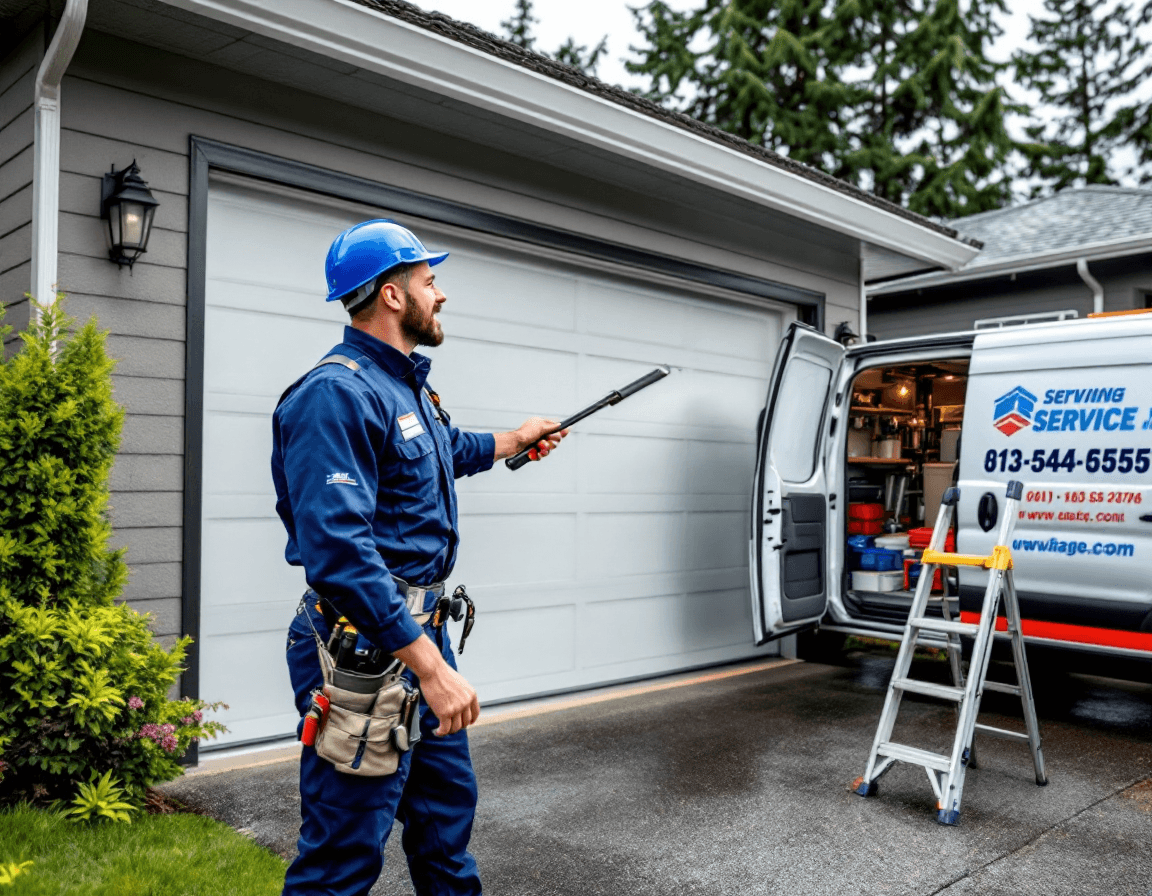
Garage door repair in Des Moines, WA is one of the more frequent calls we take, and the reasons are tied closely to the local environment. Wet winters, damp marine air drifting in from Puget Sound, and the drizzle that settles on hillside driveways all work on steel springs, rollers, and tracks. A door that ran smoothly last summer can start hesitating by November, and the change often happens so gradually that homeowners adjust without noticing. Our technicians see the same core problems across 98198 and the surrounding neighborhoods, and most can be resolved in one visit when they're caught early.
This page walks through the symptoms we hear about most often and explains what each one usually means. Some problems are simple, like a dead remote battery or a photo-eye sensor blocked by dust or a spider web. Others point to worn rollers, a bent track, a failing opener, or a broken torsion spring that needs immediate professional attention. Knowing the difference helps you describe the problem accurately when you call, and it keeps you from paying for a service that doesn't address what is actually wrong.
Most residential repairs we perform in Des Moines fall between $95 and $450, depending on the part, the opener model, and how much diagnostic time is required. We are a licensed, bonded, and insured company, and we explain what we find before any work begins. If your door is stuck open or closed right now, call (888) 799-3819 and we will walk you through what you're seeing.
Why Des Moines Garage Doors Wear Faster Than the Calendar Suggests
The coastline along Des Moines brings a lot of moisture into the air, and that moisture is hard on the metal components that keep a garage door balanced. Salt-laden air settles on exposed hinges, roller stems, and the steel tracks that run up each side of the opening. Over several seasons, that exposure produces surface rust, which then stiffens moving parts and wears down bearings. Homes near the marina and in the Redondo area tend to show this sooner than inland properties because the air stays damp longer after a rain.
Our winters add another layer of stress. Cool, wet mornings cause metal to contract slightly, and then the afternoon warms up and the cycle repeats. A door that sits in a detached garage with poor ventilation can also hold condensation on its underside, which gets into the rollers and turns grit into a paste. Even attached garages can trap humidity when the door is closed for long stretches, especially if the space is used for storage and rarely aired out.
Because of this, we recommend a basic check every spring and again in early fall. Look for orange or brown spotting on the tracks, feel for stiffness when you operate the door by hand (with the opener disconnected), and note any new sounds. A few minutes of attention can prevent a worn roller from becoming a jammed door during a rainy week when you need your car out the door in the morning.
Early Warning Signs Homeowners Often Miss
Garage doors rarely fail without warning, but the early signs are easy to dismiss. The most common ones we hear about are a door that takes a little longer to open than it used to, a panel that seems to hesitate at the same point in its travel every time, or an opener that strains and then catches before completing the move. Each of these suggests that something in the system is losing its balance or its smoothness, and each is much cheaper to address before it becomes a complete failure.
Here are the early indicators our technicians ask about first when a caller describes a new problem:
- A door that pauses or jerks at one specific height during opening or closing
- A noticeable change in the sound of the opener motor, such as a higher pitch or a labored hum
- Visible gaps at the top or sides of the door when it is fully closed
- A panel that looks slightly out of level when viewed from the driveway
- Rust-colored dust or metal shavings on the floor beneath the tracks
If you notice one of these, make a note of the date and what you observed. Technicians can diagnose far more accurately when they know whether a symptom appeared suddenly after a storm or built up over several months. Writing down a short description also helps when you call our team at (888) 799-3819 so we can prepare the right parts for your first visit.
When the Door Reverses Before It Reaches the Floor
A door that starts to close and then bounces back up is doing exactly what it was designed to do: it senses an obstruction and reverses to protect people and property. In many Des Moines homes, this behavior is triggered by the photo-eye sensors mounted near the floor on either side of the opening. These small units send an invisible beam across the doorway, and if the beam is interrupted or misaligned, the opener assumes something is in the path and stops.
Start with the simple checks. Make sure both sensors are wired correctly and that their indicator lights are steady rather than blinking. Wipe the lenses with a dry cloth, since salt film and road dust build up quickly near the coast, and confirm that nothing like a bike, a trash bin, or a wet mat is in the path. Sunlight coming in low through a side window can also confuse sensors on some installations, particularly in the late afternoon during the brief clear months.
If the sensors look clean and aligned but the door still reverses, the problem may be the auto-reverse force setting on the opener or a door that has become heavier because of a damaged spring or worn hardware. In those cases, adjusting the opener's force limits without addressing the underlying imbalance only masks the issue. Our technicians will test the travel and force on your specific model before recommending a fix, so you are not guessing at settings that could cause injury if set incorrectly.
Grinding, Squealing, and Banging: What the Sounds Are Telling You
Noise is one of the most useful clues a garage door can give you, though it takes some interpretation. A high-pitched squeal during operation usually comes from dry or dirty rollers, hinges, or bearings. A grinding sound that continues through the entire travel often points to a gear or chain issue on the opener, while a sharp bang at the top or bottom of the stroke frequently signals a worn roller that is knocking against a track seam or a loose bracket.
Each noise has a different urgency. A squeak that appears after a damp week may be solved with proper lubrication, but a grinding sound from the opener carriage could indicate a stripped drive component that will eventually leave you without power to the door. A banging noise accompanied by the door dropping or leaning sideways should be treated as urgent, because it can mean a cable or track has come loose from its position. Homeowners sometimes mistake that sort of failure for a simple rattle and keep operating the door, which can cause additional damage.
Please do not attempt to tighten or adjust torsion springs or lift cables yourself. These components store a large amount of tension, and mishandling them has caused serious injuries. If the sound is coming from the spring area, shut off the opener, keep the door closed, and call a licensed technician.
Crooked Panels, Uneven Movement, and Doors Knocked Off Track
A door that moves unevenly is usually telling you that one side is carrying more load than the other. You might notice one corner rising faster than the opposite one, a visible tilt when the door is halfway open, or a panel that seems to rub against the weatherstripping on one side. In our experience, this pattern most often traces back to a broken spring, a worn cable drum, a bent track section, or rollers that have seized in one channel.
Track problems are especially common after a vehicle clips the lower section of a door or after a strong windstorm rattles the panels. A track that has been pushed out of alignment by even a few millimeters can cause the rollers to bind, and that binding forces the opener to work harder than it was built to. Continuing to run the door in that condition can bend the track further or pull the top roller out of its channel entirely.
If you see a door that has come partly off its track, do not try to pry it back into place. Keep people and pets away from the opening, disconnect the opener if you can do so safely from inside the garage, and call a professional. Realignment requires checking the springs, cables, and tension together, and a technician who works on these systems regularly will know how to restore the door without creating a new hazard.
Stuck Halfway, Jammed, or Slamming Shut Too Fast
A door that stops partway through its travel is frustrating, particularly when you have a car on one side and a schedule on the other. Mid-travel jams usually come from one of a few causes: a roller that has popped out of the track, a cable that has slipped on its drum, a spring that has lost tension, or an opener whose limit settings no longer match the door's actual position. Some jams also result from debris, like a fallen branch or a buildup of grit, caught in the track.
The opposite problem, a door that drops or slams shut much faster than normal, is also worth taking seriously. A closing door should descend at a steady, controlled pace. When it accelerates or thuds at the bottom, the balance system may be failing, the opener's close-speed settings may be wrong, or the door may have lost a spring's support. Repeated hard closures can crack panels, damage the bottom seal, and strain the opener's drive system.
Do not force a stuck door open or closed by hand, and do not try to drag it manually while the opener is still engaged. If you need access, use the emergency release cord only when the door is closed, since releasing it while the door is open can allow it to drop suddenly. Then call us so we can determine whether the jam is a simple track obstruction or a sign of a broken component that requires immediate replacement.
Remotes and Wall Buttons That Stop Responding
When a remote or wall button does nothing, the cause is often simpler than it appears. Remote batteries are the first thing to check, and many people overlook that the small coin cells inside often lose power gradually. Next, confirm that the opener's receiver has not been reset during a power outage or a recent breaker event. Some openers also have a learn button that can be used to re-pair remotes, and that process is typically documented on a label inside the opener cover.
The wall control and its wiring deserve attention as well. Older wall buttons can fail internally, and the low-voltage wire running from the button to the opener can become pinched, loose, or corroded in the damp conditions common near the water. If the wall button lights up but the door doesn't respond, the issue may be in the opener's logic board, a blown fuse, or a safety reversal fault that keeps the system from engaging.
Keyless entry pads and smartphone integrations add another layer. A Wi-Fi bridge that has lost its network connection will make the app appear to fail even though the opener itself is working correctly. Our technicians can check each control point in sequence so we isolate the problem quickly, rather than replacing parts that were not the source of the failure.
Sagging Panels, Visible Gaps, and the Bottom Seal Problem
A garage door that sags in the middle or shows light around its edges is losing the rigidity that keeps it square. Sagging often develops when hinges loosen, when a panel warps from moisture exposure, or when the springs can no longer support the full weight evenly. Gaps at the top or sides are frequently caused by worn weatherstripping, but they can also indicate that the door has shifted slightly out of its frame.
Bottom seals deserve particular attention in Des Moines. Wind-driven rain can push water under a poorly sealed door and leave puddles or mildew along the threshold. A cracked or compressed bottom seal lets cold air and moisture in, which can affect anything stored near the door, including tools, paint, and cardboard. A seal replacement is typically one of the more affordable repairs, and it often makes a noticeable difference in comfort and humidity.
Sagging itself, however, is not something to ignore. A panel that bows noticeably may indicate a failing spring, a bent section, or a hinge that is pulling away from the frame. Operating a door in this condition can lead to a sudden drop. If you see visible sag, keep the door closed, avoid using it until it has been inspected, and schedule service so the cause can be identified before the situation becomes more serious.
What a Typical Repair Visit Looks Like
Every repair starts with a diagnosis rather than a guess. A technician will first confirm the symptoms you described, then inspect the springs, cables, rollers, hinges, tracks, opener, sensors, and weatherstripping. We look for wear patterns, misalignment, and signs of prior repairs, since those can reveal how the door has been stressed over time. Once the cause is clear, we explain the options in plain terms and provide a price before any parts are installed.
Most residential repairs we handle in the Des Moines area fall between $95 and $450. The final cost depends on several factors, and the following list covers the ones that influence pricing most often:
- The type of part needed, such as a roller set, a sensor pair, a bottom seal, or an opener component
- Whether the door is a standard steel section door, a wood or custom door, or a specialty design
- The make and model of the opener, since some drive systems require specific replacement parts
- How much diagnostic time the fault requires, particularly for intermittent problems
- Whether any safety-critical component, like a spring or cable assembly, must be replaced at the same time
Our goal is to repair what is actually broken and to avoid recommending upgrades you do not need. If a larger expense is recommended, we will walk you through why it is necessary and what would happen if you postponed it. You are always free to ask questions before approving any work.
Why Springs and Cables Belong in Professional Hands
Torsion springs and lift cables are the heart of a garage door's balance system, and they store enough energy to cause serious harm when mishandled. A torsion spring under tension can release suddenly, and a cable that snaps can whip across the garage with considerable force. These are not components that homeowners should adjust, wind, unwind, or replace without specialized tools and training, regardless of how handy they are with other projects.
Our technicians are licensed, bonded, and insured, and they follow safe procedures for relieving tension, measuring replacement springs, and setting new cables correctly. When a spring or cable has failed, we recommend replacing both sides together if the other spring is near the end of its service life, because uneven replacements can strain the door and shorten the life of the new part. We also check the drums, bearing plates, and center bracket at the same time, since those parts often show wear alongside the spring.
If you are unsure whether a noise or movement involves the spring system, treat it as a safety issue and call for service. We would much rather inspect a door that turns out to be fine than have a homeowner attempt a repair that leads to injury or additional damage. Clear communication about these risks is part of how we operate every day.
Serving Des Moines, Redondo, Woodmont, and the 98198 Area
Des Moines has a distinctive mix of housing, from older single-story homes near the central blocks to newer developments and waterfront properties close to the marina. Neighborhoods like Redondo and Woodmont sit along the shoreline, where salt air and wind exposure tend to accelerate hardware wear. Garages in these areas often face the weather more directly, which makes regular inspections especially worthwhile. Homes farther inland may see more dust and tree debris, which can clog sensors and tracks in different ways.
Our technicians regularly work across the 98198 ZIP code and nearby communities, and that familiarity helps us anticipate the issues common to specific housing styles. Detached garages, two-car doors with heavier panels, and older models with manual lock hardware each present their own considerations. When we arrive, we bring the parts most likely to be needed for your door type, which often allows the repair to be completed in a single visit rather than requiring a return trip.
Whether your door is stuck halfway, reversing unexpectedly, or making a new sound you can't identify, our team is available to help. We serve homeowners across the greater Seattle area and more than 60 cities in Western Washington, and we treat every Des Moines call with the same care we bring to any other service area.
Get Your Des Moines Garage Door Working Again
A garage door that won't open, close, or move smoothly disrupts your whole routine, and the sooner the cause is identified, the easier it is to fix. If you are dealing with a door that reverses, jams, sags, or ignores its remote, our licensed technicians can diagnose the problem, explain your options clearly, and complete most residential repairs for between $95 and $450. Call Seattle Garage Door Fix at (888) 799-3819 to schedule service in Des Moines, Redondo, Woodmont, or anywhere in the 98198 area.