
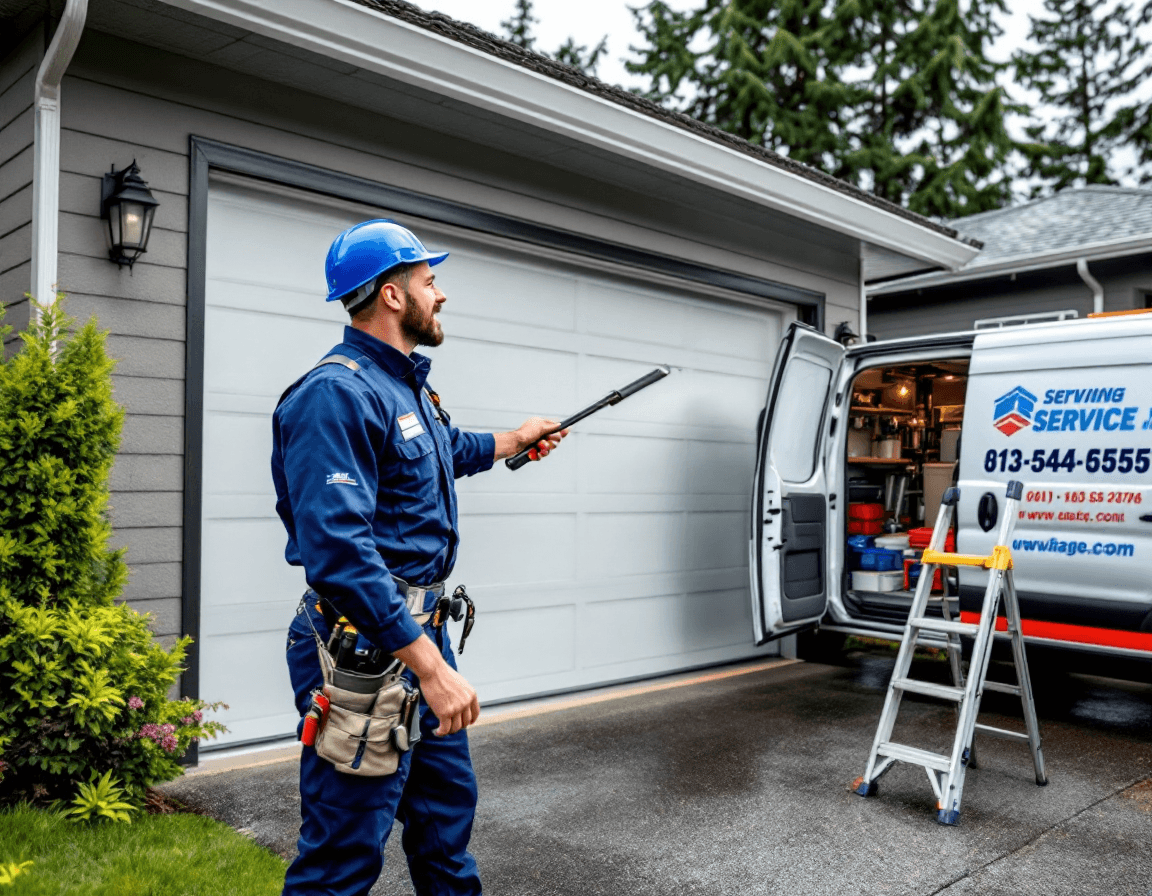
Garage Door Repair in Kent, WA is one of the most common calls we handle, and for good reason. A garage door carries more weight and moves more often than most homeowners realize, and when it stops behaving, the whole household feels it. Whether your door won't open, stops halfway, or sounds like it's about to fall apart, a prompt diagnosis usually means a simpler and less expensive fix. Seattle Garage Door Fix serves Kent homes across the 98030, 98031, 98032, and 98042 ZIP codes, and we see the same patterns repeat from the older ranch homes near Kent Station to the newer subdivisions climbing the slopes of East Hill.
Kent sits in the Green River valley, which means the local climate tends to be damp, mild, and long on gray days. That moisture works its way into wood framing, weatherstripping, and metal hardware, and it speeds up rust on hinges and rollers. Add a few hard freezes each winter and sudden warm spells that thaw everything out again, and you have a door that expands, contracts, and shifts throughout the year. Most garage door problems we see are not sudden disasters. They are small mechanical changes that have been building for months.
This page walks through the symptoms we hear about most often in Kent, explains what usually causes them, and describes what a professional repair typically involves. We also explain where safety limits begin, because some parts of a garage door system are dangerous to handle without training and the right tools. Read through the sections that match what your door is doing, and call us if you would rather have a technician take a look in person.
Why Kent Garage Doors Feel the Pacific Northwest Damp
Walk through almost any Kent neighborhood and you will see garages of many different ages. Homes built in the 1970s and 1980s often have older steel or wood-framed doors with rollers and hinges that were never upgraded. Newer construction on the hillsides near East Hill may have insulated steel doors with nylon rollers, but those still depend on the same tracks, springs, and cables that every door uses. Regardless of age, the Pacific Northwest's steady moisture is hard on any moving metal part that is not regularly lubricated.
Humidity causes a few specific problems. Steel tracks develop surface rust at the bottom curves where water collects, and that rust can make rollers hitch as they pass over it. Wood jambs and header boards swell during the wet months and shrink when the air dries out, which changes the clearance between the door and the frame. Weatherstripping on the bottom of the door can become stiff or compressed, and when it does, the door may catch or drag on the threshold. Many Kent homeowners notice that their door works fine in August and complains by November.
Temperature swings add another layer. Cold steel contracts and makes springs feel tighter, while warm afternoons loosen the same components again. If your door only misbehaves on cold mornings or after a rainstorm, that pattern is useful information. Tell your technician when the problem appears, because timing often points directly to the cause.
Reading the Early Warning Signs Before a Door Gives Out
Garage doors rarely fail without warning. In most cases, the first sign is a change in how the door moves, sounds, or feels when you press the button. Catching these early can prevent a bent track, a snapped cable, or a burned-out opener motor from turning a modest repair into a larger one. We encourage Kent homeowners to pay attention to small changes instead of waiting for the door to stop completely.
Common early signs include:
- The door takes longer to open or close than it used to.
- The motor hums or strains before the door starts to move.
- You notice a new scrape mark, paint transfer, or dent along a track.
- The door hesitates at the top or bottom of its travel.
- The auto-reverse feature engages for no clear reason.
- Light gaps appear around the bottom seal or at the side jambs.
Take a few minutes every month to look at the rollers, hinges, and track alignment. Look for hardware that is loose, rust that is spreading, or a gap that wasn't there before. These checks take almost no time, and they give you a clear record to share with a technician if you call for service. Writing down the date of the first symptom can be surprisingly helpful when diagnosing a problem that has built up slowly.
When the Door Reverses Before It Reaches the Floor
One of the most frustrating symptoms we see is a door that starts closing and then suddenly goes back up before it touches the ground. Many homeowners assume the opener is failing, but the cause is usually the safety system. Modern openers use photo-eye sensors mounted near the bottom of the door track, one on each side. These sensors send an invisible beam across the opening, and if the beam is interrupted, the door is designed to reverse. That feature exists to protect children, pets, and cars, and it is a good thing even when it is inconvenient.
In Kent, the most common reason for unexpected reversal is a sensor that has been knocked out of alignment. A stray bicycle, a garden cart, or even a strong gust during a winter storm can shift the brackets enough to break the beam path. Dirt, spider webs, and rain spatter can also cloud the lenses. Sometimes a wire has loosened at the sensor connection, which causes an intermittent fault that only appears on certain days. Check that both sensor lights are steady, that the lenses are clean, and that the two units face each other squarely.
If the sensors look fine and the door still reverses, the problem may be an automatic force setting that has drifted, or the door may be binding somewhere along the track. A door that is hard to close will often trigger the reverse function because the opener senses extra resistance. That is a sign to look at the rollers, the tracks, and the springs, not just the opener. We recommend against forcing the door or adjusting the force settings aggressively, because that can hide a real mechanical issue that will only get worse.
Grinding, Squealing, and Banging: Sorting Out the Noises
Garage door noises are unpleasant, but they are also diagnostic. Each sound tends to point toward a particular part of the system, and learning the difference can help you describe the problem accurately when you call. A high-pitched squeal usually means dry metal, a grinding sound often indicates worn gears or a failing trolley, and a sharp bang can mean a roller has come out of its track or a spring has moved unexpectedly. Kent homes with attached garages sometimes amplify these sounds because the noise travels into the living space.
Squealing is usually the easiest to address. Rollers, hinge pivots, and the bearings in the torsion or extension springs can dry out over time, especially after a wet winter. A light application of a garage-door-specific lubricant, not a heavy grease or household oil, often quiets things down. Avoid spraying lubricant onto the photo-eye sensors or the opener's motor housing. If the squeal persists after lubrication, the roller itself may be cracked or worn and needs replacement.
Grinding and banging deserve faster attention. A grinding noise from the opener can point to stripped gears in a chain or belt drive, and continuing to run the door in that condition can damage the motor. A banging noise while the door is moving may indicate a loose bracket, a misaligned track, or a roller that is jumping. If you hear a loud crack or see the door drop unexpectedly, stop using it and keep people and vehicles clear of the opening. Those signs can mean a spring or cable has failed, which is a job for a licensed professional.
A Door That Lurches, Lists, or Looks Crooked
A garage door should rise and fall in a smooth, level motion with both sides moving together. When one side lags, jerks, or sits lower than the other, you are looking at a problem that needs prompt attention. Uneven movement can strain the opener, stress the springs, and eventually cause a panel to bind or fall off track. Crooked doors are also a safety concern, because an unbalanced door puts uneven load on the entire system.
In Kent, uneven movement often traces back to a spring that has lost tension on one side, a cable that has stretched or frayed, or a roller that has worn unevenly. Ground movement and settling foundations can also shift the track slightly over time, though that tends to be a gradual process. The fix is rarely a quick adjustment you can make alone. Springs and cables are under high tension, and mishandling them can cause serious injury, which is why we always recommend a licensed technician for any work on those components.
Homeowners can do a simple check without touching any hardware. Disconnect the opener, lift the door by hand about halfway, and see whether it stays put. If it drifts or slams down, the balance is off. Look at the bottom corners to see whether one side sits higher than the other. Note what you observe, and mention it when you schedule service, since it helps your technician start the diagnosis faster.
Stuck Halfway: Jams, Off-Track Panels, and Sagging Sections
A door that stops partway through its travel is among the most urgent symptoms we respond to. Sometimes the opener quits and the door sits in the middle of the opening, leaving your garage exposed and the family car stranded. Other times, the door makes a creaking sound and refuses to go farther. In both cases, the underlying cause is often a track problem, a roller that has left its channel, or a section that has shifted out of alignment.
Doors that are off track usually show visible signs. You might see a roller sitting at an angle, a gap between panels, or a section that appears to bulge outward. Sagging is another warning sign, especially on older doors. When the panels lose their rigidity or the hinges weaken, the middle of the door may dip, and that dip can jam the rollers against the track. Visible gaps at the top corners or along the sides also suggest the door is no longer tracking straight.
Please do not try to pry a jammed door open or hammer a track back into shape. That approach can bend the track further, damage the panels, and put you in close contact with tensioned springs. A professional can usually reseat the rollers, straighten the track, and replace damaged hinges in a single visit, and they can check whether the springs are still holding the door's weight. Until help arrives, keep the door closed if you can, and keep children and pets away from the opening.
Remotes, Wall Buttons, and the Electronics Question
When the remote or wall button does nothing, many homeowners immediately assume the opener is dead. In practice, the cause is often much simpler. Remote batteries wear down faster in cold weather, and the small button contacts can corrode in damp conditions. A wall button may have a loose wire behind the plate, a stuck contact, or a failed low-voltage line. Checking these items first can save you a service call.
Start with the basics. Replace the remote battery, check whether the opener's indicator light is on, and make sure the power outlet supplying the opener is working. Many openers are plugged into a single outlet that may be on a switch or a GFCI circuit that has tripped. Garages in Kent are often cold and damp, and GFCI outlets can trip after moisture gets into the receptacle, so look for a reset button. If the indicator light blinks in a pattern, consult the manual for the code, since many openers use blink codes to point to specific faults.
If the remote works but the wall button does not, or the reverse is true, the problem may be in the wiring or the receiver. Reprogramming the remote can also resolve compatibility issues after a power outage or a change in opener hardware. When the opener itself has an internal fault, such as a failed logic board, replacement is often the more practical choice, and a technician can explain the cost difference between repair and replacement based on the age and condition of the unit.
Doors That Slam Down Too Fast
A door that drops quickly or slams shut is more than an annoyance. It can crack the concrete slab, damage the bottom seal, and create a serious pinch hazard. Fast closing usually points to a problem with the balance system or the opener's travel settings. On a door that is properly balanced, the motor should control the descent smoothly, and the door should stop gently at the floor.
The most common cause is a spring that has lost tension or a cable that has come loose on one side. A broken spring can make the door feel heavy on one end and light on the other, which is why uneven movement and fast closing often appear together. Another possibility is a worn opener gear or a damaged drive component that no longer provides steady resistance. In some cases, the close-limit setting on the opener has been changed, either by accident or during a previous repair, and it needs to be reset.
Because spring and cable work carries real risk, we ask homeowners to avoid testing the door by repeatedly letting it slam. Repeated drops can accelerate wear on the rollers, hinges, and track. If your door closes faster than usual, keep it closed, avoid using it until it is inspected, and schedule a visit. A licensed technician can measure the spring tension, check the cables, and confirm the opener is set to the correct travel limits.
What a Typical Kent Repair Visit Covers and What It Costs
Many Kent homeowners ask what a repair visit involves and what it typically costs. For most residential repairs, our pricing falls between $95 and $450, depending on the problem, the parts needed, and the door's make and model. A simple sensor realignment or roller replacement usually sits at the lower end of that range, while a broken spring replacement, opener repair, or multi-part track correction tends to fall higher. Your exact quote depends on the diagnosis, and we aim to explain the options before any work begins.
A typical visit starts with a walkthrough of the door and opener. The technician will test the safety sensors, check the balance, inspect rollers and hinges, look at the tracks for alignment and damage, and review the opener's settings. We will explain what we found in plain language, show you the worn or damaged parts when practical, and outline the repair options. You are never obligated to approve work you do not want, and we will tell you if a minor fix can wait until the next season.
Some items appear in nearly every Kent repair conversation. Lubrication, weatherstripping replacement, and roller swaps are common, and they often make a noticeable difference. Here are a few tasks homeowners frequently ask about:
- Sensor realignment and cleaning, which often resolves unexpected reversal.
- Roller replacement with quieter nylon or steel-stem rollers.
- Track straightening and bracket tightening after a bump or impact.
- Bottom seal replacement to reduce drafts and moisture entry.
- Opener programming, remote battery service, and wall button checks.
Ask for a written estimate that lists the parts and labor separately. A reputable technician will also tell you whether a repair is a good use of money, especially on older doors where a broader upgrade may make more sense over time.
Safety Lines You Should Never Cross Yourself
Garage doors are heavier than they look and store tremendous energy in their springs. Many serious injuries happen during do-it-yourself attempts that seemed simple at the start. We want every Kent homeowner to understand where the safe limit is, because the right decision in the moment can prevent a painful and expensive mistake.
Homeowners can generally handle a few tasks safely. These include cleaning the photo-eye lenses, checking that the sensor brackets are tight, replacing a remote battery, wiping down the tracks, and applying lubricant to the rollers and hinges. Testing the door manually while the opener is disconnected is also reasonable, as long as you keep fingers and feet clear of the pinch points. Those tasks cover much of the routine upkeep that keeps a door running well through the damp Kent winters.
Anything involving springs, cables, drums, bottom brackets, or track removal belongs to a licensed professional. Torsion springs in particular can release stored energy with enough force to cause severe injury. Cables can snap under tension, and a door that falls without warning can crush hands, fingers, or worse. If you are unsure whether a task is safe, stop and call us at (888) 799-3819. A short phone call costs far less than a preventable injury.
Getting Your Kent Garage Door Moving Again
A garage door that won't open, close, or move smoothly disrupts the rhythm of your household. Kent homeowners deal with the usual challenges of moisture, temperature swings, and aging hardware, and most of the symptoms covered here can be resolved with a focused, professional repair. The key is acting on early signs, documenting what you see and hear, and resisting the urge to force the door or tinker with springs.
Seattle Garage Door Fix provides fast, reliable residential garage door repair throughout Kent and the surrounding King County communities. Our technicians are licensed, bonded, and insured, and we will walk you through the diagnosis before any work begins. If your door is stuck, sagging, reversing, grinding, or simply refusing to respond to the remote, call us today at (888) 799-3819 and we will help you get it back on track.