
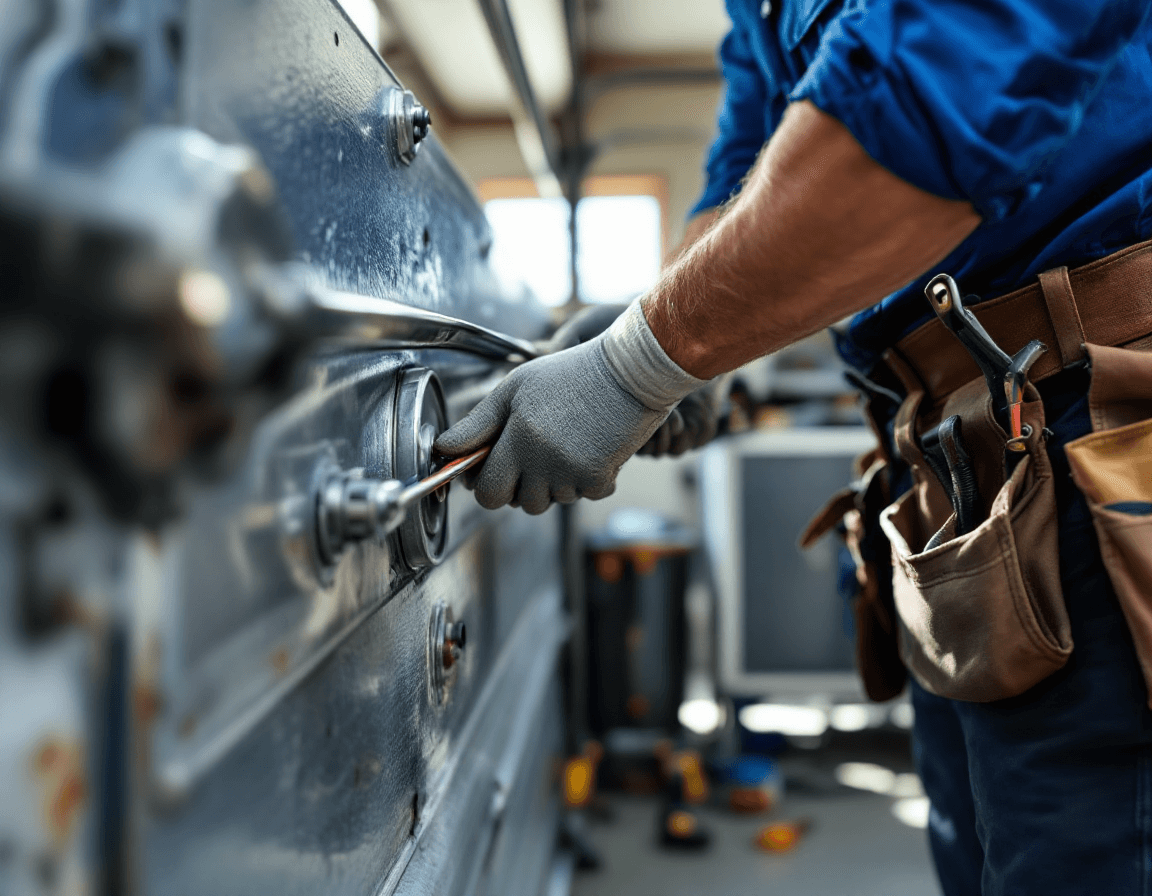
Garage Door Cable Replacement in Kent, WA is one of the most common repairs we handle for homeowners across the valley and the East Hill bluff, and it is also one of the easiest to put off until it becomes an emergency. The lift cables on a garage door carry the full weight of the door every time it opens and closes, and they do so under constant tension. When one wears through, the door can drop, twist, or lock in place without warning. Understanding what the cables do and how they fail will help you decide when to act.
Kent homes sit in a wide, low valley shaped by the Green River, and the weather here rarely gives garage hardware a break. Long stretches of gray, damp weather through the fall and winter keep steel components wet for days at a time, and that moisture finds its way into the cable strands and onto the drum surfaces. Many local garages also double as storage rooms, so doors get opened and closed irregularly, which can hide a developing problem until the moment a cable finally gives out. A calm, methodical look at your door can reveal a lot before a repair becomes urgent.
This guide walks through the warning signs, the difference between a cable problem and a drum problem, what affects replacement cost, and what a proper service visit involves. It also covers the safety rules that matter most, because spring and cable work carries real risk of injury. If you are reading this with a door that is already stuck or hanging crooked, skip ahead to the sections on immediate steps and safety, and call a licensed technician before you touch anything under tension.
Reading the Warning Signs That Your Lift Cables Are Failing
Lift cables rarely fail all at once. Most of the time, a cable goes through a slow period of wear that shows up as small changes in how the door behaves. The first thing many homeowners notice is a door that seems to open a little more slowly than it did last year, or a motor that strains at the start of its travel before the door rises. Those changes can be subtle, but they are worth paying attention to, especially if the door has been sitting unevenly.
Visual inspection is the next step. Look at the cables on both sides of the door when the door is fully closed and the opener is disconnected, and remember that you should never climb onto a ladder or pull on a cable under tension to examine it closely. Frayed strands, bright spots where the coating has worn off, or a rust-colored film along the length of the cable all point to a cable that is near the end of its service life. A cable that has begun to kink or form loops is also a serious warning, because the strands are already losing their ability to carry load evenly.
Sound and movement offer additional clues. A cable that is slipping in the drum groove, or one that has partly come off, often creates a clicking, popping, or grinding noise during the cycle. Many Kent homeowners describe a loud crack that comes from the back of the garage, followed by a door that will not budge. Once you hear that sound, treat the door as unsafe and stop operating it until a technician has assessed the damage.
- Frayed, broken, or rust-stained strands anywhere along the visible cable length
- A door that sits lower on one side when closed, or that appears to tilt when partly open
- Popping, clicking, or grinding sounds as the drum turns
- A cable that looks loose, slack, or sits out of the drum groove
- The door stopping partway through its travel or refusing to open after a sharp noise
What Lift Cables and Cable Drums Actually Do
To understand a replacement, it helps to know how the parts fit together. A typical residential garage door uses two lift cables, one on each side of the door, that run from the bottom bracket of the lowest door section up to a cable drum mounted on the horizontal shaft above the door opening. The torsion spring system, which sits on a bar above the door, provides the lifting force, and the cables transfer that force to the bottom of the door so it rises smoothly and evenly. When the door closes, the cables wind back onto the drums in a controlled way.
The cable drums are grooved cones, usually made of steel or aluminum, and each cable seats in a specific groove that is shaped to match its path. Because the drums are tapered, the cable winds onto a wider or narrower section depending on door position, which compensates for the changing leverage as the door lifts. If a cable is not seated in the correct groove, or if a drum has cracked or loosened on its shaft, the door will not rise evenly. This is why a single cable problem can look like a drum problem and vice versa.
Lift cables are made of braided steel and are sized for the weight and dimensions of your specific door. They are not generic parts, and a replacement must match the door's weight, height, and track configuration. Cables are often sold in matched sets, and it is standard practice to replace both sides together when one has failed, since the other cable has experienced the same loads and conditions. Replacing only one cable can leave the door unbalanced and place extra stress on the new part.
Why Kent's Damp Winters Wear Down Cables Faster Than You Might Expect
Kent's climate is mild by many standards, but it is persistently damp, and moisture is one of the main enemies of steel garage door hardware. Rain and fog settle into unheated garages through gaps at the bottom of the door and around the side seals, and condensation forms on cold metal surfaces during the coolest months. Over time, this moisture can work into the strands of a cable and begin to corrode the wires from the inside, which is why a cable can look acceptable from a distance and still be significantly weakened.
Garages in the Green River valley can also experience temperature swings from the day to the night, especially during the shoulder seasons. Metal expands and contracts with those swings, and the constant movement can slowly loosen cable fittings and accelerate fatigue in the strands. Doors that are used heavily, such as those serving busy households with frequent car trips, put more cycles on their cables each year, which shortens their working life even without visible corrosion.
Road grime and fine dust from nearby traffic can also collect on drum surfaces and cable housings. Over time that buildup can trap moisture against the metal and grind slightly into the cable as it winds. Keeping the garage reasonably dry, clearing debris from the track area, and avoiding storage of damp items against the door are simple habits that help slow this kind of wear. These small steps do not replace periodic inspection, but they make a real difference over several seasons.
When a Snapped Cable Leaves the Door Stuck and What to Do Next
A snapped cable is one of the most alarming garage door events a homeowner can experience. The sudden crack is often loud enough to be heard throughout the house, and the door may suddenly drop several inches, lean to one side, or refuse to move at all. The most important thing to know is that the spring system and the cable are under tremendous tension, and attempting to force the door or work on the drum yourself can cause serious injury.
Start by keeping everyone away from the door and the area beneath it. Do not stand under a door that is hanging unevenly, and do not try to lift it by hand, because the spring still holds stored energy and the door may shift unpredictably. Disconnect the opener if you can do so safely from the outside, and avoid repeatedly pressing the wall button, since running the motor against a broken cable can damage the opener and the door's internal components. Make a note of what you saw and heard so the technician can diagnose the problem quickly.
Once the area is secure, call a licensed garage door professional to inspect the door. A snapped cable often takes the adjacent drum and the bottom bracket with it, and a technician needs to check the full system before any repair begins. Some homeowners are tempted to tape the door in place or prop it with boards, but that approach can cause the door to fall suddenly and create a larger hazard. The safest path is to leave the door as it is and let a trained technician secure it correctly.
- Keep children, pets, and visitors clear of the door and the space beneath it
- Do not attempt to lift, pry, or stand under the door to test it
- Disconnect the opener from the outside if you can do so without reaching into the door path
- Avoid repeatedly pressing the opener button, which can strain the motor and other parts
- Take a photo of the damage from a safe distance to share with the technician
Crooked, Lopsided, and Binding Doors: Reading the Clues
A door that hangs crooked or closes unevenly is often the first sign that a cable has begun to slip or stretch. When one side of the door rises faster or slower than the other, the difference usually traces back to uneven tension between the two cables or to a cable that is no longer seated in the right drum groove. Homeowners frequently notice a gap along the bottom seal on one side, or a section of the door that appears to ride higher than its neighbor.
Binding is a closely related symptom. If the door catches in the tracks on one side, or if the rollers scrape or jam partway through travel, the cable may be pulling unevenly and forcing the door against the track. Sometimes the cause is a worn roller or a bent track section, but cable problems are a common source, and the two can mimic each other. A thorough inspection will check the cables, drums, rollers, and track alignment together rather than treating one symptom in isolation.
Keep in mind that a door can look level and still have a cable problem. The door may appear balanced while closed but reveal its issue during opening or closing, when the full load shifts. Watching the door cycle slowly from a safe position, without standing in the door's path, can show whether one side lags behind. Reporting exactly when the imbalance happens helps the technician narrow the cause quickly and avoid unnecessary parts.
Cable Drum Problems That Look Like Cable Problems
Many homeowners assume that a cable replacement will solve every symptom of a noisy or uneven door, but the cable drum deserves equal attention. Drums can crack along the groove, wear smooth where the cable seats, or loosen on the shaft when set screws or fasteners work free over time. A drum with a worn groove can allow the cable to ride up and down unpredictably, which produces the same crooked or binding behavior that a stretched cable does.
Loose set screws on the drum are a particularly common cause of unexpected noise and movement. A drum that spins slightly out of position on the shaft can cause the cable to wrap unevenly, and the resulting tension changes may produce a clicking or scraping sound. Tightening those fasteners is a task that requires the correct tools, the door in a safe state, and a clear understanding of how the spring system is loaded, which is why it belongs with a licensed professional.
Cable tangles are another related issue. When a cable comes off its drum, it may wrap around the drum or the shaft in a way that creates a knot or a loop. Attempting to untangle a cable while it is still under spring tension is dangerous, and the knot may tighten as the door moves. A technician will typically release the tension safely, remove the cable, inspect the drum for damage, and install a fresh cable in the correct groove before restoring operation.
Replacement Pricing in Kent: What Shapes the $110 to $300 Range
Most lift cable replacements in Kent fall within a range of about $110 to $300, depending on the door and the scope of the job. That range reflects the typical cost of replacing one or both cables, checking the drums and fasteners, and returning the door to safe operation. Homeowners often ask why the price varies, and the answer usually comes down to a few practical factors that a technician can explain during a visit.
The size and weight of the door matter because heavier or taller doors use cables with different specifications, and those cables can cost more to source. Single-car and double-car doors can also differ in the number of cables and the hardware involved. A door that needs a drum replacement in addition to the cables will fall toward the upper end of the range, while a straightforward cable swap on a well-maintained door may land near the lower end.
Access and condition also play a role. A garage with cramped headroom or unusual track configurations can take longer to work in safely, and a door with corroded fasteners may require extra time to remove. If the torsion spring or other spring components show signs of fatigue, a technician will explain the options so you can decide how to proceed. An accurate estimate requires an on-site look, but the factors below help explain where the price comes from.
- Door size, weight, and the specific cable specification required
- Whether one cable or both cables need replacement, which is usually recommended as a matched pair
- Condition of the cable drums, bottom brackets, and mounting hardware
- Time needed to access the drum safely and release the spring tension
- Any additional repairs discovered during the inspection, such as roller or track adjustment
Our Typical Cable Replacement Process in Kent Homes
A professional cable replacement follows a sequence designed to protect both the technician and the homeowner. The visit usually begins with a walk-around inspection of the door, the opener, the tracks, the rollers, and the spring system. The technician will look at the cables and drums in detail, check whether the door is balanced, and talk with you about the symptoms you have noticed. This conversation matters, because the history of the door often reveals the root cause more quickly than the hardware alone.
Once the diagnosis is clear, the technician secures the door and releases the spring tension using the proper procedure. This is the most hazardous part of the job, and it should never be attempted by an untrained person. After the tension is safely released, the old cable is removed, the drum and bracket are inspected, and any damaged parts are replaced. The new cable is then routed through the bottom bracket and seated on the drum in the correct groove, following the manufacturer's path for the door.
Final steps include restoring spring tension, testing the door through several full cycles, and checking balance and alignment. The technician will watch both sides of the door as it rises and falls, confirm that the cables are winding evenly, and verify that the opener and safety reversal system are working correctly. A good visit ends with a clear explanation of what was done, what condition the rest of the system is in, and what to watch for in the coming months.
Safety Rules Every Kent Homeowner Should Follow
Spring and cable work is one of the most dangerous tasks associated with a garage door. Torsion springs and extension springs store large amounts of energy, and that energy can release suddenly if a component fails or is disturbed. Lift cables that snap under tension can whip with considerable force. For these reasons, we always recommend that spring and cable repairs be performed by a licensed and insured professional who has the training and equipment to do the work safely.
Homeowners should never attempt to wind springs, adjust tension, remove a drum while the door is loaded, or stand under a door that is unbalanced. Even something as simple as a door that feels a little heavy can conceal a dangerous condition. If you are unsure whether a door is safe to operate, treat it as unsafe and keep it closed or secured until a technician has inspected it. Disconnecting the opener is a sensible precaution when you suspect a cable problem, but it does not remove the stored energy in the spring.
Good safety habits also apply to the rest of the system. Keep the area around the tracks clear of tools, bicycles, and stored items that could interfere with the door's path. Teach children to stay away from the door and never to play near the opener controls. Test the auto-reverse feature periodically by placing a flat object on the floor in the door's path and confirming that the door reverses when it contacts the object. These habits do not replace professional service, but they reduce the chance of injury between visits.
Preventive Care Between Service Visits
Regular attention can extend the life of your lift cables and help you catch problems before they become emergencies. A simple visual check once or twice a year, performed with the door closed and the opener disconnected, will reveal most early signs of wear. Look at the cables for fraying, rust, or kinks, and check the drums for visible cracks or loose fasteners. Note any changes so you can compare them over time.
Keeping the door's moving parts clean and lightly lubricated also helps. Use a silicone-based or lithium-based lubricant on the rollers, hinges, and track surfaces as recommended by the door manufacturer, and wipe away old residue before applying new product. Do not spray lubricant directly onto the cables themselves, because some products can attract dirt or interfere with the cable's grip. Your technician can recommend the right product for your door.
Managing moisture in the garage is equally important in our part of the Puget Sound region. Ventilate the space when possible, avoid storing wet gear against the door, and check door seals for gaps that let rain and debris in. In winter, watch for condensation on the tracks and drums and wipe it away if it accumulates. These small habits slow corrosion and help your cables last longer through the damp months.
Neighborhoods and Landmarks Where We Frequently Work in Kent
Our technicians regularly serve homes throughout Kent, from the neighborhoods near Kent Station to the residential streets climbing East Hill and the family areas around Panther Lake. Each part of the city has its own mix of home styles, garage configurations, and driveway layouts, and that variety shapes the kinds of cable and drum issues we see. Older homes may have different hardware than newer builds, and homes with detached or converted garages often present access challenges that require extra planning.
Kent Station, with its mix of newer construction and surrounding residential blocks, is a convenient reference point for many of our calls, and nearby homes often have garages with tight clearances that need careful handling during cable work. East Hill's residential streets can bring their own considerations, including sloped driveways that affect how a door tracks and how weight distributes across the cables. Homes near Panther Lake may see more seasonal moisture, which makes periodic drum and cable inspection especially valuable.
We serve Kent addresses across ZIP codes 98030, 98031, 98032, and 98042, along with the surrounding communities that share the same climate and housing patterns. If you are not sure whether your address falls within our service area, call us and a team member can confirm the details. Whatever part of Kent you call home, the approach is the same: a careful inspection, an honest explanation, and repairs performed to the safety standards that spring and cable work demands.
If your garage door is hanging crooked, binding on one side, or showing frayed or rusted cables, do not wait for a snap to force the issue. Call Seattle Garage Door Fix at (888) 799-3819 to schedule a licensed technician for your Kent cable replacement. We will inspect the cables, drums, and balance, explain your options clearly, and get your door back to safe, smooth operation.